
Last Updated on February 26, 2026
Jaguar Rescue Center Puerto Viejo: What's Covered
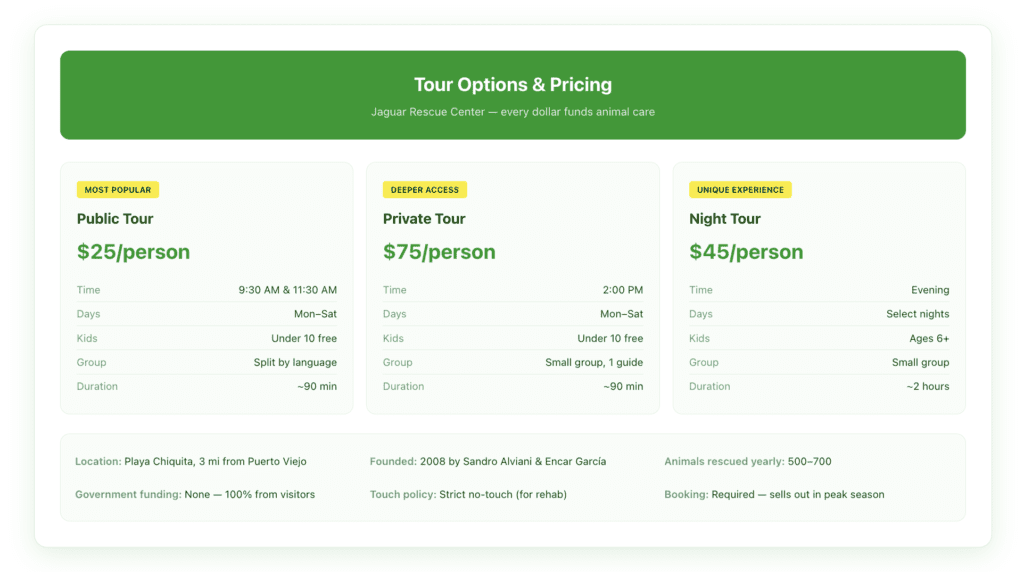
The Jaguar Rescue Center is a working wildlife rehabilitation facility in Playa Chiquita, just 3 miles south of Puerto Viejo de Talamanca. This isn’t a zoo—it’s where 500-700 injured, orphaned, and displaced animals receive care annually, with your $25 entrance fee directly funding their survival since the center receives zero government funding. Public tours run 90 minutes at 9:30 AM and 11:30 AM (Monday-Saturday), and the paved coastal road means no 4×4 needed with your rental car.
Quick Facts
- Tours: $25 USD per person; children under 10 free; private tours $75 at 2 PM
- Schedule: Monday-Saturday at 9:30 AM and 11:30 AM; arrive 15 minutes early
- Duration: 90 minutes with groups split by language (English, French, Dutch, German available)
- Location: Playa Chiquita, 3 miles south of Puerto Viejo; 15-20 minutes by bike
- Policy: No touching animals—rehabilitation requires minimal human contact for successful wild release
What You’ll See
- Sloths at Every Stage – Two-fingered sloths in climate-controlled nurseries with teddy bears, outdoor enclosures for survival practice, and the sloth garden before release. Guaranteed close-up viewing with expert explanation.
- Baby Howler Monkeys – Watch juveniles jump, climb, and escape with impressive creativity while learning about species-specific rehabilitation protocols for howlers, spider monkeys, and capuchins.
- Margay, Birds & Serpentarium – Meet Diabalino the margay (permanent resident after seven failed releases), toucans, scarlet macaws, and Costa Rica’s venomous snakes in educational terrariums.
Combine With Caribbean Coast Activities
Morning tours end by early afternoon, leaving time for beach hopping through Punta Uva and Manzanillo or visiting Cahuita National Park 20 minutes north (donation-based entry, 5-mile coastal trail, snorkeling on Costa Rica’s largest coral reef). The drive from San José takes 4-5 hours via Route 32. Families with kids find this one of Costa Rica’s best activities—guaranteed wildlife sightings, engaging guides, and age-appropriate education.
If you need any help with a Costa Rica car rental, contact us now!
If you’re heading to Costa Rica’s Caribbean coast and wondering whether the Jaguar Rescue Center deserves a spot on your itinerary, the answer is a resounding yes. This isn’t a zoo. It’s not an entertainment venue. It’s a working rehabilitation facility that rescues around 500-700 injured, orphaned, and displaced animals every year, and your visit directly funds their survival.
Located in the Playa Chiquita area just 3 miles (5 kilometers) south of Puerto Viejo de Talamanca, the center has been rehabilitating Costa Rica’s wildlife since 2008. Founded by Italian herpetologist Sandro Alviani and Catalan primatologist Encar García, the facility focuses on one mission: giving injured animals the care they need to return to the wild. Those who can’t survive on their own find permanent sanctuary here.
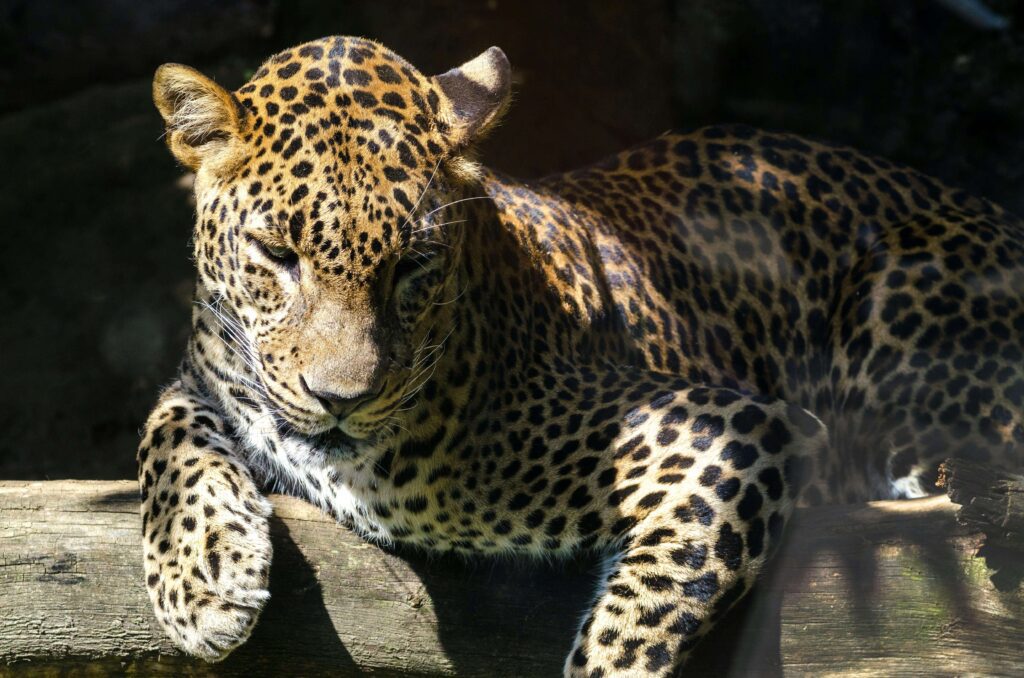
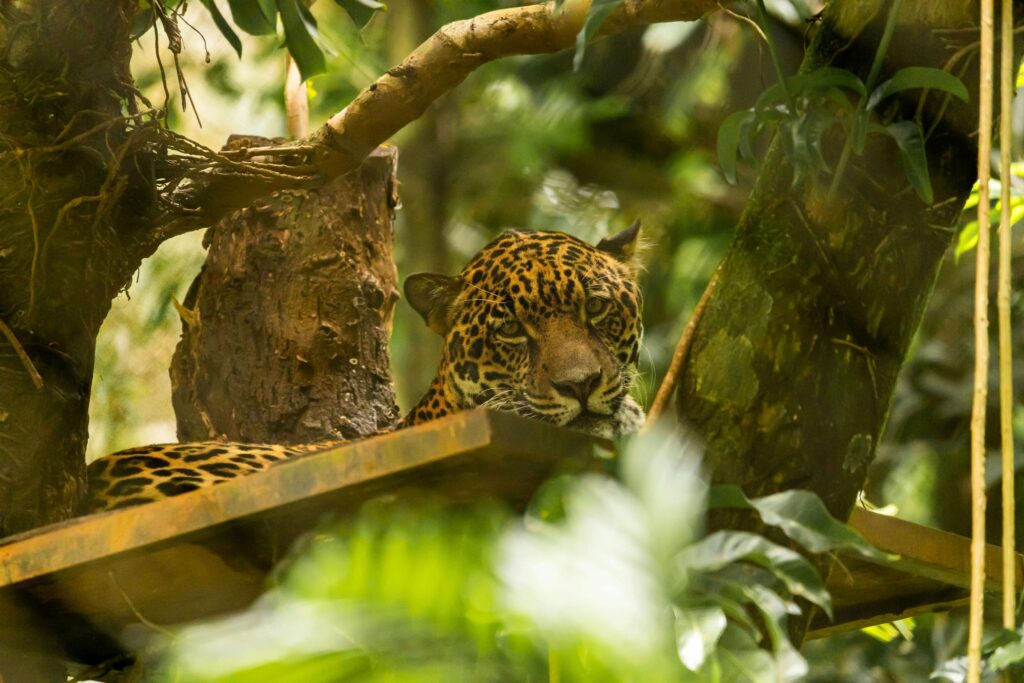
The irony? There’s no jaguar at the Jaguar Rescue Center. The facility earned its name from its very first patient, which was a sick baby jaguar that sadly didn’t survive. The name honors that animal’s memory while the center continues saving hundreds of others.
Key Takeaways
- Tours: $25 USD per person for public tours at 9:30 AM and 11:30 AM (Monday-Saturday). Children under 10 enter free. Private tours cost $75 per person at 2 PM.
- Duration: Public tours run approximately 90 minutes with groups split by language.
- Location: Playa Chiquita, roughly 3 miles(5 kilometers) from Puerto Viejo town center.
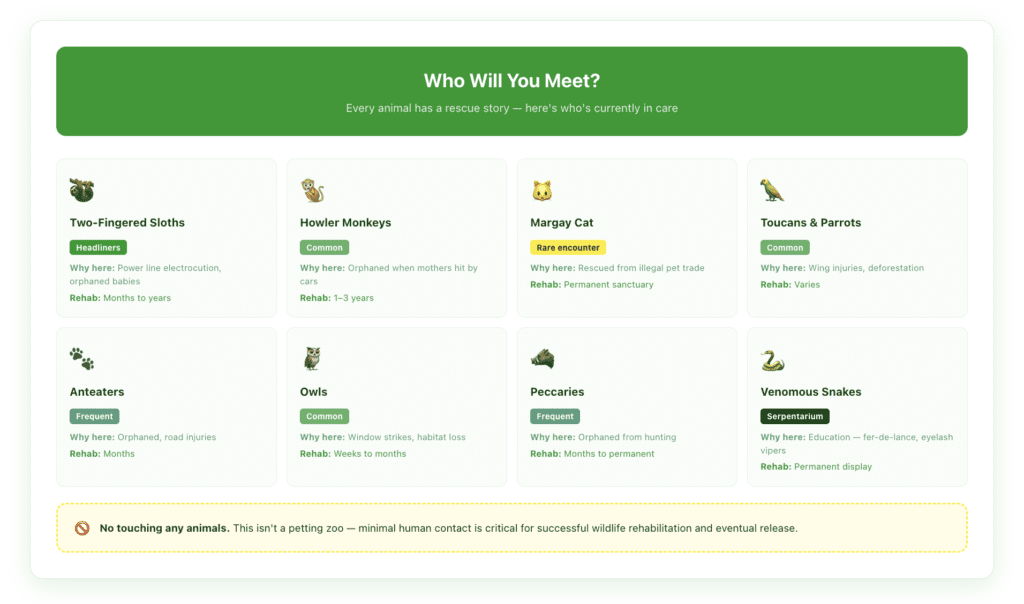
- What You’ll See: Two-fingered sloths, howler monkeys, toucans, anteaters, margay cats, owls, peccaries, parrots, and a serpentarium featuring Costa Rica’s venomous snakes.
- No-Touch Policy: Guests cannot hold or touch any animals because rehabilitation requires minimal human contact.
- Why It Matters: 100% of entrance fees support animal care and conservation since the center receives no government funding.
What Makes the Jaguar Rescue Center Different From a Zoo?
Walk through the entrance, and you’ll immediately notice this place operates differently. Animals roam freely where appropriate. A resident pelican named Pistachio might strut past you like he owns the place because essentially, he does. His wing never healed properly, so he’s become an unofficial greeter.
The center’s philosophy centers on wildlife rehabilitation rather than exhibition. Every animal you encounter has a story, usually involving human impact. Sloths are electrocuted on power lines. Monkeys were orphaned when their mothers were hit by cars. Birds are injured by deforestation. Your guide shares these individual histories, connecting you to the broader conservation challenges facing Costa Rica’s Caribbean coast.
The strict no-touch policy might disappoint visitors expecting hands-on encounters, but it exists for good reason. Animals destined for release need to maintain a healthy wariness of humans. Getting too comfortable around people means they can’t survive in the wild, or worse, they approach humans who might harm them.
What Animals Will You Actually See?
Sloths: The Headliners
Two-fingered sloths dominate the resident population. You’ll see them at various life stages, from some sleeping with teddy bears in climate-controlled nurseries to others practicing survival skills in outdoor enclosures, and adults lounging in the sloth garden before release.
The center houses notably more two-fingered sloths than three-fingered varieties. This isn’t a coincidence. Two-fingered sloths adapt better to captivity because they eat a broader diet. Three-fingered sloths require very specific leaves that don’t transport or store well, making rehabilitation considerably more challenging.
If wildlife viewing tops your Costa Rica priority list, the Jaguar Rescue Center provides guaranteed sloth sightings in comfortable viewing conditions. Unlike searching for them in Cahuita National Park or along jungle trails, here you’ll observe them up close with an expert explanation of their behavior.
Monkeys: Mischief in Rehabilitation
Baby howler monkeys generate the most entertainment during tours. Volunteers tasked with monitoring them face genuine challenges because these juveniles jump, climb, and escape with impressive creativity. Watching their antics while learning about rehabilitation protocols adds levity to what can otherwise feel emotionally heavy.
The center also rehabilitates spider monkeys and capuchins, each species requiring different approaches. Howlers need socialization training since they live in family groups. Capuchins require mental stimulation, given their high intelligence. Your guide explains these nuances, revealing how much thought goes into successful release programs.
The Margay: A Rare Encounter
Diabalino the margay represents both success and limitation. Rescued as a cub after his mother was killed for her fur near the Panama border, he was nursed back to health. However, seven attempted releases failed as he kept returning to the center. Now a permanent resident, he educates visitors about the pressures facing Costa Rica’s six wildcat species.
Should You Book a Coffee Tour or Just Show Up?
Reservations are strongly recommended. While some farms accept walk-ins, guided tours with English-speaking staff require advance scheduling. Many visitors combine coffee tours with their hot springs itinerary, and a morning farm tour followed by afternoon relaxation in thermal pools creates an ideal La Fortuna day.
How Much Do La Fortuna Coffee Tours Cost?
Expect to pay $35-65 per person, depending on the farm and whether transportation is included. If you have a rental car from Vamos, driving yourself typically saves $15-20 per person compared to tours with pickup service. Most farms are located 10-20 minutes from downtown La Fortuna along well-paved roads.
What’s the Best Time to Visit?
Coffee harvest season in Costa Rica runs from December through February, when you’ll see the most activity and have the fullest cherry-picking experience. However, farms operate year-round, explaining the process with dried and stored beans when fresh cherries aren’t available.
Morning tours (8-10 AM) typically offer better weather conditions, leaving your afternoon free for activities like La Fortuna Waterfall or hanging bridge walks.
Birds, Reptiles, and More
Keel-billed toucans, scarlet macaws, great green macaws, parrots, and owls represent the avian population. Many were former illegal pets, demonstrating why wild animals belong in forests rather than homes.
The serpentarium houses Costa Rica’s venomous snakes in naturalistic terrariums. This educational component addresses a serious local issue, as many Costa Ricans kill snakes on sight, not realizing their vital role in controlling rodent populations and maintaining ecosystem balance. The center works with schools to change these attitudes, teaching children proper responses to snake encounters.
Peccaries, anteaters, and deer round out the mammal population. You might spot Chanchita the peccary wandering freely because she’s too accustomed to humans for safe wild release, but seems perfectly content as another facility boss.
How Does the Tour Actually Work?
Tour Times and Booking
Public tours run Monday through Saturday at 9:30 AM and 11:30 AM. Arrive 15 minutes early to pay and check in. The center splits groups by language, and althoughEnglish is standard, French, Dutch, and German guides are available by request.
Expect approximately 50 visitors during busy periods. If crowds concern you, private tours at $75 per person (minimum two guests) offer more intimate experiences with extended time at each station.
You cannot book public tours in advance for specific dates, but private tours require reservations. During peak season (December through April), arriving early ensures you get into your preferred time slot.
What the 90-Minute Experience Includes
Expert guides lead you through distinct areas, sharing each animal’s rescue story, current rehabilitation status, and prognosis for release. You’ll visit the sloth nursery, monkey rehabilitation areas, bird enclosures, the serpentarium, and outdoor spaces where release-ready animals practice survival skills.
The educational component distinguishes this from wildlife tourism that prioritizes photo opportunities. Guides explain why power lines kill so many sloths, how deforestation disrupts monkey family structures, and what individual actions visitors can take to support conservation.
Photography is permitted in most areas, though certain animals during sensitive rehabilitation phases may be off-limits. Costa Rican law prohibits people from appearing in photos with wild animals, so don’t expect selfie opportunities.
Night Tours: A Different Experience
The center operates night tours at La Ceiba, their 120-acre (48.5 hectares) primary forest release station near Punta Uva. This rainforest within the Gandoca-Manzanillo Wildlife Refuge provides habitat for released animals while offering visitors nocturnal wildlife encounters.
Night tours require advance booking and separate arrangements. They’re ideal for travelers spending multiple days in Puerto Viejo who want deeper wildlife experiences.
Why Does This Place Need Your Support?
The Jaguar Rescue Center receives zero government funding. Every animal’s care from veterinary services, specialized diets, to round-the-clock monitoring and enclosure maintenance comes entirely from entrance fees, donations, and volunteer support.
Rescuing 500-700 animals annually isn’t cheap. Some animals require months of intensive care. Others need permanent sanctuary for their entire lives. Your $25 entrance fee directly funds these operations.
Beyond financial support, your visit contributes to changing attitudes about wildlife conservation. The center’s community education programs reach local schools, teaching children to coexist with wildlife rather than fear or exploit it. Tourism revenue enables these outreach efforts.

How Do You Get to the Jaguar Rescue Center?
By Rental Car
The center sits along the main coastal road in Playa Chiquita, approximately 3 miles south of Puerto Viejo town center. The route is straightforward, so just follow the paved road toward Manzanillo and watch for signage.
A rental car from Vamos makes exploring the entire Caribbean coast significantly easier. You can combine the Jaguar Rescue Center with morning tours, then drive to Cahuita National Park or continue south to Manzanillo’s beaches in the afternoon. Standard vehicles handle this route fine, so no 4×4 is required for the paved coastal road.
By Bicycle
Biking from Puerto Viejo takes 15-20 minutes and represents one of the best ways to experience this stretch of coast. Bike rentals are widely available in town. The relatively flat road passes through jungle scenery and local communities, making the ride itself enjoyable.
By Bus
Buses running the Puerto Viejo to Manzanillo route stop at Playa Chiquita. Tell the driver you’re heading to the Jaguar Rescue Center. The fare costs a few hundred colones, though schedules can be irregular.
By Taxi
Taxis from Puerto Viejo charge approximately $5-10, depending on negotiation. Agree on the price before departing.
What Else Should You Do Near Puerto Viejo?
Same-Day Combinations
The Jaguar Rescue Center tours end by early afternoon at the latest, leaving plenty of time for additional activities:
Beach Hopping: Drive or bike south through Cocles, Chiquita, Punta Uva, and Manzanillo. Each beach offers a distinct character, as Punta Uva delivers postcard-perfect Caribbean turquoise ocean but fills with people on the weekend, while Manzanillo remains quieter and more local.
Cahuita National Park: Twenty minutes north of Puerto Viejo, Cahuita National Park operates on a donation basis. The 5-mile coastal trail offers excellent wildlife spotting, like sloths, monkeys, and raccoons, plus swimming at pristine beaches. Costa Rica’s largest coral reef lies offshore for snorkeling.
Chocolate Tours: Several Bribri indigenous community operations offer cacao experiences where you’ll see the chocolate-making process from bean to bar. Tours run $30-35 and often include rainforest walks where wild capuchins and sloths sometimes appear.
Multi-Day Itineraries
If you’re building a longer Caribbean coast exploration, consider this flow:
Day 1: Arrive in Puerto Viejo, explore the town and nearby beaches. Day 2: Morning Jaguar Rescue Center tour, afternoon beach time at Punta Uva or Manzanillo Day 3: Full day at Cahuita National Park with snorkeling Day 4: Bribri chocolate tour and waterfall visit, or day trip toward Tortuguero
The drive from San José to Puerto Viejo takes 4-5 hours via Route 32 through Braulio Carrillo National Park. Consider breaking the journey with a stop at the rainforest along the way or arriving in time for sunset on the Caribbean.
Can You Volunteer at the Jaguar Rescue Center?
For travelers wanting deeper involvement, the center offers structured volunteer programs ranging from two weeks to several months. Volunteers assist with animal care, enclosure maintenance, food preparation, and rehabilitation activities under professional supervision.
Programs require advance applications and aren’t available drop-in style. If volunteering interests you, research the requirements several months before your Costa Rica trip. The experience provides meaningful wildlife conservation work alongside like-minded people from around the world.
When Is the Best Time to Visit?
The Caribbean coast operates on different weather patterns than the Pacific side. While Guanacaste bakes in dry season sun (December-April), the Caribbean often stays cooler with occasional showers. Conversely, when Pacific destinations get drenched from August through October, Puerto Viejo frequently enjoys sunny weather.
For the Jaguar Rescue Center specifically, weather matters less since much of the tour occurs in covered areas. Morning tours (9:30 AM) offer cooler temperatures and often more active animals.
Peak season (December-April) brings more visitors, so arriving early for the first tour slot means smaller groups. September and October represent some of the quietest months while offering pleasant weather conditions.
Is the Jaguar Rescue Center Worth It?
For families traveling with kids, absolutely. The combination of guaranteed wildlife sightings, educational content appropriate for all ages, and engaging guides makes this one of Costa Rica’s best family activities.
For wildlife photography enthusiasts, the close proximity to animals provides excellent opportunities. Bring a camera with decent zoom capability for the best results.
For conservation-minded travelers, your entrance fee directly supports meaningful work. You’ll leave understanding the challenges facing Costa Rica’s wildlife and the specific actions that can help, from avoiding selfies with wildlife to supporting habitat preservation.
For budget travelers, $25 represents solid value for 90 minutes of guided wildlife education. Compare that to expensive boat tours where wildlife sightings remain uncertain.
The only travelers who might skip this are those philosophically opposed to any form of captive wildlife, even rehabilitation facilities. However, understanding the center’s release-focused mission usually addresses these concerns.
Frequently Asked Questions
What is a rescue shelter?
A rescue shelter specifically refers to wildlife sanctuaries or rehabilitation centers that care for wildlife. The Jaguar Rescue Center in Costa Rica actually focuses primarily on sloths, monkeys, birds, and reptiles rather than jaguars. The name honors its first patient, which was a baby jaguar that unfortunately didn’t survive. The facility has since rescued over 700 animals annually, primarily species injured by human activities like power line electrocution and vehicle collisions.
How many jaguars are left in Costa Rica?
Costa Rica’s wild jaguar population is estimated between 400 and 500 individuals according to SINAC (Costa Rica’s conservation authority). These elusive big cats primarily inhabit protected areas like Corcovado National Park on the Osa Peninsula and the Tortuguero region. Seeing a wild jaguar remains extremely rare even in prime habitat, which is why the Jaguar Rescue Center focuses its rehabilitation efforts on more commonly injured species like sloths and monkeys that frequently require rescue.
Is the Jaguar Rescue Center a Legitimate Organization?
Absolutely. The Jaguar Rescue Center was founded in 2008 by Italian herpetologist Sandro Alviani and Catalan primatologist Encar García, both trained biologists who moved to Costa Rica’s Caribbean coast specifically to work with wildlife. The center operates entirely on entrance fees, donations, and volunteer support since it receives zero government funding. Every colón from your visit goes directly to animal care, veterinary services, and conservation programs like their Shock Free Zone initiative that insulates local power lines to prevent animal electrocutions. They rescue between 500 and 700 animals annually, with over 40% successfully released back into the wild.
Does the Jaguar Rescue Center Release Animals?
Yes, and that’s the entire point. Unlike a zoo, the Jaguar Rescue Center’s primary mission is rehabilitation and release. Animals that recover fully are moved to La Ceiba, the center’s 120-acre (48.5 hectares) primary forest release station near Punta Uva within the Gandoca-Manzanillo Wildlife Refuge. There, they practice survival skills before being reintroduced to the wild. Only animals that can’t survive on their own — due to permanent injuries, behavioral issues, or failed release attempts — become permanent sanctuary residents. The center has successfully returned thousands of animals to their natural habitats since opening.
How Long Is the Jaguar Rescue Center Tour?
Public tours run approximately 90 minutes and take place at 9:30 AM and 11:30 AM, Monday through Sunday. Expert guides walk you through distinct areas, including the sloth nursery, monkey rehabilitation zones, bird enclosures, and the serpentarium. Private tours last about 2.5 hours and start at 2:00 PM, offering a more intimate experience with smaller groups and extended time at each station. Either way, plan to arrive at least 15 minutes early to check in and get sorted into your language group.
Are Jaguar Rescue Center Tickets Refundable?
The center’s refund policy may vary, so it’s worth checking directly with them before purchasing if your plans are uncertain. Public tour tickets are available through their official website or by showing up on the day. Private tours require advance reservations, and given the limited availability (especially during peak season from December through April), it’s smart to confirm cancellation terms when booking. If you’re visiting during busier months, buying tickets online ahead of time is a good call since tours can sell out.
How Can Visitors Help Wildlife Conservation?
There are plenty of practical ways to make a difference while traveling in Costa Rica. Book certified eco-tours like the Jaguar Rescue Center rather than unlicensed wildlife encounters. Never touch wild animals, even at rehabilitation facilities, because human contact can prevent successful release. Use reef-safe sunscreen when swimming near coral reefs (especially at Cahuita National Park), reduce your plastic use, and respect turtle nesting rules along Caribbean beaches by avoiding flash photography. Supporting local conservation organizations through visits and donations goes further than most people realize. Your $28 entrance fee at the Jaguar Rescue Center, for example, directly funds veterinary care, food, and habitat restoration.
How Does Ecotourism Support Conservation?
Ecotourism creates a financial incentive for communities to protect wildlife rather than exploit it. Along Costa Rica’s Caribbean coast, entrance fees and tour revenue fund park management, scientific research, and community education programs, including the Jaguar Rescue Center’s outreach to local schools. Ecotourism also provides an alternative income that reduces dependence on activities like hunting or habitat-clearing agriculture. Many wildlife experiences in the area, from turtle nesting tours to guided hikes through Cahuita National Park, operate under strict government regulations designed to minimize human impact while maximizing conservation funding.
What Threats Does Wildlife Face on the Caribbean Coast?
Costa Rica’s Caribbean coast wildlife faces a mix of human-caused pressures. Habitat destruction from agricultural expansion (particularly banana and pineapple plantations) remains one of the biggest issues, along with agricultural runoff that pollutes waterways and coral reefs. Illegal hunting and poaching still occur despite strong environmental laws. Power line electrocution kills an alarming number of sloths and monkeys each year, which is exactly why the Jaguar Rescue Center launched its Shock Free Zone program to insulate transformers in the region. Add in plastic pollution, coral bleaching from rising ocean temperatures, coastal development, and sea level rise threatening turtle nesting beaches, and you start to understand why places like the Jaguar Rescue Center exist in the first place.