
Last Updated on June 19, 2026
Zarcero, Costa Rica: Quick Guide
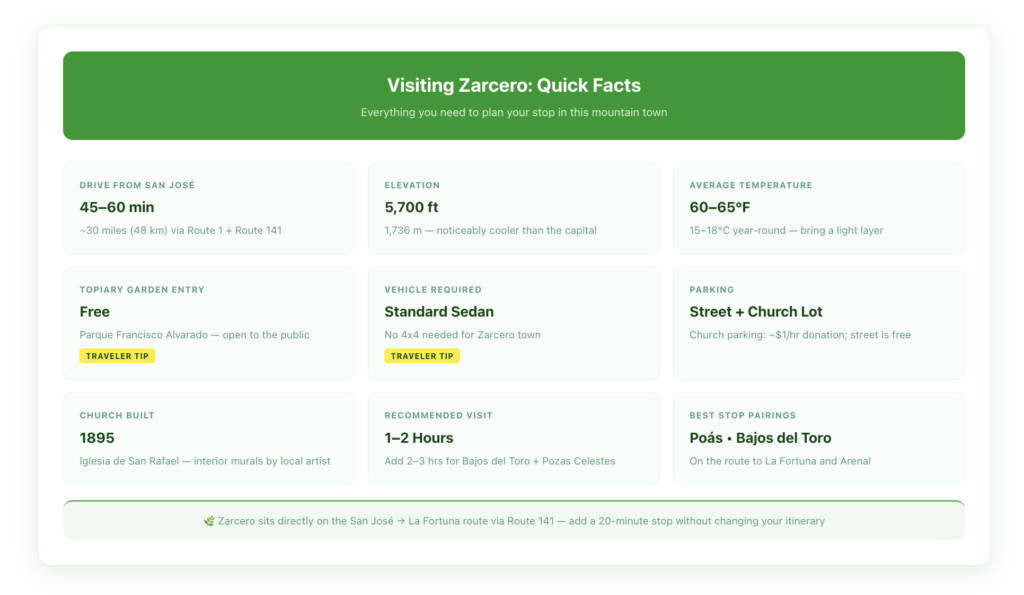
Zarcero is a mountain town in Alajuela province, 45–60 minutes from San José on the route toward La Fortuna and Arenal. Its centerpiece is Parque Francisco Alvarado, which is a free topiary garden featuring 60+ years of hand-sculpted cypress sculptures by artist Evangelista Blanco. A standard rental sedan handles the drive, so no 4×4 needed for town.
Quick Facts:
- Elevation 5,700 ft (1,736 m) — average 60–65°F (15–18°C) year-round; pack a light layer
- Parque Francisco Alvarado: free entry, open daily; Iglesia de San Rafael (1895) is free to enter
- Church parking available for ~$1/hr donation; street parking also available
- Standard sedan handles Route 141 to Zarcero, which is curvy but well-paved
- Combine with Poás Volcano (~45 min) or Bajos del Toro/Pozas Celestes (~30 min north)
Top 3 Reasons to Stop:
- Parque Francisco Alvarado has 16 wavy arches, elephant and dinosaur topiaries, and an ongoing living artwork started in 1964. Allow 30–45 minutes to walk the full garden.
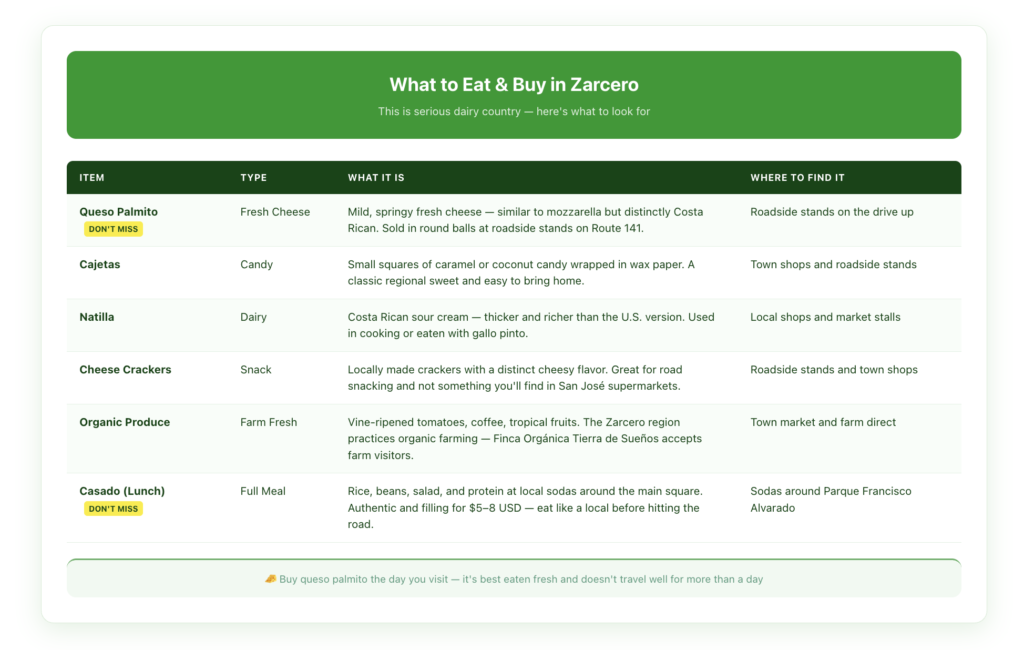
- Zarcero’s local food scene. This is dairy country at its best: queso palmito, cajetas, and natilla sold roadside along Route 141. Sodas around the square serve $5–8 casado lunches.
- Natural route stop to Arenal as Zarcero sits directly on the San José → La Fortuna route. Adding a 1-hour stop won’t meaningfully extend your driving day.
Planning a 1-week or 2-week itinerary through the Central Valley and beyond? Zarcero is the kind of stop that turns a drive into a memory.
If you need any help with a Costa Rica car rental, contact us now!
Zarcero is one of the most underrated stops in Costa Rica. It’s a small mountain town in Alajuela province, sitting at 5,700 feet (1,736 meters), that most travelers blow past on their way to La Fortuna or Monteverde, which is a mistake. Between a one-of-a-kind topiary garden that’s unlike anything else in the country, a 130-year-old pink and blue church, serious dairy country, and easy access to some spectacular natural swimming holes, Zarcero deserves more than a passing glance, especially when it’s just 45 to 60 minutes from San José and sits right on the route north.
Key Takeaways
- Zarcero is a 1-hour drive from San José on the route toward La Fortuna and Arenal, which makes it a perfect half-day stop.
- Parque Francisco Alvarado features 60+ years of hand-sculpted cypress topiary, which is the result of one artist’s lifelong work.
- The Iglesia de San Rafael was built in 1895, has stunning interior murals, and is free to enter.
- Zarcero sits in dairy country, so look out for stringy palmito cheese, milk fudge, and sour cream to buy roadside.
- No 4×4 needed, as a standard rental sedan handles the drive comfortably.
- Pair the town with Bajos del Toro and Pozas Celestes for a full day out of the capital.
- Temperatures average 60–65°F (15–18°C) year-round, so bring a light layer.
What Makes Zarcero Worth the Stop?
Most Costa Rican towns have a central park with benches and a fountain. But Zarcero has a central park with cypress dinosaurs, a motorcycle-riding monkey, and a series of undulating arches that look like they escaped from a children’s storybook. Known as Parque Francisco Alvarado, its topiary is the reason travelers who discover this town tend to talk about it for the rest of their Costa Rica trip.
The gardens were started in 1964 by a 25-year-old artist named Evangelista Blanco, who was commissioned by the municipality to design a public garden. Instead of a conventional layout, he began shaping the resident cypress trees into topiary sculptures. Over the following decades, his work grew into something extraordinary: recognized by Atlas Obscura as one of the more unusual public parks in the world, the park now features animals, geometric arches, religious figures, and abstract forms which are all maintained and continue to evolve to this day. Lonely Planet lists Parque Francisco Alvarado as a top highlight in the Central Valley, which is a rare honor for a free public park.
Blanco’s signature creation is the row of 16 wavy arches, described by Islands.com as looking like they were transported from the pages of a Dr. Seuss book, and arguably the most photogenic stretch in the entire park.
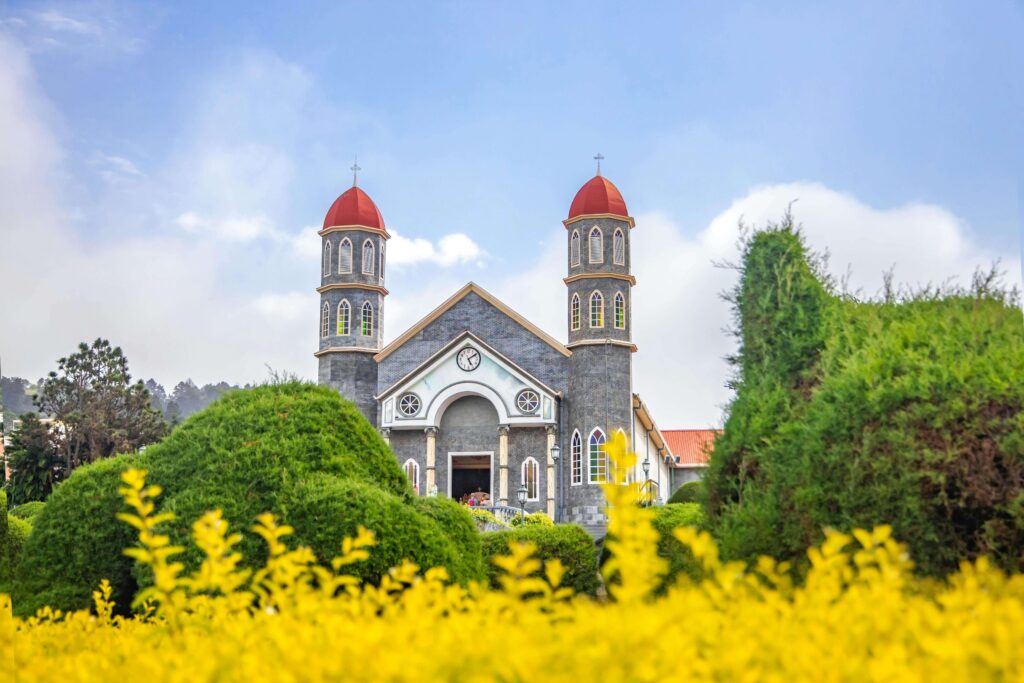
The park is free and open to the public. It sits directly in front of the Iglesia de San Rafael Arcángel, which gives you the classic photo with the park’s green sculptures framed by the church’s distinctive pink and red domes in the background. Plan for about 30–45 minutes to walk the full garden, photograph the sculptures, and appreciate just how much detail has gone into each one.
What's Inside the Church?
The Iglesia de San Rafael Arcángel was built in 1895, and it’s worth stepping inside even if you’re not religious. The interior is covered in intricate pastel stencil work and paintings by local artist Don Misael Solis Alvarado. The handcrafted details show the pride that this small town has in its heritage.
. The church is open to visitors during the day, and while there’s no set admission, the parking lot behind the church asks for a small donation (around 1,000–2,000 colones, roughly $1–2 USD). There are also bathrooms on site for a small fee, which is worth knowing if you’re on a road trip.
Zarcero itself sits at the foot of the Cordillera Central mountain range, between San Ramón and Ciudad Quesada, and has a population of around 4,000. Zarcero was officially declared a city in 1918, and while it’s small by any metric, it has an authenticity that sets it apart from towns that have sprung up around tourism. You’ll see locals using the park as a gathering spot with kids running through the arches, and older residents chatting on the benches next to topiary elephants.
How Do You Get to Zarcero from San José?
The drive from San José takes about 45 minutes to an hour, depending on traffic and where you’re starting from. From SJO airport or the Alajuela area, take Route 1 (General Cañas Highway) north, then exit onto Route 141, which takes you north toward Ciudad Quesada. Zarcero is on Route 141, and you’ll see signs for it once you’re on the mountain section of the road. The total distance from San José is about 30 miles (48 km).
It’s worth knowing that Route 141 gets noticeably curvy and steep as it climbs into the mountains. The road is in good shape, and any standard rental car can handle it without issue, but if you’re prone to motion sickness, sit in the front seat and take the drive slowly.
You don’t need a 4×4 for Zarcero, so a standard sedan works perfectly for the drive, the town, and the roads through the agricultural area surrounding it. If you’re combining the stop with a trip toward Arenal or Monteverde, Zarcero fits naturally into the route without requiring any significant detour.
For those without a rental, Transportes Zarcero runs direct buses from San José’s Coca-Cola station (near La Merced market) multiple times daily. The trip takes about 90 minutes and costs under $2 USD each way.
What Should You Eat and Buy in Zarcero?
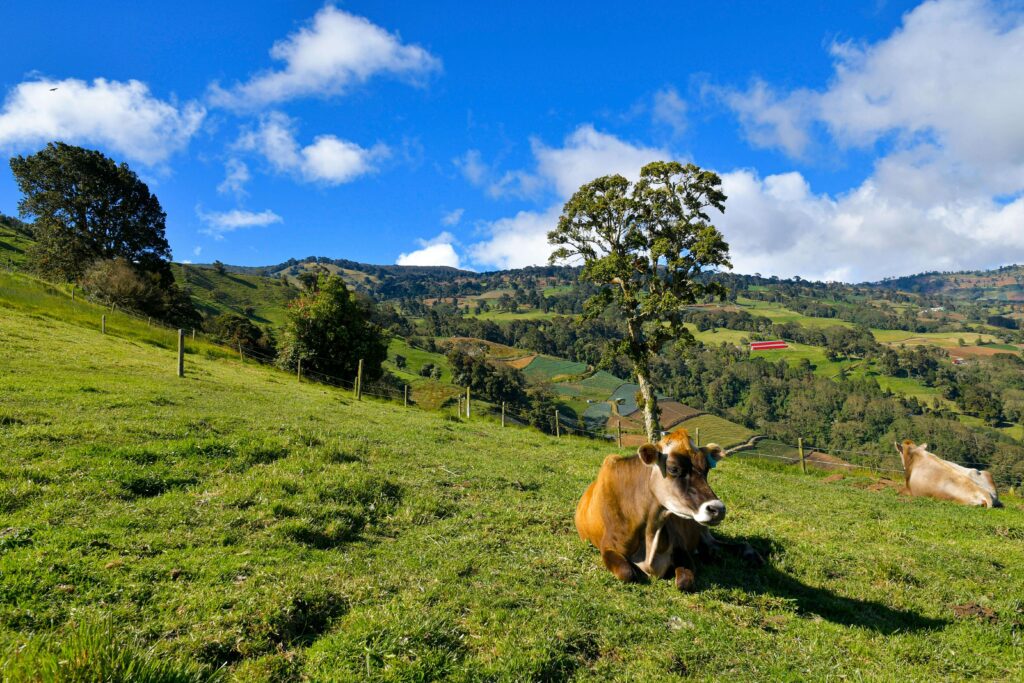
This is dairy country, as the mountains surrounding Zarcero are covered with dairy farms, and the canton has a documented reputation for organic farming that distinguishes it from other agricultural regions in Alajuela province. The products from this region have a solid reputation for quality in Costa Rica. On the drive up Route 141, keep an eye out for roadside stands selling round white balls that look oddly like large snowballs and are called queso palmito, a local fresh cheese that’s distinctly Costa Rican and best eaten the day it’s made. It has a mild, slightly springy texture similar to fresh mozzarella, but with its own character.
Beyond the cheese, you’ll find cajetas (small caramel or coconut candy squares wrapped in wax paper), natilla (Costa Rican sour cream), cheese crackers, and a range of locally grown produce, including tomatoes, coffee, and tropical fruits. There’s an annual Cheese Festival in July, which is worth a visit if your vacay dates coincide. A few local sodas in the town square serve simple Costa Rican meals. Expect a full casado lunch to cost about $5–8 USD, which is exactly the kind of no-frills, authentic meal that makes travel worthwhile.
For a more immersive experience, Finca Orgánica Tierra de Sueños, an organic farm on the outskirts of town, accepts visitors who want to see how the area’s produce is grown and can stock up directly at the source. The farm doesn’t announce itself loudly, but anyone who makes the effort to find it is well rewarded.
What Else Is Near Zarcero?
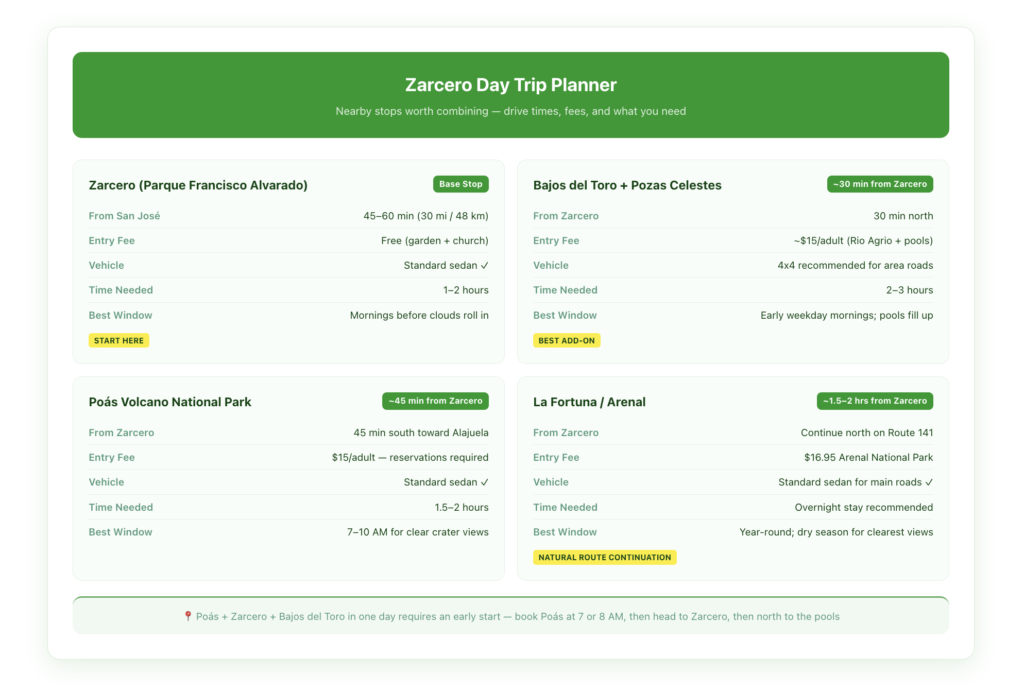
Zarcero makes the most sense as part of a broader day or multi-stop itinerary. Here are the combinations that work well:
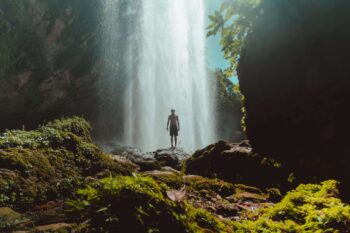
Bajos del Toro + Pozas Celestes (30 minutes from Zarcero) Bajos del Toro is a quiet valley about 30 minutes north of Zarcero, known for waterfalls and some genuinely stunning natural scenery. The star attraction is Pozas Celestes, which is a set of natural swimming pools with vivid blue-green water colored by copper sulfate and calcium carbonate minerals. The main swimmable pool is cold, but on a sunny day, it’s one of the more otherworldly spots in the region.
You’ll access Pozas Celestes through the Rio Agrio Waterfall property (Dino-Land), which charges around $15 per adult and includes access to a 164-feet (50-meter) waterfall and a kitschy dinosaur park. Note that a 4×4 is recommended for the Bajos del Toro area if you plan to explore beyond the main road. Arrive early on weekdays because the pools are popular with locals and can fill up by mid-morning on weekends.
Poás Volcano (45 minutes from Zarcero). Poás Volcano National Park is about 45 minutes south of Zarcero, which is close enough to combine into a single day if you’re strategic about timing. The volcano features one of the world’s largest active crater lakes with that distinctive turquoise color, and the 10-minute paved walk from the parking area makes it one of Costa Rica’s most accessible national parks. Park entry is $15 per adult, and reservations are required in advance through SINAC. Arrive at the 7 AM or 8 AM slot for the best chance of clear crater views before the clouds roll in.
La Fortuna / Arenal (1.5–2 hours from Zarcero). If you’re driving from San José toward Arenal Volcano and La Fortuna, Zarcero is directly on the route. It adds maybe 20 minutes to your overall journey and gives you a proper stop to stretch your legs, walk the gardens, grab some local cheese, and fuel up before the rest of the drive. The road from Zarcero to La Fortuna continues on Route 141 through the mountains, and it’s one of the more scenic approaches to the Arenal region as the road climbs through coffee plantations and occasionally offers views of Poás Volcano on clear days.
Monteverde (2 hours from Zarcero): Zarcero and Monteverde aren’t naturally on the same route, but if you’re building a multi-day Central Valley loop, they complement each other well, as the cool mountain towns offer agricultural heritage and a pace that feels genuinely different from the beach circuit.
What Should You Know Before You Go?
Temperature: Zarcero sits at 5,700 feet (1,736 meters) and averages 60–65°F (15–18°C) year-round. Pack a light jacket or fleece, as it can feel noticeably cool, especially in the mornings and if the clouds roll in. The weather here behaves like Costa Rica’s mountain microclimates because it’s generally clearer in the mornings, with more clouds and occasional light rain in the afternoons.
Parking: Free street parking is available around the park, or use the church parking lot behind the Iglesia de San Rafael for a small donation.
Best time to visit: Any day works, but weekday mornings are quieter. The annual Cheese Festival in July draws larger crowds if that’s your scene.
Cell service: Coverage is generally fine in the town of Zarcero. Bajos del Toro is a different story, as Kolbi is the only reliable carrier in that area, so download offline maps before heading out. Check Waze for road closures or obstacles before beginning your journey.
How long to spend: 1–2 hours covers the gardens, church, a bite to eat, and some roadside shopping. Add 2–3 hours if you’re continuing to Bajos del Toro and Pozas Celestes.
Zarcero isn’t going to compete with the drama of Arenal Volcano or the wildlife density of Manuel Antonio, but that’s not the point of the trip. It’s a 30-minute pause that shows you something genuinely different about Costa Rica, as the town was built around a farmer’s instinct to make something beautiful, sitting in mountains that have been feeding the country for generations.
Costa Rica’s tourism board (ICT) consistently highlights the Central Valley‘s cultural towns as under-visited highlights that reward anyone who takes the scenic route over the express lane. If you have a rental car and you’re driving anywhere near that northern route, stop for an hour at Zacero. It’s the kind of place that makes a good road trip a great one.
For help planning the rest of your Costa Rica driving route, contact us now because we know which roads need a 4×4 and which ones are fine for a sedan.
Frequently Asked Questions
Is Zarcero worth visiting if I’m not a nature person?
Yes, Zarcero’s main attractions are cultural rather than ecological. The topiary garden is genuinely unusual, the church has beautiful interior murals, and the town itself gives you a glimpse of real Costa Rican farming life rather than tourist infrastructure. You don’t need to be into hiking or wildlife to enjoy a visit to the town.
Who created the topiary garden in Zarcero?
The garden was designed and sculpted by Evangelista Blanco, who was commissioned by the municipality in 1964 at age 25. He worked on the garden for decades to create everything from dinosaurs and elephants to a monkey on a motorcycle and geometric arches. His work is ongoing as the sculptures are living plants that require constant tending, and the garden has been maintained by the town since Blanco stepped back from primary caretaking.
Is Zarcero safe for tourists?
Zarcero consistently has one of the lowest crime rates in Costa Rica. The canton has a documented literacy rate of 93% and is one of the more peaceful, welcoming small towns you’ll encounter in the Central Valley. Standard travel awareness applies (don’t leave valuables in your car, and be aware of your surroundings), but the town is very calm.
How does Zarcero’s weather compare to San José’s?
San José sits at about 3,800 feet (1,160 meters) and averages 72–78°F (22–25°C). Zarcero is around 1,900 feet (580 meters) higher, which translates to noticeably cooler temperatures, which are usually 10–15°F (5–8°C) cooler than the capital. It’s refreshingly comfortable in the heat of the dry season and can feel genuinely chilly during the rainy season. Mornings are usually clearer; afternoons sometimes bring light rain or mist.
Can you combine Zarcero with a Poás Volcano visit in one day?
Yes, though you’ll need an early start and advance online reservations for Poás (which are mandatory through the SINAC website). A practical approach: arrive at Poás for the 7 or 8 AM entry, spend 1.5–2 hours at the crater, then drive to Zarcero for a late morning/early lunch stop. From there, you can continue north toward La Fortuna or loop back to San José. The Poás-to-Zarcero drive is about 45 minutes.
What’s near Zarcero for families with kids?
Bajos del Toro and Pozas Celestes make a great family add-on. The Rio Agrio Waterfall property includes a kitschy “Dino-Land” with 25 mechanical dinosaur replicas that children love, plus the actual blue pools for a swim. Zarcero’s own topiary garden is also very kid-friendly; the sculptures are recognizable enough (monkeys, elephants, dinosaurs) to keep them entertained. Combine with a stop for ice cream and local cheese crackers, and you’ve got a solid family day out.