
Last Updated on July 4, 2026
Costa Rica Helicopter Tours: What's Covered
Costa Rica helicopter tours run $200–$600 per person for 25–90 minute scenic flights, most departing from Liberia Airport in Guanacaste. Coastal, volcano, and combination routes reveal hidden beaches and steaming craters. Pair one flight with a rental car and you get Costa Rica from both the ground and the air.
Quick Facts:
- Coastal flights (25–30 min) run $200–$350; volcano routes $350–$500
- Private point-to-point charters start around $1,200–$2,500 and can replace a 3–4 hour drive
- Book ICT-certified operators 2–3 days ahead, earlier over holidays
- Dry season (December–April) brings the clearest skies; sunset flights cost 10–15% more
- Most flights leave near Liberia versus San José, so a car handles the rest
Top 3 Options:
- Coastal tours – Aerial views of Guanacaste’s beaches you can’t get from the road
- Volcano tours – Fly near Rincón de la Vieja’s craters and mud pots
- Private transfers – Skip the mountain switchbacks in about 30 minutes
Most travelers pair a rental car with one strategic flight. Compare it against domestic flights and other worthwhile activities before you book. If you need any help with a Costa Rica car rental, contact us now!
Flying over Costa Rica in a helicopter is the kind of perspective-shifting experience which makes you realize how truly wild this country remains. While most travelers spend hours navigating winding mountain roads or waiting for tour buses, helicopter tours let you see hidden beaches, volcanic craters, and rainforest canopies which you’d otherwise miss.
Helicopter tours in Costa Rica typically range from $200 to $600 per person, depending on duration and route, and scenic coastal flights from Guanacaste’s beaches start at around 30 minutes. Most operators fly out of Liberia or the greater Papagayo Peninsula area, which gives you instant access to some of the country’s most dramatic landscapes. Whether you’re celebrating a special occasion, saving precious vacation hours, or simply want the unforgettable experience of flying past Rincón de la Vieja’s steaming crater, here’s everything you need to know before booking.
Key Takeaways
- Costa Rica helicopter tours range from $200-$600+, depending on duration (30 minutes to 2+ hours) and route complexity
- Guanacaste province offers the most helicopter tour options, with coastal, volcanic, and combination routes available.
- Sunset tours typically cost 10-15% more than daytime flights, but deliver dramatically better photography conditions.
- Private charters and point-to-point transfers can actually save time compared to 4-6 hour drives across mountainous terrain.
- Booking during the dry season (December-April) provides clearer skies and more reliable flying conditions.
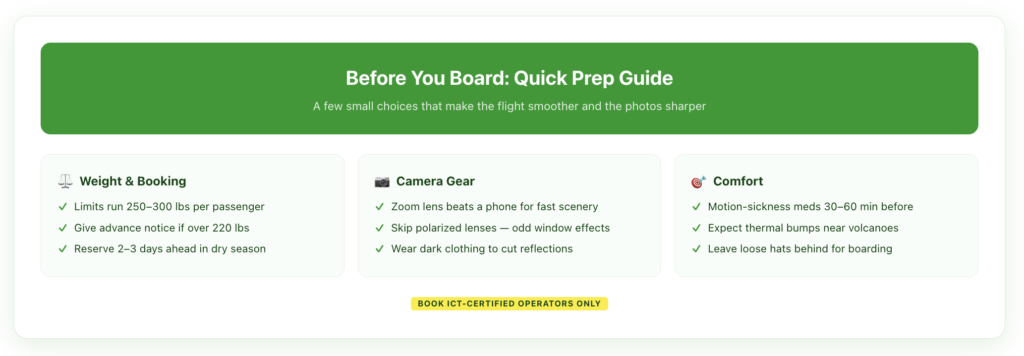
- Weight limits typically cap at 250-300 lbs per passenger, and some operators require advance notice for passengers over 220 lbs.
How Much Does a Helicopter Tour in Costa Rica Actually Cost?
Costa Rica helicopter tours aren’t exactly budget-friendly, but they’re more accessible than most people assume. Here’s what you’re looking at:
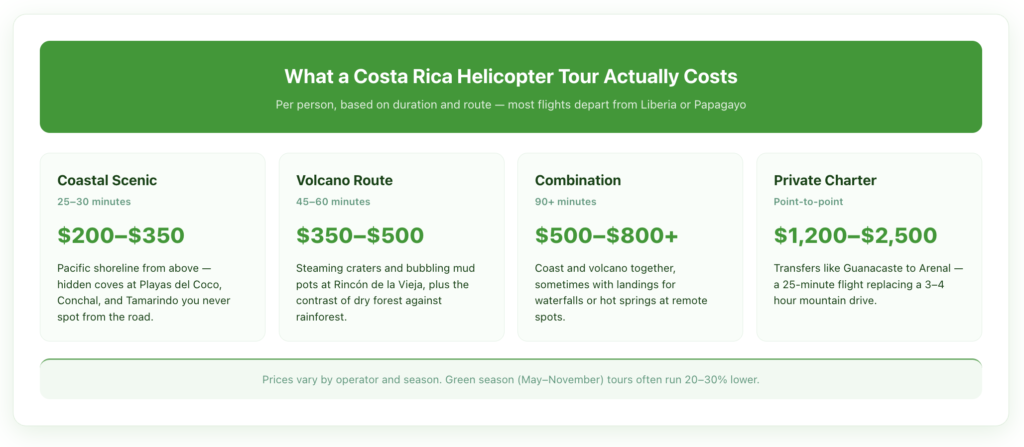
Scenic coastal tours running 25-30 minutes typically cost between $200-$350 per person. These tours fly along the Pacific coastline, giving you aerial views of beaches like Playas del Coco, Hermosa, Ocotal, and the entire Gulf of Papagayo peninsula. You’ll spot hidden white sand coves that don’t appear on most tourist maps.
Volcano tours covering destinations like Rincón de la Vieja or combining coastal and volcanic views run $350-$500 for 45-60 minute flights. Flying close to volcanic craters and steaming fumaroles provides perspectives impossible to achieve any other way.
Extended combination tours lasting 90+ minutes can reach $500-$800+ and might include landings at remote destinations, with combined activities like waterfall tours or hot springs experiences.
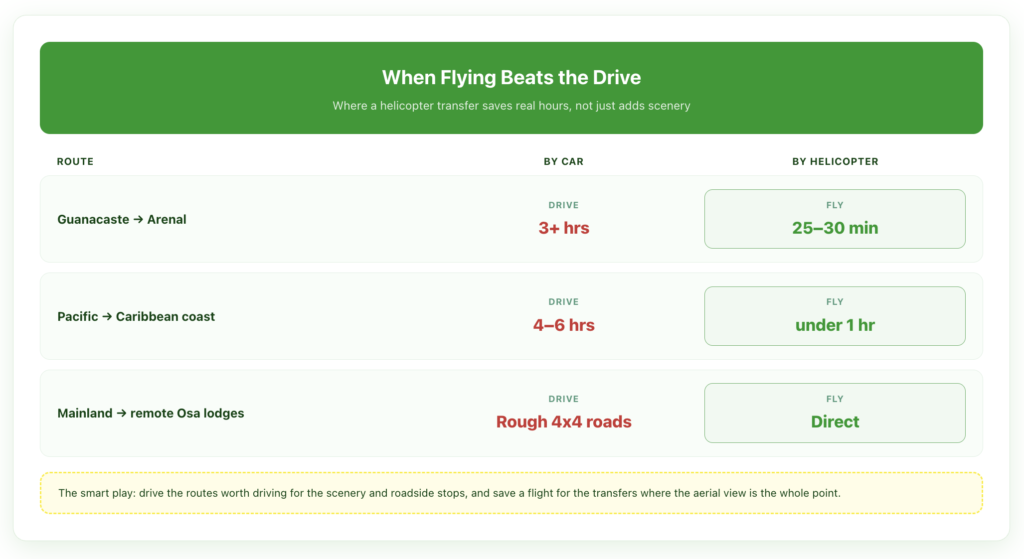
Private charters for point-to-point transfers such as Guanacaste to Arenal start around $1,200-$2,500 depending on distance and aircraft type. While pricey, consider that you’re replacing a 3-4 hour drive with a 25-minute flight while gaining stunning aerial scenery.
The Costa Rica Tourism Board certifies tour operators, and booking with ICT-certified companies ensures proper licensing and safety standards. Most reputable operators include all fees in their quoted prices, but always confirm whether fuel surcharges or landing fees apply.
Are Helicopter Tours in Costa Rica Worth the Money?
This depends entirely on what you value. If your vacation philosophy centers on maximizing unique experiences over budgeting, few activities deliver the same wow-factor-per-minute ratio.
Arguments for splurging:
The perspective is genuinely irreplaceable. Driving through Guanacaste, you’ll see beautiful beaches, but by flying over them, you’ll understand how the coastline curves for miles, spot wildlife from above, and see the dramatic color contrast between tropical dry forest and turquoise water. The time savings can be significant. A helicopter transfer from the Papagayo Peninsula to La Fortuna takes roughly 30 minutes versus 3+ hours of mountain driving. For travelers with limited time, that’s half a day reclaimed for hot springs or volcano hiking.
Arguments for keeping your feet on the ground:
The same money could fund 3-4 full-day guided tours at places like Manuel Antonio National Park or a week of car rental with complete itinerary flexibility.
Some travelers find the experience too brief. Thirty minutes sounds adequate until you’re airborne; then it feels like it ends too quickly, so bear that in mind.
What Can You Actually See From a Costa Rica Helicopter Tour?
The answer varies dramatically based on which route you choose and where you depart from. Here’s what the main tour types include:
What Do Coastal Tours Cover?
Departing from Liberia or the Papagayo area, coastal tours typically sweep along the northern Pacific shoreline. You’ll fly over Bahía Culebra, spot the golden sands of Playa Conchal, see Tamarindo’s famous surf breaks from above, and identify beaches you’d never find from the road.
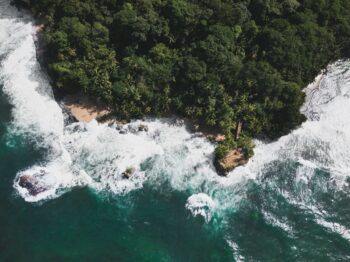
The Guanacaste coastline looks dramatically different from 1,000 feet. The contrast between turquoise water, white sand, and the golden-brown hills of the tropical dry forest creates photography opportunities you simply can’t replicate at ground level. According to the Costa Rica Tourism Board, the Gold Coast earned its nickname from this exact aerial perspective.
Wildlife sighting possibilities include sea turtles (seasonal), manta rays in shallow waters, and pods of dolphins that pilots often circle for better viewing.
What Do Volcano Tours Reveal?
Volcano-focused routes provide access to geological features that ground-based visitors rarely see clearly. Flying near Rincón de la Vieja, which is one of Costa Rica’s most active volcanoes, allows you to peer into steaming craters, spot bubbling mud pots, and understand the scale of volcanic systems that create the country’s famous hot springs.
The contrast between volcanic landscapes and the surrounding rainforest becomes strikingly clear from above. You’ll see how vegetation patterns change based on volcanic soil composition and elevation, which are details that National Geographic notes are crucial for understanding Costa Rica’s incredible biodiversity.
What About Combination and Custom Tours?
Multi-destination tours might include flying over Palo Verde National Park’s wetlands, where crocodiles and thousands of migratory birds congregate. Some operators offer routes extending to Monteverde’s cloud forests or even Arenal Volcano, though longer distances significantly increase costs.
Sunset tours are typically priced 10-15% higher than daytime flights and add golden-hour photography conditions. The Pacific Coast sunsets in Costa Rica are famous for looking even more spectacular when you’re watching the sun drop below the horizon from 800 feet.
Which Helicopter Tour Companies Operate in Costa Rica?
Several reputable operators serve Costa Rica’s helicopter tour market, primarily concentrated in Guanacaste province:
Fly Adventure Air (flyadventureair.com) operates extensively from the Guanacaste region to offer everything from 30-minute coastal tours to full-day expedition packages combining helicopter transport with activities like waterfall rappelling and hot springs.
HeliJet Costa Rica (flyhelijet.com) provides charter services and scenic tours with an emphasis on luxury travel and corporate clients.
Aerotour Costa Rica (aerotour.com) specializes in helicopter charters and transfers, particularly useful for reaching remote destinations that would otherwise require hours of challenging driving.
When selecting an operator, verify their ICT certification and check recent reviews on platforms like TripAdvisor and Reddit. Safety records, aircraft maintenance standards, and pilot experience vary, so don’t choose solely based on price.
What's the Best Time of Year for Helicopter Tours?
Costa Rica’s weather patterns significantly impact helicopter tour quality and reliability:
Dry season (December-April) delivers optimal flying conditions with clear skies, minimal turbulence, and excellent visibility. This is peak tourist season, so book well in advance, particularly during Christmas, New Year’s, and Easter weeks. The landscape appears more golden-brown during the dry season as Guanacaste’s tropical dry forest sheds leaves.
Green season (May-November) brings afternoon rain showers and occasional morning fog, but also lush, vibrant vegetation. Morning flights before 10 AM typically avoid weather issues. Some travelers prefer the green season’s emerald landscapes and 20-30% lower tour prices.
The Costa Rica Meteorological Institute provides regional forecasts that experienced pilots monitor closely. Most operators maintain flexible rebooking policies for weather-related cancellations.
How Should You Prepare for a Helicopter Tour?
Pre-flight preparation maximizes your experience:
Weight considerations: Most helicopters seat 4-6 passengers with weight limits around 250-300 lbs per person. Some operators require advance notice for passengers over 220 lbs to ensure proper weight distribution. Be honest about weight because your safety depends on accurate calculations.
Camera equipment: Bring a camera with a good zoom lens if you’re serious about photography. Smartphone cameras work adequately, but the fast-moving scenery and vibration make professional equipment worthwhile. Polarized sunglasses reduce glare but can create odd effects with helicopter windows.
Clothing: Wear dark, non-reflective clothing to minimize window reflections in photos. The helicopter interior is climate-controlled, but comfortable, casual attire works best. Leave loose hats behind because they won’t survive the rotor wash during boarding.
Motion sickness: If you’re prone to motion sickness, take medication 30-60 minutes before departure. Helicopter flights are generally smoother than small airplane rides, but turbulence occurs, especially near volcanic areas with thermal updrafts.
Booking timing: Reserve at least 2-3 days in advance during the dry season, and earlier during peak holiday weeks. Same-day bookings occasionally work during the green season’s slower periods.
Can Helicopters Replace Driving Between Destinations?
For certain routes, helicopter transfers make genuine practical sense beyond the scenic appeal:
Guanacaste to Arenal: The 3-hour drive through mountains becomes a 25-30 minute flight, and you arrive having already experienced aerial volcano views rather than white-knuckling mountain switchbacks.
Pacific Coast to Caribbean: Crossing Costa Rica by car takes 4-6 hours, depending on the route. Helicopter transfers cut this to under an hour while providing cross-country aerial perspectives that few visitors ever see.
Remote lodge access: Some eco-lodges in places like the Osa Peninsula are significantly easier to reach by helicopter than by the rough roads that require serious 4×4 capability.
That said, driving in Costa Rica remains one of the country’s great pleasures. The road trip experience from San José through mountain passes, past coffee plantations, and into beach towns creates memories that helicopters can’t replicate. The smartest approach? Use ground transportation for the journey itself, and save helicopter flights for destinations where the aerial perspective is the point.
What's the Cheapest Way to Get Around Costa Rica?
While helicopter tours represent the premium end of Costa Rica transportation, budget-conscious travelers have plenty of alternatives for exploring the country:
Rental cars from Vamos Rent-A-Car provide the most flexibility for reaching destinations like Manuel Antonio, Monteverde, and La Fortuna on your own schedule. Daily rates for a reliable 4×4 SUV run $40-80, depending on season—a fraction of helicopter costs and far more practical for multi-day exploration.
Public buses connect major destinations for under $15 per route, though schedules limit flexibility, and journeys take significantly longer than driving yourself.
Shared shuttles between tourist hubs cost $30-60 per person and offer door-to-door convenience without the stress of navigating unfamiliar roads.
Domestic flights via airlines like Sansa provide middle-ground pricing ($80-160 one-way) for longer distances, cutting 4-6 hour drives to 30-45 minute flights, though with stricter luggage limits than driving.
For most Costa Rica itineraries, combining rental car flexibility with one strategic helicopter experience like a sunset coastal tour or volcano flyover delivers the best value balance between practical transportation and once-in-a-lifetime aerial perspectives.
Frequently Asked Questions
How much is a helicopter charter in Costa Rica?
Private helicopter charters in Costa Rica range from $1,200 to $3,500+, depending on distance, aircraft type, and whether the flight is one-way or round-trip. A charter from Guanacaste to Arenal typically runs $1,500-2,000, while longer transfers to the Caribbean coast or Osa Peninsula cost more. Charter pricing usually covers up to 4-6 passengers, making per-person costs more reasonable for groups.
What is the best tour company for Costa Rica?
The “best” tour company depends on your priorities. For helicopter tours specifically, Fly Adventure Air offers the widest range of aerial experiences in Guanacaste. For overall Costa Rica adventure tours, certified ICT operators with strong reviews provide the safest, most reliable experiences. Always verify certification and read recent reviews before booking any tour.
Are there helicopter tours in Costa Rica?
Yes, multiple operators offer helicopter tours primarily from Guanacaste province (near Liberia Airport) and the greater San José area. Tours range from 25-minute coastal scenic flights to multi-hour expedition packages combining aerial sightseeing with ground-based activities. Availability has expanded significantly in recent years as luxury tourism has grown.
How much is a private helicopter per hour?
Hourly helicopter charter rates in Costa Rica typically range from $1,500-$2,500 per hour, depending on aircraft size and configuration. Most scenic tours use smaller helicopters seating 4-6 passengers, while larger aircraft for groups cost more. Some operators offer flat-rate pricing for popular routes rather than hourly billing.
Is it cheaper to charter a plane or a helicopter?
Small aircraft charters are generally 30-50% less expensive than helicopter charters for equivalent distances. However, helicopters offer advantages, including vertical takeoff/landing capability (useful for remote destinations without airstrips), lower minimum altitude flying for better sightseeing, and the ability to hover over points of interest. For pure transportation between airports, small planes win on price; for scenic experiences, helicopters justify their premium.
What is the best fishing month in Costa Rica?
While not directly related to helicopter tours, Costa Rica’s prime offshore fishing runs from December through April during the dry season, with peak marlin and sailfish activity in the Papagayo region. Some helicopter operators offer aerial fish-spotting services for serious anglers, identifying schools and optimal fishing locations from the air before returning to boats.
Can you hire private drivers in Costa Rica?
Yes, private driver services are widely available in Costa Rica, typically charging $150-$300 per day depending on vehicle type and itinerary complexity. This option works well for travelers who want the flexibility of private transportation without driving themselves on challenging Costa Rican roads. However, for most visitors, renting your own vehicle provides better value and complete schedule flexibility.