
Last Updated on July 4, 2026
Whale Watching in Costa Rica: What's Covered
Costa Rica has one of the world’s longest humpback whale seasons, and Uvita’s Marino Ballena National Park is the epicenter. Peak sightings hit August–September and January–February, with activity July–October and December–March. Tours run $75–145 for 2.5–3 hours. A rental car makes those early departures and coastal detours easy.
Quick Facts:
- Two seasons: Southern Hemisphere (Jul–Oct) and Northern Hemisphere (Dec–Mar) humpbacks
- Uvita sits 3.5 hours from San José Airport via paved Route 34 — no 4×4 needed
- Shared tours $75–100; Caño Island combos around $145
- Take anti-nausea meds 30–60 minutes before boarding
- Swimming with whales is prohibited — observation from a boat only
Top 3 Spots:
- Uvita – Highest sighting odds; boats leave from the beach at Marino Ballena
- Drake Bay – Fewer crowds on the Osa Peninsula, reached by boat or small plane
- Manuel Antonio – Occasional peak-season sightings one hour north
Pair your tour with Nauyaca Waterfalls or Dominical. If you need any help with a Costa Rica car rental, contact us now!
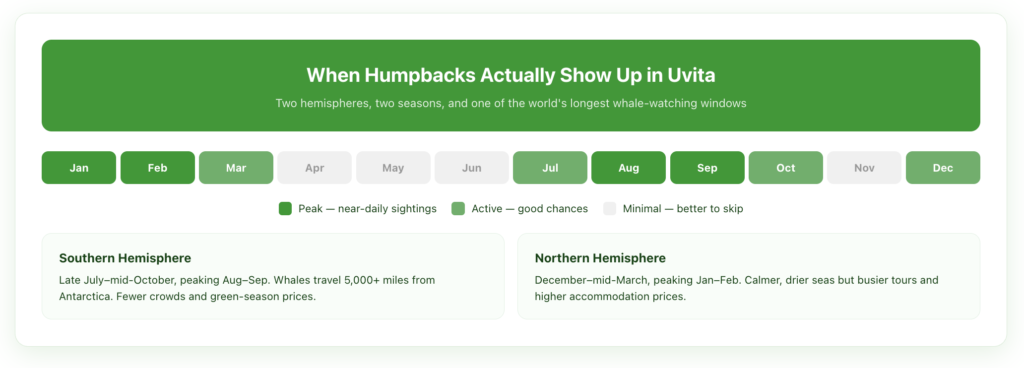
Costa Rica offers one of the longest humpback whale watching seasons in the world, which spans roughly eight months of the year, thanks to migrations from both the Northern and Southern hemispheres. Uvita’s Marino Ballena National Park serves as the country’s whale watching epicenter, where the famous whale tail-shaped sandbar marks prime viewing waters. The best months for sightings are August and September (Southern hemisphere whales) and January through February (Northern hemisphere whales), although you’ll find activity from July through October and December through March.
Having your own vehicle transforms whale watching from a single activity into a full South Pacific coast exploration. You can chase optimal conditions, combine tours with waterfall hikes, and reach early-morning departures without shuttle coordination headaches.
Key Takeaways
- Humpback whales visit Costa Rica from both hemispheres, which creates viewing opportunities from July through October and December through March.
- Uvita delivers the highest concentration of sightings, which makes it Costa Rica’s top whale watching destination.
- August and September offer the most consistent daily sightings from Southern Hemisphere whales.
- Whale watching tours typically run 2.5-3 hours and cost $75-145 per adult, depending on the operator and inclusions.
- Anti-nausea medication is strongly recommended because boats rock significantly on Pacific swells.
- Costa Rica prohibits swimming with whales or dolphins, so expect observation from a boat at a distance only.
Which Whales Can You Actually See in Costa Rica?
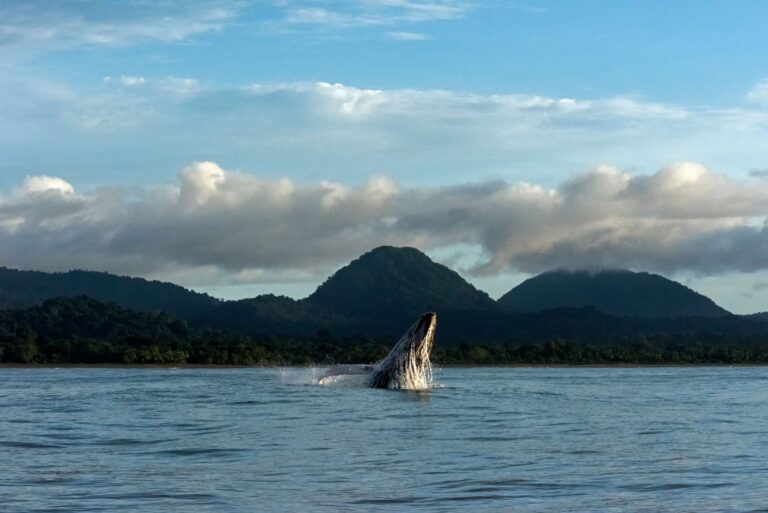
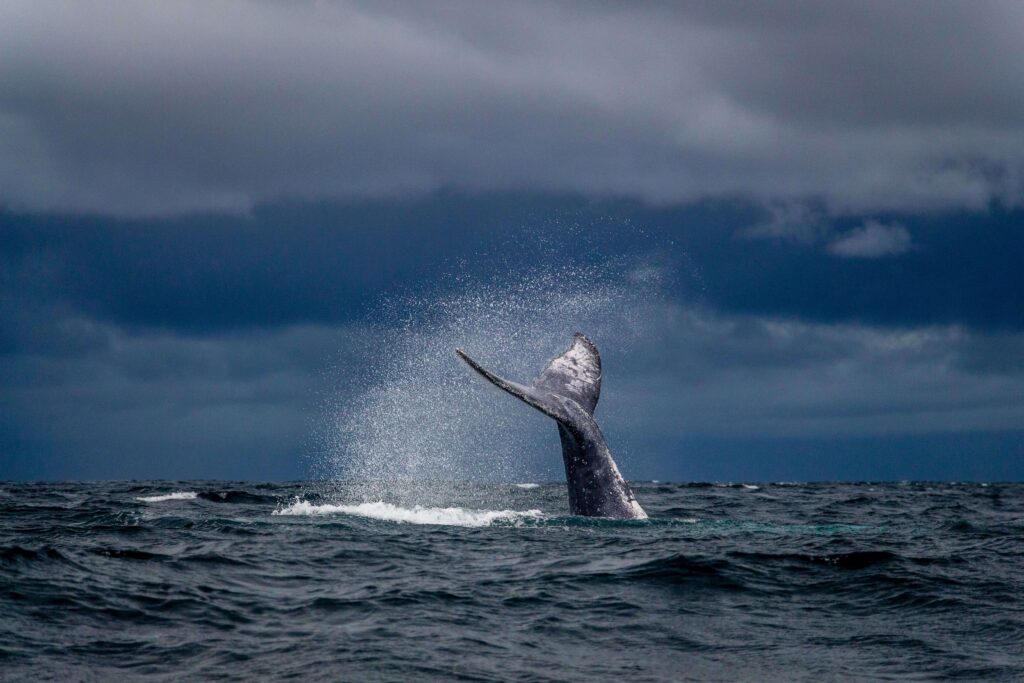
Humpback whales steal the show in Costa Rica, accounting for the vast majority of sightings. These magnificent marine mammals travel thousands of miles to breed and raise calves in Costa Rica’s warm Pacific waters. You’ll often spot mothers with their young, and the calves are particularly playful, splashing fins and practicing breaches while learning from mom.
Beyond humpbacks, you might encounter several other species during your tour. Spotted dolphins and bottlenose dolphins frequent these waters year-round, often approaching boats to ride bow waves. Pilot whales (technically, the second-largest oceanic dolphin) make occasional appearances. Bryde’s whales inhabit deeper offshore waters but stay further from shore. Orcas have been spotted, but sightings remain extremely rare.
The diverse wildlife in Costa Rica’s waters extends beyond cetaceans. During your boat ride, keep your eyes open for sea turtles surfacing to breathe, manta rays gliding beneath the surface, and various seabirds, including frigates and pelicans.
When Is the Best Time for Whale Watching in Costa Rica?
Costa Rica’s whale watching calendar divides into two distinct seasons based on migration patterns.
What’s the Southern Hemisphere Season?
Southern hemisphere humpbacks travel from Antarctica to Costa Rica’s Pacific coast from late July through mid-October. These whales make an incredible 5,000+ mile journey to breed and give birth in warm tropical waters. August and September deliver the most consistent sightings,s and during peak weeks, tour operators report near-daily whale encounters in Uvita.
This season coincides with Costa Rica’s green season, which means that afternoon rain showers are common. Morning tours run rain or shine, and typical conditions remain favorable for boat excursions. The upside? Fewer tourists, lower accommodation prices, and lush green landscapes throughout the South Pacific region.
What About the Northern Hemisphere Season?
Northern hemisphere whales migrate from Alaska and California waters between December and mid-March. January and February typically offer excellent viewing opportunities as whales actively breed and nurse their calves. This season aligns with Costa Rica’s dry season, bringing calmer seas and more predictable weather.
The trade-off? Higher tourist volumes mean busier tours and pricier accommodations throughout Guanacaste and the Pacific coast. Book tours and lodging well in advance if you’re visiting during Christmas, New Year’s, or the dry season peak.
Which Months Should You Avoid?
April through June and November see minimal whale activity as migrations pause between seasons. While dolphins remain year-round and you might get lucky with a random sighting, dedicated whale watching tours during these months often come up empty. Plan your trip around the peak seasons if seeing humpbacks tops your priority list.
Where Are the Best Places to See Whales in Costa Rica?
Why Is Uvita the Top Spot?
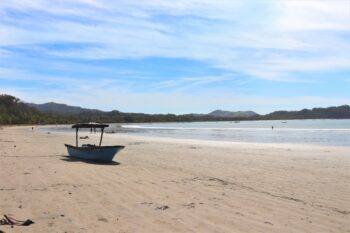
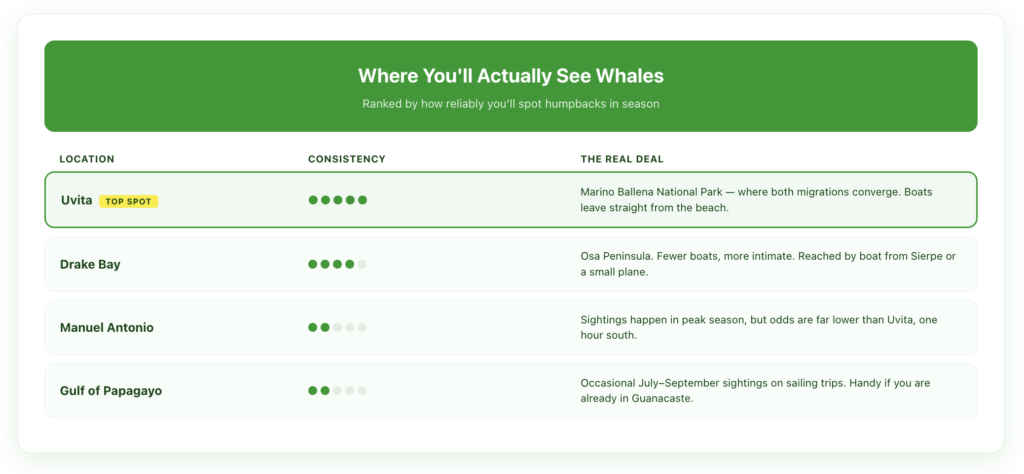
Uvita reigns as Costa Rica’s whale watching capital for good reason. Marino Ballena National Park, which was created specifically to protect humpback whale breeding grounds, offers prime waters where both Northern and Southern hemisphere populations converge. The park’s famous “whale tail” sandbar formation (visible only during low tide) marks the gateway to exceptional marine encounters.
Tour boats depart directly from the beach within the national park, which puts you in whale territory within minutes. During peak season, multiple pods often feed and play in the area simultaneously. Many visitors combine whale watching with exploring the beaches and trails throughout Marino Ballena’s four sectors: Uvita, Colonia, Ballena, and Piñuela.
Getting to Uvita takes about 3.5 hours from San José Airport via the scenic Costanera Sur highway (Route 34). The drive passes through Manuel Antonio and Dominical, which makes it easy to combine destinations. Standard vehicles handle the paved route without issue year-round.
What About Drake Bay and the Osa Peninsula?
Drake Bay serves as an excellent alternative whale watching base, particularly for travelers already exploring Corcovado National Park. Divine Dolphin and other operators run dedicated tours during both seasons, and the more remote location means fewer boats crowd whale pods.
The Golfo Dulce is a deep tropical fjord on the Osa Peninsula’s eastern edge and attracts humpbacks seeking calm waters for nursing. Dolphins frequently accompany whale sightings, and sometimes pods of dozens hunt together. The region’s lower tourism density creates more intimate wildlife encounters compared to heavily visited destinations.
Reaching Drake Bay requires either a boat transfer from Sierpe or a small plane flight, as no roads connect directly to the town. Most travelers pair it with multi-day Corcovado expeditions rather than quick whale watching day trips.
Can You See Whales from Guanacaste?
Yes, though with less consistency than Uvita. The Gulf of Papagayo sees humpback activity primarily from July through September, with occasional sightings in January and February. Boats departing from Playas del Coco and Playa Hermosa may encounter whales during sailing or snorkeling excursions.
Tamarindo and Flamingo offer similar possibilities like sunset sailing tours and catamaran trips, which sometimes spot whales during August and September. These aren’t dedicated whale watching tours, though. If seeing humpbacks is your primary goal, make the drive south to Uvita, where sighting probabilities jump dramatically.
The advantage of Guanacaste? You’re already positioned near Liberia Airport, which is convenient if you want to combine beach time with a potential bonus whale encounter.
What About Manuel Antonio?
Manuel Antonio National Park draws visitors for its incredible wildlife and beaches, and whale sightings do occur during peak season (mainly August and September). However, the probability remains significantly lower than in Uvita, just a one-hour drive south.
If whale watching tops your Costa Rica bucket list, book a tour from Uvita even if you’re staying in Manuel Antonio. The drive along the Costanera Sur highway offers stunning Pacific views, and you can return for a late lunch in Quepos.
Is the Gulf of Nicoya Worth Considering?
The Gulf of Nicoya sits between the Nicoya Peninsula and mainland Costa Rica. During August and September, boats heading to Tortuga Island sometimes encounter humpbacks along the route. It’s not a dedicated whale watching destination, but travelers already planning a Tortuga day trip during those months have a reasonable shot at bonus sightings.
What Should You Expect on a Whale Watching Tour?
How Much Do Tours Cost?
Whale watching tours from Uvita typically run $75-100 per adult for shared boat experiences. Prices usually include park entrance fees, bilingual guides, life jackets, water, and fresh fruit. Some operators bundle snorkeling equipment for reef visits after whale viewing.
Caño Island tours combining whale watching with world-class snorkeling cost around $145 per adult and are a full-day adventure worth considering if you want both experiences.
Private charters run $300-500 for small groups, offering flexibility in timing and routes. These work well for families with young children or photographers wanting optimal positioning.
How Long Are the Tours?
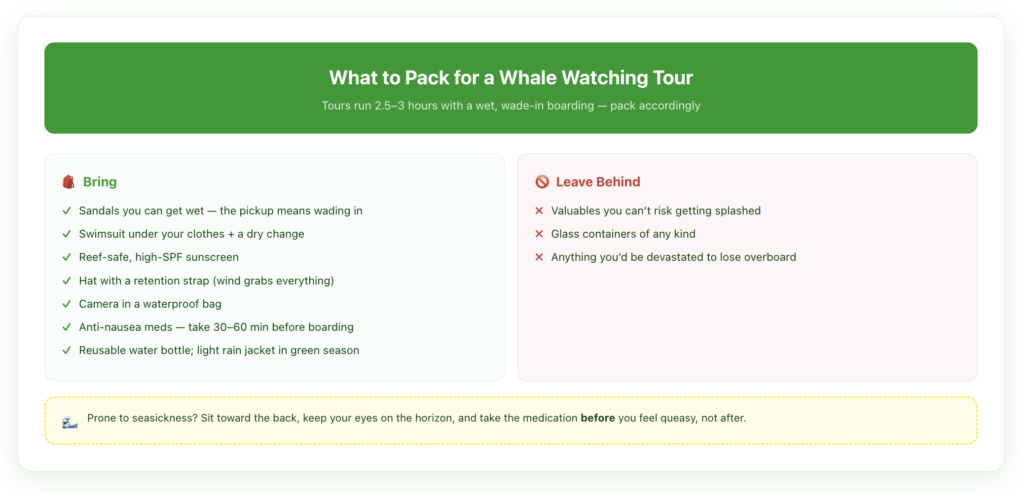
Standard shared tours last 2.5-3 hours. You’ll meet at the tour operator’s office in Uvita around 7:30-8:00 AM, then transfer to the beach for a “wet pickup” where you’ll wade into knee-deep water to board the boat. Expect about 45 minutes of cruising to reach whale territory, then 1-2 hours of observation before returning.
Pack your patience. Wildlife operates on its own schedule, and some days deliver spectacular breaching while others require more searching. Guides communicate via radio to share whale locations between boats.
What Should You Bring?
Essential items:
- Sandals you can get wet (the pickup requires wading)
- Swimsuit worn under clothes
- Change of dry clothes for afterward
- High-SPF reef-safe sunscreen
- Hat with retention strap (wind will grab anything loose)
- Camera in a waterproof bag or case
- Anti-nausea medication (take 30-60 minutes before boarding)
- Reusable water bottle
- Light rain jacket during the green season
Leave behind:
- Valuables you can’t risk getting splashed
- Glass containers
- Anything you’d be devastated to lose overboard
Will You Get Seasick?
The Pacific between Uvita and whale watching grounds can be choppy, particularly during afternoon winds. Even experienced boaters sometimes feel queasy from the constant rocking while trying to spot and photograph whales.
Take motion sickness medication before boarding, not after you start feeling sick. Sit toward the back of the boat where motion is less pronounced. Keep your eyes on the horizon when not actively watching whales. Stay hydrated but avoid heavy meals before departure.
If you’re prone to severe seasickness, consider whether a 2-3 hour boat trip will be enjoyable. Some travelers find the experience uncomfortable enough to dampen an otherwise amazing wildlife encounter.
What Are the Rules for Whale Watching in Costa Rica?
Costa Rica takes marine mammal protection seriously. SINAC regulations prohibit swimming with or touching whales and dolphins. Tour boats must maintain minimum distances from animals and cannot pursue or harass them.
Responsible operators cut engines when whales approach (which they often do out of curiosity) and allow animals to control the interaction. If a tour company promises swimming opportunities or aggressive pursuit of whales, find a different operator because they’re violating wildlife protection laws.
You’ll also encounter rules about not feeding marine animals, keeping noise levels reasonable, and avoiding sudden movements that might startle wildlife. These guidelines exist to protect both animals and the long-term viability of whale watching tourism.
How Should You Plan Your Whale Watching Trip?
Where Should You Stay Near Uvita?
Uvita offers accommodations ranging from budget hostels to boutique jungle lodges. Unlike Manuel Antonio or Tamarindo, you won’t find beachfront mega-resorts as the area maintains a quieter, more authentic vibe.
Look for lodging along the main highway (Route 34) or in the hills above town for the best access to tour meeting points. The area around Bahía Ballena and Playa Hermosa (not to be confused with the Guanacaste beach of the same name) offers scenic options with ocean views.
Two nights minimum allows for one whale watching tour plus exploration of the national park and nearby waterfalls. Three nights give breathing room for weather delays or multiple marine activities.
What Else Can You Do in the Area?
The Uvita region delivers far more than whale watching:
Marino Ballena National Park beaches – Walk to the whale tail formation during low tide, snorkel rocky areas, and enjoy less-crowded Pacific sand
Nauyaca Waterfalls – A two-tiered waterfall about 30 minutes from Uvita, which is reachable by horseback or hiking
Uvita Waterfall – A natural waterslide right in town, popular with locals on weekends
Caño Island snorkeling – Costa Rica’s best underwater visibility at 60-100 feet, with sea turtles and tropical fish
Dominical surfing – Just 20 minutes north, this laid-back surf town offers waves for all skill levels
What’s the Best Itinerary for Whale Watchers?
For travelers prioritizing whale watching within a broader Costa Rica trip, consider this one-week itinerary modification:
Days 1-2: Fly into San José, pick up your rental car, and drive to Uvita (3.5 hours). Settle in, explore the whale tail at low tide.
Day 3: Early morning whale watching tour. Afternoon at Uvita Waterfall or relaxing on the beach.
Day 4: Drive to Manuel Antonio (1 hour). Afternoon exploring Quepos or sunset on the beach.
Day 5: Manuel Antonio National Park for wildlife and beaches.
Days 6-7: Continue north to Arenal or Monteverde, or head to Guanacaste beaches before departure.
For two-week trips, add the Osa Peninsula for Corcovado wildlife, or extend beach time in Guanacaste.
Why Does Having a Rental Car Matter for Whale Watching?
Whale watching tours depart early, and you’ll typically find 7:30-8:00 AM meeting times. Without your own vehicle, you’re dependent on shuttle schedules that may not align, or you’re paying for expensive private transfers from distant accommodations.
A rental car lets you:
- Stay in more affordable lodging outside the Uvita town center while still reaching tours easily
- Combine whale watching day with waterfall visits or beach exploration
- Chase optimal conditions if one location has better weather
- Continue exploring the South Pacific coast at your own pace
- Make the most of early mornings and golden hour evenings
The drive from San José to Uvita via Route 34 requires no 4×4 as it’s a fully paved highway with stunning Pacific Ocean views. Standard vehicles handle the route year-round, though a 4×4 opens more options if you plan to explore remote Osa Peninsula roads or continue to Monteverde afterward.
Frequently Asked Questions
What is the best time to see whales in Costa Rica?
August and September offer the most consistent humpback whale sightings, with near-daily encounters during peak weeks in Uvita. January and February provide the second-best viewing opportunities during the Northern Hemisphere migration. Both seasons deliver excellent chances, although August-September edges ahead for sheer volume of activity.
Where to whale watch in Costa Rica?
Uvita’s Marino Ballena National Park stands as Costa Rica’s premier whale watching destination, offering the highest sighting probability thanks to its position where both migration routes converge. Drake Bay on the Osa Peninsula provides an excellent alternative with fewer crowds. The Gulf of Papagayo and waters off Tamarindo see occasional sightings during July-September, but with lower consistency.
What’s the best month for whale watching?
September ranks as the single best month for whale watching in Costa Rica. Southern hemisphere humpbacks reach peak numbers, weather conditions typically cooperate for boat excursions, and the annual Whale Festival in Uvita celebrates the season. January follows as the second-best option during the Northern Hemisphere migration peak.
Is seasickness common on whale watching tours?
Yes, many passengers experience some degree of motion discomfort on whale watching boats. The Pacific Ocean between shore and whale territory can be choppy, and boats rock continuously while stopped for observation. Taking anti-nausea medication 30-60 minutes before boarding significantly helps. Sitting toward the boat’s rear and keeping eyes on the horizon also reduces symptoms.
How many days is enough in Costa Rica for whale watching?
Plan at least two full days in the Uvita area so you can spend one whale watching and have another as a buffer for weather or to explore Marino Ballena National Park. Three days allow for both whale watching and Caño Island snorkeling, plus time to visit local waterfalls. If whale watching is your primary Costa Rica goal, timing your entire trip during August-September or January-February maximizes success.
What is the number one tourist destination in Costa Rica?
Manuel Antonio National Park draws the most visitors thanks to its accessible wildlife viewing, beautiful beaches, and proximity to San José. However, for whale watching specifically, Uvita surpasses all other destinations in Costa Rica, which is why the area has earned recognition as one of the world’s top ten whale watching locations.
Is it cheaper to travel with a tour company?
For whale watching specifically, organized tours are your only option since independent boat rentals for whale pursuit aren’t available. However, having your own rental car typically costs less than booking shuttles between destinations when you factor in flexibility and the ability to share costs among travel companions. The freedom to explore multiple attractions daily often makes car rental the more economical choice for overall trip transportation.
How much do whale watching tours cost in Costa Rica?
Shared whale watching tours from Uvita run $75-100 per adult, including park fees, guide, and basic refreshments. Premium tours combining whale watching with Caño Island snorkeling cost around $145 per person. Private charters for small groups range from $300-500 total, depending on boat size and duration.