
Last Updated on October 31, 2025
Cahuita National Park: What's Covered
Cahuita National Park on Costa Rica’s Caribbean coast combines 5 miles (8 km) of coastal jungle trail with reef snorkeling — all at one of the country’s most accessible parks. Kelly Creek entrance is donation-based; Puerto Vargas charges $5.65. The 3.5-hour drive from San José via Route 32 is fully paved and requires no 4WD.
Quick Facts:
- Hours: 8 AM–4 PM; Punta Cahuita closes at 2 PM, last entry 3:30 PM
- Snorkeling requires a certified guide — personal gear not allowed, bags checked
- No single-use plastics inside the park — enforced at entry
- Best reef visibility: February–April and September–October
- Standard vehicle works fine — no 4WD needed
Top Experiences:
- Punta Cahuita hike – 1.9 miles (3 km) from Kelly Creek to the park’s best swimming beach and snorkel access point
- Guided reef snorkel tour – $30–60/person by boat to Costa Rica’s largest Caribbean coral reef; gear included
- Wildlife trail – Howler monkeys, three-toed sloths, capuchin monkeys, and 125+ bird species in the coastal forest
- Cahuita town – Authentic Afro-Caribbean village steps from Kelly Creek entrance
Driving yourself lets you reach both entrances, day-trip to Puerto Viejo and Manzanillo, and explore the coast on your own schedule.
If you need any help with a Costa Rica car rental, contact us now!
Cahuita National Park gives you something genuinely rare — rainforest hiking and Caribbean reef snorkeling in the same morning, at one of Costa Rica’s most accessible and least crowded national parks. Located on the southern Caribbean coast near the small town of Cahuita, this 2,732-acre (1,105-hectare) park protects Costa Rica’s largest coral reef alongside dense coastal jungle. Howler monkeys hang in the canopy, three-toed sloths doze in cecropia trees, and the main entrance operates entirely on donations. If you’re already planning time on the Caribbean coast, skipping Cahuita would be a real mistake.
Key Takeaways
- Cahuita combines coastal rainforest hiking with Caribbean reef snorkeling in one location.
- Kelly Creek entrance accepts donations (suggested $5); Puerto Vargas charges $5.65 fixed fee.
- The full trail is 5 miles (8 km) one-way — most visitors do the 1.9-mile (3 km) out-and-back to Punta Cahuita.
- Snorkeling the reef requires a certified guide — you cannot bring your own gear, and bags are checked at entry.
- No single-use plastics allowed inside the park — bring reusable containers.
- Best snorkeling visibility: February–April and September–October.
- Howler monkeys, three-toed sloths, capuchin monkeys, caimans, and 125+ bird species are regularly spotted.
- Standard vehicles are fine — no 4WD needed for either entrance.
What Makes Cahuita Different from Other Costa Rica Parks?
Most first-timers head straight to the Pacific side, which leaves Cahuita refreshingly under the radar. The park protects Costa Rica’s largest coral reef — 35 coral species and over 500 fish species across roughly 22,400 marine acres. While you’re hiking through the jungle watching for sloths, you’re walking parallel to underwater formations still recovering from a 1991 earthquake that lifted sections of the reef by about 10 feet (3 meters) and exposed coral to the air. The reef has been regenerating since, and guided snorkel tours confirm there’s genuinely plenty worth seeing.
The ecosystem looks and feels completely different from Pacific coast parks like Manuel Antonio. The Caribbean’s year-round rainfall creates denser vegetation, the beaches are whiter and quieter, and the Afro-Caribbean cultural influence shapes everything from the pace of life to what’s on the menu in town. Cahuita draws a fraction of the crowds you’d find at Manuel Antonio on a Saturday, which is half the reason to come.
Cahuita is also uniquely co-managed between the local community and SINAC, Costa Rica’s national park service. Your donation to Kelly Creek goes directly to park maintenance and community members who help run it — a model that doesn’t exist anywhere else in the Costa Rican park system.
Kelly Creek or Puerto Vargas — Which Entrance Should You Use?
The two entrances connect to the same coastal trail but serve different purposes.
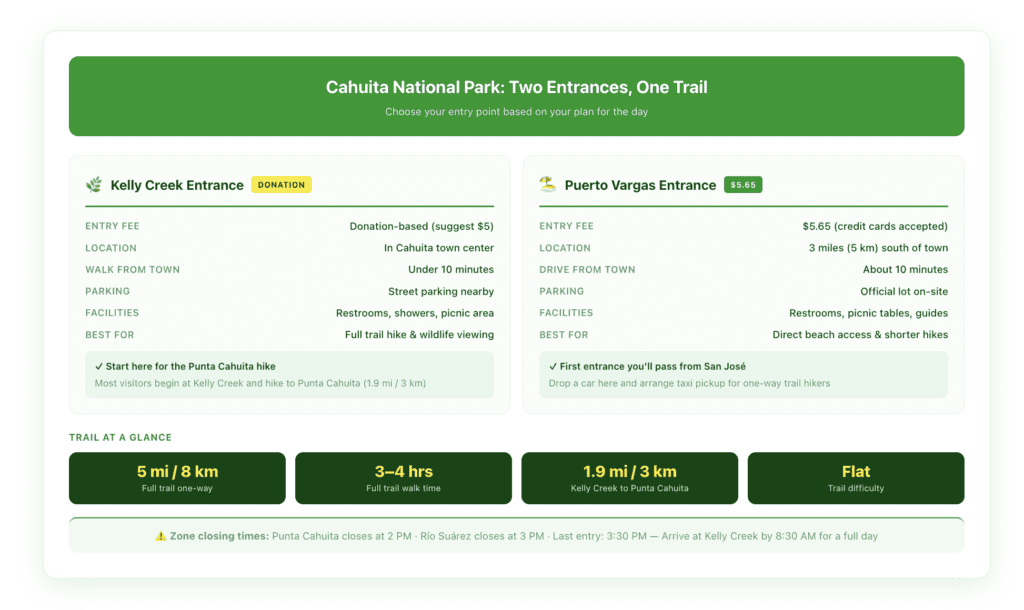
Kelly Creek Entrance sits right in Cahuita town — walkable from most hotels in under 10 minutes. Entry is by donation only (suggested $5), and you decide what you pay. This is where most visitors start because it’s the natural launch point for the full trail and the hike out to Punta Cahuita. There are restrooms, showers, picnic seating, and a ranger station near the entrance. If hiking and wildlife-watching are your plan, start here.
Puerto Vargas Entrance sits 3 miles (5 km) south of town — about a 10-minute drive. This is the official SINAC-managed entrance with a fixed $5.65 fee (credit cards accepted). It has a proper parking lot, clean restrooms, picnic tables, and a ranger station where local guides are available. Use Puerto Vargas if you want direct beach access, shorter hikes, or if you’re leaving a second vehicle here as a trail shuttle. When driving south from San José on Route 36, Puerto Vargas is the first entrance you’ll pass.
The practical call: If you’re hiking the full 5-mile (8 km) trail one-way, arrange a taxi pickup at Puerto Vargas before you leave Kelly Creek — $10–15 and well worth it. Don’t assume you can flag one down when you’re tired and ready to leave.
What Park Rules Do You Actually Need to Know?
A few rules catch first-timers off guard. Knowing them before you show up saves real frustration.
Snorkeling requires a certified guide — no exceptions. You cannot bring your own snorkel equipment into the park. Bags are physically checked at the entrance. This rule exists to protect the remaining reef from contact damage. Guided snorkeling tours run $30–60 per person, depart by boat from near Kelly Creek, take you to designated reef areas around Punta Cahuita, and include all gear. Tours typically combine about an hour of snorkeling with optional guided trail time back through the park.
No single-use plastics inside the park. This is enforced at entry. Bring reusable containers for snacks and lunch — there is nothing for sale once you’re on the trail.
Zone closing times vary. General park hours are 8 AM to 4 PM, but Punta Cahuita closes at 2 PM, Río Suárez closes at 3 PM, and the last entry across all sectors is 3:30 PM. Plan to start no later than 8:30 AM if you’re doing a full day.
Green flag zones are no-swim areas. Beach sections marked with banderas verdes (green flags) are protected marine zones — swimming is not allowed. The safest, calmest swimming in the park is at Punta Cahuita, sheltered naturally by the reef. Never swim near river mouths or mangrove channels — caimans are present, and warning signs throughout the park are not decorative.
What Wildlife Will You Actually See?
Cahuita delivers on wildlife without demanding a pre-dawn start. The coastal forest stays active through mid-morning, which is more forgiving than parks where sightings crash after 9 AM.
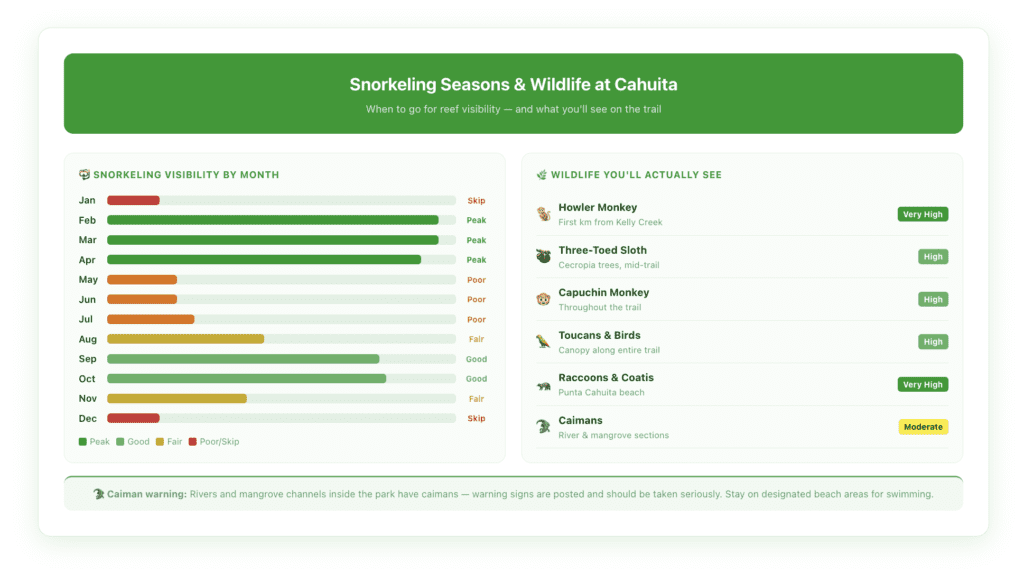
Howler monkeys are the park’s constant soundtrack — you’ll hear their deep, resonant roar long before you spot them. Watch the canopy along the first kilometer of trail from Kelly Creek. Troops move slowly, which makes photography much easier than with the hyperactive capuchins. Look for fresh droppings on the path — the troop is usually directly overhead.
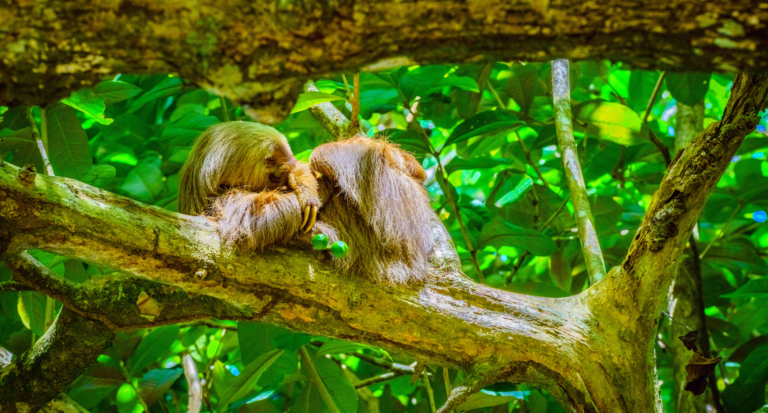
Three-toed sloths appear more often than you’d expect. Scan cecropia trees — pale trunks with large star-shaped leaves — roughly 30–60 minutes into the trail. Sloths feed almost exclusively on cecropia leaves, so learning to identify the tree dramatically improves your odds. They’re surprisingly active during light rain, so a drizzly morning doesn’t mean no sloths.
White-faced capuchin monkeys travel in fast-moving troops of 10–20. They’re curious about humans and will approach the trail. Keep all food locked inside your pack — they’ve worked out zippers and loose pockets.
Raccoons and coatis patrol Punta Cahuita beach and approach confidently. Don’t feed them. It causes aggression toward future visitors and disrupts foraging patterns in ways that genuinely harm the animals long-term.
The bird diversity here exceeds 125 species, including toucans, green herons, kingfishers, and boat-billed herons. For serious Caribbean coast birding, the Manzanillo Wildlife Refuge, 15 miles (24 km) south, adds another strong wildlife zone if you want to extend the day.
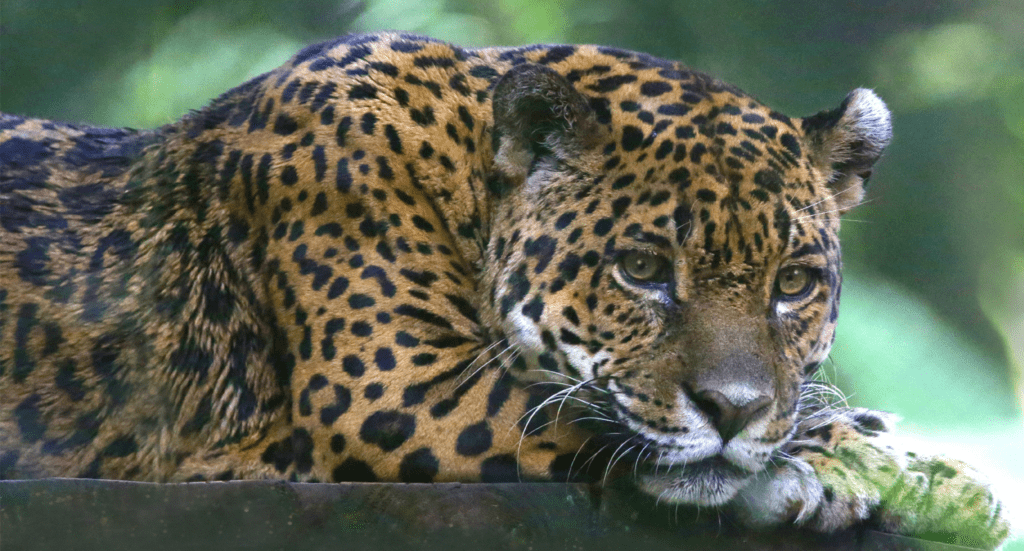
On jaguars: Jaguars live in the broader Talamanca corridor connected to the park, but actual sightings inside Cahuita are extremely rare. Don’t build your visit around that expectation — but know they’re part of the larger ecosystem.
On crocodiles and caimans: Caimans are actively present in the park’s rivers and mangrove sections. The warning signs near waterways are serious. Stick to designated beach areas for swimming and treat river channels as off-limits regardless of how shallow they appear.
When Is Snorkeling at Cahuita Actually Worth It?
The Caribbean coast doesn’t follow the Pacific’s predictable weather logic, which catches a lot of visitors off guard. Costa Rica’s Caribbean weather patterns operate almost inversely to the Pacific — which is good news if you time it correctly.
February through April is the most consistent window — typically 15–30 feet (5–9 meters) of visibility. Less rainfall and calmer seas create ideal conditions for seeing brain corals, elkhorn corals, sea fans, and the 500+ fish species recorded on the reef. If snorkeling is the priority, plan your visit here.
September and October are the Caribbean’s unofficial dry season. While the Pacific coast gets hammered by rain, the southern Caribbean typically sees sunny skies and calm water. Visibility drops slightly compared to February–April, but crowds drop significantly too. The green season timing makes this a smart window for budget travelers who want real snorkeling without peak-season competition.
Avoid snorkeling from May through August and December through January. Rough seas and sediment runoff reduce visibility to just a few feet. Hiking and wildlife-watching are still excellent during these windows — just don’t plan around reef time.
Even in ideal conditions, Caribbean reef visibility differs from Pacific or island snorkeling. Tours get cancelled due to sea conditions — ask the operator about current conditions before paying, not after.
How Long Does the Trail Actually Take?
The full 5-mile (8 km) trail from Kelly Creek to Puerto Vargas takes 3–4 hours one-way at a steady pace. Add wildlife stops, a swim at Punta Cahuita, and a snorkel tour, and you’re looking at a 6–7 hour full-day experience.
Most visitors do the out-and-back to Punta Cahuita — 1.9 miles (3 km) each way from Kelly Creek, about 90 minutes walking in. This covers the park’s best wildlife corridor, ends at the best swimming beach in the park, and keeps you moving before the 2 PM zone closure. That creates a manageable 4–5 hour half-day, hitting all the highlights.
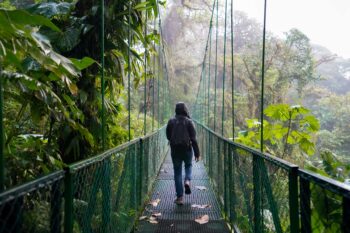
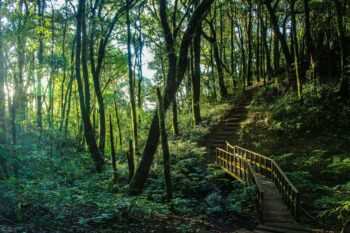
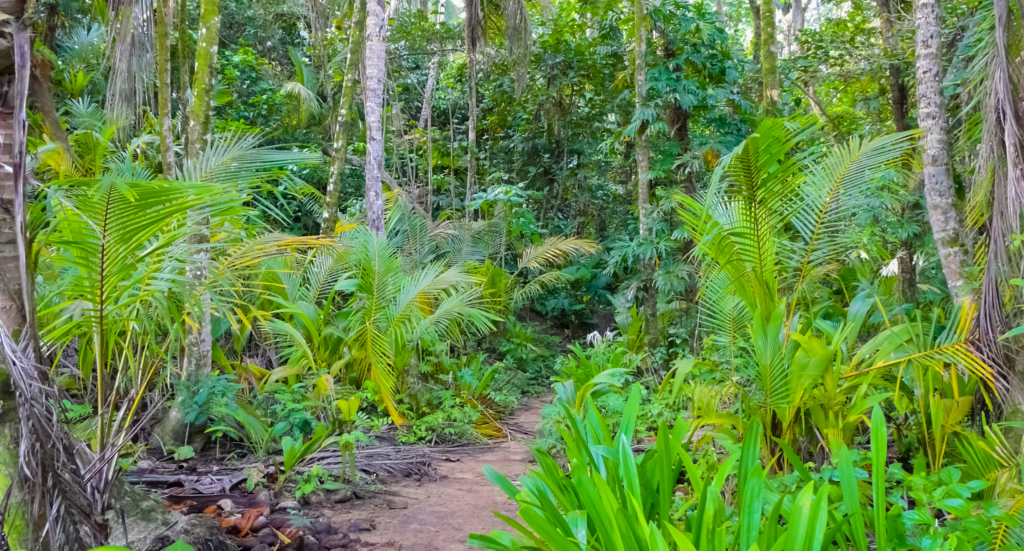
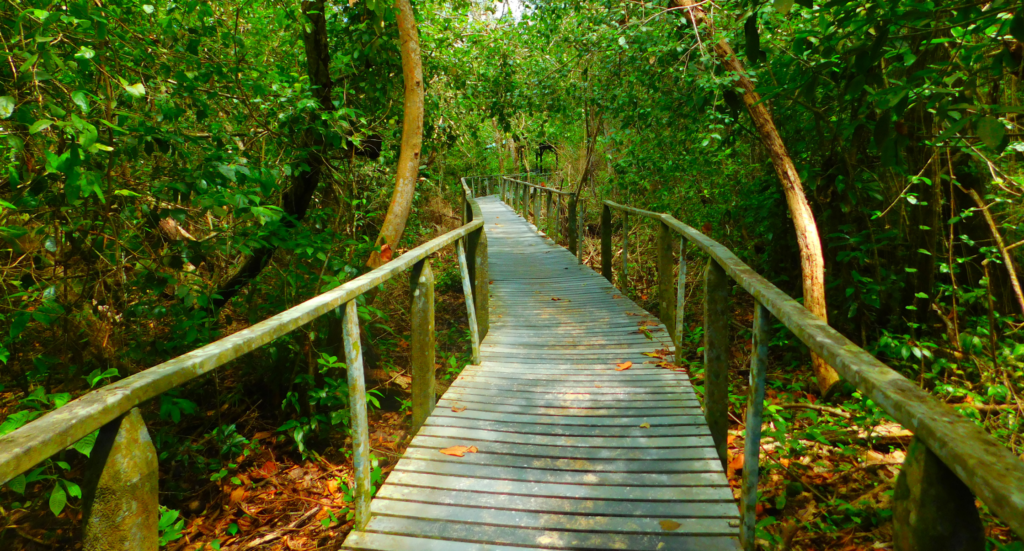
The trail is flat throughout — this is not technical hiking. The path alternates between packed sand, dirt, and occasional boardwalks over wetland sections. After heavy rain, some parts get muddy and slippery. Flip-flops don’t work here — wear shoes with traction. Families with kids 8 and older handle it well with built-in beach breaks. Temperatures run high 80s–low 90s°F (29–34°C) year-round with high humidity. The heat wears you down faster than the terrain does — worth taking seriously when packing water.
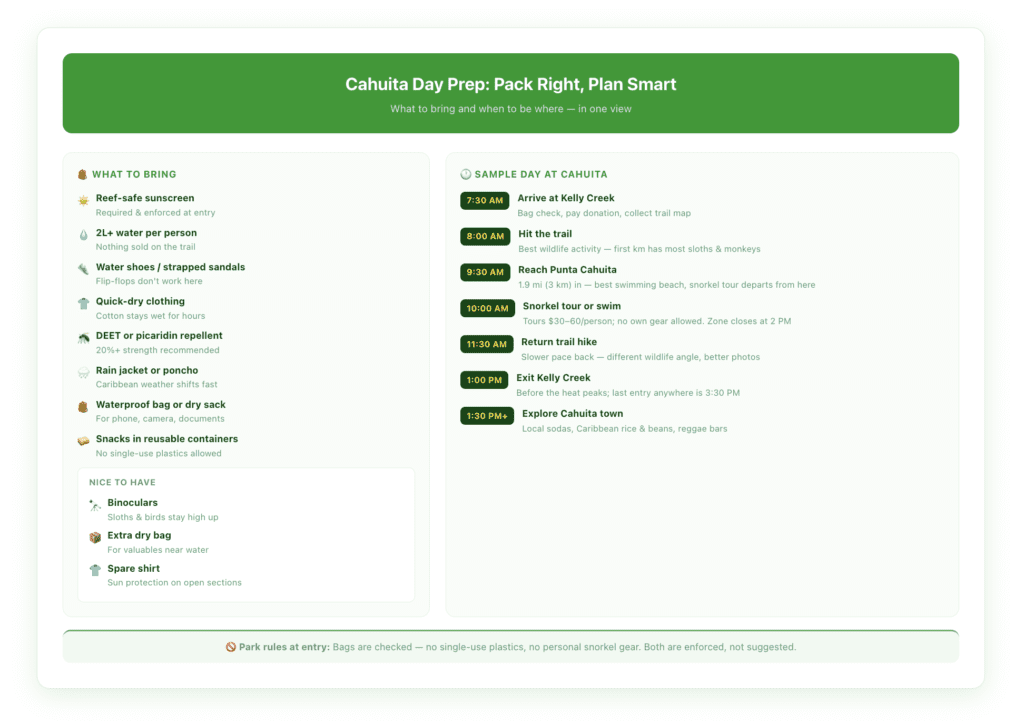
What Should You Pack for Cahuita?
Caribbean weather is unpredictable. Unlike the Pacific, where mornings tend to stay dry even in the rainy season, conditions here can shift at any hour.
Must bring:
- Reef-safe sunscreen — required inside the park and verified at entry
- At least 2 liters (68 fl oz) of water per person — nothing is sold on the trail
- Water shoes or sandals with heel straps — for reef and beach sections
- Quick-dry clothing — cotton stays wet for hours in Caribbean humidity
- Insect repellent with 20%+ DEET or picaridin
- Light rain jacket or packable poncho — even dry-season mornings get surprise showers
- Waterproof bag or dry sack for your phone and camera
- Snacks and lunch in reusable containers — no single-use plastics allowed
Worth bringing:
- Binoculars — many sloths and birds stay high in the canopy
- Small dry bag for documents and valuables near water
How Do You Get to Cahuita?
Cahuita sits 3.5 hours from San José via Route 32 through Braulio Carrillo — one of Costa Rica’s most dramatic drives, climbing through cloud forest then descending sharply into the Caribbean lowlands. The entire road is paved and doesn’t require 4WD. After reaching Limón, turn south on Route 36 for the final 45 minutes to Cahuita. Cell coverage gets spotty on Route 36 — download offline maps and confirm your address before leaving Limón.
From Liberia (LIR), you’re looking at 6–7 hours — this is a destination for travelers already spending multiple days on the Caribbean coast, not a day trip from Guanacaste.
Having your own vehicle makes a real difference here. Beyond the park itself, you can combine Cahuita with Puerto Viejo (10 miles / 16 km south), the Manzanillo Wildlife Refuge (15 miles / 24 km south), and the Sloth Sanctuary (19 miles / 30 km north on Route 36). Driving on the Caribbean coast is genuinely easy compared to mountain routes — paved roads, lighter traffic, no 4WD required in standard conditions. The ability to move between both park entrances on your own schedule is hard to replicate on public shuttles.
Where Should You Base Yourself Near the Park?
Cahuita town is the most convenient base — the Kelly Creek entrance is under a 10-minute walk from most accommodations. The village has an authentic Caribbean atmosphere with no resort chains: reggae from open-air sodas, coconut rice and beans, and a pace that drops noticeably compared to Pacific coast towns. Budget cabins run $30–50 per night; boutique hotels with beach access run $100–150. Book 2–3 months ahead for December through April.
Puerto Viejo (10 miles / 16 km south) gives you more restaurant variety, nightlife, and tour operators, with Cahuita just a 15-minute drive. It’s a legitimate alternative if you want more evening options. Your call on where to stay on the Caribbean coast depends on whether you’re optimizing for park proximity or social options — either works with a car.
Is Cahuita Safe for Tourists?
Safety in Cahuita is generally good. The town and national park both see low crime compared to Costa Rica’s more heavily touristed areas. Standard precautions apply: don’t leave valuables visible in a parked vehicle at either park entrance, keep phones secured on the trail, and avoid isolated beach areas after dark. Cahuita is quieter and more local-feeling than Puerto Viejo, which contributes to the relaxed atmosphere overall.
The Afro-Caribbean communities along this coast have distinct cultural traditions shaped by Jamaican and West African heritage — different in feel from the Central Valley or Pacific coast towns. Supporting local businesses and understanding that the relaxed pace is intentional goes a long way toward a genuinely good experience here.
Ready to Head to the Caribbean?
Cahuita delivers something you won’t find at Manuel Antonio or Tortuguero — reef snorkeling, uncrowded forest trails, and authentic Caribbean culture all in one spot. The 1.9-mile (3 km) out-and-back to Punta Cahuita covers the park’s best wildlife corridor and ends at the best swimming beach, all before the zone closes at 2 PM. Check snorkel tour conditions before booking, bring your own water and food, and leave time to explore Cahuita town after the hike. The Route 32 drive from San José through Braulio Carrillo is itself one of Costa Rica’s great scenic drives — a solid reason to drive yourself rather than take a shuttle.
Frequently Asked Questions
Is Cahuita, Costa Rica, worth visiting?
Yes — especially if you want a Caribbean experience without Pacific-side crowds. The donation entrance, reliable wildlife sightings, flat accessible trail, and genuine coral reef snorkeling make this one of Costa Rica’s best-value park visits. It’s a clear must-do if you’re already in the region. The 3.5-hour drive from San José is harder to justify as a standalone trip but easy to build into any Caribbean itinerary of two or more days.
Do you need a guide at Cahuita National Park?
You don’t need a guide to hike the trail — the coastal path is straightforward. But snorkeling the reef requires a certified guide (your own gear is not allowed), and a local guide significantly improves wildlife spotting success on the trail. Guides are available at the Kelly Creek entrance for $20–30 per person for a walk. Going solo on the trail is perfectly fine for most visitors.
Can you swim in Cahuita, Costa Rica?
Yes, in designated areas. Beach sections marked with green flags (banderas verdes) are protected marine zones where swimming is prohibited. The calmest, safest swimming in the park is at Punta Cahuita, sheltered by the reef — the park’s best beach. Never swim in or near river mouths or mangrove channels; caimans are present, and warning signs are posted throughout the park.
Are there jaguars in Cahuita National Park?
Jaguars live in the Talamanca mountain corridor connected to the park, but sightings inside Cahuita itself are extremely rare. Don’t plan your visit around this expectation. What you will reliably see are sloths, howler monkeys, capuchin monkeys, coatis, and a wide range of birds.
Are there crocodiles in Cahuita?
The rivers and mangrove sections inside the park are home to caimans — a crocodilian species. Warning signs are posted throughout the park near waterways, and they’re serious. Stay in designated swimming areas on the beach and treat river channels as off-limits regardless of how shallow they appear.
How long do you need in Cahuita National Park?
Plan 4–5 hours minimum for an out-and-back hike to Punta Cahuita from Kelly Creek. If you’re adding a snorkeling tour, budget 6–7 hours for a full day. The full 5-mile (8 km) trail one-way takes 3–4 hours without stops. Most people find a half-day hike plus beach time hits all the park’s highlights without overdoing it in the Caribbean heat.
Is Cahuita or Puerto Viejo better for a base?
Cahuita wins on park proximity — Kelly Creek is a 10-minute walk from most hotels, and the town has a quieter, more local feel. Puerto Viejo (10 miles / 16 km south) has more restaurant variety and nightlife, with the park just a 15-minute drive away. Choose Cahuita if the park is your main focus. Choose Puerto Viejo if you want more options in the evenings.