
Last Updated on January 6, 2026
Cascada El Pavon: What's Covered
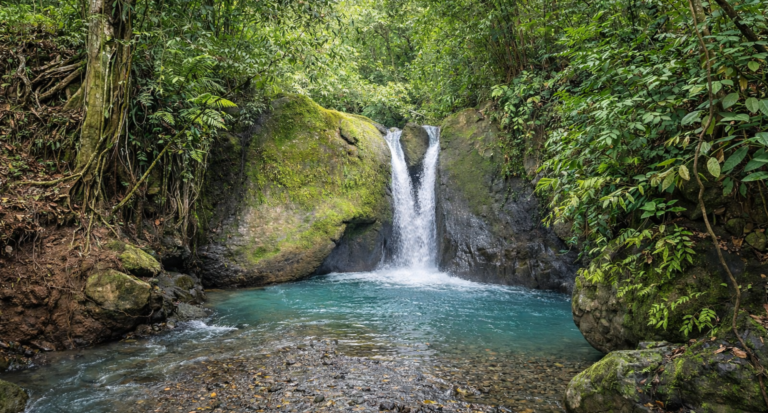
Cascada El Pavon is one of those Costa Rica waterfalls that most visitors drive right past without knowing it exists. Tucked away on a back road near Ojochal in the Costa Ballena region, this small but charming cascade drops into a natural swimming pool where locals gather on weekends to cool off from the tropical heat. What makes El Pavon special isn’t its size—it’s actually smaller than many Costa Rica waterfalls. The magic lies in a massive boulder wedged right in the middle of the falls, splitting the water as it tumbles down a smooth rock chute into the pool below. There’s no entrance fee, no crowds of tourists, and no complicated logistics—just a short walk from the road to a refreshing dip in the jungle. Located near Ojochal on Route 34, about 4 hours from San José and 20 minutes from Uvita, with free entrance and super easy trail requiring just a few minutes down dirt steps. Swimming allowed in deep pool, best for travelers wanting authentic local experience away from tourist crowds.
Quick Facts
- Location: Near Ojochal on Route 34, Puntarenas Province—20 min from Uvita, 35 min from Dominical, 1h 15min from Manuel Antonio
- Cost: Free entrance, no tickets required—park along roadside (don’t leave valuables visible)
- Trail: Few minutes on short dirt path with natural steps, can get slippery when wet but not challenging
- Swimming: Yes, pool deep enough for refreshing swim; small fish visible with snorkel; don’t jump from top—pool not deep enough
- Access Road: 4 km gravel road from Route 34 turnoff—standard car works dry season, 4×4 more comfortable green season
- Best Time: Weekday mornings for solitude; dry season (December-April) for clearest water; locals visit Saturday afternoons
- Nearby Dining: Tilapia El Pavon restaurant (1 km before falls)—catch your own tilapia from pond, excellent fried yucca
Top 5 Cascada El Pavon Tips
- Visit Weekday Mornings for Private Experience – Popular with local families especially January-February school summer break and Saturday afternoons; early weekday arrivals give you peaceful jungle pool before crowds and heat—better photo light too
- Bring Everything Since Zero Facilities – No ticket booth, bathrooms, or vendors; pack swimsuit (wear under clothes), towel, water, snacks, sandals/water shoes for slippery rocks, sunscreen, bug spray, waterproof bag for phone—nearest services 1 km at Tilapia El Pavon restaurant
- Don’t Jump from Top Rock – Large boulder splitting waterfall makes iconic photo spot from above but pool not deep enough for jumping—wading downstream from falls and sitting on rocks safer for enjoying river
- Combine with Costa Ballena Activities – Morning waterfall stop pairs with Uvita whale watching at Marino Ballena (20 min), Nauyaca Waterfalls near Dominical (35 min) for more dramatic cascade, Dominical surf scene and sunsets—perfect South Pacific day
- Time Visit Around Seasonal Conditions – Late dry season (March-April) or early green season (May-June) balances good waterflow with calm swimming; September-November heaviest rains may create intense overflow limiting comfortable swimming
Cascada El Pavon offers genuine local experiences perfect for travelers exploring Costa Rica’s South Pacific coast. The waterfall makes excellent morning stop between destinations, making it valuable for beach-and-nature combinations. Many travelers combine the visit with nearby Marino Ballena National Park whale watching, Nauyaca Waterfalls hiking, Dominical surfing, or Manuel Antonio wildlife. For building comprehensive itineraries, check our one-week and two-week plans. Ojochal has quietly become culinary hotspot with expat chefs from around world creating French bistros and fusion restaurants—unexpected find in small jungle village. The Costa Ballena region stretches from Manuel Antonio south to Uvita with Route 34 connecting beaches, waterfalls, and national parks. Standard vehicles handle paved coastal highway fine—only final 4 km on gravel road, manageable dry season but 4×4 provides comfort during green season rains. Access from San José takes 4 hours via Route 27 and Route 34 with spectacular ocean views passing Jacó, Quepos.
If you need any help with a Costa Rica car rental, contact us now!
Cascada El Pavon is one of those Costa Rica waterfalls that most visitors drive right past without knowing it exists. Tucked away on a back road near Ojochal in the Costa Ballena region, this small but charming cascade drops into a natural swimming pool where locals gather on weekends to cool off from the tropical heat.
What makes El Pavon special isn’t its size because it’s actually smaller than many Costa Rica waterfalls. The magic lies in a massive boulder wedged right in the middle of the falls which splits the water as it tumbles down a smooth rock chute into the pool below. There’s no entrance fee, no crowds of tourists, and no complicated logistics. Just take a short walk from the road to a refreshing dip in the jungle.
Key Takeaways
- Location: Near Ojochal on Route 34, about 4 hours from San José and 20 minutes from Uvita
- Cost: Free entrance—no tickets required
- Trail difficulty: Super easy, just a few minutes down dirt steps
- Swimming: Yes, the pool is deep enough for a refreshing swim but not for cliff jumping
- Best for: Travelers wanting an authentic local experience away from tourist crowds
- Vehicle needed: Any car works in dry season, but a 4×4 SUV provides more comfort on the gravel road
Where Is Cascada El Pavon Located?
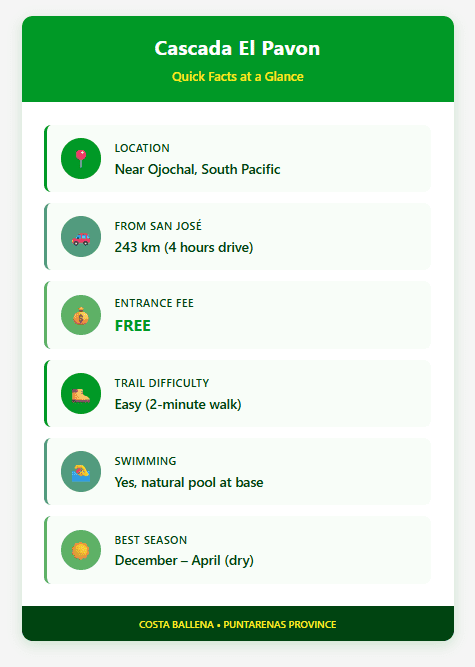
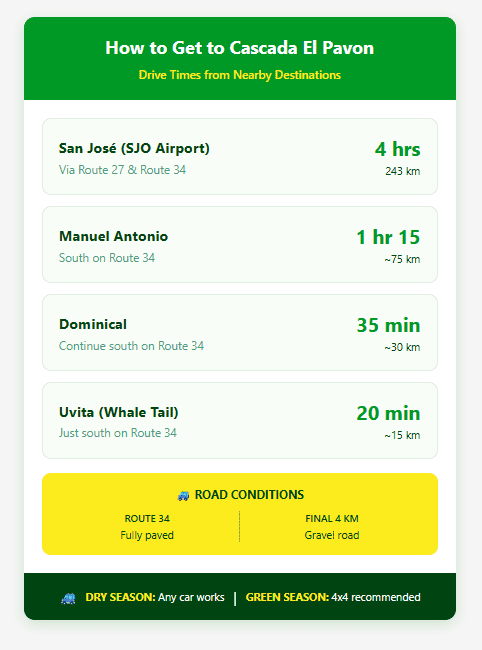
Cascada El Pavon sits in the South Pacific region of Costa Rica, specifically in the Puntarenas Province near the small village of Ojochal. The waterfall is approximately 151 miles (243 kilometers) from San José International Airport, making it about a 4-hour drive via the coastal Route 34.
How Far Is El Pavon from Nearby Towns?
The waterfall is conveniently positioned between several popular South Pacific destinations:
- From Uvita: 20 minutes (where you’ll find the famous Marino Ballena National Park)
- From Dominical: 35 minutes south
- From Manuel Antonio: 1 hour and 15 minutes via Route 34
You can find Cascada El Pavon on both Google Maps and Waze. When driving south on Route 34 past Ojochal, look for a sign directing you to turn left. If you cross a bridge, you’ve gone too far.
After turning left, stay on the gravel road for about 2.5 miles (4 kilometers). The route is well-signed, so you won’t get lost. You’ll pass Tilapia El Pavon restaurant on your left then keep going another 0.6 miles (1 kilometer) until you see a small sign marking the waterfall on the left side of the road.
How Do You Get to Cascada El Pavon?
Getting to Cascada El Pavon is straightforward once you’re on Route 34, the Costanera Sur coastal highway that connects Manuel Antonio to the southern Pacific coast.
Driving Directions from San José
The most common route from San José follows Route 27 toward the Pacific coast, then connects to Route 34 heading south. This well-maintained highway offers spectacular ocean views as you pass Jacó, Quepos, and Manuel Antonio before reaching the Costa Ballena region.
Total drive time runs about 4 hours depending on traffic. If you’re leaving from SJO airport, add another 20-30 minutes to navigate out of the Central Valley.
What Type of Vehicle Do You Need?
The coastal highway is fully paved and easily navigable in any vehicle. However, the final 2.5 miles (4 kilometers) to the waterfall are on a gravel road with some potholes. During dry season (December through April), a standard car can handle this stretch without problems. During green season when afternoon rains are common, a 4×4 with higher clearance makes the drive more comfortable.
What Should You Expect at the Waterfall?
Is There an Entrance Fee?
Nope, Cascada El Pavon is completely free to visit. There’s no ticket booth, no official parking lot, and no facilities. When you arrive, you’ll simply park along the side of the road. Since parking isn’t monitored, don’t leave valuables visible in your car, roll up your windows, and lock your doors.
How Difficult Is the Trail?
The walk from the road to the waterfall takes just a couple of minutes. It’s a short dirt path with some natural steps carved into the hillside. The trail can get slippery when wet, so watch your footing as there are no handrails. But don’t let that worry you; this isn’t a challenging hike by any measure.
What Does the Waterfall Look Like?
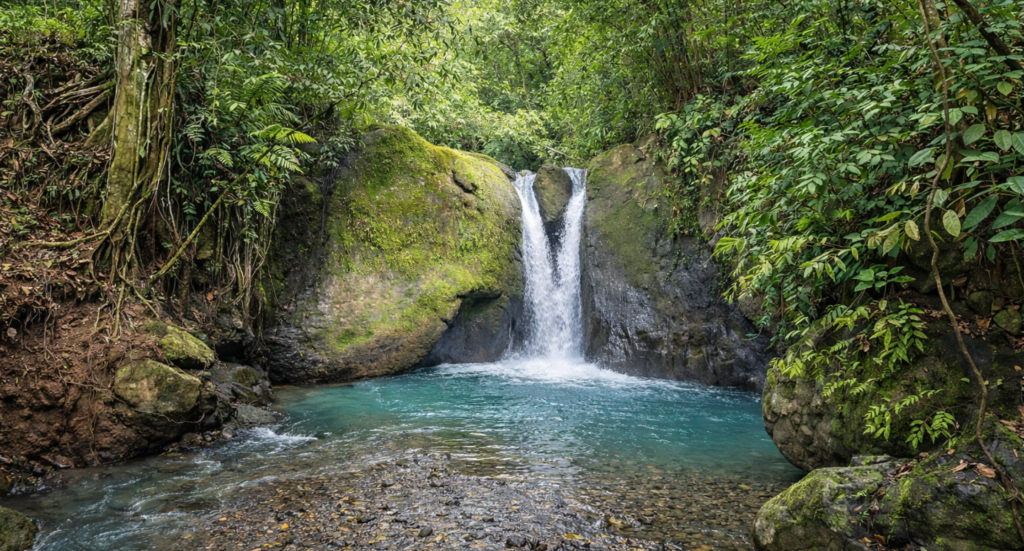
Cascada El Pavon is smaller than you might expect, but it has genuine character. The waterfall flows down a smooth rock chute that looks almost man-made from years of water erosion. What gives it that distinctive look is a large boulder sitting right in the middle of the cascade which splits the water flow as it tumbles into the pool below.
The swimming hole at the base is deep enough for a refreshing dip, and some visitors bring snorkel masks to chase the small fish swimming around. There’s a small sandy and rocky area beside the pool where you can sit, have a picnic, and relax in the shade.
A path leads up to the top of the waterfall where you can stand on that iconic rock. But don’t jump because the pool isn’t deep, and you could seriously hurt yourself.
Can You Swim at Cascada El Pavon?
Absolutely. Swimming is one of the main attractions here becausethe pool offers a refreshing escape from the South Pacific’s heat and humidity. You can also wade downstream from the falls, sit on the rocks, and enjoy the river flowing through the jungle.
During the rainiest months (September through November), the pool can overflow and the water may flow too intensely for comfortable swimming. Visiting during or just after dry season provides ideal conditions as the waterfall is still flowing nicely but the pool is calm enough to enjoy.
When Is the Best Time to Visit Cascada El Pavon?
What Season Works Best?
The dry season from December through April offers the most predictable weather and best swimming conditions. Water levels are lower, the pool is clearer, and the gravel access road stays in good condition.
That said, green season (May through November) has its own appeal. The surrounding jungle is at its most lush, the waterfall flows more dramatically, and you’ll have the place largely to yourself. Just plan to visit in the morning before the typical afternoon showers roll in.
What’s the Best Time of Day?
If you want the waterfall to yourself, go on a weekday morning. The waterfall is popular with locals, especially families on weekends during the school summer break which is January and February in Costa Rica. Saturday afternoons tend to be the busiest.
Visiting early morning also gives you better light for photos and more comfortable temperatures before the midday heat sets in.
What Should You Bring to Cascada El Pavon?
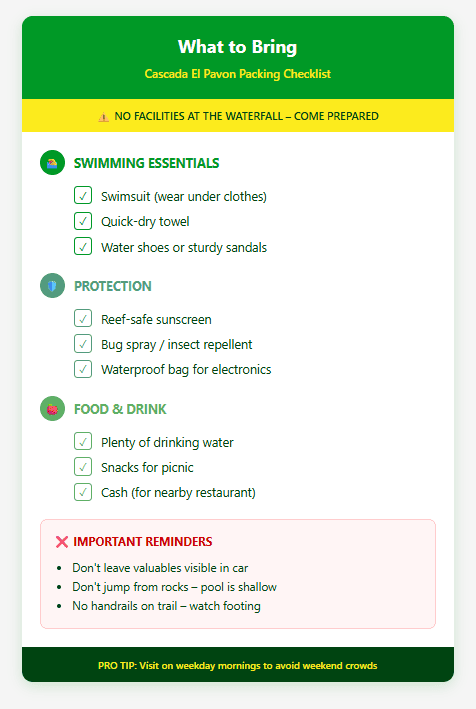
Since there are no facilities at the waterfall, come prepared:
- Swimsuit: Wear it under your clothes for easy changing
- Towel: No place to rent or buy one
- Water and snacks: Bring your own since there’s nothing at the falls
- Sandals or water shoes: The trail is short enough for sandals, but the rocks around the pool can be slippery
- Sunscreen and bug spray: You’re in the jungle, after all
- Waterproof bag: Keep your phone and valuables dry while swimming
- Cash: If you want to eat at the nearby restaurant afterward
Where Can You Eat Near the Waterfall?
Right before reaching the waterfall, you’ll pass Tilapia El Pavon restaurant which is a local spot where you can catch your own tilapia from their pond and have it prepared fresh. It’s a casual, authentic Costa Rican dining experience with really good fried yucca and some visitors say it’s the best yucca they’ve had in the country.
If you’re exploring the broader area, Ojochal has quietly become known as one of Costa Rica’s culinary hotspots. Thanks to a mix of expat chefs from around the world and abundant tropical ingredients, you’ll find everything from French bistros to fusion restaurants along the main road. It’s an unexpected treat in such a small village!
What Else Can You Do Near Cascada El Pavon?
The Costa Ballena region offers plenty of attractions to combine with your waterfall visit:
Marino Ballena National Park
Just 20 minutes north in Uvita, this marine park is famous for its whale tail-shaped sandbar that emerges at low tide. It’s also one of the best spots in Costa Rica for whale watching from July through October and December through March when humpbacks migrate through these waters.
Nauyaca Waterfalls
If Cascada El Pavon leaves you wanting more waterfall action, Nauyaca Waterfalls near Dominical offers a more dramatic experience with two impressive tiers and deeper swimming pools. You can hike, take a horseback tour, or ride a 4×4 truck to reach them.
Dominical Beach
About 35 minutes north, Dominical is the surfing hub of the South Pacific. Even if you don’t surf, the beach scene is lively and the sunsets are spectacular. It’s a great place to grab dinner after an afternoon at El Pavon.
Corcovado National Park
For serious nature lovers, day trips to Corcovado National Park on the Osa Peninsula can be arranged from the Costa Ballena area. Often called the most biologically intense place on Earth, it’s home to all four Costa Rican monkey species, tapirs, scarlet macaws, and even jaguars.
Is Cascada El Pavon Worth Visiting?
If you’re looking for a tourist attraction with infrastructure and organized tours, this isn’t it. But if you want an authentic, off-the-beaten-path experience where you can swim in a jungle waterfall alongside local families rather than busloads of tourists, Cascada El Pavon delivers exactly that.
The waterfall makes an excellent morning stop on your way to or from other South Pacific destinations like Uvita, Dominical, or Manuel Antonio. Combine it with lunch at the tilapia restaurant, a sunset at Dominical beach, or a whale watching tour from Uvita for a full day exploring this beautiful stretch of Costa Rica’s coast.
Having your own rental car is essential for reaching Cascada El Pavon since no public transportation runs to the waterfall. The flexibility to stop at hidden gems like this one is what makes a Costa Rica road trip so rewarding.
Frequently Asked Questions
What Is the Prettiest Waterfall in Costa Rica?
Costa Rica has dozens of stunning waterfalls, each with its own character. La Fortuna Waterfall near Arenal is often considered the most dramatic with its 70-meter drop into a turquoise pool. Rio Celeste Waterfall wins for color with its impossibly blue water. Nauyaca near Dominical impresses with its two-tiered cascade and large swimming area. Cascada El Pavon is smaller but offers something different which is an intimate, crowd-free experience with genuine local character.
Can You Swim in Waterfalls in Costa Rica?
Many Costa Rica waterfalls have swimming pools at their base where swimming is permitted and safe. Cascada El Pavon, La Fortuna Waterfall, Nauyaca Waterfalls, and Llanos de Cortés are all popular swimming spots. However, always exercise caution. Check water levels before entering especially after heavy rains, avoid jumping from heights unless you know the pool depth, and never swim alone.
What Is the Best Time to Visit Waterfalls in Costa Rica?
The dry season from December through April generally offers the best waterfall visiting conditions with clearer pools and easier trail access. However, waterfalls flow more impressively during and just after the rainy season. For a balance of good flow and safe swimming, late dry season (March-April) or early rainy season (May-June) often work best. Always visit waterfalls in the morning, regardless of season to avoid afternoon rain showers.
What Is the Famous Blue Waterfall in Costa Rica?
That would be Rio Celeste Waterfall in Tenorio Volcano National Park. The waterfall’s impossibly turquoise color comes from volcanic minerals that create an optical illusion when two rivers merge. It’s located about 2 hours from La Fortuna and requires a 3.7 mile (6-kilometer) round-trip hike through primary rainforest. Unlike Cascada El Pavon, swimming is not permitted at Rio Celeste due to the high concentration of natural chemicals.
What Should You Bring to a Waterfall in Costa Rica?
Essential items include water shoes or sandals with good grip, a swimsuit, towel, waterproof bag for electronics, sunscreen, bug spray, drinking water, and snacks. Many waterfalls like Cascada El Pavon have no facilities, so come prepared. A dry bag keeps your belongings safe while you swim.
Is Ojochal Worth Visiting?
Absolutely. Ojochal has quietly developed into one of Costa Rica’s most interesting culinary destinations with an unexpected concentration of excellent international restaurants in a small jungle village. Combined with nearby beaches like Playa Tortuga and Playa Ventanas, the Nauyaca Waterfalls, and Marino Ballena National Park, the Ojochal area offers plenty to explore over several days.
Do You Need a 4×4 to Visit Cascada El Pavon?
During dry season (December through April), a standard car can reach the waterfall without problems. The coastal highway is fully paved, and only the final 2.5 miles (4 kilometers) on gravel road require some care. During rainy season, a 4×4 with higher clearance makes the gravel stretch more comfortable, especially after heavy afternoon rains when potholes can fill with water.
How Do You Get from Manuel Antonio to Cascada El Pavon?
From Manuel Antonio, head south on Route 34, the Costanera Sur highway, toward Dominical and Uvita. The drive takes about 1 hour and 15 minutes. Continue past Uvita and Ojochal while watching for the signed turnoff on your left just before a bridge. The scenic coastal drive passes through the heart of the Costa Ballena region with opportunities to stop at beaches and viewpoints along the way.