
Last Updated on March 27, 2026
Rincon Thermals & Adventures: What's Covered
Rincon Thermals & Adventures (formerly Vandara) packs hot springs, ziplining, horseback riding, a 1,300 ft (400 m) waterslide, and volcanic mud baths into one day on 350 acres of Guanacaste rainforest near Rincón de la Vieja volcano. The Explorer Pass (~$95/adult) covers everything; the Nature Pass (~$65/adult) focuses on relaxation. It’s about 45 minutes from Liberia on paved roads — any rental car works.
Vamos Quick Facts
- Open 8 AM–4:30 PM daily, ~45 min from Liberia Airport
- Both passes include buffet lunch, parking, lockers, and towels
- 4.8/5 stars, 1,100+ TripAdvisor reviews
- Day trip from Tamarindo (~2 hrs), Playas del Coco (~1 hr), or Papagayo (~1 hr)
Top 3 Experiences:
- Hot Springs & Swim-Up Bar — Volcanic pools beside a waterfall
- Zipline Canopy Tour — 8 platforms crossing the Tizate River
- Cultural Experience — Coffee tasting, sugar cane demo, bread baking
Self-driving from Guanacaste’s beach towns saves 30–50% versus hotel tour desks.
If you need any help with a Costa Rica car rental, contact us now!
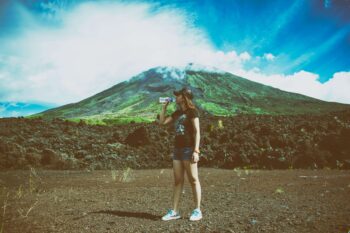
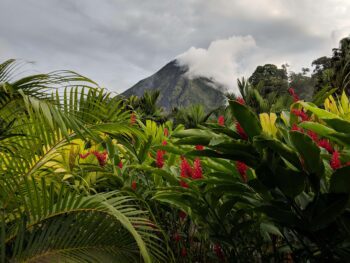
Rincon Thermals & Adventures (formerly known as Vandara) packs hot springs, ziplining, horseback riding, a 1,300-foot (400 m) jungle waterslide, volcanic mud baths, and an organic buffet lunch into a single day pass l on 350 acres (142 hectares) of rainforest at the base of Rincón de la Vieja volcano. If you’re staying anywhere in Guanacaste and want a full day of adventure without stitching together five separate tours, this is one of the best value-for-money experiences in northwest Costa Rica.
The park sits about 45 minutes from Liberia on fully paved roads, so no 4WD is required, which makes it an easy day trip from beach towns like Tamarindo, Playas del Coco, and the Gulf of Papagayo. Lonely Planet highlights the Rincón de la Vieja area as one of Guanacaste’s most rewarding inland destinations, and with 1,100+ TripAdvisor reviews averaging 4.8 out of 5 stars and a Travelers’ Choice award, the consensus is clear: most visitors call it a trip highlight.
Key Takeaways
- Two pass options: Explorer Pass ($95/adult or $75/child ) includes everything; Nature Pass ($65/adult or $52/child) skips the zipline, horseback riding, and waterslide
- No 4WD needed: The road from Liberia is fully paved, and free parking is available on-site
- Full-day value: Both passes include buffet lunch, lockers, towels, and all activities
- Best for: Families, couples, and groups looking for a mix of adventure and relaxation in one location
- Hours: 8:00 AM–4:30 PM daily (open every day, unlike Rincón de la Vieja National Park, which closes Mondays)
- Pro tip: Book directly through the park website, as hotel tour desks charge 2–3× more for the same experience

Wait — Is This the Same Place as Vandara?
Yes. Same park, same family owners, same 350-acre property. The rebrand from “Vandara” to “Rincon Thermals & Adventures” happened in late 2025, but you’ll still see the old name everywhere on TripAdvisor reviews, blog posts, and even some booking platforms. Both vandaracostarica.com and rinconthermals.com lead to the same booking system, so don’t worry if you see either name during your research.
The park was founded by a local Guanacaste ranching family who wanted to share the natural thermal resources on their land. That family-run feel still comes through today, and reviewers consistently name specific guides (Martin, Walter, Carlos, Sergio) who’ve been with the park for years.
What's the Difference Between the Explorer Pass and the Nature Pass?
This is the most common question people ask before booking, and the answer comes down to how much adrenaline you want mixed with your relaxation.
The Explorer Pass (from $95/adult, up to 8 hours) is the full experience. You get the eight-platform zipline canopy tour across the Tizate River, a guided horseback ride through the rainforest, the 1,300-foot (400 m) jungle waterslide, thermal hot springs with a swim-up bar beside a waterfall, volcanic mud baths, a hands-on cultural experience with coffee tasting and sugar cane demonstration, hanging bridges, hiking trails, and an organic garden-to-table buffet lunch.
The Nature Pass (from $65/adult, 7.5 hours) includes everything listed above except the zipline, horseback riding, and waterslide. You still get the hot springs, mud bath, cultural experience, hanging bridges, trails, river walk, and lunch.
Children ages 5–11 receive discounted pricing on both passes (~$75 Explorer, ~$52 Nature), whereas under-5s go free. Both include free parking, lockers, and towels.
Which should you pick? If anyone in your group is even slightly interested in ziplining in Costa Rica, go with the Explorer Pass. The $30 difference gets you three additional activities that would cost $50–80 each if booked separately at other parks. The Nature Pass makes sense if you’re purely after relaxation, traveling with very young children, or have mobility concerns.
How Do You Get to Rincon Thermals from the Beach Towns?
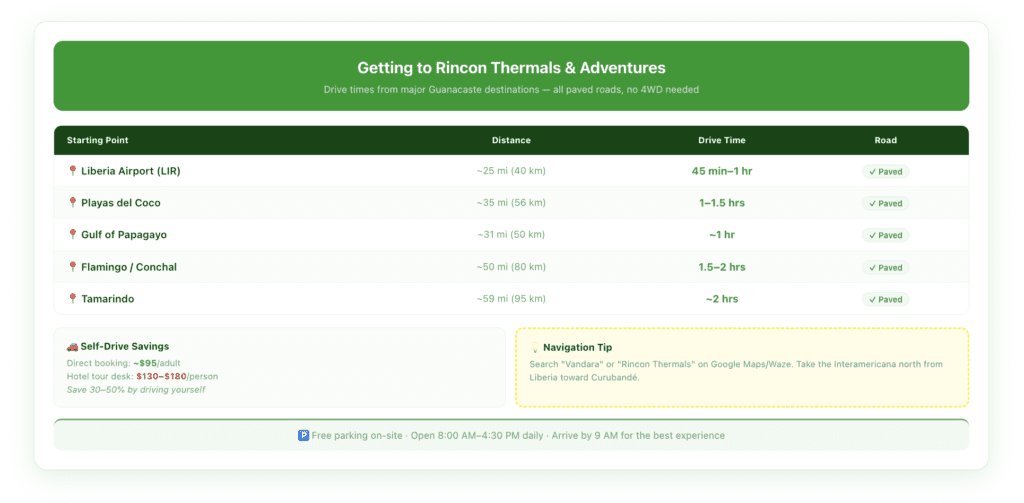
Here’s where having your own rental car really pays off. The park is accessible from every major Guanacaste destination on paved roads, and self-driving saves you significant money compared to booking a shuttle tour.
Drive times from major destinations:
- Liberia Airport (LIR): ~25 miles (40 km), approximately 45 minutes to 1 hour
- Playas del Coco: ~35 miles (56 km), approximately 1 to 1.5 hours
- Gulf of Papagayo: ~31 miles (50 km), approximately 1 hour
- Tamarindo: ~56–62 miles (90–100 km), approximately 2 hours
- Flamingo/Conchal: ~50 miles (80 km), approximately 1.5–2 hours
The route from Liberia follows the Interamericana Highway north toward Curubandé. GPS works well, just search “Vandara” or “Rincon Thermals” on Google Maps or Waze. The road is fully paved the entire way, so any standard rental car handles it without issue.
Why drive yourself? One reviewer paid $45 booking directly versus $140 through a hotel concierge for the exact same experience. When you factor in that a rental car in Guanacaste costs roughly $30–50 per day, self-driving to Rincon Thermals practically pays for the car itself in savings on a single day trip.
What Are the Activities Actually Like?
Let’s break down each experience so you know what to expect.
Are the Hot Springs Worth the Hype?
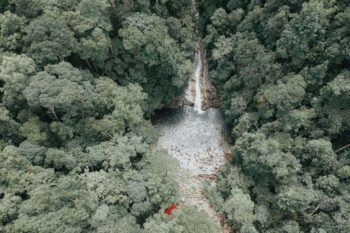
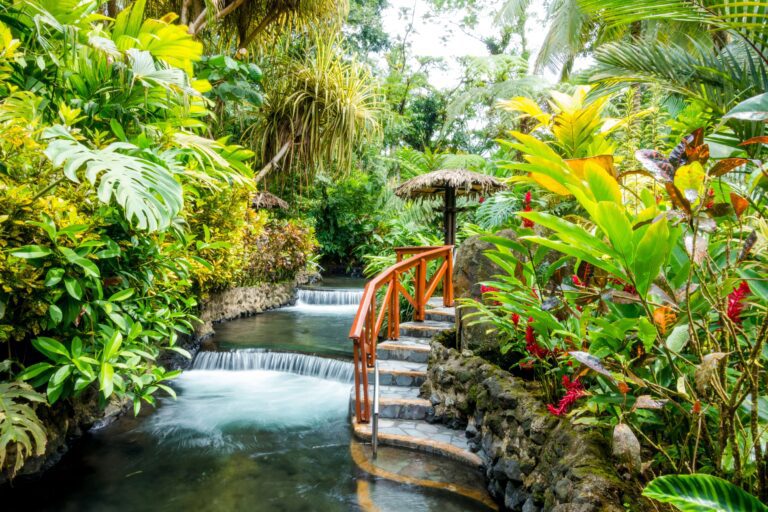
The thermal pools are the centerpiece, and honestly, they deliver. Fed by naturally heated volcanic water from the Tizate River, which gets its heat from one of Costa Rica’s most active volcanoes, Rincón de la Vieja, so they aren’t resort-heated swimming pools. Multiple pools sit at varying temperatures, and the star attraction is the swim-up bar right beside a waterfall. According to the Instituto Costarricense de Turismo, Guanacaste’s volcanic thermal waters are among the most mineral-rich in Central America.
The volcanic mud bath follows a satisfying ritual: apply the mineral-rich mud (loaded with sulfur, calcium, magnesium, zinc, and potassium), let it dry in the sun, rinse off in the cool river, then soak in the hot springs. Research from the Universidad de Costa Rica has documented the mineral content of Rincón de la Vieja’s geothermal waters, confirming therapeutic concentrations of these elements. Reviewers regularly describe this as the most unexpectedly enjoyable part of the day.
How’s the Zipline and the Waterslide?
The canopy tour features eight platforms of varying height, crossing over the Tizate River with views of the surrounding Guanacaste rainforest. Multiple reviewers describe the guides as extremely safety-conscious, and the “supergirl style” flying position is a crowd favorite. There’s a 300-pound (136 kg) weight limit for the zipline.
Here’s an honest heads-up on that waterslide that most articles don’t mention. The 1,300-foot (400 m) jungle waterslide is thrilling but rougher than you might expect. Multiple TripAdvisor reviewers report scrapes and bruises, particularly on elbows and backs. The consistent advice from people who’ve done it: wear shorts over your swimsuit bottom to prevent friction burns, sit upright to control your speed, and skip it if you have back problems or aren’t reasonably fit. Helmets and padding are provided. It’s not dangerous, but calling it a “gentle lazy river” would be dishonest.
What About the Cultural Experience?
Here’s the sleeper hit most visitors don’t expect to love. The hands-on cultural experience includes traditional Costa Rican coffee tasting (café chorreado brewed through a cloth filter), a sugar cane demonstration showing how raw cane becomes guaro (Costa Rica’s national spirit), and traditional bread baking. Reviewer after reviewer calls this “unexpectedly fascinating” and “one of the best parts of the day.” It’s a genuine window into Chorotega culture and Guanacaste heritage, not a tourist show.
Is Horseback Riding Good for Beginners?
The guided horseback ride through the rainforest lasts about 1–1.5 hours and works well for all experience levels. Guides match you with appropriate horses and stay attentive throughout. The trail passes through tropical forest with opportunities for wildlife spotting, so keep your eyes peeled as howler monkeys and exotic birds are common companions. This is a gentle trail ride rather than an extreme horseback adventure.
How Does Rincon Thermals Compare to Other Guanacaste Adventure Parks?
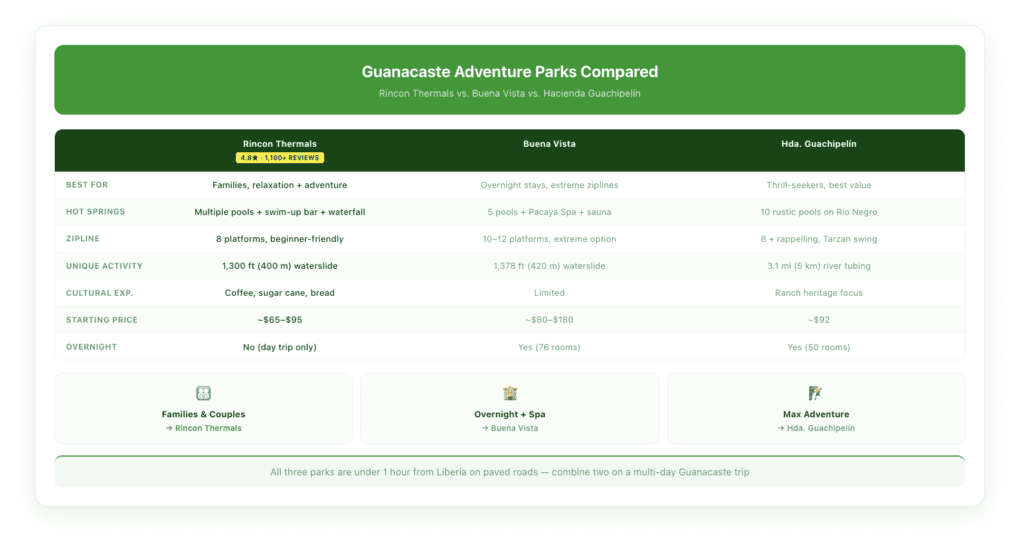
Three major parks compete for your attention in the Rincón de la Vieja area, and each excels at something different.
Rincon Thermals & Adventures is the most intimate and family-friendly option. The swim-up bar beside the waterfall is unique to this park, the cultural experience is a standout, and the staff-to-guest ratio means you’ll never feel like a number. It’s a day-trip only (no hotel on-site), which keeps it feeling less crowded than the larger parks.
Buena Vista del Rincón is the big resort option. They have 76 rooms if you want to sleep on-site, a 1,378-foot (420 m) waterslide, which is the longest in Costa Rica, and a broader spa complex with a sauna. Their adventure packages range from $80–$180 depending on which combo you choose.
Hacienda Guachipelín offers the most extreme adventure lineup. Their zipline follows a river canyon, which is considered the most scenic canopy route in the area; they’re the only park with Class II–III river tubing, and the Rio Negro Hot Springs feature 10 rustic natural pools along the river.
If you have the time, combining Rincon Thermals with a Rincón de la Vieja National Park hike on a separate day gives you the best of both worlds of private adventure park experiences plus the volcanic mud pots and waterfalls of the national park.
What Should You Bring to Rincon Thermals?
Packing smart makes the difference between a perfect day and a slightly annoying one. Here’s what experienced visitors recommend:
Essentials: Water shoes for rocky river areas, reef-safe sunscreen, bug spray, swimsuit, change of dry clothes, and closed-toe shoes for trails and horseback riding because ants are common on forest paths. Bring cash for cocktails at the swim-up bar and tips for guides.
The park provides: Lockers, towels, helmets for zipline and waterslide, safety harnesses, and all activity equipment.
Pro tip from reviewers: Wear shorts or leggings over your swimsuit bottom for the waterslide. Also, bring a lightweight rain jacket during the green season (May–November) when afternoon showers are common but typically brief.
How Long Should You Spend at the Park?
Budget 5–6 hours minimum for the Explorer Pass and 3–4 hours for the Nature Pass. On busy days with larger groups, the Explorer Pass can stretch to a full 8 hours as you rotate through activities. The park operates from 8:00 AM to 4:30 PM daily.
The smart move for visitors coming from Tamarindo or other beach towns: depart by 7 AM, arrive by 9 AM, enjoy the full day, and return to the coast by early evening. During the dry season (December–April), arriving early also means you’ll enjoy the hot springs before the midday crowd builds.
If you’re staying near Liberia or picking up a rental car at the airport, Rincon Thermals makes a perfect first-day or last-day activity. It’s close enough that you won’t waste driving time, and spending the day in hot springs is a great way to recover from jet lag or decompress before a flight.
Is Rincon Thermals Good for Families with Kids?
Short answer: yes, with one caveat. The Explorer Pass works for children ages 5 and up, and the Nature Pass is suitable for all ages. Staff are patient with young kids on horseback, and the zipline and the cultural experience keep children engaged.
The caveat is that waterslide. It’s genuinely intense because this isn’t a theme park ride with gentle curves. For kids under 10 or adults who aren’t comfortable with speed and some bumps, it’s worth watching others go first before deciding. Everything else at the park is thoroughly family-friendly.
For families traveling with kids, the combination of active adventures in the morning and hot springs relaxation in the afternoon works perfectly for managing energy levels. The included lunch also means you don’t need to hunt for kid-friendly restaurants in an unfamiliar area.
How to Book and Save Money
Book directly through the park. This is the single most valuable piece of advice in this entire article. The official website (vandaracostarica.com) offers the lowest prices, starting at $95 for the Explorer Pass and $65 for the Nature Pass. Hotel concierges and third-party tour operators routinely charge $130–$180 for the same experience with no additional value.
The park offers 24-hour free cancellation, so there’s no risk in booking early. They also accept reservations via WhatsApp at (506) 8449-6994 and email at [email protected].
For the best experience, arrive between 8 and 9 AM and start with the active adventures like zipline, horseback riding, and the waterslide while you’re fresh. Save the hot springs and mud bath for the afternoon when your muscles are tired, and the warm water feels like absolute heaven.
Planning Your Guanacaste Road Trip Around Rincon Thermals
If you’re building a multi-day Guanacaste itinerary, here’s how Rincon Thermals fits into the bigger picture.
Day trip from beach towns: Drive from Tamarindo, Flamingo, Coco, or Papagayo in the morning, spend the full day at the park, and return to the coast for dinner. No overnight needed.
Combined with national park: Visit Rincón de la Vieja National Park one day (hike the Las Pailas mud pot trail, $16.95 entry via SINAC online ticketing, closed Mondays) and Rincon Thermals the next. They’re on the same road and complement each other perfectly, as one is raw nature, the other is curated adventure.
En route to another destination: If you’re driving between the beaches and La Fortuna/Arenal, Rincon Thermals sits right along the logical route through Liberia. Stop for a full day, then continue your road trip refreshed.
Having a rental car from Liberia Airport gives you the flexibility to combine Rincon Thermals with beach hopping, Nosara’s yoga scene, or Samara’s laid-back vibe — all at your own pace, on your own schedule. If you’re flying into San José instead, the drive to Guanacaste takes about 4–4.5 hours, and staying near Liberia’s airport hotels your first night makes Rincon Thermals an easy second-day activity.
Frequently Asked Questions
Is volcanic mud good for your skin?
The volcanic mud at Rincon Thermals contains sulfur, calcium, magnesium, zinc, and potassium, which are minerals commonly used in dermatology for their exfoliating and anti-inflammatory properties. Sulfur in particular helps with oil control and can temporarily improve skin texture. That said, it’s a fun experience at a hot springs park rather than a medical treatment. People with open cuts, sunburns, or very sensitive skin should skip the mud bath or test a small patch first.
Is it safe to swim in hot springs in Costa Rica?
Yes, the thermal pools at places like Rincon Thermals are maintained, temperature-monitored, and staffed. The water is naturally heated by volcanic geothermal activity, and not artificially. Standard precautions apply: stay hydrated because the heat dehydrates you faster than you realize, limit your soak time to 15–20 minutes at a stretch, and avoid submerging open wounds. Pregnant visitors should consult their doctor beforehand, as prolonged heat exposure isn’t recommended during pregnancy.
Do you wear a bathing suit in a mud bath?
Yes, wear your swimsuit for the mud bath. The volcanic mud covers you head to toe, so pick a darker suit or one you don’t mind getting stained (the minerals can discolor light-colored fabric). After you let the mud dry in the sun for 10–15 minutes, you rinse off in the cool river before heading to the hot springs. The park provides towels, so you don’t need to bring your own.
How long should you stay in a volcanic mud bath?
Apply the mud, then let it dry on your skin for about 10–15 minutes, and you’ll feel it tighten as it dries. Once it’s cracked and chalky, rinse off in the river. The whole process from application to rinse takes roughly 20–30 minutes. Don’t leave it on significantly longer than 15 minutes, as over-drying can irritate sensitive skin. After rinsing, head straight to the thermal pools as the contrast between the cool river and warm springs is the best part.
Are there free hot springs in Costa Rica?
There are a handful of free natural hot springs in Costa Rica, most notably near La Fortuna, where the Tabacón River has publicly accessible warm sections along the roadside. However, free springs lack the facilities, safety monitoring, and amenities you get at a place like Rincon Thermals. For Guanacaste specifically, there aren’t widely known free thermal springs, as the volcanic hot springs in the Rincón de la Vieja area are accessed through private parks like Rincon Thermals, Buena Vista, and Hacienda Guachipelín.
What should you do after a mud bath?
After rinsing the dried mud off in the river, head to the thermal hot springs to let the warm mineral water soak into your freshly exfoliated skin. Drink plenty of water as dehydration sneaks up on you between the sun, the mud drying process, and the heat of the springs. Apply moisturizer after your final shower at the end of the day, since the minerals and sulfur can leave your skin feeling tight. Most visitors say their skin feels noticeably smoother for a day or two afterward.
Can you visit just the hot springs without buying a full day pass?
No, there’s no hot-springs-only ticket at Rincon Thermals. The Nature Pass ($65/adult) is the minimum entry and includes the springs, mud bath, cultural experience, trails, and buffet lunch. When you compare that to other Guanacaste hot springs that charge $30–50 for pools alone without food, the Nature Pass holds up well on value.
Can you combine Rincon Thermals with Rincón de la Vieja National Park in one day?
You could technically do both, but you’d be rushing and wouldn’t enjoy either properly. The national park’s Las Pailas trail alone takes 3–4 hours, and the Explorer Pass at Rincon Thermals needs 5–6 hours minimum. They’re on the same road from Liberia, so the smarter play is one per day, so hike the national park on day one (closed Mondays, $16.95 entry), then do Rincon Thermals on day two when your muscles are begging for hot springs.