
Last Updated on January 9, 2026
Pacuare River Rafting: What's Covered
The Pacuare River consistently earns its spot among the top five white water rafting destinations on the planet, and it’s not hard to see why. This 108-kilometer river carving through Costa Rica’s Caribbean slope delivers Class III-IV rapids wrapped in untouched rainforest, cascading waterfalls, and wildlife encounters you simply won’t find elsewhere. Most day trips cover about 28 kilometers from San Martín to Siquirres, taking roughly 4-5 hours of actual paddling time through one of Central America’s most spectacular river gorges. Whether you’re looking for an adrenaline-packed Costa Rica activity or trying to squeeze in an unforgettable adventure between destinations, Pacuare delivers an experience that rivals anything you’d find in the country’s famous national parks. The river flows through protected wilderness, passing indigenous Cabécar villages accessible only by water and waterfalls that plunge directly into the rapids around you. One-day trips cost $95-120 including transportation from San José, La Fortuna, or Puerto Viejo.
Quick Facts
- Ranking: Top 5 white water rafting destinations globally—Class III-IV rapids surrounded by pristine rainforest
- Cost: $95-120 one-day trips including transportation; multi-day packages $350-650 with eco-lodge stays
- Best Season: December-May consistent water levels; March-April optimal balance of exciting rapids and clear weather
- Requirements: Minimum age 12 years, minimum weight 50 kg (110 lbs); no prior rafting experience required
- Duration: Full-day commitment—4-5 hours actual paddling, 28 km San Martín to Siquirres section
- Access: 2 hours from San José via Turrialba; operators provide round-trip transportation from San José, La Fortuna, Puerto Viejo
- Wildlife: Howler monkeys, spider monkeys, capuchins, toucans, parrots, herons, kingfishers, river otters, iguanas, morpho butterflies
Top 5 Pacuare River Tips
- Book March-April for Optimal Conditions – Dry season (December-May) provides consistent water levels and clearer weather; March-April sweet spot with enough water for exciting rapids without swollen conditions that increase difficulty—green season (May-November) brings higher water increasing rapid intensity about half class
- Use Strategic Transportation Routing – Operators service three pickup zones: San José (5:30 AM, 2-hour drive), La Fortuna (5:00 AM, 2.5 hours), Puerto Viejo (interconnection service)—use Pacuare as productive transition between destinations eliminating backtracking
- Pack Quick-Dry Clothing and Secure Footwear – Quick-dry synthetic clothing or swimsuit under board shorts (avoid cotton staying wet and cold), secure water shoes with heel straps (flip-flops wash away), waterproof sunscreen, baseball cap, skip jewelry/watches—operators provide dry bags for essentials but assume everything gets wet
- Understand Beginner-Friendly Despite Class III-IV Rating – Professional guides handle technical work (steering, reading currents, identifying lines); your job follows paddle commands and hangs on—requires reasonable fitness for 4-5 hours physical activity; approximately 40-50 rapids ranging playful Class II to heart-pounding Class IV
- Consider Multi-Day Packages for Deeper Immersion – 2-3 day packages ($350-650) include overnight eco-lodge stays accessible only by river (Pacuare Lodge), covering more river sections including technical upper stretches day trips skip—waterfall hikes, indigenous village visits, canopy tours filling non-rafting hours
Pacuare River rafting offers world-class white water experiences perfect for travelers seeking authentic Costa Rica adventures. The river anchors full-day explorations, making it valuable for active itineraries connecting destinations. Many travelers use Pacuare as strategic transition: San José → Pacuare → Caribbean coast eliminating backtracking; La Fortuna → Pacuare → San José for final adventure. For building comprehensive itineraries, check our one-week and two-week plans. The river originates Cordillera de Talamanca at nearly 3,000 meters elevation, descending through diverse microclimates before draining Caribbean Sea—dramatic elevation change creates powerful rapids. Conservation efforts blocked proposed 1986 hydroelectric dam in 2005, preserving wild river. Standard day trip schedule: early morning pickup (5:00-6:00 AM), breakfast & safety briefing (8:00-9:00 AM), river time (9:00 AM-2:00 PM covering 28 km with 4-5 hours paddling, riverside lunch halfway), return journey (2:00-5:00 PM). Route from San José follows Highway 2 to Cartago, Route 10 toward Turrialba—approximately 2 hours paved roads any vehicle handles. Typical day involves breakfast, gear fitting, comprehensive safety briefing teaching paddle commands and fall procedures. Water temperature stays comfortable year-round (20-22°C/68-72°F), no wetsuit needed. The Braulio Carrillo biodiversity parallels Pacuare corridor protection.
If you need any help with a Costa Rica car rental, contact us now!
The Pacuare River consistently earns its spot among the top five white water rafting destinations on the planet, and it’s not hard to see why. This 67-mile (108-kilometer) river carving through Costa Rica’s Caribbean slope delivers Class III-IV rapids surrounded by untouched rainforest, cascading waterfalls, and wildlife encounters you simply won’t find elsewhere. Most day trips cover about 17 miles (28 kilometers) from San Martín to Siquirres, taking roughly 4-5 hours of actual paddling time through one of Central America’s most spectacular river gorges.
Whether you’re looking for an adrenaline-packed Costa Rica activity or trying to squeeze in an unforgettable adventure between destinations, Pacuare delivers an experience that rivals anything you’d find in the country’s famous national parks. The river flows through protected wilderness passes indigenous Cabécar villages which are only accessible only by water and waterfalls that plunge directly into the rapids around you.
Key Takeaways
- Pacuare River ranks among the world’s top 5 rafting destinations with Class III-IV rapids surrounded by pristine rainforest
- One-day trips cost $95-120 and include transportation from San José, La Fortuna, or Puerto Viejo
- December through May offers the most consistent water levels; March-April provides the best balance of exciting rapids and clear weather
- Minimum age is typically 12 years old with a minimum weight of 110 lbs (50 kg)
- No prior rafting experience is required because professional guides handle everything
- The put-in point sits about 2 hours from San José via Turrialba and most operators providing round-trip transportation
Pacuare River Rafting
Essential Quick Facts for Your Adventure
Rapid Classification
Class III-IV rapids with 40-50 total rapids per day trip
Distance Covered
17 miles (28 km) of pristine river through protected rainforest
Time on Water
4-5 hours paddling with breaks for swimming & lunch
Cost Per Person
$95-120 including transport, gear, meals & guides
Requirements
Minimum age 12 years and weight 110 lbs (50 kg)
Best Season
Dec-May for consistent levels; Mar-Apr optimal
VAMOS RENT-A-CAR • Your Costa Rica Adventure Partner
What Makes Pacuare River Different From Other Rafting Destinations?
The Pacuare isn’t just another adventure activity in Costa Rica—it’s a complete immersion into one of the country’s last wild places. The river originates in the Cordillera de Talamanca at nearly 1,000 feet (3,000 meters) elevation, descending through diverse microclimates before draining into the Caribbean Sea. The dramatic elevation change creates the powerful rapids that made this river famous.
What sets Pacuare apart is the combination of challenging white water and extraordinary scenery. According to Visit Costa Rica’s official tourism board, the river flows through one of Costa Rica’s most impressive primary rainforests, with stone canyon walls rising on either side as you paddle through the famous Pacuare Gorge. Howler monkeys call from the canopy above, toucans flash overhead, and waterfalls cascade directly into the river at several points along the route.
The Pacuare River nearly lost its wild character when Costa Rica’s state electricity agency proposed a hydroelectric dam in 1986. This would have flooded much of the river corridor but conservation efforts finally succeeded in blocking the dam in 2005 and preserved this natural treasure for future generations of rafters and wildlife alike.
How Do the Rapids Actually Feel?
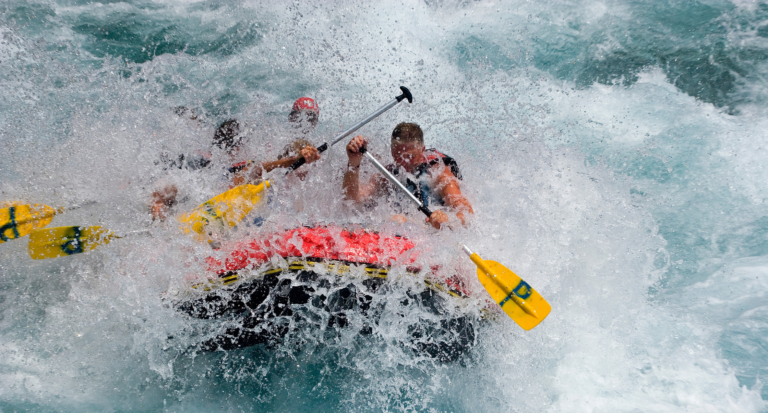
You’ll encounter approximately 40-50 rapids throughout a typical day trip which range from playful Class II wave trains to heart-pounding Class IV drops that demand your full attention. The river sections have evocative names like “Huacas,” “Double Drop,” and “Terciopelo” which is named after the venomous pit viper. Each rapid has its own personality, from smooth roller-coaster waves to technical boulder gardens requiring precise maneuvering.
Guides break the experience into manageable sections with calm stretches between rapids which give you time to catch your breath and appreciate the surroundings. These tranquil pools often provide opportunities for swimming—yes, you can jump in—and wildlife spotting before the next set of rapids appears around the bend. If you enjoy this type of outdoor adventure, the Pacuare delivers an experience unlike any other in Costa Rica.
When Should You Go Rafting on the Pacuare?
Timing your Pacuare adventure matters although the river can be rafted year-round. The dry season from December through May offers the most consistent water levels and the best chance of clear skies throughout your trip. March and April hit the sweet spot with enough water for exciting rapids without the swollen river conditions that can make the experience more intense or occasionally force cancellations.
The green season from May through November brings higher water levels that actually increase rapid intensity by about half a class. Some experienced rafters specifically prefer September and October for this reason although afternoon thunderstorms become more likely. Tour operators monitor conditions constantly and will cancel if safety becomes a concern; however, you’ll get a full refund when weather forces cancellations.
Water temperature stays comfortable year-round and hovers around 20-22°C (68-72°F). You won’t need a wetsuit, though some operators provide splash jackets for cooler morning starts. The surrounding air temperature typically ranges from 25-30°C (77-86°F) which makes green season travel quite pleasant despite occasional showers.
What Does a Typical Pacuare Day Trip Include?
Most operators follow a similar schedule designed to maximize your time on the water while handling all logistics. Here’s what to expect:
How Does the Day Unfold?
Early Morning Pickup (5:00-6:00 AM): Transportation collects you from hotels in San José, La Fortuna, or Puerto Viejo. The drive to the operation center takes 2-3 hours depending on your starting point.
Breakfast & Preparation (8:00-9:00 AM): You’ll arrive at the operations center near Turrialba for a light breakfast, gear fitting, and comprehensive safety briefing. Guides teach paddle commands, explain what to do if you fall in, and assess the group’s fitness level.
River Time (9:00 AM-2:00 PM): The actual rafting portion covers approximately 17 miles (28 kilometers) with 4-5 hours on the water. You’ll navigate Class II rapids first as warm-ups before hitting the more challenging Class III-IV sections. A riverside lunch break halfway through includes typical Costa Rican fare like rice, beans, and grilled chicken.
Return Journey (2:00-5:00 PM): After takeout at Siquirres, transportation returns you to the operations center for showers and changing, then you’re delivered back to your hotel or dropped at a new destination.
What Should You Wear and Bring?
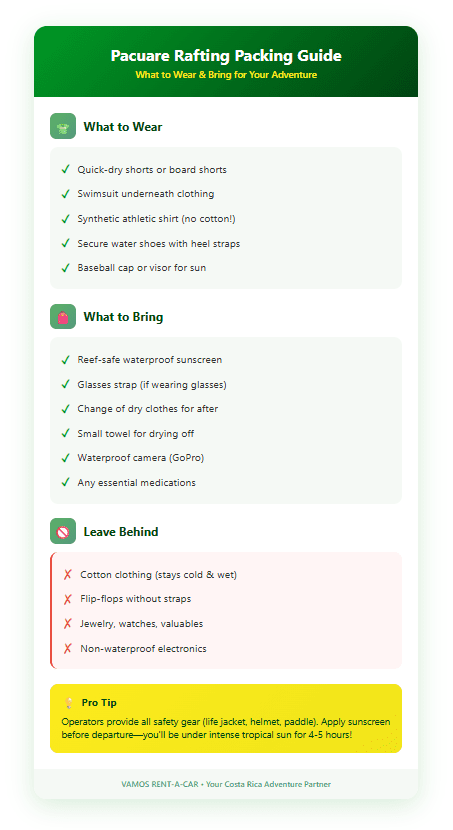
The right preparation makes the difference between a fantastic day and an uncomfortable one. Wear quick-dry clothing or a swimsuit under shorts but don’t use cotton clothing, which stays waterlogged and cold. Secure water shoes or adventure sandals with heel straps work best, as regular flip-flops will disappear into the river.
Leave valuables at your hotel. Most operators provide dry bags for essentials like medication, but assume everything gets wet. If you wear glasses, invest in a sports strap because they’re nearly impossible to recover from the rapids. For photography, waterproof action cameras like GoPros work well, especially with helmet mounts that many operators provide.
Pack reef-safe sunscreen and apply it before you start because you’ll be under tropical sun for several hours, and water reflection intensifies exposure. Bring any necessary medications, but don’t bring jewelry, watches, or anything you can’t afford to lose.
Can Beginners Handle Pacuare River Rafting?
Absolutely. While Pacuare’s Class III-IV rating sounds intimidating, the river welcomes first-time rafters regularly. Professional guides with years of river experience do the technical work of steering, reading currents, and identifying lines through rapids. Your job is following their paddle commands and hanging on.
That said, you’ll need reasonable fitness. Expect to paddle continuously through rapids and swim if you fall out. The typical day involves 4-5 hours of physical activity at elevation and you’ll often be in warm conditions. If you can manage a moderate hike or swim laps at a pool, you’ll be fine. The safety precautions operators follow include thorough briefings and quality equipment.
Who Shouldn’t Attempt This Trip?
Most operators set a minimum age of 12 years and minimum weight of 110 lbs (50 kg). Pregnant women, people with serious back problems, heart conditions, or recent surgeries should skip this particular adventure. If you’re uncertain about your fitness level, consider the Balsa River near La Fortuna instead as its Class II-III rapids offer excellent scenery with less intensity.
The psychological component matters too. If the idea of potentially falling into rushing water terrifies you rather than excites you, this might not be your ideal Costa Rica activity. Fear is normal and manageable, but genuine phobia of water or heights could make the experience more stressful than enjoyable.
How Does Pacuare Compare to Other Costa Rica Rivers?
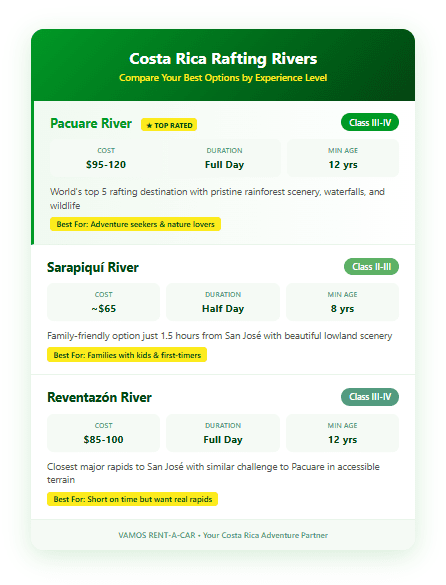
Costa Rica offers several rafting options which each have distinct characteristics. The Pacuare stands alone for combining world-class rapids with pristine wilderness, but other rivers may be preferable:
Sarapiquí River: Located just 1.5 hours from San José, this river provides Class II-III rapids suitable for families with children as young as 6. Half-day trips cost around $65 and work well for first-time visitors testing comfort levels before committing to Pacuare.
Reventazón River: The closest major rafting river to San José offers Class III-IV sections similar to Pacuare but through more accessible terrain. It’s a solid choice when Pacuare conditions don’t cooperate or when time constraints limit your options.
Corobicí River: A mellow Class I-II float through dry forest in Guanacaste, perfect for wildlife viewing and families with young children. Not really rafting in the adrenaline sense, but a pleasant river experience nonetheless.
For the full Costa Rica adventure experience, nothing matches Pacuare’s combination of challenge, scenery, and authentic wilderness immersion.
How Do You Get to the Pacuare River?
The Pacuare flows through a relatively remote area between San José and the Caribbean coast. Most travelers access it through organized tours that include transportation, but independent options exist for those with their own rental vehicle.
Using Tour Transportation
The simplest approach involves booking a complete package that picks you up at your hotel. Major tour operators service three primary pickup zones:
San José Area: Most common starting point with pickups beginning around 5:30 AM. The 2-hour drive follows Route 10 through Cartago and Turrialba, passing through stunning agricultural landscapes and coffee plantations.
La Fortuna/Arenal: A popular connection option if you’re exploring the Arenal volcano region. Pickup begins around 5:00 AM for the 2.5-hour drive, and you can arrange drop-off in San José, Puerto Viejo, or return to La Fortuna.
Puerto Viejo/Caribbean Coast: Operators offer interconnection services where the Pacuare trip serves as transportation between destinations. Start your day in Puerto Viejo and end in La Fortuna or San José or vice versa.
Driving Yourself
If you’re planning a road trip through Costa Rica, you can drive to the operations center near Turrialba. The route from San José follows Highway 2 to Cartago, then Route 10 toward Turrialba which takes approximately 2 hours on paved roads that any vehicle can handle. From the operations center, tour transportation shuttles you to the put-in point; however, the take-out location is different and rafters will need to use the operator’s transportation.
Having your own vehicle gives you flexibility to explore the Turrialba volcano area, Irazú volcano, or Guayabo National Monument before or after your rafting adventure. The region around Turrialba sees fewer tourists than popular destinations like Arenal or Manuel Antonio and offers authentic encounters with Costa Rican agricultural life.
What About Multi-Day Pacuare Adventures?
For travelers seeking deeper immersion, several operators offer 2-3 day packages that include overnight stays at eco-lodges which are only accessible only by river. These extended trips cover more river sections and include technical upper stretches that day trips skip.
The Pacuare Lodge and similar properties offer comfortable accommodations surrounded by rainforest, with activities like waterfall hikes, indigenous village visits, and canopy tours filling non-rafting hours. Prices start around $350-650 per person depending on accommodation level and included activities.
Multi-day trips particularly suit travelers who want to combine adventure with authentic Costa Rican hospitality in a truly off-grid setting. You’ll fall asleep to howler monkey calls and wake to birdsong without WiFi or no traffic noise, just jungle. It’s the perfect complement to busier destinations like Monteverde or the Guanacaste beaches.
How Can You Combine Pacuare Rafting With Other Destinations?
Smart trip planning transforms Pacuare from a standalone activity into a strategic connection between Costa Rica’s highlights. The river’s location on the Caribbean slope creates natural routing opportunities:
San José → Pacuare → Caribbean Coast: Start in the capital, raft the Pacuare, then continue to Puerto Viejo, Cahuita, or Tortuguero. This route eliminates backtracking while maximizing adventure.
La Fortuna → Pacuare → San José: Perfect for travelers ending their Costa Rica trip. Enjoy a final adventure after exploring Arenal’s hot springs and waterfalls, then arrive in San José refreshed for your departure.
Caribbean to Pacific: Use the Pacuare as your transition from the Caribbean’s laid-back Afro-Caribbean culture toward Pacific destinations. You’ll cover ground productively while creating memories.
When planning your itinerary, remember that Pacuare day trips require full-day commitment. You won’t have energy for much else afterward so plan some recovery time at your next destination, whether that means beach lounging, hot springs soaking, or simply early bedtime.
What About Wildlife on the Pacuare?
The Pacuare corridor supports remarkable biodiversity thanks to its protected status and remote location. During your trip, keep eyes open for:
Primates: Howler monkeys are practically guaranteed and you’ll hear them before you see them. Spider monkeys and capuchins occasionally appear in riverside trees, especially in calmer stretches where you can look up from paddling.
Birds: Toucans, parrots, herons, and kingfishers frequent the river corridor. The rainforest canopy hosts hundreds of species similar to those found in Caño Negro Wildlife Refuge or Braulio Carrillo National Park.
Lizards:Jesus Christ lizards may dash across the water, iguanas bask on sunny rocks, and various snake species are seen along the banks. The name “Terciopelo” for one of the rapids comes from the fer-de-lance vipers occasionally spotted nearby.
Insects: Morpho butterflies flashing blue in the sunlight, dragonflies skimming the water surface, and countless other species you simply don’t see in developed areas.
The wildlife viewing differs from structured national park visits because sightings happen incidentally while you’re focused on paddling. That spontaneity often makes encounters more memorable such as suddenly spotting a toucan mid-rapid or watching a sloth in an overhanging tree during a calm stretch.
Ready to Tackle Costa Rica’s Premier Rapids?
Pacuare River rafting delivers exactly what Costa Rica does best, which is adventure wrapped in natural beauty, accessible to anyone with moderate fitness and a willingness to get wet. The river challenges you without overwhelming you, impresses you without feeling staged, and leaves you with stories that last longer than any beach tan.
If you’re planning a trip to Costa Rica and wondering whether to include the Pacuare, the answer is straightforward: yes. Book your spot in advance during peak season, arrange your own transportation with a reliable rental car for exploring the region, and prepare for one of those rare experiences that genuinely lives up to the hype.
Frequently Asked Questions
Is Pacuare River Rafting Worth It?
The Pacuare consistently ranks among the world’s top five rafting rivers for good reason. The combination of challenging Class III-IV rapids, pristine rainforest scenery, and professional guide services creates an experience that justifies the $95-120 price tag. Unlike manufactured adventure experiences, the Pacuare flows through genuinely wild territory and you’re not sharing the river with dozens of other groups or passing by hotels and restaurants. For anyone seeking authentic adventure in Costa Rica, this river delivers value that extends well beyond the activity itself.
What Grade Is Pacuare River Rafting?
The standard day trip section runs Class III-IV rapids, meaning the river presents moderate-to-challenging white water with significant waves, technical moves, and the possibility of falling out. Class III rapids have irregular waves and complex maneuvers but remain manageable for beginners with good instruction. Class IV sections add more powerful hydraulics, requiring precise boat handling and quick reactions. Professional guides ensure safety by reading conditions, choosing appropriate lines, and managing group capabilities.
Is the Pacuare River Safe?
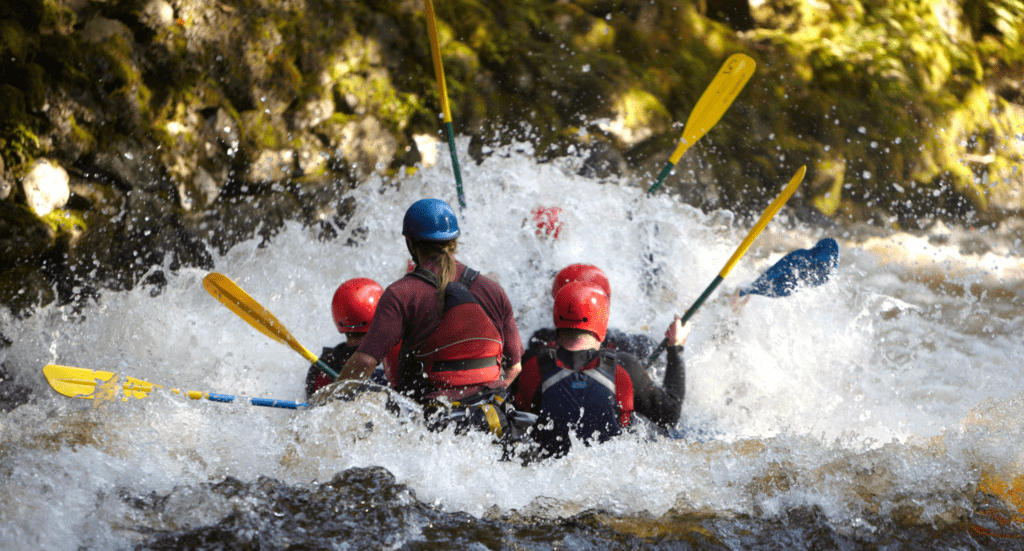
With reputable operators, yes. Costa Rica’s rafting industry operates under strict regulations, requiring certified guides, proper equipment, and safety protocols. All participants wear life jackets and helmets, and guides carry rescue equipment and first aid supplies. The river does present real risks as falling out happens, and rapids can briefly hold swimmers underwater but proper preparation and following guide instructions minimize dangers. Operators cancel trips when water levels become unsafe and prioritize your wellbeing over revenue.
What Month Is Best for White Water Rafting in Costa Rica?
March and April offer optimal conditions with enough water for exciting rapids without the swollen river levels that increase difficulty. The dry season overall (December through May) provides more predictable conditions and clearer weather whereas Green season (May through November) brings higher water and more challenging rapids, which experienced rafters often prefer. September and October see the highest water levels which occasionally forces cancellations but creates thrilling runs when conditions allow.
Can Beginners Do White Water Rafting?
First-time rafters regularly complete the Pacuare with no prior experience. Professional guides handle the technical aspects such as reading currents, steering the raft, and choosing lines through rapids. Your role involves following paddle commands (forward, backward, stop) and staying in the boat. Reasonable fitness matters more than experience; if you can swim and have basic endurance for 4-5 hours of activity, you’ll manage fine. The experience feels challenging but achievable, like hiking a trail that pushes you without defeating you.
What Is Best to Wear for White Water Rafting?
Quick-dry synthetic clothing works best so wear a swimsuit under board shorts or athletic wear. Avoid cotton entirely, as it stays wet and cold for hours. Secure water shoes with heel straps prevent loss during swims whereas flip-flops and sandals without straps wash away immediately. Apply waterproof sunscreen before starting, and consider a baseball cap or visor for sun protection. Don’t bring jewelry, expensive watches, or anything else that you can’t afford to lose in Class IV rapids.
What Is the Best Time for Rafting on the Pacuare?
Start early as most operators launch around 9:00 AM after safety briefings and gear distribution. Morning starts mean cooler temperatures during the physically demanding paddling sections and better odds of clear weather before afternoon showers which are common in green season. The river typically runs clear in morning hours which provides better visibility for wildlife spotting and photography. By early afternoon, you’ll complete the most challenging sections while energy remains high.
What Is the Pacuare River Known For?
The Pacuare earned international recognition as one of the world’s premier rafting destinations because it combines challenging Class III-IV rapids with extraordinary biodiversity and scenery. The river flows through protected rainforest corridors, past indigenous Cabécar communities, and through dramatic canyon sections with waterfalls cascading directly into the water. Conservation efforts successfully blocked a proposed hydroelectric dam in 2005 which preserved the wild river for future generations. The unique combination of adventure, nature, and cultural significance makes Pacuare stand apart from other Costa Rican rafting options.