
Last Updated on November 8, 2025
Arenal Volcano National Park: What's Covered
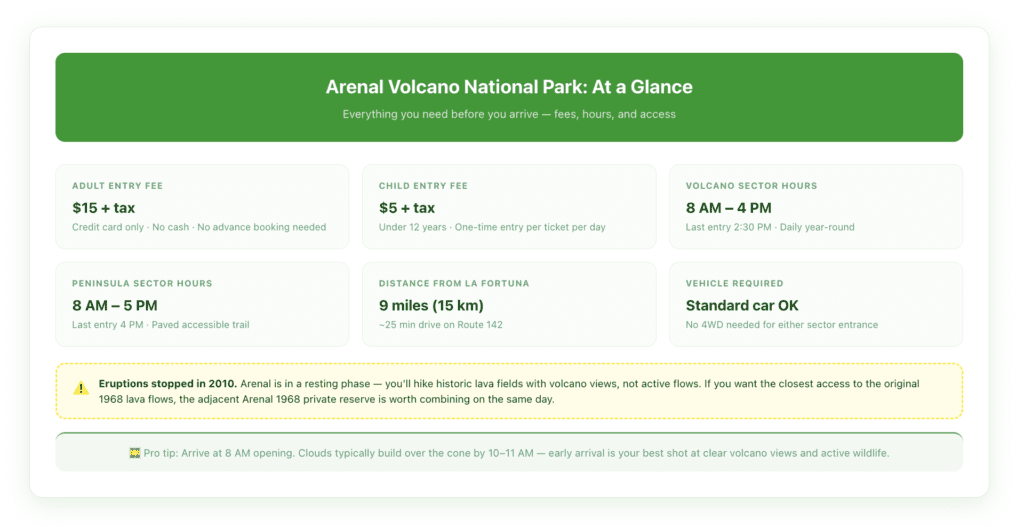
Arenal Volcano National Park protects 12,000 hectares of lava fields and rainforest near La Fortuna. Entry is $15 plus tax for adults, open 8 AM–4 PM daily, no advance booking required. A standard rental car handles both sectors — no 4WD needed.
Quick Facts:
- Entry fee: $15 + tax adults, $5 + tax children — credit card only
- Hours: Volcano Sector 8 AM–4 PM (last entry 2:30 PM); Peninsula Sector 8 AM–5 PM
- Eruptions: Dormant since 2010 — lava field hikes, no active flows
- Best time: Arrive at 8 AM, opening for the clearest views before clouds build
- Combine with: Hot springs, La Fortuna Waterfall, hanging bridges
Top 4 Trails:
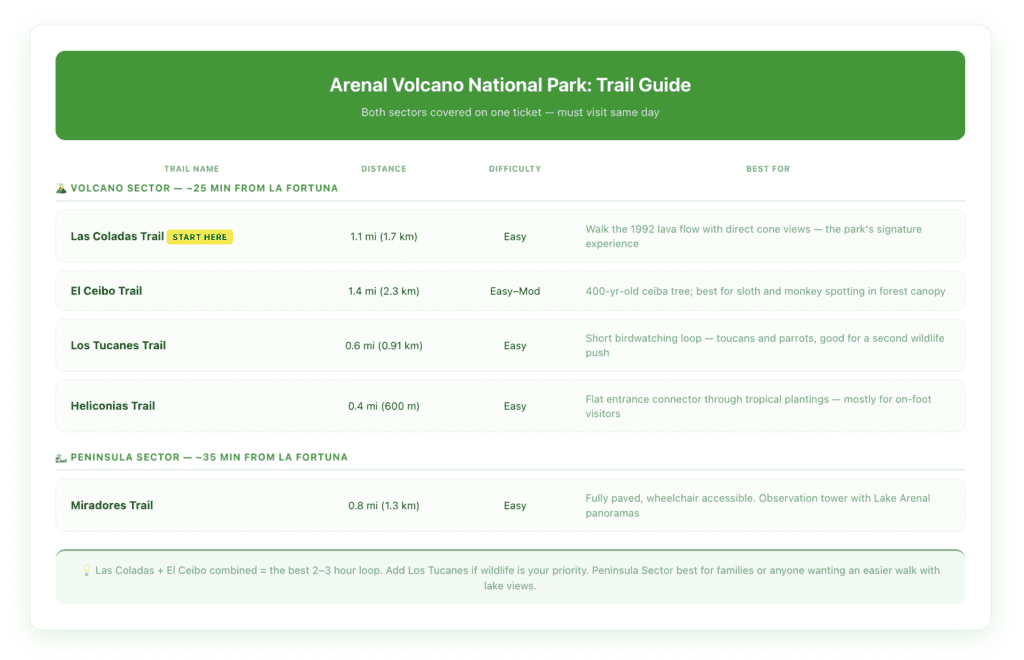
- Las Coladas — 1.1-mile lava flow walk with direct volcano views; start here
- El Ceibo — 1.4-mile forest loop; best for sloths and monkeys
- Los Tucanes — 0.6-mile birdwatching loop through dense canopy
- Miradores (Peninsula Sector) — Paved, wheelchair-accessible; Lake Arenal views
Most visitors pair a morning park visit with an afternoon hot springs visit. From San José Airport, it’s 3 hours; from Liberia Airport, 2.5 hours via the Lake Arenal route.
If you need any help with a Costa Rica car rental, contact us now!
Yes — Arenal Volcano National Park delivers one of Costa Rica’s most rewarding half-days, though not for the reason most visitors expect. The volcano itself stopped erupting in 2010, so you won’t see lava. What you’ll get instead is a walk across hardened lava fields with a near-perfect cone looming overhead, dense rainforest packed with monkeys and sloths, and access to the region’s famous geothermal hot springs just down the road. The park entrance fee is $15 plus tax for adult foreigners and $5 plus tax for children, and no advance reservation is required — you just show up and pay by credit card.
Key Takeaways
- Entrance fee: $15 + tax adults, $5 + tax children (credit card only — no cash)
- Hours: Volcano Sector 8 AM–4 PM daily (last entry 2:30 PM); Peninsula Sector 8 AM–5 PM (last entry 4 PM)
- No eruptions: Arenal has been dormant since 2010 — you’ll hike historic lava fields, not active flows
- Best time to visit: Arrive at 8 AM, opening for the clearest views and most active wildlife before clouds build
- No 4WD needed: Standard rental cars handle both park entrances year-round
- Best combo: Morning hike in the park + afternoon hot springs = ideal Arenal day
What Is Arenal Volcano National Park?
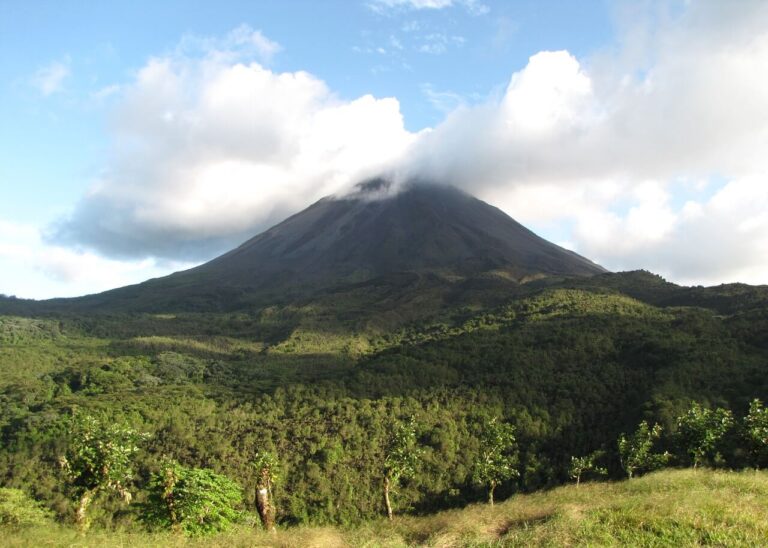
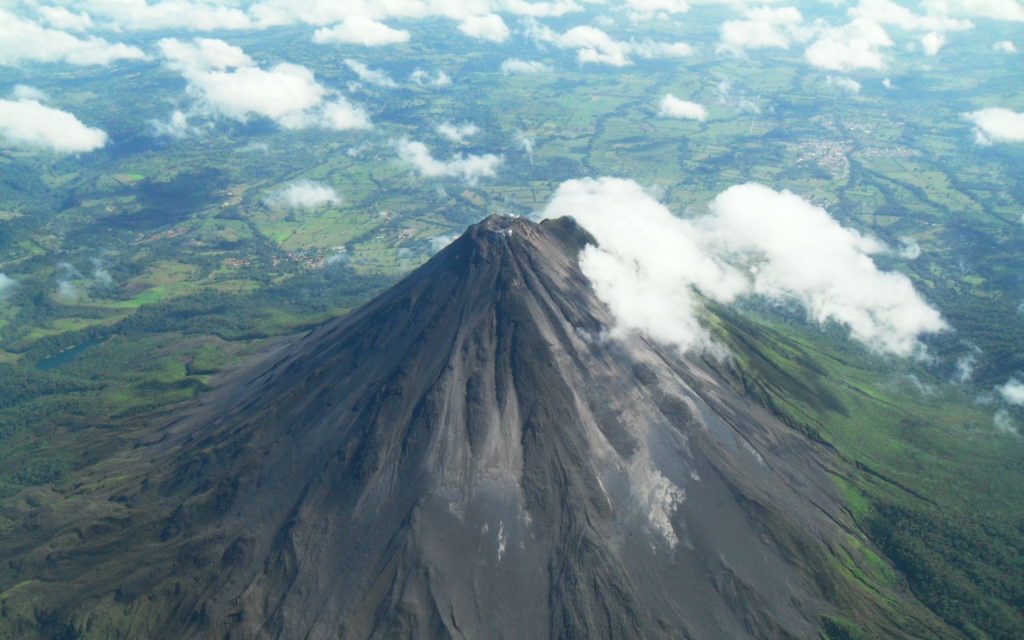
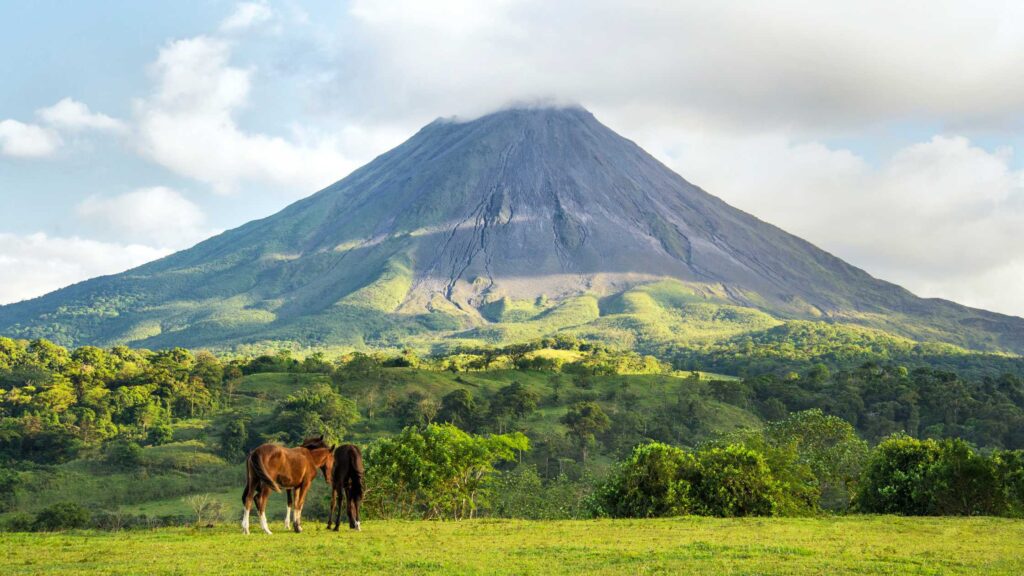
Arenal Volcano National Park covers approximately 12,000 hectares (29,650 acres) of volcanic terrain, lava fields, and tropical rainforest in Costa Rica’s Alajuela Province. Established in 1991, the park protects the area surrounding Arenal Volcano — a near-perfect stratovolcano rising 1,633 meters (5,358 feet) — and serves as the ecological backbone of the larger Arenal Conservation Area.
The park connects Costa Rica’s Pacific and Caribbean watershed systems, creating a biological corridor that supports remarkable biodiversity. According to Costa Rica’s national tourism board, Arenal remains one of the most visited destinations in the country. The iconic La Fortuna region surrounds it, with hot springs, waterfalls, hanging bridges, and Lake Arenal all within 30 minutes of the park entrance.
Why Hasn’t Arenal Erupted Since 2010?
Arenal erupted nearly continuously for 42 years following a catastrophic explosion on July 29, 1968, that killed 87 people and buried three villages. After that awakening, it became one of the most reliably active volcanoes in the Western Hemisphere — until October 2010, when activity gradually stopped. Volcanologists classify it as being in a “resting phase,” not extinct. According to the Smithsonian Institution’s Global Volcanism Program, which tracks Arenal’s ongoing monitoring data, prior to 1968, the volcano had been dormant for approximately 500 years, so long periods of quiet are simply part of its natural cycle. Geothermal activity continues below the surface, which is exactly what feeds the region’s famous hot springs.
What this means practically: you’ll walk across actual cooled lava from past eruptions — including the 1992 Coladas flow and the catastrophic 1968 flow at the adjacent Arenal 1968 private reserve — but you won’t witness active lava. Setting that expectation correctly makes the visit much more satisfying.
What Wildlife Lives Inside the Park?
The park harbors 131 mammal species. White-faced capuchins, howler monkeys, and three-toed sloths are the most reliably spotted — particularly along the canopy above the El Ceibo and Coladas trails. Spider monkeys and coatis appear regularly, too. More elusive residents include jaguars, ocelots, and the Baird’s tapir, though sightings of big cats are uncommon.
Birdwatchers have recorded more than 500 species in the broader Arenal Conservation Area — over half of all bird species found in Costa Rica. Inside the park, chestnut-mandibled toucans, keel-billed toucans, mot-mots, resplendent quetzals, and various parrot species are regular sightings. The Caño Negro Wildlife Refuge, 90 minutes north, offers a complementary wildlife experience if birding is your priority. For deeper context on the park’s ecosystem, Costa Rica’s conservation science journal CECOECO documents biodiversity research across the Arenal region.
Reptile diversity is equally impressive — 135 species, including the fer-de-lance and eyelash pit viper, plus red-eyed tree frogs and blue jean poison dart frogs in the forest understory.
What Are the Hiking Trails at Arenal Volcano National Park?
The park has two separate sectors — Volcano Sector and Peninsula Sector — each with its own entrance, parking, and trails. Your ticket covers both, but you must visit both on the same day to avoid paying twice.
Volcano Sector Trails
The Volcano Sector is the main visitor experience, located roughly 9 miles (15 km) from La Fortuna on Route 142. Four trails fan out from the central visitor center and parking lot:
Las Coladas Trail — 1.1 miles (1.7 km), easy: This is the park’s signature hike and the one worth prioritizing. It takes you directly across the 1992 lava flow, through a landscape of black volcanic rock slowly being reclaimed by young forest. The trail ends at a viewpoint where Arenal’s cone fills the sky on clear mornings. Trail surfaces are uneven, so sturdy footwear matters. National Geographic’s coverage of Costa Rica’s volcanic parks notes that lava field hikes like this are among the most distinctive geological experiences in Central America.
El Ceibo Trail — 1.4 miles (2.3 km), easy-moderate: Named for an ancient ceiba tree that somehow survived surrounding lava flows, this trail winds through secondary forest where sloths and monkeys are commonly spotted. It connects to Las Coladas at the far end, making a satisfying loop for those with extra time.
Los Tucanes Trail — 0.6 miles (0.91 km), easy: A short out-and-back trail designed specifically for wildlife and birdwatching. The forest here is slightly denser, providing good cover for toucan and parrot activity. Useful if you’ve already done Las Coladas and want a second wildlife push.
Heliconias Trail — 0.4 miles (600 meters), easy: A flat connector trail running through heliconia plantings near the entrance. Most visitors with a car will drive past this one — it’s most useful if you’re combining trails on foot.
What Is the Peninsula Sector?
Opened in 2017, the Peninsula Sector sits about a 35-minute drive from the main visitor center and offers a completely different experience focused on Lake Arenal views. The 0.8-mile (1.3 km) paved Miradores Trail is fully wheelchair accessible and leads to an observation tower with panoramic lake and volcano views. A wooden bridge side trail branches off for visitors who want more forest.
The Peninsula Sector is excellent for families with young children or anyone who wants a more relaxed walk. It’s less visited than the Volcano Sector, so mornings here are genuinely quiet.
How Much Does It Cost and Do You Need to Reserve?
The Arenal Volcano National Park entrance fee for adult foreigners is $15 USD plus tax (approximately $16.95 total). Children under 12 pay $5 USD plus tax. Costa Rican residents pay lower rates in colones — an ethical pricing structure that ensures locals can access their own natural heritage regardless of income. Park management falls under SINAC, Costa Rica’s national park authority, which oversees all protected areas in the country.
Payment is by credit card only. No cash, no advance reservations required. You purchase tickets at the ranger station upon arrival. Visa and Mastercard are most reliably accepted — if you’re carrying only American Express, confirm before visiting. Unlike Manuel Antonio or Poás Volcano, Arenal doesn’t cap daily visitors with advance bookings — walk-ins are always welcome during operating hours.
Sara Flag: Verify current fee amounts directly at the park or via SINAC before publishing, as national park fees in Costa Rica occasionally adjust.
Is a Guided Tour Worth It?
Self-guided visits work perfectly well — the trails are clearly marked, and signage is informative throughout. However, hiring a naturalist guide genuinely transforms the wildlife experience. Guides carry spotting scopes, know where sloths tend to sleep, and can identify bird calls from 165 feet (50 meters) away. You’ll simply see more.
Guided tours typically cost $40–$70 per person and last 2–3 hours. If you’re not renting a car, bundled tours also solve the transportation problem since there’s no direct public bus to either park entrance.
Private reserves near the national park offer solid alternatives worth knowing about:
- Arenal 1968: Trails through the original 1968 lava flows, open until 5 PM (one hour later than the national park), $25 adults. Better for visitors wanting historical context around that specific eruption.
- Arenal Observatory Lodge: 6.8 miles (11 km) of trails, hanging bridges, and The Nest observation tower — the only accommodation actually inside park boundaries.
When Should You Visit Arenal Volcano National Park?
What’s the Best Season?
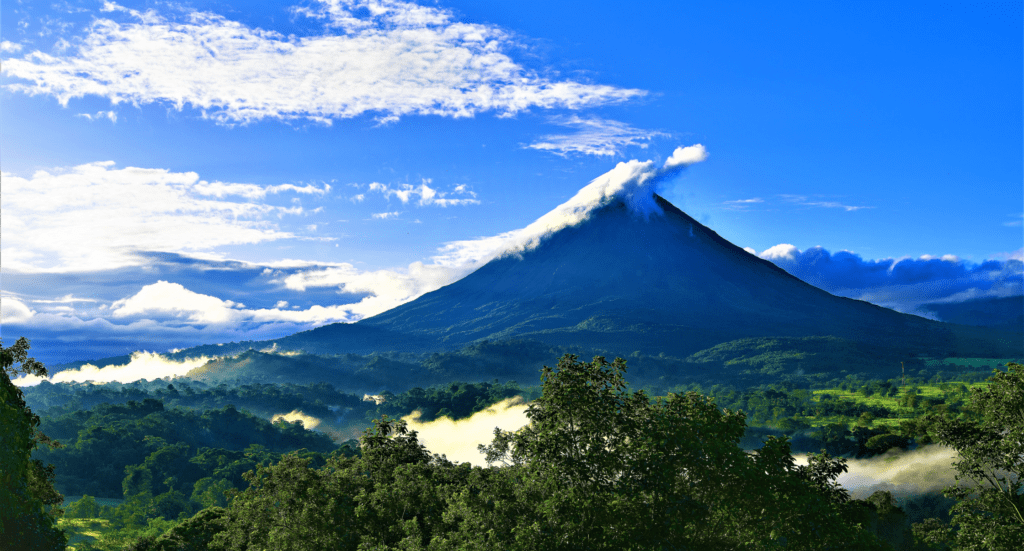
The dry season from December through April offers the best conditions for volcano views. January through March are the clearest months. Morning visibility is highest before clouds build — Arenal’s cone acts as a moisture magnet and tends to disappear into cloud cover by mid-morning regardless of season. The Tico Times has noted that visitor counts are highest from December through April, so arriving at opening on weekdays gives you the best combination of views and crowd avoidance.
The green season from May through November brings real benefits: dramatically lower accommodation prices, fewer tourists at the trailheads, lush jungle scenery, and typically dry mornings. Rain usually arrives after 2 PM, so a morning visit works well even in the wet months. September and October see the heaviest rainfall and most persistent cloud cover — if clear volcano views are your top priority, avoid those two months.
What Time of Day Is Best?
Arrive at 8 AM when the gate opens. Wildlife is most active in the cooler early morning hours, and that’s your best window for a clear cone view before cloud cover rolls in. Most visitors wrap up by 11 AM–noon, which leaves the afternoon free for hot springs or other La Fortuna activities.
Don’t waste time heading to the park in the afternoon expecting views — clouds are almost always present by midday.
How Do You Get to Arenal Volcano National Park?
Driving from San José
The drive from San José’s Juan Santamaría Airport (SJO) to La Fortuna covers roughly 81 miles (130 km) and takes 2.5–3 hours via Routes 1 and 702 through San Ramón. From La Fortuna, the Volcano Sector entrance is another 15 km (9 miles) west — a 25-minute drive on Route 142.
No 4WD required for either park entrance. Standard rental vehicles handle both sectors year-round. From the main road, watch for a junction near a blue and white police station about 5 minutes past Tabacón Hot Springs — turn toward El Castillo, and the park entrance appears 2.1 km (1.3 miles) down on the left. Waze set to “Arenal Volcano National Park Visitor Center” reliably navigates to the correct lot.
For driving tips specific to Costa Rica’s road conditions, the San José to La Fortuna route is one of the more straightforward drives — mostly paved with two small toll booths near San José.
Driving from Liberia Airport
Coming from Liberia Airport (LIR), the drive to La Fortuna takes 2.5–3 hours via Route 1 south to Cañas, then Route 142 east along the scenic Lake Arenal shoreline. This route is excellent for travelers combining Arenal with Guanacaste beaches — it’s a logical one-way loop that avoids backtracking.
Both airports are roughly equidistant from La Fortuna. If Arenal is a mid-trip stop on a larger Costa Rica itinerary, either airport works as a starting point — just plan your route around your other destinations.
What Should You Bring to Arenal Volcano National Park?
The Arenal region runs 70–88°F (21–31°C) year-round with high humidity. Trail surfaces at Las Coladas involve uneven lava rock — ankle support matters. The U.S. State Department’s Costa Rica travel page lists the country as a Level 1 destination (exercise normal precautions), and the main national parks are considered very safe for independent travelers.
Essential gear:
- Closed-toe shoes with traction (not sandals)
- Lightweight, moisture-wicking clothing
- Rain jacket or poncho — applicable in any season
- Long pants for lava trail sections
- Hat and sunglasses
Pack these too:
- At least 1.5 liters of water per person (no vendors inside the park)
- Sunscreen and insect repellent
- Snacks (nothing is sold inside either sector)
- Binoculars — a genuine wildlife game-changer here
- A camera with zoom capability for both volcano and bird shots
What Hot Springs Are Near the Park?
Most visitors combine a morning at the national park with an afternoon soak. The Arenal hot springs are naturally heated by geothermal activity connected to the volcano’s subsurface — no eruptions required for the springs to keep flowing.
Tabacón Grand Spa Thermal Resort: The most famous option, built around a naturally heated river. Day passes start around $80–100 and include access to multiple pool levels and waterfall features. Book in advance during high season. Lonely Planet’s Costa Rica guide consistently ranks Tabacón among the country’s top hot spring experiences.
Baldi Hot Springs: The largest property with 25 thermal pools, waterslides, and swim-up bars. More of a resort atmosphere than an intimate spa. A day costs around $63, including a meal.
Eco Termales: Capped at 100 visitors for a genuinely peaceful experience. Fewer pools, but a better option for anyone seeking quiet over party atmosphere. Reservations required.
Free Rio Tabacón pools: A natural section of the river accessible from a pullout near Tabacón resort — bring water shoes and a local tip on safe entry points.
Beyond hot springs, the La Fortuna area offers hanging bridge tours, La Fortuna Waterfall, horseback riding through rainforest reserves, and the Peñas Blancas safari float for wildlife sightings from the river. The Venado Caves about an hour away offer a dramatically different underground experience worth stacking onto a multi-day stay.
Where Should You Stay Near Arenal?
La Fortuna town provides the widest range of accommodations near Arenal Volcano, from budget hostels to multi-pool luxury resorts. Staying between La Fortuna and the park entrance — rather than in town itself — gives better volcano views from your room but requires a car to reach restaurants.
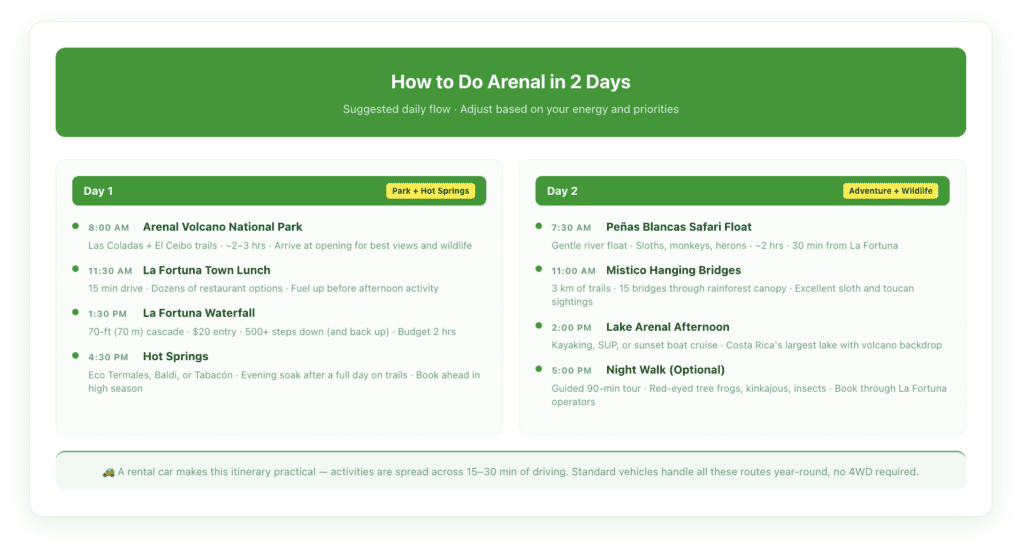
Most travelers find 2–3 nights is the right amount of time to cover the park, hot springs, waterfall, and at least one adventure activity without feeling rushed. One night works if you’re doing Arenal as a stop on a bigger Costa Rica road trip rather than a destination in itself.
Arenal sits roughly midway between San José and Monteverde cloud forests, which makes it a logical hub stop on the classic Costa Rica route. Whether you’re approaching from SJO or LIR, having your own rental car turns the Arenal area from a single attraction into an entire region of exploration. With a car, you can chase the morning light to the park at opening, drive to hot springs for a late afternoon soak, and take a night walk tour back in La Fortuna — all in one day, at your own pace. Britannica’s entry on Arenal Volcano provides additional geological background for anyone wanting to go deeper into the science before visiting. When you’re ready to plan the drive, contact Vamos — our team knows the roads and can match you with the right vehicle for your itinerary.
Frequently Asked Questions
Can you see lava at Arenal Volcano National Park?
No. Arenal stopped producing active lava flows in October 2010 and has been in a dormant resting phase since. You’ll walk over hardened lava fields from past eruptions — particularly the 1992 Coladas flow — but there’s no active volcanic activity visible from the trails. The volcano’s cone is still impressive to look at, especially when the clouds clear in the morning.
Do you need to book tickets in advance for Arenal Volcano National Park?
No advance reservation is required. Unlike Manuel Antonio or Poás Volcano, Arenal Volcano National Park does not cap daily visitor numbers. You purchase tickets at the ranger station with a credit card on the day of your visit. No cash accepted.
How long does it take to hike Arenal Volcano National Park?
Most visitors spend 2–3 hours covering the main Volcano Sector trails. The Las Coladas Trail alone takes about 45–60 minutes at a relaxed pace. Combining Las Coladas with El Ceibo adds another hour. If you add the Peninsula Sector on the same day, budget a full 4–5 hours total, including driving between sectors.
Is Arenal Volcano National Park safe?
Yes. The volcano has been dormant since 2010 and is continuously monitored by Costa Rica’s national seismological network. The trails are well-maintained and clearly marked. The main safety considerations are trail surfaces — volcanic rock can be slippery when wet — and standard outdoor precautions like sun protection, hydration, and staying on marked paths. Summit hiking is prohibited and would be extremely dangerous due to gas and terrain.
Is one day enough for Arenal Volcano?
One day covers the national park and one other activity (hot springs or waterfall). Most travelers prefer 2–3 nights in the area to include the park, hot springs, La Fortuna Waterfall, and one adventure activity without feeling rushed. The region genuinely rewards slowing down — volcano views often improve on your second or third morning.
What is the closest city to Arenal Volcano National Park?
La Fortuna de San Carlos is the nearest town, 15 km (9 miles) from the main Volcano Sector entrance — about a 25-minute drive. La Fortuna has restaurants, accommodations across every budget range, tour operators, and everything you need to base your Arenal visit.
Is Arenal Volcano National Park worth it without eruptions?
Yes, though it requires adjusting expectations. The park’s value now lies in lava field hiking, forest wildlife, and dramatic volcanic scenery — not active eruptions. Visitors who approach it as a lava field trek combined with birdwatching and volcano photography consistently find it worthwhile. Those expecting flowing lava tend to be disappointed. The combination of the park plus nearby hot springs and La Fortuna Waterfall makes the overall region — not just the park alone — the main draw.
Can you hike to the summit of Arenal Volcano?
No. Summit hiking is prohibited in the national park and illegal. The volcano remains geologically active below the surface, and toxic gas exposure at higher elevations poses serious danger — the last person who attempted an illegal summit hike died from it. All designated trails stay at the base of the volcano and are completely safe.