
Last Updated on June 19, 2026
Puntarenas to Paquera Ferry: What's Covered
The Puntarenas to Paquera ferry crosses 11 nautical miles (20 km) of the Gulf of Nicoya in 70-80 minutes, connecting San José travelers to Santa Teresa, Montezuma, and Tambor while cutting 4+ hours off the overland drive.
Quick Facts:
- Crossing time: 70-80 minutes, 8 daily departures each direction (4 AM–10 PM)
- Cost: Priced in colones — check QuickPay CR for current USD equivalent
- Best departure: 9 AM from Puntarenas for travelers from San José
- Vehicle: 4WD recommended for peninsula roads, especially during the green season (May–Nov)
- Booking: Online essential December–April; arrive 1.5–2 hours early for in-person tickets
Top 3 Ferry Tips:
- Book online early – QuickPay CR sells limited spots; in-person buyers during the dry season risk missing peak departures
- All passengers exit the vehicle – Driver boards alone; others walk on with individual tickets
- Download tickets offline – Cell service at both docks is unreliable; screenshot your confirmation
The ferry is the fastest route to the southern Nicoya Peninsula for travelers from San José or the Central Pacific. Those arriving via Liberia Airport typically save time by driving around via the Friendship Bridge instead.
If you need any help with a Costa Rica car rental, contact us now!
The ferry ride from Puntarenas to Paquera is 11 nautical miles across the Gulf of Nicoya. It’s the main gateway to the southern Nicoya Peninsula and serves destinations like Santa Teresa, Montezuma, Mal País, and Tambor. Whether you’re a foot passenger or bringing a rental car, the ferry cuts a 5+ hour drive around the peninsula down to a scenic 70-minute crossing with Gulf views, wildlife spotting, and an onboard cafeteria. It’s not just transportation; it’s genuinely a pleasant part of the trip.
Key Takeaways
- Crossing time: 70–80 minutes across 11 nautical miles of the Gulf of Nicoya.
- Schedule: 8 daily departures each direction — 4 AM, 6:30 AM, 9 AM, 12 PM, 3 PM, 6 PM, 8 PM, 10 PM.
- Cost: ₡810 CRC per adult foot passenger (~$1.50–1.55 USD at current rates); ₡11,400 CRC + tax per car with driver (~$23–26 USD depending on the exchange rate).
- Capacity: 170 vehicles, 700 passengers.
- Booking: Online via QuickPay CR website or in person at the dock, but online booking is strongly recommended December through April.
- Best for: Reaching Santa Teresa, Montezuma, Mal País, and Tambor from San José or the Central Pacific.
What Is the Ferry Schedule from Puntarenas to Paquera?
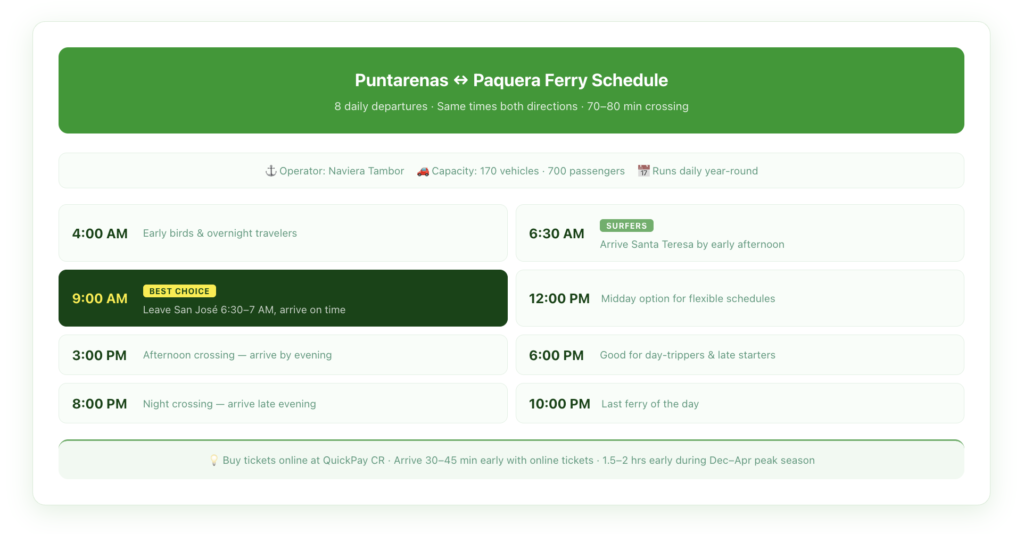
The ferry operates eight times daily in each direction, with the same departure times going both ways.
Puntarenas → Paquera: 4 AM, 6:30 AM, 9 AM, 12 PM, 3 PM, 6 PM, 8 PM, 10 PM
Paquera → Puntarenas: 4 AM, 6:30 AM, 9 AM, 12 PM, 3 PM, 6 PM, 8 PM, 10 PM
The operator is Naviera Tambor, and their large vessel holds 170 vehicles and 700 passengers. It’s substantial enough that you barely feel the Gulf swell during the crossing. You should always confirm the current schedule on their website before traveling, because times occasionally shift around major holidays or for ferry repairs.
Which Departure Time Works Best?
The 9 AM ferry from Puntarenas hits the sweet spot for most travelers coming from San José. Leave the city around 6:30–7 AM, allow time for San José traffic on the way out, and you’ll arrive at the dock with time to spare. You’ll reach Santa Teresa or Montezuma by early afternoon to hit the beach.
The 6:30 AM departure works if you’re staying overnight in Puntarenas or need to get to the Nicoya Peninsula early, which is useful if you’re chasing a morning surf session. The 6 PM or 8 PM ferries give you a full day exploring the Central Pacific coast before making the crossing and arriving at your accommodation that evening.
How Much Does the Ferry Cost?
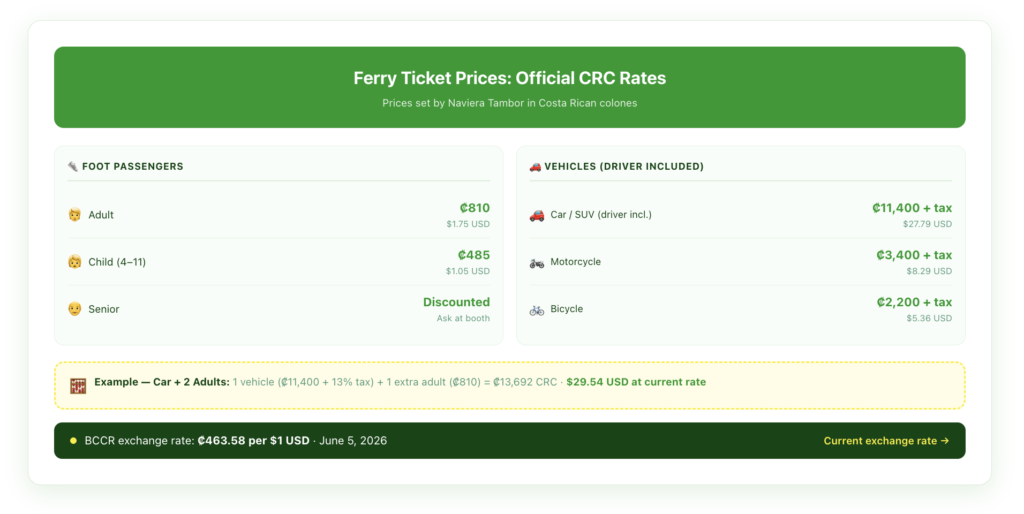
Ferry prices are set in Costa Rican colones (CRC). You can see the current USD exchange rate here.
What Are the Passenger Fares?
- Adults: ₡810 CRC
- Children (4–11): ₡485 CRC
- Seniors: Reduced rate available at the ticket office
How Much Does It Cost to Take a Vehicle?
- Cars/SUVs (includes driver): ₡11,400 CRC base + tax
- Motorcycles: ₡3,400 CRC + tax
- Bicycles: ₡2,200 CRC + tax
If you’re traveling with a car and two adults, you’ll purchase one vehicle ticket (which includes the driver) plus one individual passenger ticket for the second person for a total of roughly ₡12,210–13,000 CRC. The USD amount you see displayed will depend on that day’s exchange rate. Cash in colones is accepted at the dock, whereas credit cards work at the QuickPay CR booking site.
How Do You Buy Ferry Tickets?
How Do You Buy Tickets Online?
Tickets are sold through the QuickPay CR website. Here’s how it works:
Step 1: Select your route (Puntarenas to Paquera or reverse), date, and departure time.
Step 2: Choose ticket type: “Vehiculo Liviano Automovil/SUV” for standard cars and SUVs, “Persona(s)” for foot passengers, or “Vehiculo Carga Liviana Placa CL” for pickup trucks with commercial plates.
Step 3: Enter the number of adults, children, and seniors. For vehicles, enter the license plate. For rental cars where the plate isn’t assigned until pickup, enter any 6-digit placeholder or type “RENTALCAR.”
Step 4: Enter your name, phone number, and email. Accept terms and click “Comprar” (Buy).
Step 5: Complete payment. Your ticket arrives by email, so screenshot it or save the PDF before leaving WiFi, since cell service at the Paquera dock is unreliable.
The site sells a limited number of tickets online per departure. Once those sell out, remaining spots are available in person only, which is why early online booking matters during the dry season, when first-time visitors often underestimate how quickly the ferry fills up.
Can You Buy Tickets in Person?
The ticket office is across the street from the dock in a store called “To Go.” Tell the cashier the number of passengers and if you have a vehicle to buy the correct tickets: “Dos adultos y un carro liviano, por favor” (Two adults and one small car, please).
Arrive early for in-person purchases:
- Regular days: At least 1 hour before departure
- Weekends and December–April: 1.5–2 hours early
- Christmas, New Year’s, Easter: 2–3 hours early because these periods can sell out, and getting bumped to the next departure can mean hours of waiting
Where Is the Ferry Terminal in Puntarenas?
The ferry departs from the tip of Puntarenas, at the end of “Paseo de los Turistas,” which is the main coastal road that runs parallel to the shore.
How Do You Find the Ferry Terminal?
- Google Maps: Search “Ferry El Carmen Puntarenas”
- Waze: Enter “Atracadero Ferry Paquera – Naranjo”
Both work well once you’re in Puntarenas city. If you’re driving from San José, note that the final approach through Puntarenas city can be confusing, so stick to GPS directions. The parking area at the dock gets congested during busy departure windows, and it’s worth factoring in an extra 10–15 minutes if you’re arriving during peak season.
How Long Is the Drive from San José to the Ferry?
The drive from San José’s Juan Santamaría Airport to the ferry dock takes approximately 1 hour and 45 minutes under normal conditions via Highway 27 toward the Pacific. In reality, always add at least 30 minutes for traffic, and up to an hour during rush hours (6:30–8:30 AM and 4:30–6:30 PM). The route is well-paved, and a standard vehicle handles it without issue.
How Do You Take the Ferry with a Car?
What Should You Do Before Loading?
When approaching the dock with a vehicle, look for officers in yellow vests directing traffic. Follow signs reading “Fila de Ferry – Line to Ferry” and get in the Paquera line specifically, as the Naranjo ferry uses a separate queue, and they load from the same general area. A ferry attendant will approach the vehicle line to check tickets before loading begins.
What Happens During the Loading Process?
Loading begins approximately one hour before departure. Announcements are played in both English and Spanish.
Important: When driving onto the ferry, all passengers except the driver must exit the vehicle and board on foot. Each person needs their individual ticket, either physical or digital, to show the boarding agent. This is one of the most common mistakes families make, and it causes boarding delays if everyone stays in the car.
What Is There to Do During the Crossing?
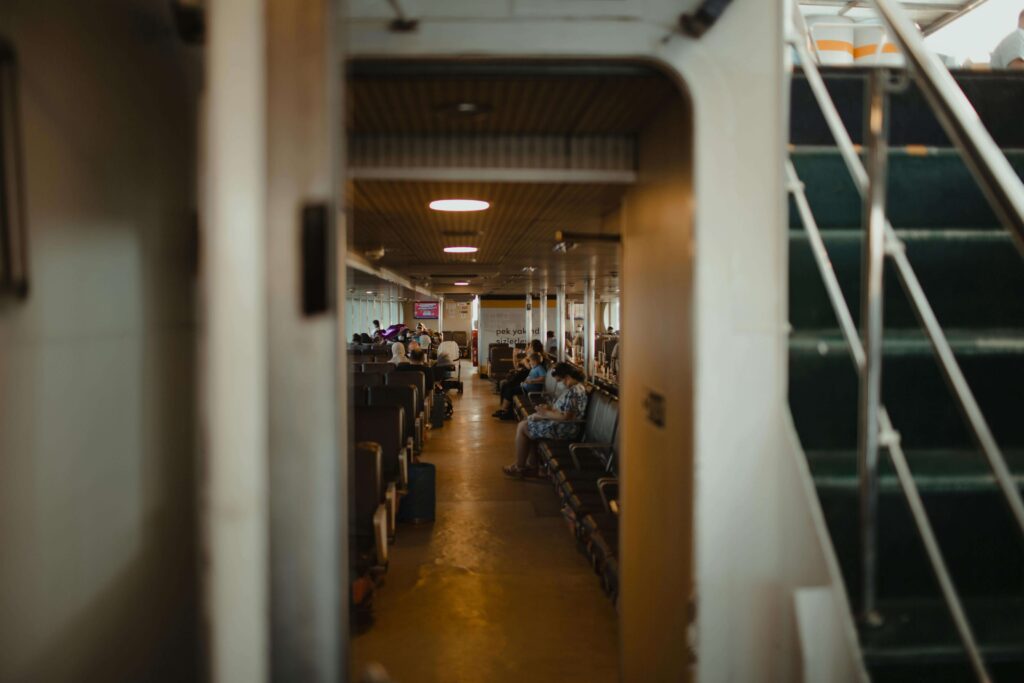
Leave your car on the lower deck and head upstairs. The ferry has an air-conditioned indoor cabin with TVs, outdoor deck seating with Gulf views, a cafeteria selling snacks, drinks, and food, free WiFi (requires a simple signup), bathrooms, and a pet area on the lower level (pets must be leashed).
It’s worth being on the upper deck for the views of crossing the Gulf of Nicoya. You’ll pass small islands; some are protected bird sanctuaries, others house fishing communities as well as pelicans, frigatebirds, and occasional dolphins. Bring binoculars to make the most of the incredible view if you have them.
What Happens When You Arrive in Paquera?
An announcement alerts drivers to return to their vehicles as the ferry approaches the dock. Foot passengers disembark first, then vehicles drive off. From the Paquera dock:
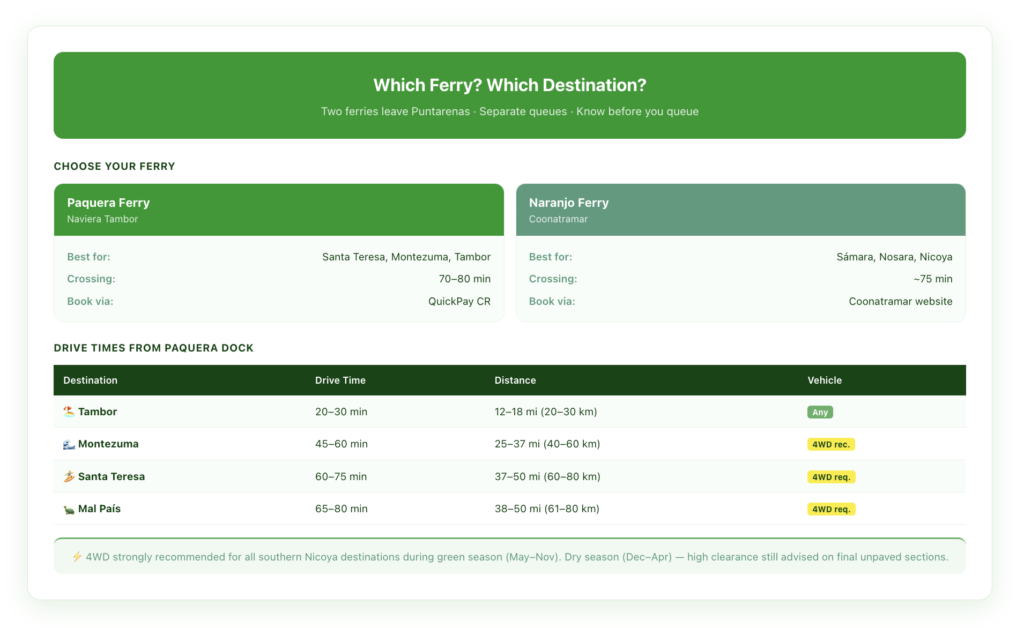
- Tambor: 20–30 minutes (30 km / 19 miles)
- Montezuma: 45–60 minutes (45 km / 28 miles)
- Santa Teresa / Mal País: 60–75 minutes (53 km / 33 miles)
The roads on the southern Nicoya Peninsula have improved significantly over recent years, but still include unpaved sections. A 4WD or high-clearance vehicle is recommended, particularly during the green season (May–November) when rain can impact road surfaces. If you’re coming from Liberia Airport and heading to the southern peninsula, the ferry route isn’t your most efficient option, but more on that below.
What Do Foot Passengers Need to Know?
How Do Foot Passengers Get to the Dock?
If arriving by bus from San José, you’ll be dropped directly at the ferry ticket area. The Montezuma and Santa Teresa buses continue through the ferry with you, so you stay on the bus when it drives onto the vessel. Foot passengers can also reach Puntarenas by public bus from San José’s Coca Cola Terminal for around $2 USD.
While waiting to board, foot passengers gather under a large covered area near the loading zone. Be ready to show your ticket when the line moves.
How Do Foot Passengers Board the Ferry?
Follow the foot passenger line when loading begins, show your ticket to the attendant, and find a seat on the upper decks. Seating is open, and there are no assigned spots. The outdoor upper deck fills up fast on sunny mornings, so board early if you want deck space.
How Do Foot Passengers Continue from Paquera?
If you arrive on the San José bus, simply reboard after the ferry docks and the bus continues to Cóbano, Montezuma, and Santa Teresa. Taxis wait at the Paquera dock as well, and you can expect around ₡30,000 CRC (~$57–60 USD) for a taxi to Santa Teresa, although prices vary by driver and season. Shared taxis cost less if you can find other passengers heading the same direction.
What's the Difference Between the Paquera and Naranjo Ferries?
Two ferries operate from Puntarenas to the Nicoya Peninsula, which serve different destinations. Make sure you’re in the correct line at the dock because they load separately.
Paquera Ferry (Naviera Tambor):
- Best for: Santa Teresa, Montezuma, Mal País, Tambor
- Crossing time: 70 minutes
- Tickets: QuickPay CR website
Naranjo Ferry (Coonatramar):
When Should You Take the Ferry Instead of Driving Around?
Does the Ferry Make Sense for Your Route?
Take the ferry if you’re:
- Coming from San José, the Central Valley, or the Central Pacific coast
- Heading to the southern Nicoya Peninsula: Santa Teresa, Montezuma, Tambor
- Wanting to cut 4+ hours off total drive time
- Interested in a scenic, relaxing break from the road
- On a one-week Costa Rica itinerary where every hour counts
Drive around via the Friendship Bridge (Puente de la Amistad) if you’re:
- Coming from Guanacaste or Liberia Airport
- Heading to the northern Nicoya Peninsula: Tamarindo, Nosara, Sámara via the main highway
- Planning stops along the peninsula’s interior towns
One practical note for two-week itinerary travelers: the ferry works best as a one-way crossing from the mainland toward the peninsula. Many travelers combine a Santa Teresa or Montezuma stay with a Manuel Antonio National Park stop beforehand, then take the ferry onward. Coming from the Central Valley toward the southern peninsula, this is one of the most efficient sequences available.
What Should You Know Before Your First Ferry Crossing?
Download your ticket offline. Cell service at both docks can be spotty. Screenshot your confirmation or save the PDF before you lose signal. You’ll need to show it at least twice.
Bring cash in colones. Credit cards work at the ticket office, but the onboard cafeteria and last-minute purchases are easier with colones. ATMs in Puntarenas work, but don’t rely on finding one right at the dock.
Arrive early during high season. The ferry can’t accommodate every vehicle that shows up, and being bumped means waiting hours for the next departure. Budget-conscious travelers planning Costa Rica activities can lose half a day by failing to book in advance. Online booking during December–April will guarantee your spot on the ferry.
Confirm the schedule before you go. While the eight-departure timetable is consistent year-round, verify timing at the Naviera Tambor website before your travel day, especially around major Costa Rican holidays when operations occasionally adjust or in low season when ferries might be withdrawn from service for repairs.
Consider taking a domestic flight to Tambor. If Tambor is your only destination and you don’t need a vehicle, domestic flights serve Tambor’s small airstrip and save time compared to the combined drive-plus-ferry route. You can arrange car rental delivery to the airport or hotel.
The 70-minute crossing is genuinely enjoyable. Most travelers find it goes quickly, so grab a drink, take the upper deck, and keep an eye on the water. The Gulf of Nicoya has an active ecosystem: dolphins appear regularly along the route, and the islands you pass are home to nesting seabirds. The views are part of what makes visiting Costa Rica’s Pacific coast worth the trip in the first place.
Planning your Nicoya Peninsula transport? Vamos can set you up with the right vehicle for the roads on the other side of the crossing, and the ferry dock is easy; the peninsula roads are where vehicle choice matters. For more details on ferry schedules and pricing directly from local sources, NicoyaPeninsula.com keeps an up-to-date crossing reference, and the Tico Times covers any service changes around major Costa Rican holidays.
What Destinations Can You Reach from the Paquera Ferry?
What Is Santa Teresa Like After the Crossing?
A world-class surf destination that’s evolved from a backpacker secret to an internationally known beach town. Expect consistent waves, yoga studios, boutique hotels, and a laid-back international crowd. Approximately 60–75 minutes (53 km / 33 miles) from the Paquera dock via roads that are mostly paved with some unpaved sections that are better navigated with a 4WD in the green season.
What’s in Montezuma?
The original bohemian beach village on the southern peninsula was established by European travelers in the 1960s. Known for waterfalls, artisan markets, and an authentically alternative vibe that’s resisted the resort development found elsewhere. Approximately 45–60 minutes (45 km / 28 miles) from Paquera.
What Does Tambor Offer?
A quieter option with a sheltered horseshoe-shaped bay and the peninsula’s calmest swimming conditions. Home to the only large resort on the southern peninsula and a domestic airstrip for travelers not taking the ferry. Approximately 20–30 minutes (24 km / 15 miles) from Paquera; it’s the closest major destination after docking.
What About Cabo Blanco Reserve?
Costa Rica’s first protected natural reserve is at the southern tip of the peninsula. Hiking trails through tropical dry forest reach pristine, secluded beaches accessible only on foot. Entry requires advance reservation through SINAC’s booking system, so book before your trip since walk-in access is not guaranteed. You can access the Reserve from Montezuma or Mal País.
Frequently Asked Questions
How long is the ferry ride from Puntarenas to Paquera?
The ferry takes approximately 70–80 minutes to cross the 11 nautical miles of the Gulf of Nicoya. Expect to take about 1.5 hours total from arriving at the dock to driving off on the Paquera side, including vehicle loading and unloading. The Naviera Tambor vessel holds 170 cars and 700 passengers, which makes it stable and comfortable even when the Gulf is a bit choppy.
How much is the Puntarenas to Paquera ferry?
Foot passengers pay ₡810 CRC per adult. And taking a car with the driver costs ₡11,400 CRC base plus tax. Additional passengers each need their own separate ticket. A car with two adults totals approximately ₡12,210–13,000 CRC one way. Check the current exchange rate here to convert pricing into USD.
Is Paquera, Costa Rica, worth visiting?
Paquera itself is a small transit town rather than a destination, but it’s the gateway to some of Costa Rica’s best beaches. From the dock, you can reach Santa Teresa’s world-class surf breaks, Montezuma’s waterfalls and artistic community, Tambor’s calm horseshoe bay, and the Cabo Blanco Reserve. The ferry crossing itself adds scenic value to the journey, which makes it a worthwhile trip rather than a chore.
How do I get to Paquera, Costa Rica?
The most practical route is to take the ferry from Puntarenas. Drive from San José (approximately 1 hour 45 minutes to the dock without traffic), purchase tickets online in advance, and cross in 70 minutes. From the Paquera dock, continue by car to your final destination. If you’re traveling without a vehicle, San José buses to Montezuma and Santa Teresa board the ferry as part of their route, but you stay on the bus through the crossing.
How early should I arrive for the ferry?
Online ticket holders on regular days: arrive 30–45 minutes before departure. During weekends and the dry season (December–April), arrive at least 1 hour early. Buying tickets in person during high season: arrive 1.5–2 hours early. During Christmas, New Year’s, and Easter week, arrive 2–3 hours early, as the ferry cannot accommodate all vehicles that show up, and getting bumped to the next departure means a significant wait.
How safe is the Puntarenas to Paquera ferry?
The Naviera Tambor ferry has an excellent safety record. The vessel is designed for calm gulf waters rather than open ocean, and the Gulf of Nicoya is sheltered, and crossings are smooth even on windy days. Life jackets and safety equipment are onboard, and the crew conducts safety briefings. The ferry operates daily in virtually all weather conditions, and cancellations for severe weather events are rare.
What is the best time to visit the Nicoya Peninsula?
The dry season (December–April) offers the best weather with minimal rain and easier road conditions for exploring. This is also peak tourist season with higher prices and busier ferries, so book early. The green season (May–November) brings afternoon showers, fewer tourists, lower accommodation rates, and lusher landscapes. Surfers often favor September–October for bigger Atlantic-driven swells. The ferry crossing itself is pleasant year-round.
Are ferries cheaper than flying to Tambor?
Significantly. The ferry costs ₡810 CRC per person, versus $100+ for domestic flights to Tambor’s airstrip. Even with a rental car vehicle fee, the ferry remains far cheaper than flying and gives you the flexibility that you don’t get with the domestic flight schedule. The ferry also accommodates surfboards, gear, and luggage without the strict 30 lb limits of domestic carriers.