
Last Updated on July 24, 2026
Playa Iguanita Guanacaste: Quick Guide
Playa Iguanita is a dark-sand, calm-water cove inside the Iguanita Wildlife Refuge on Costa Rica’s Nacascolo Peninsula, 14 miles (23 km) from Liberia Airport. No restaurants, vendors, or lifeguards — just calm, clear water inside a protected wildlife refuge. A rental car is the only way in.
Quick Facts:
- 14 miles (23 km) from Liberia Airport via Route 253 toward the Papagayo Peninsula
- Standard sedan works December–April; 4×4 recommended May–November
- Entry ~$2–5 USD cash; rangers available 8 AM–4 PM (+506 8330-4863)
- Camping allowed; bathrooms and showers on-site; no food vendors within 30 min
- No disposables inside refuge; dogs not permitted within refuge boundaries
Top 3 Reasons to Visit:
- Calm swimming water — sheltered Gulf cove, minimal waves, perfect for families and anyone wanting a quiet beach day in Guanacaste.
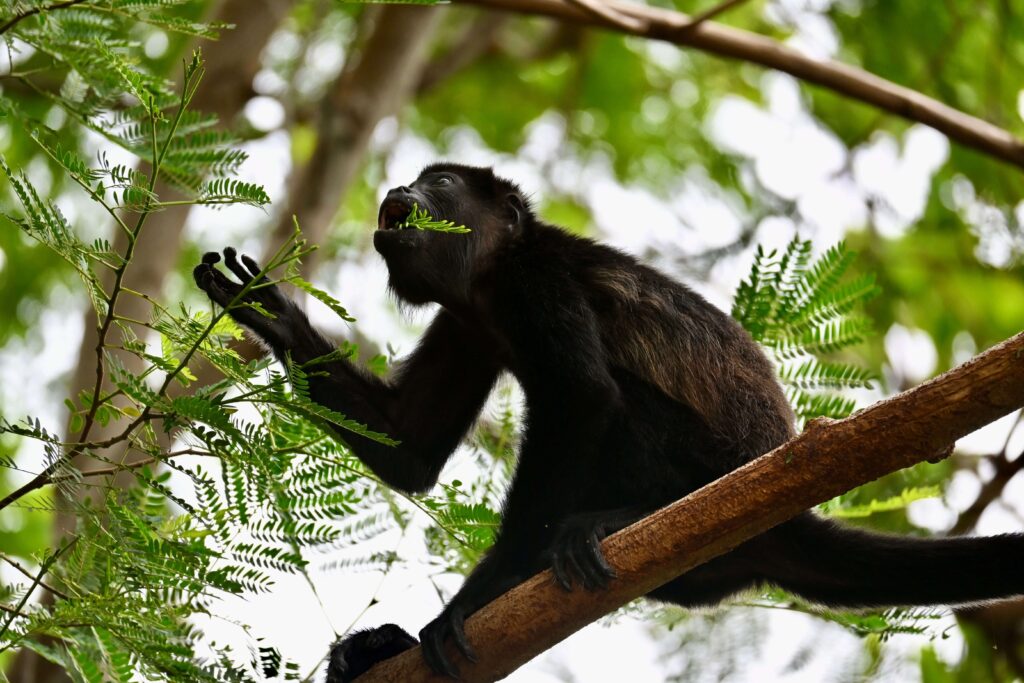
- Protected wildlife refuge — 84% mangrove forest, howler and capuchin monkeys, birds, and a Guanacaste Conservation Area beach that feels nothing like a resort.
- Genuinely uncrowded on weekdays — Avoid Costa Rican national holidays, and this beach delivers the quiet that most Guanacaste beach towns can’t.
If you need any help with a Costa Rica car rental, contact us now!
Playa Iguanita is one of Guanacaste’s most underrated beaches. The dark-sand, calm-water cove is tucked inside the Refugio Nacional de Vida Silvestre Iguanita (Iguanita Wildlife Refuge) on the Nacascolo Peninsula, just 14 miles (23 km) from Liberia Airport. You won’t find restaurants, surf schools, or beach vendors here. What you will find is crystal-clear water that’s nearly flat on most days, a shaded shoreline, wildlife, and the kind of uncrowded beach that’s getting harder to find in Guanacaste. For beach-hopping on the Papagayo Peninsula, Iguanita represents the most untouched option in the cluster. It’s car-access only, as there’s no public bus service and during peak holidays it fills with Costa Rican campers. But on a weekday, it can feel like you’ve got the place to yourself. If you’re planning your first Costa Rica trip and wondering whether Guanacaste’s off-the-beaten-path beaches are worth seeking out, Iguanita is one of the best answers to that question.
Key Takeaways
- Playa Iguanita sits inside a protected wildlife refuge, 14 miles (23 km) from Liberia Airport on Route 253.
- A rental car is the only practical way to get there, as there are no buses or shared shuttle service to the beach.
- Dry season (December–April): standard car handles the access road fine; green season (May–November): 4×4 strongly recommended.
- The beach is excellent for swimming and family days as the water is calm, clear, and shallow near shore.
- Surfing only occurs at the south-end river mouth during south/southwest swells at low tide, typically in rainy season months.
- Camping is allowed with basic facilities at the ranger station; no food vendors within 30 minutes.
- Avoid weekends and national holidays (Christmas week, Easter) if you want a quiet experience.
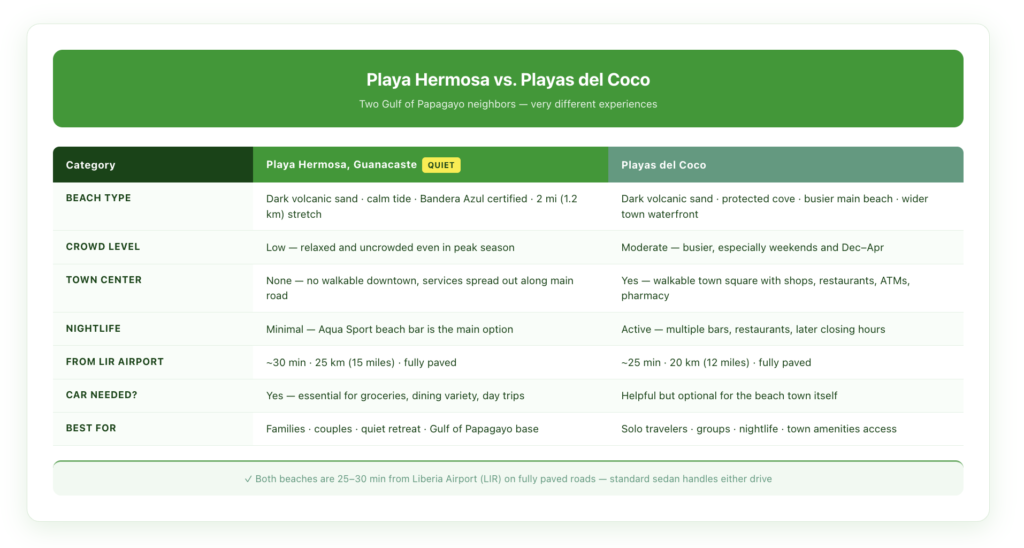
Why Does Playa Iguanita Look Different From Most Guanacaste Beaches?
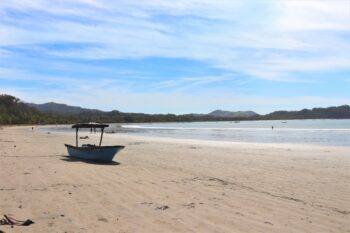
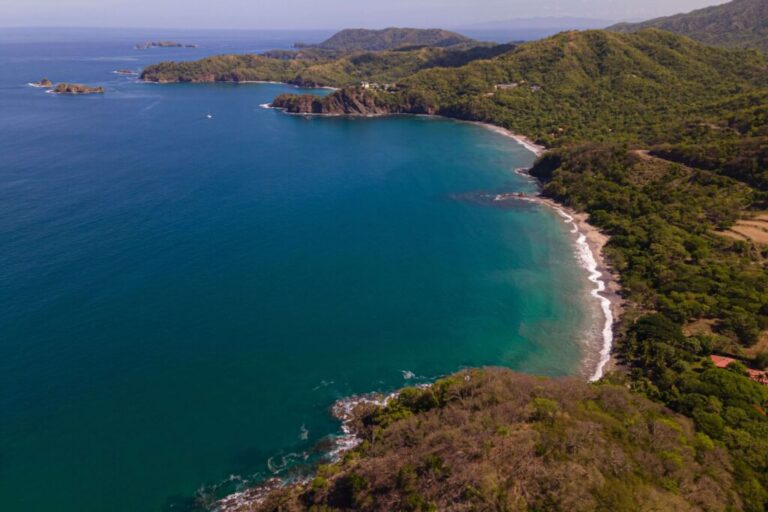
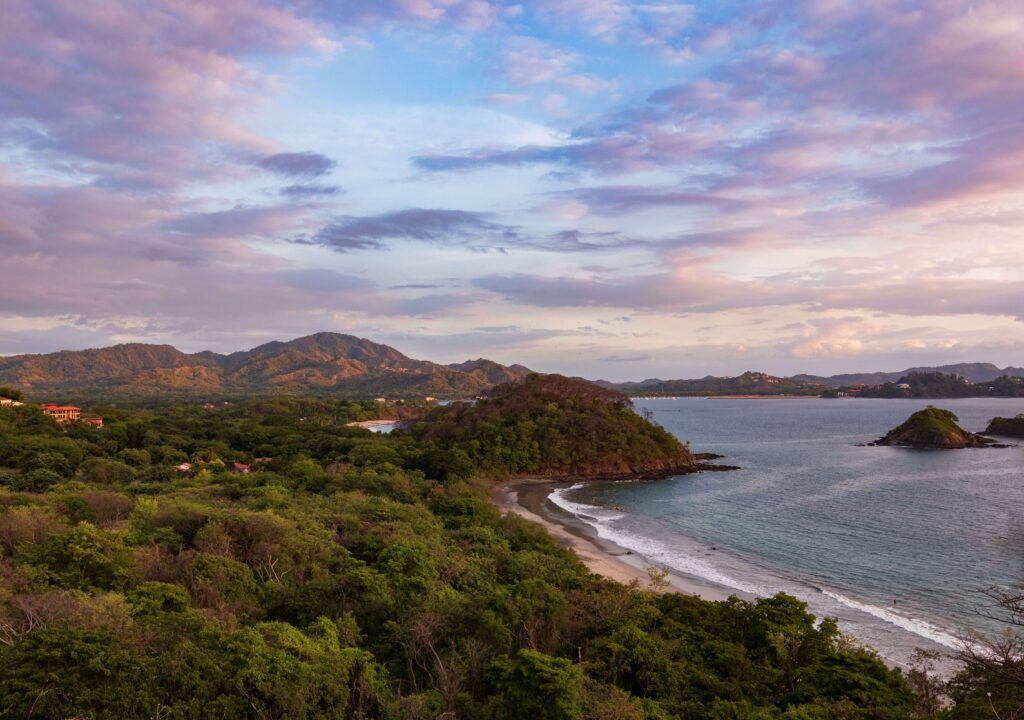
Most travelers arrive in Guanacaste expecting white or tan sand. Iguanita’s sand is a rich volcanic black-brown that contrasts with the turquoise water in the cove. The surrounding hills make it feel enclosed, almost like a natural amphitheater. During the green season from June through November, those hills turn intensely green, making the whole cove feel like something from a film set. During the driest months of February, March, and April, the vegetation dries to yellow and brown, which gives it more of a Guanacaste savanna feel.
The refuge spans 284 acres (115 hectares), and about 84% of it is covered in dense mangrove forest, which explains the notable estuary on the south end of the beach. Sediment from the river mouth limits underwater visibility, which is why snorkeling isn’t recommended here despite the water’s clarity. You can often see your feet on the sandy bottom from the surface, but snorkeling conditions are far better on boat tours that access the deeper Gulf of Papagayo waters offshore.
Is Playa Iguanita Actually Protected Land?
Yes. The Iguanita Wildlife Refuge was formally established in 1993 after local Guanacastecan communities organized to protect the area from hotel development. The reserve is administered by SINAC (Costa Rica’s National Conservation Areas System) and is designed explicitly for public access. Disposable items like plastic bottles are not allowed inside the refuge. The nearest store is about 30 minutes away, so bring everything you need before you turn off the main road.
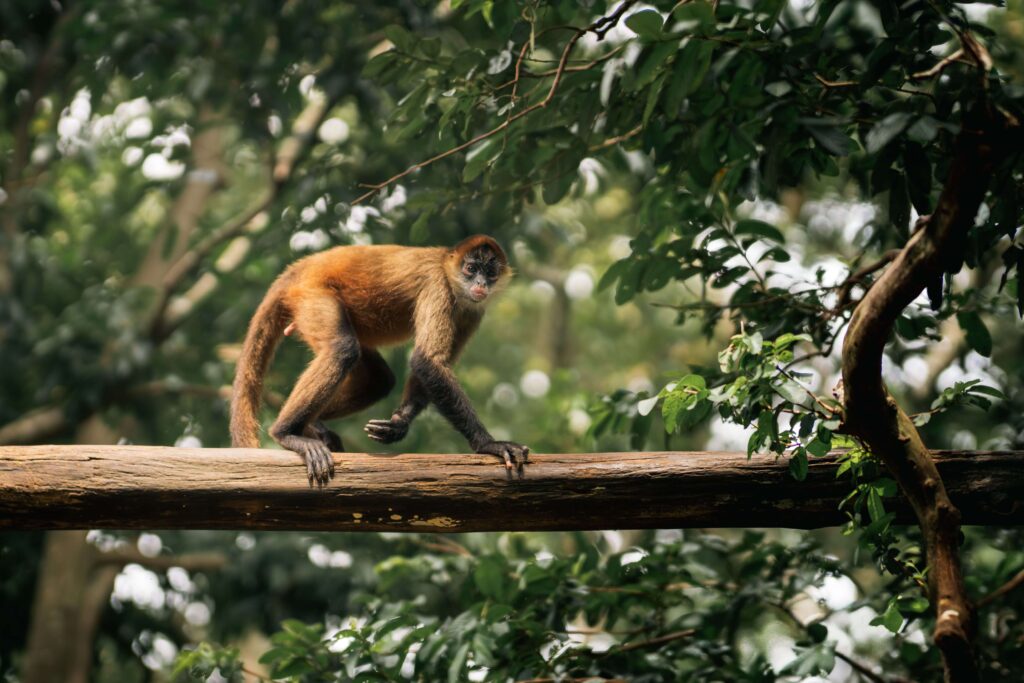
Wildlife in and around the refuge includes howler and capuchin monkeys, various bird species, iguanas, seasonal sea turtles, and crocodiles in the estuary area, so don’t wade in or near the river mouth.
How Do You Get to Playa Iguanita?
From Liberia Airport, take Route 253 toward the Papagayo Peninsula. About 14 miles (23 km) from the airport, you’ll see the junction for Iguanita. Signage is limited, so use Waze or Google Maps with “Refugio Nacional de Vida Silvestre Iguanita” as your destination. The turnoff takes you onto a road that descends steeply to the beach. Don’t drive this road after dark because there are no street lights.
Once you reach the bottom, the road forks:
- Right fork → Free parking lot outside the ranger station, open anytime
- Left fork → Secure parking inside the refuge, fee applies, opens at 8 AM
For a standard day visit, the right-fork lot works fine, but don’t leave valuables visible in the car, close windows, and lock everything.
Does the Road Require a 4×4?
It depends on the season. A large section of the road was paved fairly recently, which eliminated the worst stretch, and during the dry season (December–April), a standard sedan handles the road without issue. During the green season rains, the lower unpaved section near the beach can become muddy and potholed. The rule: December–April, a standard car is fine; May–November, a 4×4 rental is strongly recommended.
If you’re already renting a 4×4 for other Guanacaste destinations or exploring the wider Papagayo area, the extra clearance at Iguanita is reassuring regardless of the season.
What's the Beach Actually Like?
The cove is wider than it appears in photos. Walk in either direction, and you’ll find shifting character with some areas shaded by trees, and others more open. The water is exceptionally calm by Guanacaste standards. The Gulf of Papagayo’s geography shelters Iguanita from the swells that hit more exposed beaches, which makes it one of the calmest swimming spots on Costa Rica’s Pacific coast. Temperatures run a consistent 84–88°F (29–31°C) during the dry season, the sandy bottom is shallow near shore, and children can wade safely without fighting waves.
Trees border much of the beach, and shade is a legitimate advantage here compared to some of Guanacaste’s more exposed beaches like Flamingo or Playa Conchal, where midday sun has nowhere to hide.
The calm waters attract local families from Liberia and surrounding Guanacaste towns who make this their go-to holiday camping beach. On Christmas Eve through New Year’s and during Easter week, the beach fills dramatically. For a quiet, uncrowded visit, those are the dates to avoid entirely. Unlike Manuel Antonio National Park, where crowds are a known tradeoff for world-class wildlife access, Iguanita’s quiet is the whole point, and holiday timing is what determines whether you get it.
Can You Surf at Playa Iguanita?
Occasionally, but the waves at Iguanita are not consistent, and it’s not worth driving specifically to surf. When conditions align, the south end near the river mouth produces a small, long, forgiving break that’s waist-high, sandy bottom, slow ride that’s excellent for longboarding and beginners. The wave only activates with a south/southwest swell at low tide. Swells big enough to trigger it tend to arrive during green season months, particularly May, July, and into November. You’d need offshore forecasts of around 5–7 feet for the break to work.
Some instructors from Papagayo Peninsula resorts use Iguanita for beginner lessons when conditions cooperate, precisely because the waves are gentle and the water is shallow. It’s a genuine beginner-friendly break when it’s running, but unpredictable. If you’re looking for Guanacaste’s best surfing options with more consistency, there are better choices.
For reliable surfing in Guanacaste, Tamarindo’s beach break gives you consistent beginner waves year-round, while Witch’s Rock delivers world-class surf when you’re ready for something more serious. Iguanita’s break is a bonus you stumble on, not a reason to plan around. If you’re basing yourself at Playas del Coco and want to do a dedicated surf day, Coco’s boat operators run trips to Witch’s Rock when swells are running.
Is Playa Iguanita Good for Wildlife Watching?
The mangrove ecosystem on the south end is the wildlife highlight. Costa Rica’s coastal mangroves are nursery environments for fish and prawns, and the surrounding dry forest transition creates habitat for a wide range of bird species. Birding is worthwhile here, so bring binoculars and walk the mangrove edge early in the morning before the heat builds and animals retreat to shade.
Howler and capuchin monkeys are regularly spotted in the tree canopy along the beach. Iguanas are common on rocks. If you scan the water’s edge near the estuary at dusk, bird activity increases noticeably.
The estuary comes with a caveat: crocodiles are documented here, consistent with other estuaries throughout Guanacaste. Stay entirely out of the estuary channels and brackish areas. The main cove swimming area is completely fine. The reserve is administered by SINAC’s Guanacaste Conservation Area. If you want a completely different kind of Costa Rica wildlife experience while you’re in Guanacaste, Caño Island snorkeling and the Rincón Thermals adventure park both offer structured wildlife and nature encounters that complement a self-guided beach day at Iguanita.
For more structured wildlife or marine experiences, boat tours from Playas del Coco cover the wider Gulf with snorkeling stops and marine wildlife that Iguanita’s estuary can’t match. The Barra Honda National Park offers another inland Guanacaste nature experience if you’re building a multi-stop itinerary around the Iguanita area.
When Is the Best Time to Visit Playa Iguanita?
For swimming and a relaxed beach day, the dry season (December through April) is ideal because Guanacaste weather is predictable, road access is straightforward, and the water is at its calmest and clearest. The landscape looks golden and stark during the driest months of February–April.
For the occasional surfing opportunity, green season (May–November) is your better bet, but you’re dealing with afternoon rains, muddier roads, and the need for that 4×4. For driving safely in Costa Rica during the green season on roads like this one, higher ground clearance makes a real difference. If you’re also visiting Rincón de la Vieja or other active destinations during green season, having a 4×4 from the start just makes sense across your whole Guanacaste itinerary. Check the Vamos car rental vehicle guide if you’re deciding between sedans and SUVs for your trip.
For a budget-friendly Costa Rica trip, Iguanita is genuinely free once you pay the entry fee, with no chair rentals, no beach bars, and no vendor pressure. The s diversity of protected areas in Guanacaste is a key reason the region earns attention beyond its resort beaches. You could come in February and again in December to experience two completely different beaches. For Costa Rica holiday timing and planning, this seasonal crowd pattern at Iguanita is worth building around from the start.
What About the Campground?
Camping is permitted in the designated campground near the ranger station, and the facilities include bathrooms and showers. Rangers are available from 8 AM to 4 PM. There’s limited cell service inside parts of the refuge, so download offline maps before leaving Liberia and save the ranger station number: +506 8330-4863. The nearest store is about 30 minutes away. Entrance fees run approximately $2–5 USD for day use with separate overnight camping rates; bring cash. For context on what camping and self-guided Guanacaste travel looks like in terms of cost and logistics, that guide covers the planning basics.
How Does Playa Iguanita Fit Into a Guanacaste Road Trip?
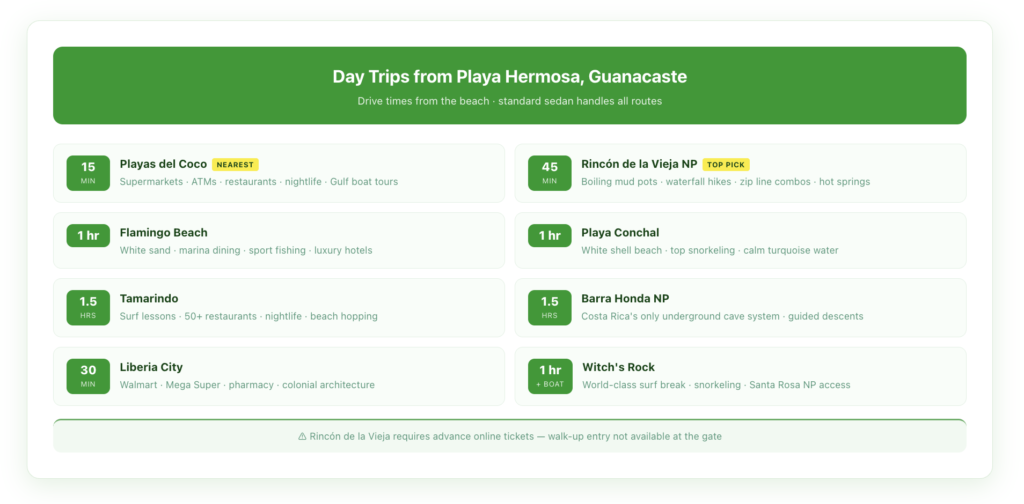
Iguanita sits north of Playas del Coco on the Route 253 corridor, which also passes the Four Seasons and Andaz Papagayo resorts. It’s about 25 minutes north of Playas del Coco, so a natural day trip if you’re based there, especially once you’ve done the Coco boat tours and want to explore the coast by land.
From the airport, the drive is 30–35 minutes. You could make Iguanita your first beach stop after picking up a rental car from Vamos before heading south to your main accommodation. The LIR airport rental car process typically takes 45–90 minutes from landing to driving away, so factor that in for an 8 AM beach arrival.
A logical day sequence:
- Morning (8–9 AM arrival): Iguanita to swim, and explore the mangrove edge, and beat the midday heat
- Early afternoon: Drive south toward Playas del Coco for lunch or continue to Playa Hermosa, Guanacaste, or Playa Panama
- Next-day option: Rincón de la Vieja National Park is under an hour from Iguanita and the volcanic landscape that makes for a compelling contrast to a beach day
- Extended itinerary: If you’re spending two weeks in Costa Rica, the Iguanita area works perfectly as a quieter Guanacaste day before continuing south toward Flamingo or Tamarindo
It also pairs naturally with the broader Guanacaste beach-hopping circuit. The Route 253 corridor includes Iguanita on the way to Playa Cabuyal, further north. Each beach has a distinct character, and Iguanita is the one that requires an effort to reach and rewards you with fewer people because of it. If you’re building a 1-week Guanacaste itinerary, the northern beaches cluster well together, and Iguanita fills a natural half-day slot.
For planning your full Guanacaste trip, the Costa Rica Tourism Board (ICT) has general destination information, and the Tico Times is a useful source for any current updates to refuge access or conditions. On-the-ground road advice for your specific rental vehicle choice matters more than any map for a road like the Iguanita access.
Practical Details Before You Go
Disposables are banned inside the refuge. Pack food and drinks in reusable containers.
Cell service is limited. Download offline Google Maps or Waze before leaving Liberia. Save +506 8330-4863.
No food or drinks at the beach. Guanacaste heat in the dry season can hit 90–100°F (32–38°C). Bring more water than you think you’ll need.
No lifeguards. The beach is calm, but you’re in a protected refuge with limited ranger coverage. For first-time visitors to Costa Rica, especially, understanding what “unguarded wildlife refuge beach” means versus a resort beach is useful context before you arrive.
Dogs are not allowed inside the wildlife refuge, but can go on the beach area outside the refuge boundaries.
Car security. Pay to use the secure parking inside the refuge, which opens at 8 AM for peace of mind, or keep all valuables completely out of sight in the outer lot. Driving in Costa Rica means basic security habits apply everywhere. The U.S. Embassy in Costa Rica’s travel advisories are worth a quick check before any trip for the most current safety information.
Playa Iguanita isn’t the beach you’ll tell everyone about because it’s famous. It’s the beach you’ll tell people about because they’ve never heard of it, and when you show them the photos, they’ll immediately ask how to get there. The fact that access requires a car, a bit of navigation, and arriving on the right day is exactly what keeps it special. If you want to keep exploring Guanacaste’s underrated side, our day trips from Playas del Coco list covers a dozen more spots that fly under the tourist radar.
Frequently Asked Questions
Is Playa Iguanita safe for swimming?
Yes. The beach sits in a sheltered cove with minimal wave action on most days, which makes it one of Guanacaste’s safest swimming spots. The water is warm, shallow near shore, and usually clear. There are no lifeguards, so swim within your abilities and avoid the estuary and river mouth area entirely.
Is there an entrance fee at Playa Iguanita?
The refuge charges a modest fee of around $5 USD per person and a separate rate for overnight camping. Fees are paid directly to rangers in cash at the station as there are no card payment terminals at the refuge.
What time do the park rangers leave Playa Iguanita?
Secure parking and rangers are available from 8 AM to 4 PM, although the beach remains accessible outside those hours. The ranger station number is +506 8330-4863.
Is Playa Iguanita crowded?
On weekdays during the regular tourist season, it’s typically quiet with few visitors. On Costa Rican public holidays, especially Christmas week, New Year’s, and Semana Santa (Easter week), the campground and beach fill with local families; so plan your trip accordingly.
How is Playa Iguanita different from Playa Cabuyal?
Both beaches sit north of Playas del Coco along Route 253 in the Gulf of Papagayo area. Cabuyal is slightly further north and has lighter sand. Iguanita is inside a formal wildlife refuge with more established camping facilities. Both reward the effort it takes to reach them.
Can you camp on the beach at Playa Iguanita?
Camping is permitted in the designated campground near the ranger station, and the facilities include bathrooms and showers. Bring all food and supplies from town as the nearest store is 30 minutes away. Confirm current bonfire rules with rangers when you arrive.
What wildlife can you see at Playa Iguanita?
The mangrove ecosystem hosts diverse bird species, iguanas, and fish. Howler and capuchin monkeys are frequently spotted in beach-area trees, whereas sea turtle sightings are possible seasonally. The estuary has crocodiles, so stay well away from the river mouth and brackish water.