
Last Updated on July 24, 2026
Playa Cabuyal: Quick Guide
Playa Cabuyal is a free, uncrowded white sand beach on Guanacaste’s Gulf of Papagayo, 30 minutes from Liberia Airport via Route 253. Inside a UNESCO World Heritage conservation area — no hotels, no vendors, strong wildlife. A standard rental car works in the dry season.
Quick Facts:
- 0.87 miles (1.4 km) of soft white sand; calm, swimmable water
- Free parking, bathrooms, picnic tables; no entry fee
- Three turtle species nest here — The Leatherback Trust has been monitoring since 2011
- Manta rays and stingrays in the shallows — shuffle your feet entering
- The South mangrove estuary is a crocodile habitat — swim the central section only
Top 3 Reasons to Visit:
- Zero development — no resort corridor, quiet on weekdays. The best day trip from Coco that most visitors skip.
- Sea turtle nesting — leatherback, olive ridley, and East Pacific green turtles nest here in a UNESCO ecosystem with jaguars and 200+ bird species.
- Manta ray encounters — rays surf the shallows at wading depth, a wildlife moment the resort beaches don’t offer.
An uncrowded alternative to busy Guanacaste beach towns, accessible by car in 30 minutes.
If you need any help with a Costa Rica car rental, contact us now!
Playa Cabuyal is one of the Gulf of Papagayo’s least-visited white sand beaches, and that’s exactly what makes it worth the trip. Located about 17 miles (27.5 km) from Liberia Airport, this quiet stretch of coast sits within the Guanacaste Conservation Area and sees a fraction of the foot traffic of nearby Playas del Coco or Playa Hermosa. You get calm, swimmable waters, soft light sand, roadside parking, basic amenities, and the kind of slow afternoon that the rest of Guanacaste used to offer. It’s reachable with a standard car in the dry season, though a high-clearance vehicle helps once the rains hit. If you’re flying into Liberia for a Gulf of Papagayo vacation, Cabuyal makes an easy half-day escape. And unlike the major resort beaches, it’s completely free, so one of the better budget-friendly things to do in Costa Rica in the Papagayo area.
Key Takeaways
- Playa Cabuyal sits 17 miles (27.5 km) from Liberia Airport, which is a roughly 30-minute drive along well-paved Route 253 before a short dirt section at the end.
- The beach is inside the Guanacaste Conservation Area, a UNESCO World Heritage Site recognized for its tropical dry forest and critical sea turtle nesting grounds.
- Three sea turtle species, leatherback, olive ridley, and East Pacific green, nest here and have been monitored by The Leatherback Trust since 2011.
- Manta rays and stingrays are commonly spotted in the shallows. Do the stingray shuffle when entering the water.
- The south end mangrove estuary is crocodile habitat, so stay away from that area, especially near dusk.
- A standard car works January through April and June–July; a high-clearance vehicle is recommended September–December on the dirt access road.
Where Exactly Is Playa Cabuyal?
Playa Cabuyal sits in Guanacaste province on Costa Rica’s northern Pacific coast, tucked inside the Guanacaste Conservation Area just south of Santa Rosa National Park. The Area de Conservación Guanacaste is a UNESCO World Heritage Site spanning over 100,000 hectares of land and sea. It fronts the Gulf of Papagayo, the same bay that hosts the Peninsula Papagayo resorts and the luxury hotel zone around Coco and Hermosa. Despite sharing the same bay, Cabuyal feels like it operates on a different frequency entirely.
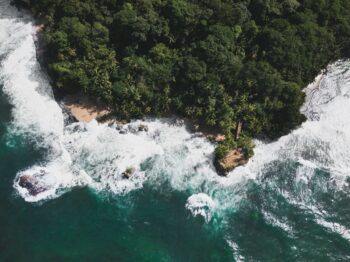
The beach stretches about 0.87 miles (1.4 km) of soft, light-colored sand backed by dry tropical forest. A mangrove estuary opens at the south end, which creates excellent bird habitat and is why you’ll often hear and see species you won’t spot at more developed beaches. The surrounding mountains turn golden brown in the dry season and shift to lush green from May through November, but both versions are worth seeing.
How Do You Get to Playa Cabuyal?
From Liberia Airport, head out toward Route 21 and turn right onto the main road. Drive roughly 10 minutes until you hit the large intersection near the Do-It Center, then turn right onto Route 253. Follow well-paved Route 253 for about 11 miles (18 km) until you see a sign for Cabuyal. Turn right at the sign, and drive on a dirt road for the final stretch to the parking area.
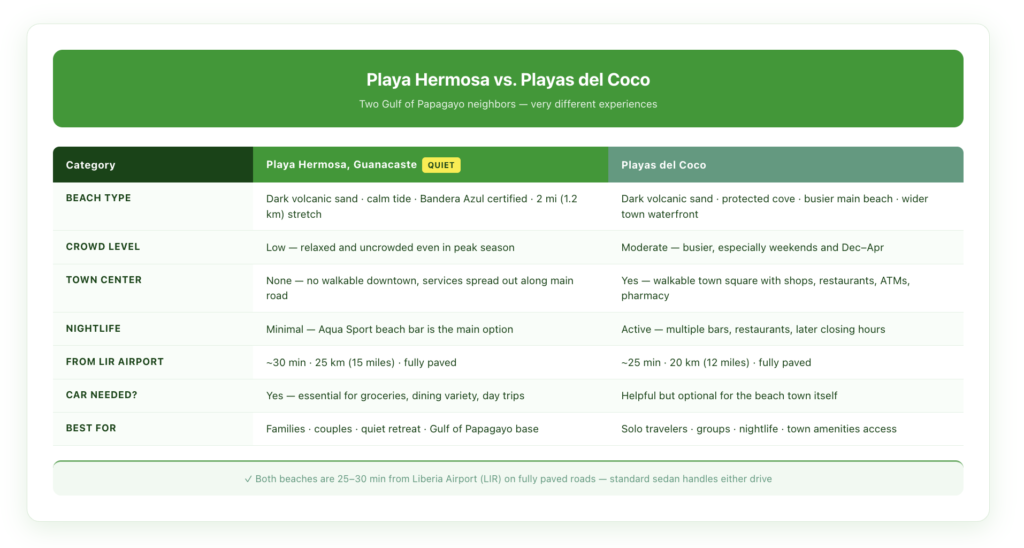
Waze and Google Maps both navigate here accurately. Total drive time from Liberia Airport is about 30 minutes in good conditions, whereas it’s roughly 40 minutes going back toward the Route 253 junction and then north from Playas del Coco. It’s worth noting on your day trips from Playas del Coco shortlist if you’re based in the area.
Travelers using Tamarindo as a Guanacaste base can reach Cabuyal in about 75 minutes via Route 21 north.
Do You Need a 4×4 to Reach Playa Cabuyal?
Not necessarily. In dry season, which is generally January through April, and often June–July, a standard sedan handles the dirt access road without much drama. In the wettest months, which are September through December, a high-clearance vehicle makes the drive much more comfortable and safer. If you’re renting a car and planning a rainy season visit, this is exactly the kind of scenario covered in our breakdown of which rental car you actually need for different destinations and seasons.
The parking area at the end of the road is free. There’s no parking guard, so don’t leave valuables in your vehicle. Roll up the windows, lock the doors, and take anything of value with you, which applies to any secondary beach lot.
What Is Playa Cabuyal Like When You Get There?
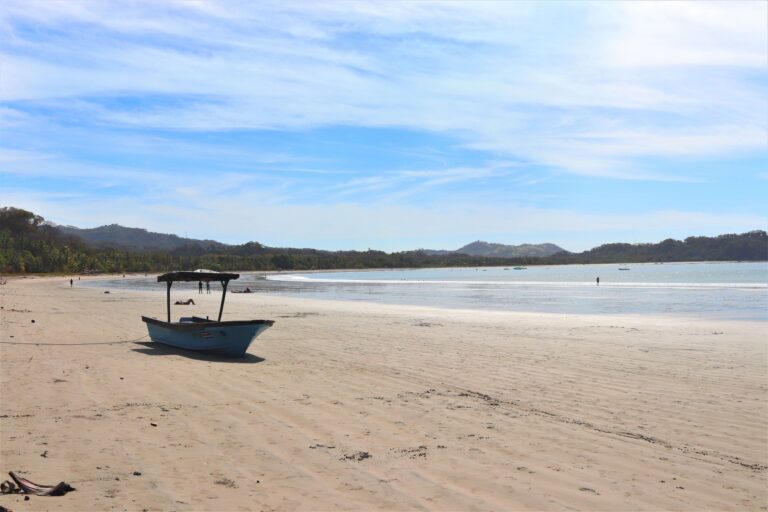
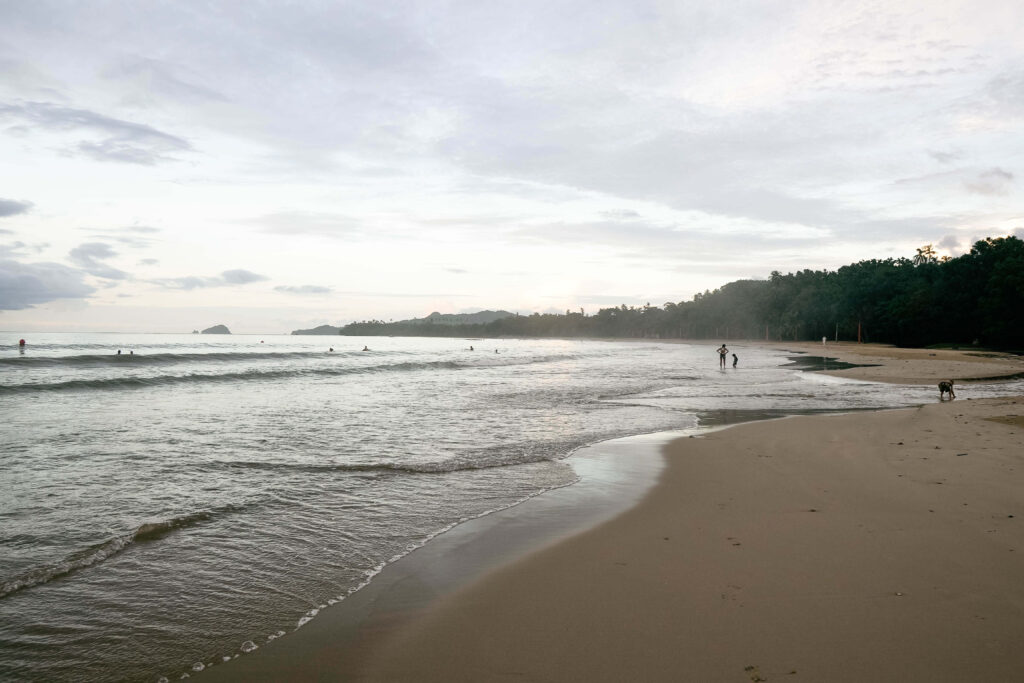
This is one of the few beaches in the Papagayo area that genuinely feels undeveloped. No hotel towers, no bar strips, and no vendors hawking tours. You pull up, park, walk maybe 2 minutes, and you’re on a wide white sand beach with blue-green water. The sand is soft and light, the water is calm enough for easy swimming, and on a weekday, you might share the beach with a handful of local families at most.
The beach has picnic tables and basic bathroom facilities, which puts it above most of Guanacaste’s truly off-the-beaten-path options. The Instituto Costarricense de Turismo (ICT) classifies Costa Rica’s public beaches as free-access by law, meaning there’s no entry fee so you’re just paying for your drive and whatever you bring.
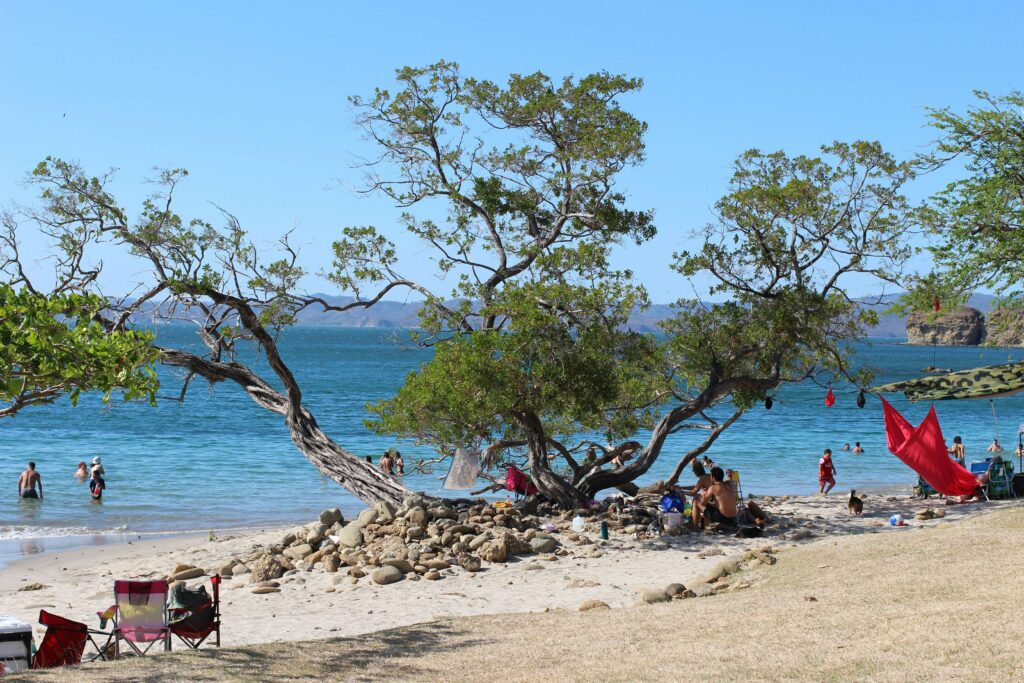
There’s enough tree cover near the parking area to find shade for a blanket or hammock, though the area close to the water is mostly exposed, so bring a shade tent or arrive before 9 AM if you’re sensitive to sun. The Guanacaste weather pattern holds here: dry mornings, potential afternoon clouds and showers from May through November. Plan activities around the morning hours during green season visits.
The shallows extend a good distance before dropping off, making it genuinely kid-friendly on calm days. Waves are modest, so although you won’t surf here, you can wade, swim, and bodysurf without fighting a serious break. The water is clear enough on calm days that you’ll see what’s swimming around you, which leads to the most talked-about thing about Cabuyal.
What Wildlife Can You See at Playa Cabuyal?
This is where Cabuyal separates itself from most Papagayo beaches. The combination of mangroves, dry forest, and a direct wildlife corridor into the broader Guanacaste Conservation Area, which is a UNESCO World Heritage Site recognized for protecting the best tropical dry forest between Central America and northern Mexico, creates conditions for wildlife encounters you don’t get at the more developed beaches.
Manta rays and stingrays are the most frequently mentioned sightings. Visitors report finding rays surfing the waves in the shallows, sometimes in significant numbers, sometimes so close to shore that wading becomes an unexpected nature encounter. Manta rays are filter feeders with no barbs, and they pose no threat. Stingrays do have barbs, so adopt the stingray shuffle (dragging your feet along the sandy bottom as you enter the water) rather than stepping down suddenly. The water is clear enough in calm conditions that you’ll often see them before they react.
Sea turtles are the beach’s most scientifically significant residents. The Leatherback Trust has monitored a nesting program here since 2011 under the direction of Dr. Bibi Santidrián Tomillo. Three species nest regularly: leatherback (critically endangered, with the East Pacific population having declined over 98% over the past three decades), olive ridley, and East Pacific green (also called black turtle). Hawksbill turtles have also been recorded nesting, though rarely. If you’re visiting and want to support active conservation efforts at Cabuyal, the Trust runs a Sea Turtle Biology Training Camp that accepts participants each season.
Birds are abundant, particularly around the mangrove estuary on the south end. Herons, egrets, frigatebirds, and various wading species are common. The dry forest edge also attracts species that move between the coast and interior. For serious birders, arriving early in the morning before the heat sets in produces the best results. The broader Guanacaste Conservation Area sits adjacent to the Peninsula Papagayo resort zone, but Cabuyal sits on the undeveloped side of that boundary.
Jaguars, monkeys, and crocodiles have all been documented in and around the beach, according to The Leatherback Trust’s field documentation. The jaguar and monkey sightings are rare for day visitors, but underscore how intact this ecosystem is compared to more visited stretches of coast. The crocodile presence, however, carries a direct safety implication for swimmers.
Is It Safe to Swim at Playa Cabuyal?
The main beach area is generally considered swimmable because the waves are calm, the water is relatively clear, and the ICT (Costa Rica Tourism Board) classifies Guanacaste’s protected bay beaches as among the country’s calmest for swimming. That said, two things require genuine attention.
First, stingrays are common in the shallows. Use the stingray shuffle. This is standard practice at most Guanacaste beaches.
Second, and more importantly, the south end of the beach near the mangrove estuary is crocodile habitat. This is not a hypothetical risk. Multiple visitor accounts confirm crocodile presence in this area, and local hotels in the surrounding area have confirmed that crocodiles frequent the estuary mouth due to the mangrove ecosystem. Stay away from the south end of the beach, particularly in the late afternoon and evening. Instead, swim in the clearly open central section of the beach, away from the estuary opening. This mirrors the wildlife safety principles that apply to any natural beach in Costa Rica, and when you respect habitat boundaries, the encounter risk drops dramatically.
When Is the Best Time to Visit Playa Cabuyal?
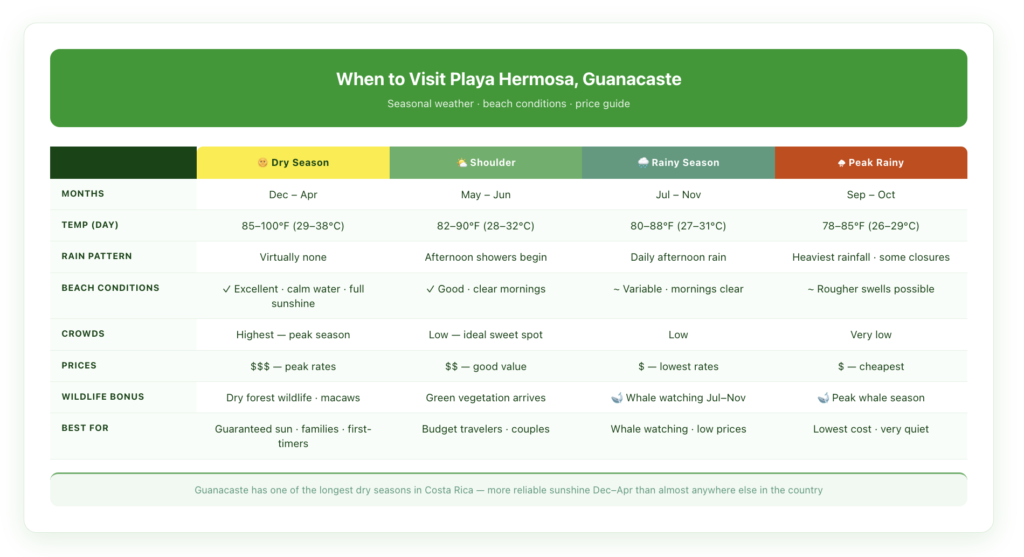
Guanacaste’s dry season runs from December through April, delivering the most reliable sunshine, clearest water, and easiest road access. This is peak season for the whole Papagayo region, and if you’re flying into Liberia Airport, prices are higher, and beaches like Coco and Conchal see their biggest crowds. Cabuyal’s lower profile means it stays relatively quiet even in high season. March and April can see temperatures hit 95–100°F (35–38°C); bring more water than you think you need.
May through November is the green season. The surrounding mountains shift to vivid green, the beach is almost always empty on weekdays, and the dirt access road requires more care after rain. September and October are the wettest months, and a high-clearance vehicle is the right call during this stretch. The upside: you often have the entire beach to yourself, the wildlife activity is at its most intense as the habitat is at its most verdant, and first-time visitors to Costa Rica who want fewer crowds and lower prices do well visiting Guanacaste during this window.
The surf forecast from Wisuki’s Playa Cabuyal forecast shows mostly moderate conditions year-round. According to Surf Atlas Costa Rica data, the Gulf of Papagayo doesn’t produce the kind of consistent swell that draws dedicated surfers, as the bay orientation and protected position mean Cabuyal is a swimming and relaxing beach, not a surf destination.
The Leatherback Trust’s Cabuyal monitoring program also operates best in the calmer sea conditions of the green season, when turtle nesting peaks. If you’re interested in participating in active conservation work here, The Leatherback Trust accepts volunteers for their Sea Turtle Biology Training Camp at Cabuyal each season.
What Else Is Near Playa Cabuyal?
Cabuyal works best as part of a broader Guanacaste beach-hopping day rather than as a standalone destination from a distant base. It’s naturally positioned to anchor a morning or afternoon alongside neighboring beaches.
Playa Iguanita is a short drive north along the same Route 253 corridor, which is another low-key beach in the Papagayo area that sees minimal tourism development. Playa Carbonal, the beach immediately north of Cabuyal, is only accessible at low tide and sees almost no visitors at all. It’s worth timing a walk up if you’re already at Cabuyal and want complete solitude. Playa Nacascolo, further north near the Four Seasons, has turquoise water and dramatic headlands, which is more striking visually, though technically inside the resort corridor.
For travelers based in Playas del Coco, Cabuyal is an easy day addition. If you’re staying in the Papagayo Peninsula resort zone and want to escape the hotel beach for something local, it’s one of the most accessible options. Renting a car at Liberia Airport is the only practical way to reach Cabuyal because public transportation doesn’t run to the beach, and ride-share options in this corridor are limited. Visitors combining a Guanacaste beach week with a side trip to Tamarindo’s surf and nightlife will find Cabuyal a useful contrast as it’s everything Tamarindo isn’t in terms of pace and development.
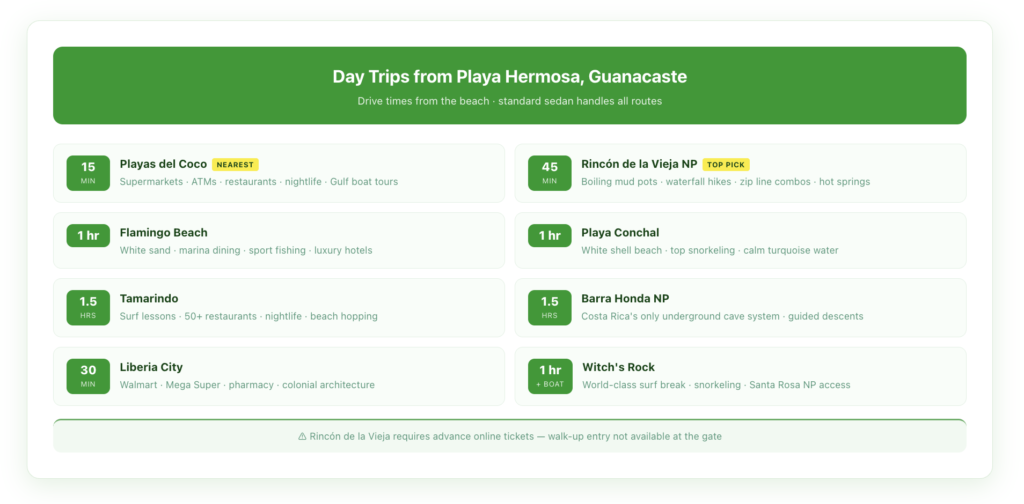
For a more active day, the Guanacaste region directly around Cabuyal puts you within reach of top Guanacaste activities, including Rincón de la Vieja’s volcanic trails (about 90 minutes from the beach), snorkeling boat tours from Coco, and the shell beaches at Playa Conchal, about an hour south.
Flamingo Beach is about 45 minutes south along the same coast if you want a more developed lunch stop with marina access. The Liberia Airport driving routes guide covers how to efficiently string these together if you’re working from an LIR arrival.
If your trip is one week in Costa Rica or longer and you’re using a Guanacaste base, Cabuyal fits cleanly into a half-day without requiring any detour from the main Route 253 corridor that connects the airport to the Papagayo beaches anyway. Two-week itineraries with a northern Guanacaste segment can make Cabuyal a first-morning stop right off the plane before checking into a resort.
For visitors also interested in Costa Rica’s dry season travel planning logistics, the Route 253 corridor also connects directly to Rincón de la Vieja via the inland route from Liberia. And if you’re a first-time visitor to Costa Rica and uncertain where to base yourself, the Gulf of Papagayo with Cabuyal as a day trip is one of the smoothest introductions to the country’s Pacific coast.
What Should You Bring to Playa Cabuyal?
The services at Playa Cabuyal are limited, so pack all you need for your visit. Specific items worth packing: reef-safe sunscreen (standard in Costa Rica, given environmental regulations), insect repellent for the mangrove-edge forest area, water shoes or sandals for the stingray shuffle, and a dry bag for electronics. Bring more food and water than you think you need. The Guanacaste sun at midday is seriously strong, so sunscreen, a hat, and a shade tent or umbrella matter more here than at a beach with covered facilities. If you stay all day, then the beach has legendary sunsets for a perfect end to your Cabuyal experience.
Restaurant and bar, Casa del Mar, offers a diverse menu from fast food to local dishes served on the shaded wooden deck. Cell phone coverage can be poor, so consider one of the bar’s refreshing cocktails and connect to the WiFi if you need to stay in touch.
If you’re comparing Guanacaste’s wilder beaches to other Costa Rica options, Santa Teresa and Montezuma on the Nicoya Peninsula offer a similar off-the-beaten-path vibe but require a ferry and 4×4 to access, whereas Cabuyal is significantly easier to reach.
For wildlife-focused travelers, Manuel Antonio National Park in the Central Pacific provides a more structured wildlife and beach combo if reliable animal sightings on marked trails are the priority. The Smithsonian Ocean’s coverage of the Guanacaste Conservation Area notes this is one of the most ecologically intact Pacific coastal ecosystems in the Americas, which is a reason to visit responsibly. Leave nothing behind, don’t approach wildlife, and keep clear of the estuary.
Cabuyal is worth the drive for travelers who want to see what Guanacaste’s coastline looked like before the hotel corridors arrived. Lonely Planet’s overview of northwestern Costa Rica describes Guanacaste’s dry forest character accurately, and Cabuyal is exactly that character in beach form. It’s not a secret in the sense that nobody knows about it, as locals come on weekends, and the parking lot fills on busy Saturdays.
But on a Tuesday morning in May with the hills green and the water calm, it’s about as good as a Pacific beach day gets. Costa Rica’s position as a land bridge between two continents gives it this kind of biodiversity density, even at a simple beach, and Cabuyal wears it well.
If you’re planning to rent a car for your Guanacaste trip and want to make sure you have the right vehicle for beach access like Cabuyal alongside resort roads and potentially volcanic park routes, contact us at Vamos because we know these roads well and can point you toward the right option for your specific itinerary.
Frequently Asked Questions
Is Playa Cabuyal crowded?
On weekdays, especially outside peak season, you’ll often share the beach with just a handful of people or have it entirely to yourself. Weekends and Costa Rican holidays bring more local families, but crowds never reach the density of Playas del Coco or Tamarindo, even on the busiest days.
Are there crocodiles at Playa Cabuyal?
Yes. The mangrove estuary at the south end of the beach is documented crocodile habitat, and locals have observed them in the water. Swim in the central section of the main beach, stay away from the estuary and its mouth, and avoid the water near the south end at dawn and dusk.
Can you camp at Playa Cabuyal?
There’s a camping area at the beach which is a basic setup without hookups or facilities beyond those available at the beach itself. s Rules in Costa Rican conservation areas can change, so check the latest information before heading to Cabuyal with your tent.
What sea turtles nest at Playa Cabuyal?
Three species nest here regularly: leatherback, olive ridley, and East Pacific green (also called black turtle). The Leatherback Trust has monitored nesting here since 2011. Cabuyal is considered a secondary but important nesting site for the critically endangered East Pacific leatherback population.
Is there surfing at Playa Cabuyal?
The Gulf of Papagayo’s protected position means waves are generally calm and unsuited to surfing. Cabuyal gets some body-surfing and boogie-boarding conditions on bigger swell days, but it’s not a surf destination. For waves, Witch’s Rock and Ollie’s Point are accessible by boat from Playas del Coco.
Do you need a 4×4 to get to Playa Cabuyal?
. A standard car handles the short dirt access road fine when it’s dry between December–April and June–July. In the heaviest rainy months (September–December), a high-clearance vehicle is recommended for comfort and safety on the unpaved section.
What is the best time to visit Playa Cabuyal for wildlife?
Sea turtle nesting peaks from October through February for leatherbacks, whereas marine wildlife like manta rays and stingrays appear year-round in the shallows. Birdlife around the mangroves is most active early morning, any time of year. The green season (May–November) brings the fullest, greenest habitat and typically the most wildlife activity overall.