
Last Updated on March 18, 2026
Barra Honda National Park: What's Covered
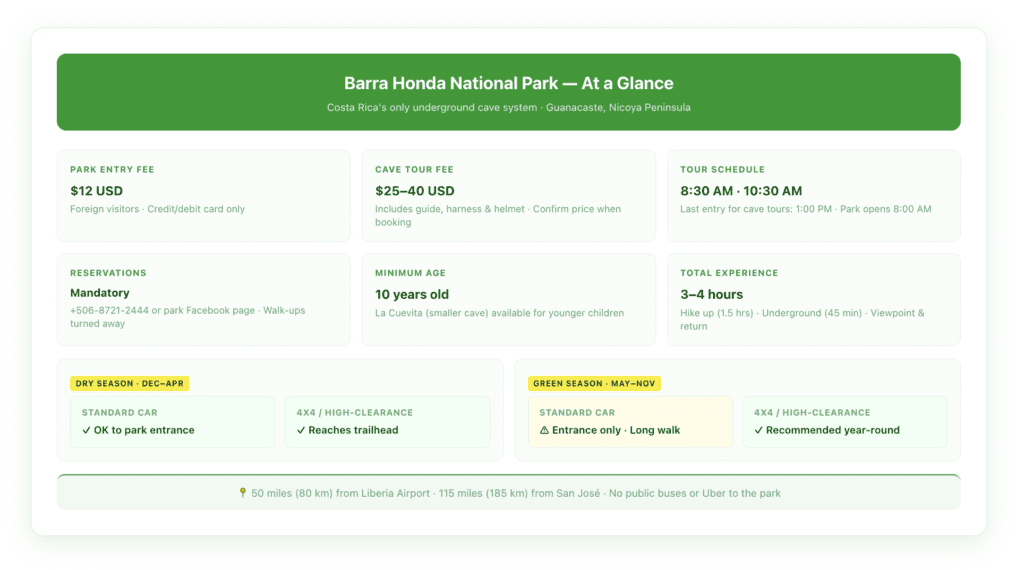
Barra Honda National Park in Guanacaste protects Costa Rica’s only underground cave system—42 limestone caverns formed from a coral reef that was pushed above sea level over 60 million years ago. Entry costs $12 USD for foreign visitors; guided cave tours run $25–40 USD per person (confirm pricing when booking) and require advance reservations via +506-8721-2444 or the park’s Facebook page. The 3–4 hour experience includes a 1.5-hour uphill hike through tropical dry forest, descending 197 feet (60 m) into Terciopelo Cave via ladders, and panoramic Nicoya Peninsula views on the way back. Reaching the park requires your own vehicle—no buses or Uber serve the area—making a Costa Rica rental car essential for most visitors.
Quick Facts:
- Location: Guanacaste interior, 50 miles (80 km) from Liberia Airport, 115 miles (185 km) from San José
- Fees: $12 park entry + $25–40 cave tour (credit/debit only)
- Reservations: Mandatory — +506-8721-2444 or park Facebook; walk-ups turned away
- Tours: 8:30 AM and 10:30 AM departures; must arrive before 1:00 PM
- Requirements: Ages 10+; moderate fitness; closed-toe shoes; no claustrophobia
Top Barra Honda Experiences:
- Terciopelo Cave Descent — Ladder descent into two chambers, including the famous “Fried Eggs Room” where stalagmites genuinely resemble sunny-side-up eggs
- Tropical Dry Forest Hiking — Los Mesones and Cerro Barra Honda trails offer wildlife watching and panoramic Guanacaste views without the cave tour’s physical demands.
- Dusk Bat Tours — Thousands of bats emerge from Pozo Hediondo Cave at sunset; ask the park when booking
Pair Barra Honda with a Palo Verde National Park boat safari for a two-day Guanacaste inland adventure, or use Samara or Tamarindo as your beach base. For a completely different caving experience, the Venado Caves near La Fortuna feature underground rivers in a wetter volcanic setting.
If you need any help with a Costa Rica car rental, contact us now!
Barra Honda National Park sits in Guanacaste’s interior near Nicoya—about 50 miles (80 km) from Liberia Airport and 115 miles (185 km) from San José. Established in 1974, it protects Costa Rica’s only underground cave system: 42 known limestone caverns formed from a coral reef pushed above sea level 60–70 million years ago, then carved by millions of years of rainfall. Two caves are open to the public. Guided tours descend 197 feet (60 m) into Terciopelo Cave and run $25–40 USD per person (plus $12 park entry), depart at 8:30 AM and 10:30 AM, and require advance reservations—call +506-8721-2444 or message the park’s Facebook page. You need to be physically fit, at least 10 years old, and comfortable with ladders, narrow passages, and complete darkness.
Key Takeaways
- Barra Honda is Costa Rica’s only national park built around an underground cave system—nothing else exists in the country.
- Reservations are mandatory; walk-ups get turned away, especially from December through April.
- The tour involves real physical demands: a 1.5-hour uphill hike in tropical heat, a 17-meter (56-foot) ladder descent, and tight squeezes through narrow passages.
- A standard vehicle works on the main access road during the dry season (December–April); high-clearance is recommended year-round for the road to the trailhead.
- Samara (1 hour away) and Tamarindo (1.5–2 hours away) make ideal bases for combining caves with beach time.
Where Is Barra Honda National Park?
The park occupies a limestone plateau rising 985–1,475 feet (300–450 m) above the Tempisque River valley on the northern Nicoya Peninsula. It’s about 14 miles (22 km) northeast of the town of Nicoya, and 7.5 miles (12 km) off Highway 21. The park covers 2,295 hectares (5,670 acres) of protected tropical dry forest and karst limestone terrain.
From Liberia Airport, the drive is roughly 1.5 hours on mostly paved roads. From San José Airport, plan on 3 hours—you’ll cross the scenic Tempisque Bridge before turning south toward Nicoya. After the bridge, continue on Highway 21 for about 9 miles (15 km) until you see signs pointing toward Barra Honda. From there, it’s another 2.5 miles (4 km) on good gravel to the park entrance.
How Do You Get to the Trailhead?
This is where things get practical. The park entrance and parking area are accessible to any vehicle. The road from the ranger station to the actual trailhead is where things change—it’s steep, rocky, and significantly more comfortable in a high-clearance vehicle. In a sedan, you’ll park at the ranger station and add about 35–45 minutes of walking on the road to get to the trail start. In a 4×4 rental, you can drive much closer, saving that time and energy before the hike even begins.
There’s no direct public transportation to the park. You can catch a bus from San José to Nicoya, then take the once-daily bus to Santa Ana village—but that still leaves a 30-minute walk to the entrance with no guarantee of reaching the trailhead. For most travelers, having a rental car from Vamos is what makes this trip actually work, especially if you’re combining it with Guanacaste beach time.
What Makes These Caves Different From Anything Else in Costa Rica?
Before scientists explored Barra Honda in the late 1960s, locals thought the hill was a dormant volcano. The sound of thousands of bat wings rushing out at dusk and the smell of guano wafting up from the entrances led to that conclusion for decades. When a French explorer first went into the caves, and a U.S. geological team mapped them in 1969, they found something geologically extraordinary: an ancient coral reef dating back over 60 million years, uplifted by tectonic activity and then sculpted by millions of years of rainwater percolating through calcium carbonate.
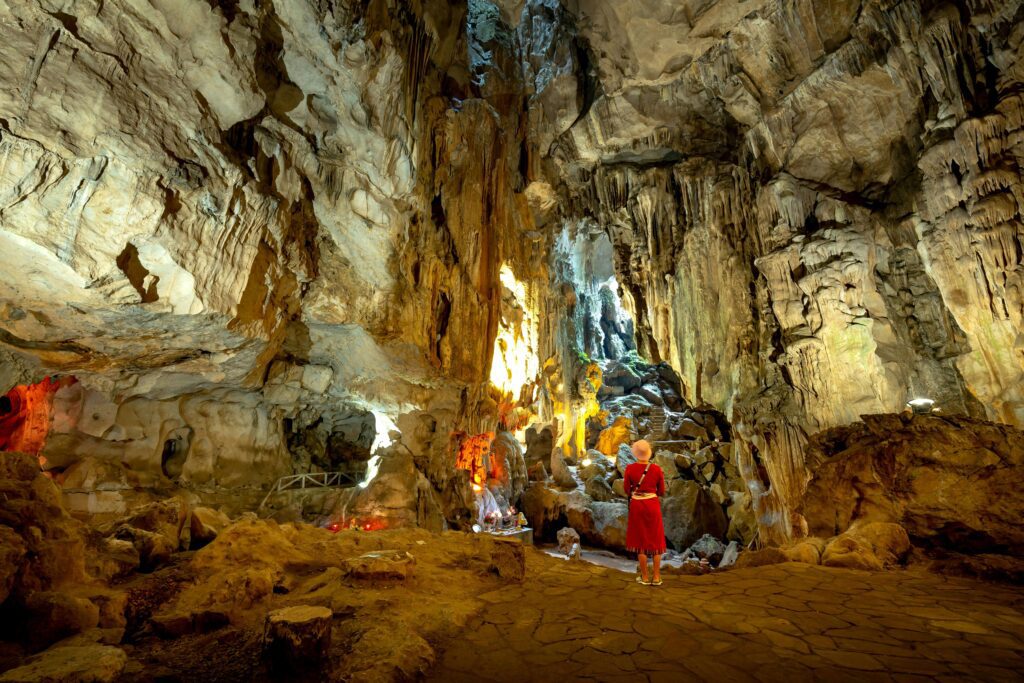
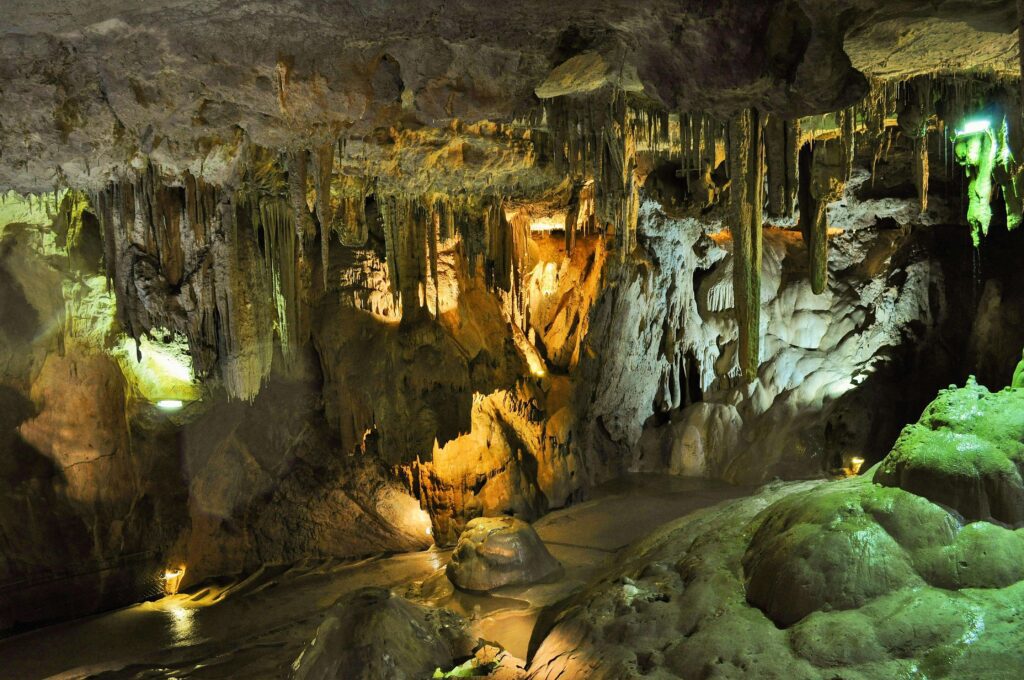
The result is 42 known caverns containing formations that defy easy description—stalactites shaped like curtains, shark teeth, and roses; columns that have grown a centimeter per century; cave pearls formed around grains of sand over thousands of years. The deepest cave, Santa Ana, drops 817 feet (249 m) below the surface. La Trampa (The Trap) features a 98-foot (30 m) vertical entrance shaft. Human remains and pre-Columbian artifacts found in Nicoa Cave suggest indigenous peoples used these chambers long before modern discovery. The National Museum of Costa Rica holds many of the artifacts recovered from Barra Honda’s caves, and visiting it from San José before heading to Guanacaste adds useful context to what you’ll see underground.
What keeps the formations intact is the cave architecture itself. The vertical entrances made unauthorized access nearly impossible for centuries, protecting the interior from the vandalismthat hass damaged more famous caves worldwide. Today, Terciopelo and La Cuevita are the only two caves open to the public—a deliberate conservation decision that keeps the rest of the system pristine.
What Happens on the Cave Tour?
This isn’t a polished tourist attraction with lighting and paved walkways. It’s a genuine physical adventure that starts before you even reach the cave entrance.
What’s the Hike Like Before You Get Underground?
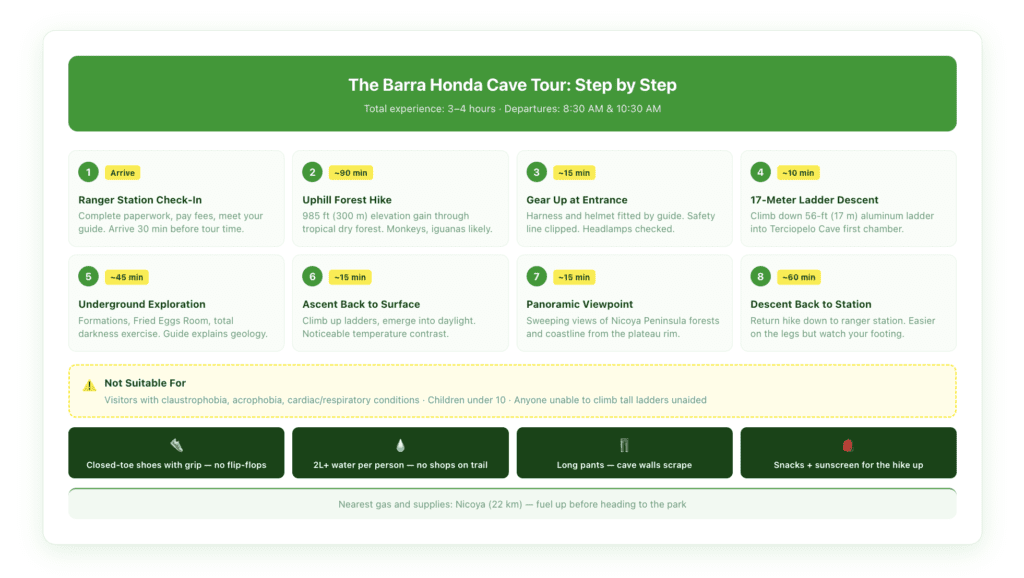
Your guide meets you at the ranger station, and you begin a 1.5-hour uphill hike through the park’s tropical dry forest. The trail gains nearly 985 feet (300 m) in elevation. It’s well-maintained—no scrambling over rocks or hacking through brush—but the Costa Rican sun and humidity make it feel more demanding than the distance suggests. This is not the time to wish you’d brought more water.
Along the way, you’ll hear howler monkeys in the canopy and may spot white-faced capuchins, coatis crossing the trail, and iguanas basking near rocky outcroppings. The tropical dry forest ecosystem here is one of Earth’s rarest—unlike the rainforests of Arenal or Monteverde, these trees shed their leaves during the December–April dry season, creating an open, golden landscape that makes wildlife easier to spot than in dense jungle. Less than 2% of the world’s original tropical dry forest remains intact, making Barra Honda’s protected patch genuinely significant.
What’s the Descent Into Terciopelo Cave Like?
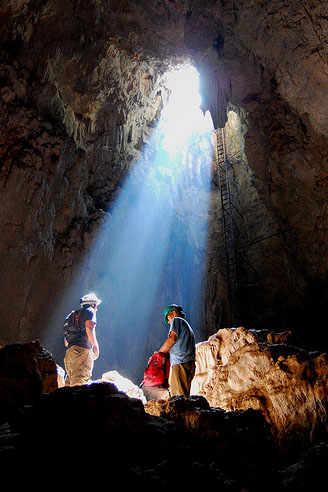
At the cave entrance, your guide fits you with a harness and helmet. The first descent is a 56-foot (17 m) aluminum ladder. Your harness clips to a safety line—it’s a backup, not your primary means of support—so you’re climbing the ladder rungs while the rope keeps you tethered. The cave is named for the terciopelo (fer-de-lance), a highly venomous snake whose dead body was found at the entrance during the initial scientific survey. None lives in the cave today.
The drop into the first chamber is immediate and complete. No wind, no light except your headlamp, no sounds from the surface. The temperature drops noticeably—from the 90°F (32°C) heat above to something cave-like and still. Your guide begins pointing out formations: curtains of translucent stone, clusters shaped like bunches of grapes, columns that look almost architectural.
What Is the Fried Eggs Room?
A tight squeeze through a narrow passage (this is the part that makes claustrophobic visitors turn back) leads to the second chamber: La Sala de Huevos Fritos—the Fried Eggs Room. Flat-topped stalagmites here genuinely look like sunny-side-up eggs on a griddle. The resemblance is uncanny enough that it’s become the most photographed formation in the park.
The most disorienting moment comes when your guide asks everyone to switch off their headlamps simultaneously. The darkness is total—not “dark room” dark, but genuinely absolute. No light has reached this chamber in the millions of years since it formed. Sitting in that silence, with formations that grew a centimeter per century surrounding you, is one of those moments that actually shifts your sense of scale.
After 30–45 minutes underground, you’ll climb back up and emerge blinking into daylight. Your guide then leads you to a panoramic viewpoint overlooking the Nicoya Peninsula—the contrast between what you just experienced underground and the sweeping coastal views above is genuinely striking. The total experience—hike up, cave exploration, viewpoint, descent back—runs 3–4 hours.
How Should You Actually Prepare?
Underpreparing is the most common mistake at Barra Honda. People show up in flip-flops, having skipped breakfast with a half-empty water bottle. The park is remote enough that there’s no correcting that once you arrive.
What Are the Physical Requirements?
You need to be comfortable with sustained uphill hiking in tropical heat, climbing tall ladders while wearing a harness, crouching through narrow passages, and spending time in complete darkness. Children must be at least 10 years old. The tour isn’t suitable for anyone with severe claustrophobia, significant mobility limitations, cardiac or respiratory conditions, or acrophobia. If a visitor is larger-framed, some of the narrow squeezes may not be passable—call ahead to discuss.
What Should You Pack?
Footwear is the most important decision. Hiking boots with ankle support and aggressive tread are ideal. Trail runners work if they have a good grip. The cave floor is slippery limestone with broken rock, and the occasional guano patch—flip-flops and smooth-soled shoes are genuinely dangerous here. This isn’t a suggestion; the park guides enforce it.
Bring at least 2 liters of water per person, ideally more. You can’t buy anything once you leave the ranger station. Pack snacks for the hike—there are no vendors on the trail. The nearest gas station and convenience store are in Nicoya, so fuel up and stock up before you arrive.
Wear long pants. They protect your legs from scrapes on the cave walls, insect bites on the trail, and the general grime of crawling through geological formations. Bring a lightweight layer for the temperature change underground.
Leave anything valuable in the car. You’ll get dirty, your phone will get in the way during the ladder descent, and the cave environment isn’t friendly to electronics.
What's There to Do Above Ground?
The cave tour is the main event, but Barra Honda has more to offer than just what’s underground—especially for wildlife watchers.
What Are the Hiking Trails Like?
The park has several trails for independent exploration, none requiring a guide. The Los Mesenos Trail is a 1.9-mile (3 km) loop through secondary forest—good for easy wildlife watching without the physical demands of the cave tour. The Cerro Barra Honda Trail climbs to the park’s highest point at 1,450 feet (442 m) for panoramic views of the Tempisque Valley and Gulf of Nicoya. Trail maps are available at the ranger station free of charge.
What Wildlife Can You See?
The tropical dry forest ecosystem here produces a different cast of animals than Costa Rica’s wetter regions. Howler monkeys call loudly enough to be heard from the parking lot—you’ll have no trouble locating them. White-faced capuchins are common along the main trail. White-tailed deer, coatis, agoutis, and coyotes appear more frequently here than in rainforest parks. Over 150 bird species have been recorded, including magpie jays, orange-fronted parakeets, and various raptors. The Nicoya Peninsula Blue Zone that surrounds the park is also worth knowing about—this region is one of the world’s five longevity hotspots, and Nicoya town is the closest service hub for the park.
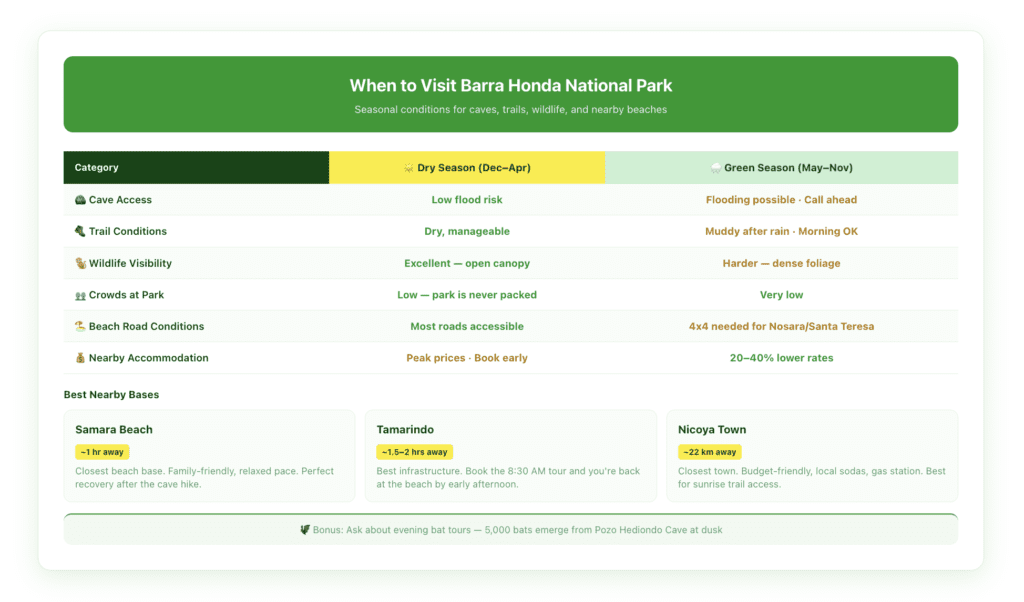
Wildlife viewing is dramatically better during the dry season (December–April) when the deciduous trees drop their leaves, opening up sightlines and concentrating animals around remaining water sources. The green season brings lush vegetation but makes spotting harder.
Are There Bat Tours at Dusk?
Yes—and this is worth knowing about. Pozo Hediondo (Fetid Pit Cave) houses a colony of roughly 5,000 bats. At dusk, they emerge en masse for their nightly insect hunt. Some guides offer evening tours to watch this—thousands of bats spiraling upward from the cave entrance against the fading sky is exactly as dramatic as it sounds. Bats consume their own body weight in insects nightly, making Pozo Hediondo’s colony a meaningful part of Guanacaste’s agricultural ecosystem. Ask when you make your reservation whether dusk tours are available on your dates.
When Is the Best Time to Visit?
Is Dry Season the Only Option?
Dry season (December–April) is the safest bet for cave access. Minimal rainfall means passages stay accessible without flooding risk, the trails are manageable, and the dry forest landscape is easier to navigate for wildlife watching. The trade-off is that this coincides with Costa Rica’s peak tourism season—prices for nearby accommodations rise 20–40%, and popular beach towns like Tamarindo and Samara fill up fast. Barra Honda itself rarely feels crowded, regardless.
What About Green Season?
The green season (May–November) brings the risk of cave flooding—heavy afternoon rains can make passages temporarily inaccessible. Tours occasionally get cancelled when water levels rise in the cave chambers. The park monitors conditions closely, but if flexibility matters to you, visit in the morning before afternoon storms, and have a backup plan. Some sources note that the caves can be entirely closed during the wettest months. Lonely Planet advises calling national parks directly to confirm access during the rainy season before making the drive. If you’re traveling during Costa Rica’s green season, call ahead to confirm tour availability before driving out.
The upside: accommodation prices drop significantly, the forest turns lush green, and you’ll likely have the park almost to yourself.
What Time Should You Arrive?
Tour departures are at 8:30 AM and 10:30 AM. Arrive at least 30 minutes before your tour time to complete check-in and gear up. If you’re driving from Tamarindo, leave by 6:00 AM for the 8:30 AM tour. From Samara, a 6:30 AM departure works comfortably.
How Does Barra Honda Fit Into a Guanacaste Trip?
Barra Honda works best as a standalone day trip from a Nicoya Peninsula or northern Guanacaste base. The morning commitment (3–4 hours) leaves your afternoon free for beach time.
From Tamarindo or Playas del Coco: Plan 1.5–2 hours driving each way. Book the 8:30 AM tour, finish by noon, and you’re back at your beach hotel by early afternoon. The drive from Liberia Airport routes you directly through the area.
From Samara: About 1 hour each way. The closest base for Barra Honda and Samara’s relaxed pace makes for an easy recovery after the hike. Nosara is about 1.5 hours away.
Combining with Palo Verde: Palo Verde National Park sits in the same Tempisque Conservation Area and is renowned for boat safaris on the Tempisque River. A two-day itinerary—caves one morning, boat safari the next—covers two wildly different ecosystems without much backtracking.
As a San José-to-Nicoya Peninsula stop: If you’re driving from SJO to the southern Nicoya Peninsula beaches like Santa Teresa or Montezuma, Barra Honda is a natural halfway stop. You cross near the park on Highway 21—the same road that runs down the entire peninsula. Barra Honda sits near the northern inland edge of the peninsula, making it a logical detour rather than a backtrack.
For travelers who love cave exploration, pairing Barra Honda with the Venado Caves near La Fortuna gives you two completely different caving experiences in one trip—Venado has underground rivers and is wetter and murkier, while Barra Honda is geological and ancient-dry.
What Else Should You Know Before You Go?
Reservations and Fees
Reservations are mandatory. Contact the park directly via their Facebook page or by calling +506-8721-2444 or +506-8539-1010. Tour times are 8:30 AM and 10:30 AM—confirm which is available when you book. Walk-ups are turned away when tours are fully booked.
- Park entry: $12 USD (foreigners)
- Cave tour: $25–40 USD per person (includes guide, harness, helmet)
- Payment: Debit or credit card only—no cash accepted at the entrance
Note: Pricing varies across sources. Confirm exact amounts when you make your reservation, as fees can change.
Staying Overnight
If you want sunrise access to the trails, four rustic cabins at the ranger station sleep 6–8 people each on bunk beds. These are bare-bones—shared facilities, no amenities—but they put you in the park before tour groups arrive. Camping is also permitted near the ranger station. Most visitors, though, treat Barra Honda as a day trip and base themselves in Nicoya (22 km away), Samara (about 1 hour), or Tamarindo (about 1.5–2 hours).
Practical Tips
- Download offline maps before you leave cell service—coverage is spotty near the park.
- The nearest gas station is in Nicoya; don’t count on finding fuel closer
- Bring cash for any small purchases in Barra Honda village—there’s a small tienda near the entrance road
- The park gate opens at 8:00 AM; last entry for cave tours is 1:00 PM
Barra Honda offers something most Costa Rica national parks don’t: an experience that’s entirely underground, unique, and entirely worth the preparation. It’s one of those places where the physical effort involved is exactly the point.
FAQs About Barra Honda National Park
Are there caves in Costa Rica you can visit?
Yes—Costa Rica has two main caving destinations. Barra Honda National Park in Guanacaste protects the country’s most extensive limestone cave system with 42 known caverns, two of which are open to the public via guided tours. Venado Caves near La Fortuna offer a different experience with underground rivers and wetter passages. Both require reservations and guided tours.
Does Costa Rica have caves you can explore without a tour?
Not at Barra Honda—the guide is mandatory for safety reasons. The cave descent involves ladder climbing, harness use, and navigation through passages where getting disoriented in the dark is a real risk. The self-guided hiking trails above ground are open independently with regular park entry.
What are the real risks of spelunking at Barra Honda?
The main risks are physical rather than dramatic: slipping on wet cave floors, ladder fatigue during the descent and ascent, and disorientation if separated from your guide. The guided format and harness requirement significantly reduce injury risk. The cave is not suitable for visitors with claustrophobia, heart or respiratory conditions, acrophobia, or significant mobility limitations. Children under 10 are not permitted.
What is so special about Nicoya, Costa Rica?
Nicoya sits in one of the world’s five Blue Zones—regions where people statistically live the longest. The town itself is the administrative center of the Nicoya Peninsula and serves as the practical base for visiting Barra Honda (22 km away). Beyond longevity research, the Nicoya Peninsula delivers some of Costa Rica’s most varied experiences: caves at Barra Honda, Palo Verde wetlands, and beach towns ranging from family-friendly Samara to surf-focused Nosara.
What should you wear for a cave tour in Costa Rica?
Closed-toe shoes with ankle support and good traction are non-negotiable—the cave floors are slippery limestone, and your footwear determines how safely you can move. Long pants protect against scrapes and insect bites during the hike. Lightweight, breathable fabrics handle the heat outside; expect a noticeable temperature drop underground. Leave valuable electronics in the car—you’ll have both hands occupied on the ladders and get dirty regardless.
Is it OK to go spelunking alone at Barra Honda?
No—solo exploration of the caves isn’t permitted. All cave tours require a park guide, both for safety and conservation. The guide also carries the lighting equipment beyond individual headlamps, knows the specific route through the chambers, and provides context on the formations and history that make the experience significantly richer.
Explore Costa Rica with Vamos Rent-A-Car!
Vamos Rent-A-Car not only offers reliable vehicles but also provides expert guidance to help you uncover Costa Rica’s hidden treasures. We can assist you with insider tips and a downloadable checklist to ensure you don’t miss any must-see attractions.
Book your car today with Vamos Rent-A-Car and start your adventure. For personalized assistance, contact us now!