
Last Updated on July 24, 2026
Dominical Beach, Costa Rica: Quick Guide
Dominical Beach is a 2.5-mile (4 km) South Pacific surf break for intermediate to advanced surfers, 3.5 hours from San José Airport via the paved Costanera Sur. The Costa Ballena puts waterfalls and whale watching within 30 minutes. A rental car is essential.
Quick Facts:
- Waves suit intermediate–advanced surfers; beginners use Dominicalito (1 mi south)
- Year-round temps: 85°F (29°C) day / 75°F (23°C) night
- Marino Ballena is 20 min south — $6 entry, two humpback whale seasons annually
- Green season (May–Nov) brings the best surf and 20–30% lower prices
- 4×4 recommended for mountain hotels above town
Top 3 Experiences:
- Nauyaca Waterfalls — Two-tiered cascade 15 min from town; truck, horseback, or hike in
- Marino Ballena Nat. Park — Whale’s Tail tombolo, dual-hemisphere humpback seasons
- Hacienda Baru Wildlife Refuge — 815 acres, 365 bird species, $15 self-guided trails
The SJO South Pacific route through Manuel Antonio to Dominical is one of Costa Rica’s most scenic coastal drives.
If you need any help with a Costa Rica car rental, contact us now!
Dominical Beach is Costa Rica’s South Pacific secret: a 2.5-mile (4 km) stretch of dark sand and powerful surf that draws experienced wave-riders, bohemian expats, and travelers who find Manuel Antonio too crowded. It’s one of the few beach towns in Costa Rica that’s stayed genuinely low-key despite growing tourism, and Lonely Planet’s Costa Rica coverage consistently highlights it as the South Pacific’s most characterful surf destination. It’s not a polished resort town. The beach is rocky in spots, the surf is serious, and the vibe is genuinely laid-back in a way that’s becoming rare in Costa Rica. It’s consistently one of the most rewarding stops on the South Pacific coast, especially if you’re behind the wheel and can explore the entire Costa Ballena region on your own schedule.
Dominical sits about 130 miles (209 km) from San José, a 3.5-hour drive south on Route 27 and then Route 34 (the Costanera Sur). You’ll need a car here and not just to reach Dominical, but because the best experiences are spread across a 30-mile (48 km) stretch of coastline that no bus route connects efficiently. If you’re planning your first Costa Rica trip and the South Pacific is on your list, this stretch deserves more than a day stop.
Key Takeaways
- Dominical is a genuine surf town, as intermediate to advanced waves dominate, and beginners should head to nearby Dominicalito or Playa Uvita.
- The Costanera Sur highway (Route 34) is fully paved and direct from Manuel Antonio; a 4×4 is recommended if you plan to stay at mountain hotels above town.
- The surrounding Costa Ballena region packs waterfalls, whale watching, snorkeling, and wildlife into a very compact area, and a car unlocks all of it.
- Green season (May–November) means reliable surf and lush scenery, but you’ll also get afternoon rain and more humidity; pack accordingly.
- Monkeys, sloths, and coatis appear regularly around town and at Hacienda Baru so you don’t need a tour to see wildlife here.
- Driving in from San José takes roughly 3.5 hours via Route 27 west; this is the most direct and straightforward route.
Where Is Dominical Beach, and How Do You Get There?
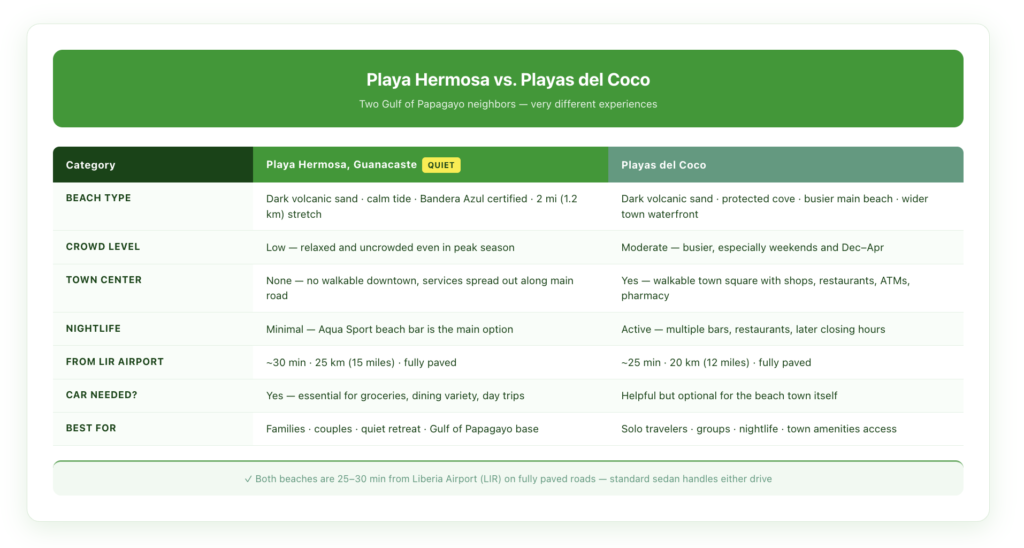
Dominical sits in the Puntarenas Province, within an area locals call the Costa Ballena or “Whale Coast.” It’s the informal name for the stretch of South Pacific shoreline between Manuel Antonio National Park and the Osa Peninsula, centered on Dominical, Uvita, and Ojochal.
Getting here is straightforward from San José Airport (SJO). Take Route 27 west toward Jacó, then continue south on Route 34 (the Costanera Sur) through Quepos. Dominical is about 30 minutes past Quepos. The entire route is paved and is easily driven in a standard car during the dry season. From Manuel Antonio, it’s a quick 45-minute drive on a flat coastal highway.
If you’re asking whether you need a 4×4, the honest answer is: it depends where you’re staying. The town itself and the main beach are accessible in any vehicle. But many of Dominical’s most appealing accommodations sit up in the mountains above town, and these ocean view villas and jungle lodges require a real 4×4. If you’ve already read what vehicle each Costa Rica destination actually requires, you know the pattern: the higher the address, the higher the clearance needed.
What Is It Like to Drive the Costanera Sur?
Route 34 is one of Costa Rica’s smoothest driving experiences. It’s fully paved, runs right along the Pacific coast, and has enough viewpoints, fruit stands, and roadside soda stops to make the drive itself an activity. The road from Manuel Antonio through Dominical to Uvita is spectacular because you’re moving between forested mountains and open Pacific for much of it.
One heads-up: the route from San José to Dominical involves Route 27 (a toll road, roughly $8 total). If you’re coming from Liberia Airport (LIR), the drive runs 5–6 hours. SJO is the logical gateway for anything in the South Pacific, and the SJO vs. LIR comparison spells out exactly why for travelers heading south.
What Is Dominical Beach Actually Like?
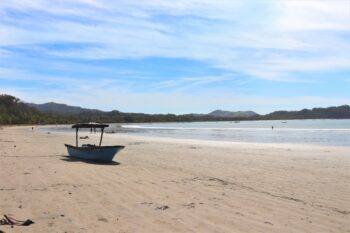
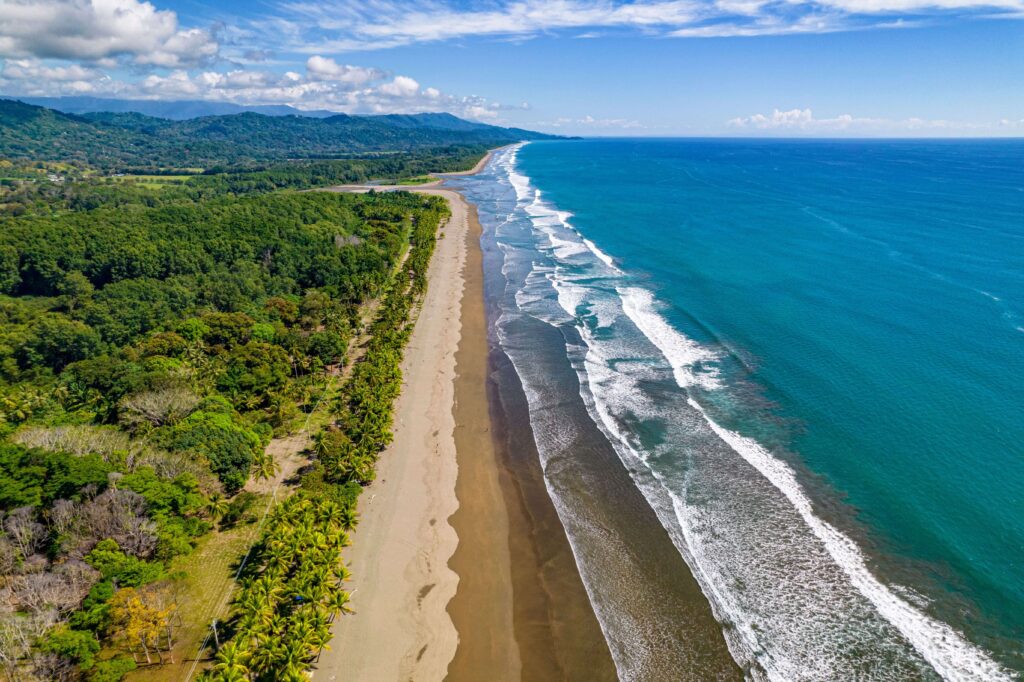
Playa Dominical is a long, dark-sand beach with volcanic rock formations, consistent swell, and powerful shore break. The water is not calm. There are no perfectly protected coves, as this is the open Pacific, and the waves reflect that. The beach stretches 2.5 miles (4 km) from the mouth of the Río Barú at the north end to where the coast bends south toward Dominicalito.
The town itself is genuinely small and low-key. There are two main roads: one through town and another running parallel to the beach have restaurants, surf shops, hostels, ATMs, and a handful of basic hotels. There’s no shopping mall or chain restaurant. But that’s the point.
Average year-round temperatures sit around 85°F (29°C) during the day and 75°F (23°C) at night. The South Pacific runs wetter and more humid than Guanacaste, and the area stays brilliantly green all year as a result. If you’ve been wondering how Costa Rica’s seasons affect Dominical, the green season is often better here than at northern beach towns. Surf is stronger, waterfalls are fuller, and prices drop noticeably.
Costa Rica’s 12 distinct microclimates mean this region runs noticeably wetter than Guanacaste, so pack a light rain layer regardless of season. The Costa Rica regional weather guide breaks down the month-by-month picture if you want to time your trip precisely.
Is Dominical Beach Good for Surfing?
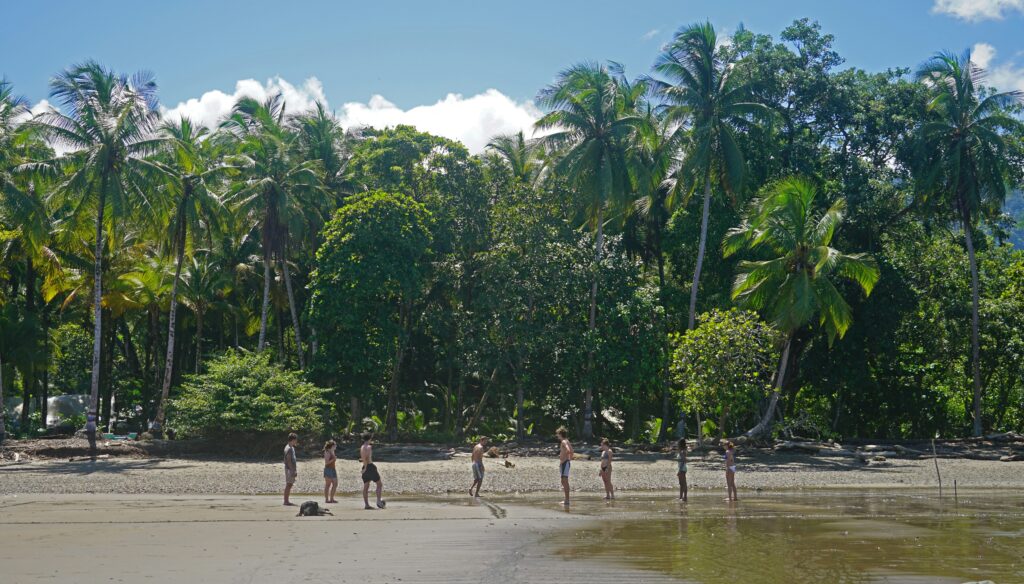
Dominical is primarily a surf break for intermediate to advanced surfers. The waves are consistent, often reaching 6–10 feet (1.8-3 meters), and the rocky shore means wipeouts have consequences. If you’re an experienced surfer, this is exactly what you’re looking for. Current surf conditions at Dominical are worth checking before you paddle out because local breaks change quickly after rain.
Beginners should head to Dominicalito, a smaller cove about 1 mile (1.5 km) south, where the waves are gentler, and several surf schools serve the Dominical area. Playa Uvita and Playa Linda are other beginner-friendly options nearby. Lesson rates run around $50–65 per person.
The surf is most consistent from May through October during the green season, when swells roll in from the south. For comparison, Tamarindo’s waves are far more beginner-friendly if you’re looking for a gentler introduction to Costa Rica surfing, and Santa Teresa and Montezuma on the Nicoya Peninsula offer another intermediate option, but Dominical is not the right destination for a soft start.
What Else Is There to Do in Dominical?
Dominical’s real power as a destination is what surrounds it. The Costa Ballena region is one of Costa Rica’s most activity-dense areas, and unlike Arenal, the crowds haven’t fully caught up yet.
Should You Visit Nauyaca Waterfalls?
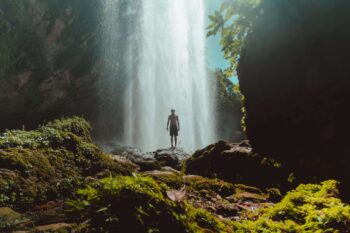
Nauyaca is the most-visited attraction near Dominical, and the reason is obvious the moment you arrive: two-tiered waterfalls dropping into deep swimming pools, surrounded by primary rainforest. The lower fall drops roughly 50 feet (15 m); the upper is around 130 feet (40 m). You can reach it three ways: a 3-hour hike in each direction, a horseback riding tour, or a 4×4 truck ride (the most popular option). The trailhead is about 15 minutes from Dominical by car.
Tours typically cost $35–65 per person, depending on whether you’re hiking, riding, or taking the truck. Nauyaca Waterfalls are one of those places where photos don’t capture the scale, and the cascades are significantly more impressive in person than any social media post suggests.
Is Hacienda Baru Worth Your Time?
Hacienda Baru National Wildlife Refuge sits 2 miles (3 km) north of Dominical and is one of the more underrated nature experiences in the entire South Pacific. This 815-acre (330-hectare) private reserve is part of the Paso de la Danta Biological Corridor, connecting Corcovado and Manuel Antonio national parks where you’ll find 365 bird species, capuchin and howler monkeys, two- and three-toed sloths, coatis, and occasional puma sightings.
The reserve has 4.3 miles (7 km) of self-guided trails, a zipline canopy tour, birdwatching excursions, and a beach section that’s almost always empty. The road into the Refuge is paved and right off the Costanera Sur, so no 4×4 required. Trail entry runs around $15 per person. Worth the stop, especially for Costa Rica birdwatching and wildlife photography.
Is Marino Ballena National Park Worth a Day Trip?
Absolutely. Marino Ballena National Park is 20 minutes south of Dominical and deserves at least a half-day. It’s the only marine park in the world where humpback whales from both hemispheres converge, so two separate whale-watching seasons (July–November and December–April) mean you have a legitimate shot at whale sightings almost year-round.
The park’s other famous feature is the Whale’s Tail, which is a tombolo formation that emerges at low tide. Check the tide chart for Uvita before you go, or you’ll miss it. Entry is $6 per person for foreigners, paid at the ranger station. For context on Costa Rica’s national park system, SINAC manages all park reservations and fee schedules, and it’s worth bookmarking the link for any South Pacific itinerary that includes multiple parks.
What About Caño Island Snorkeling?
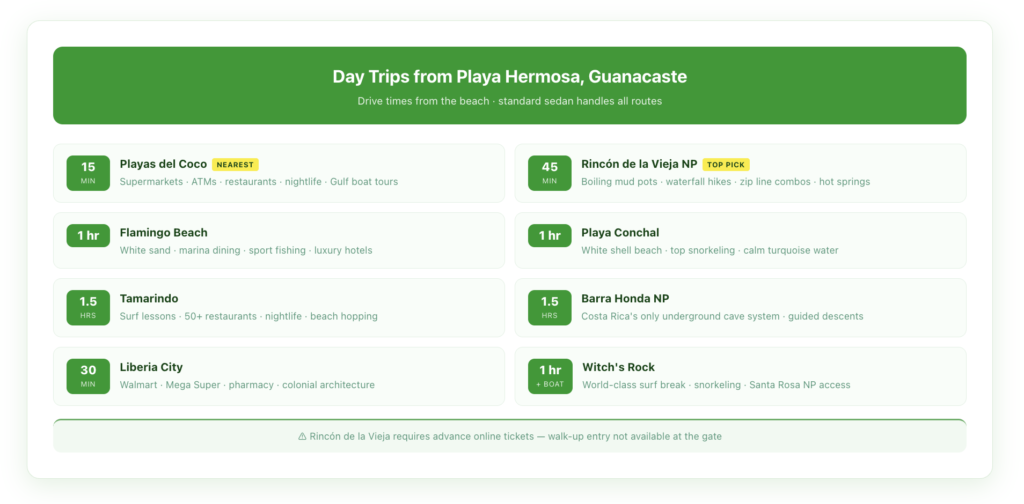
If you want to snorkel the South Pacific properly, Caño Island Biological Reserve is the destination. Tours depart from Uvita and run about $145 per adult for a full-day excursion, including equipment, guide, lunch, and park fees. Visibility regularly exceeds 65 feet (20 m), and you’ll see sea turtles, massive schools of jacks, and parrotfish without much effort. It’s the best snorkeling on the Costa Rica Pacific coast, full stop.
Can You Do the Baru River by Paddleboard or Kayak?
Yes, and it’s one of the most scenic low-key activities near town. The Río Barú runs through Dominical before emptying into the ocean, and the calm upper stretches are perfect for stand-up paddleboarding or kayaking. Wildlife sightings along the river banks of animals like monkeys, sloths, otters, and herons are almost guaranteed during an early morning session. The Tico Times has reported on Dominical’s growing eco-activity scene, and river tours are consistently among the most recommended low-key experiences in the area.
Combine a river morning with an afternoon stop at Cascada El Pavon, a free natural swimming hole 35 minutes south near Ojochal that most visitors drive past without knowing it exists. The combination of river paddling, free waterfall swim, and Marino Ballena sunset makes an exceptional full day with your own car. Having a rental is what makes days like this possible; no tour fits this exact sequence.
What's the Best Time to Visit Dominical?
Dominical is a year-round destination, but what you get changes significantly by season.
Dry season (December–April) delivers the most predictable sunny mornings, lower humidity, and better road conditions for mountain trails and upland hotels. Prices are higher, Nauyaca fills up, and you’ll share the whale tail at Marino Ballena with more people. Surf can be inconsistent. This is peak season across Costa Rica countrywide, so book accommodations early.
Green season (May–November) means afternoon rain which is typically 1–3 hours per day, rather than all-day downpours. Mornings are usually clear, though. Waves are better for surfing, waterfalls are dramatically fuller, and Nauyaca’s pools are at their deepest. Prices drop 20–30%, and the area feels genuinely quiet. Heads up: October is the rainiest month.
The shoulder months of May–June and November–early December are the sweet spot: decent surf, reasonable prices, manageable weather. If you’re watching your budget, free and low-cost Costa Rica activities around the South Pacific- public beaches, Cascada El Pavon, Baru River walks add several genuinely rewarding days without adding tour costs. This regional insight is the kind that separates people who’ve actually explored Costa Rica’s South Pacific from those who stuck to the standard Arenal/Tamarindo circuit.
What Do You Need to Know About Safety in Dominical?
Dominical has a relaxed, friendly vibe and isn’t an inherently dangerous destination. But a few practical realities apply.
The surf is the most significant hazard. The shore break is powerful, and the rocks are real. Don’t swim at the main beach unless you have solid ocean experience. Casual swimmers and families should bathe at Dominicalito or Playa Uvita. The U.S. Travel Advisory for Costa Rica notes the country at Level 2 (exercise increased caution) primarily for petty crime, so standard precautions apply everywhere.
Don’t leave valuables in your car, and this applies anywhere in Costa Rica, so use hotel safes. It’s also worth knowing what to expect at Costa Rica airports when you arrive, so the entry process is smooth before the driving starts. And since Dominical operates mostly on cash, especially at surf schools, market stalls, and smaller restaurants, understanding how currency works in Costa Rica before you arrive saves you the scramble of finding an ATM on your first afternoon.
Are there monkeys in Dominical? Yes, white-faced capuchins appear in town within an hour of arrival for most visitors, and howler monkeys announce the dawn from the surrounding jungle. The wildlife density in this region is genuinely high, which is part of why the South Pacific keeps drawing repeat visitors.
How Far Is Dominical from Major Costa Rica Cities and Airports?
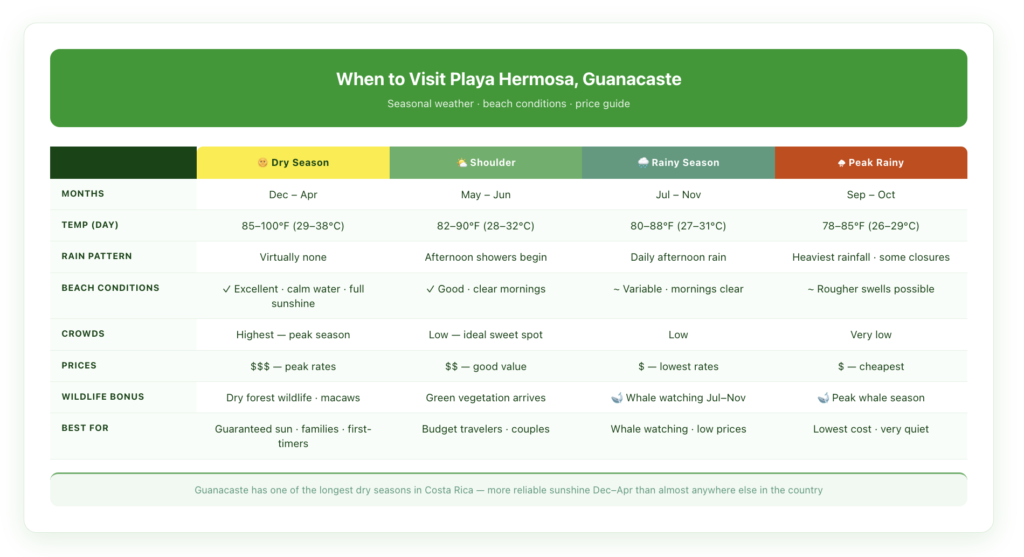
Dominical is around 130 miles (209 km) from San José, which is about 3.5 hours via Route 27 and Route 34. From Manuel Antonio, it’s roughly 28 miles (45 km) south on Route 34, about 45 minutes. From Liberia (LIR), the drive is around 200 miles (320 km) and takes 5–6 hours.
SJO is the logical gateway. For SJO road trip routes that include the South Pacific, the loop from San José → Manuel Antonio → Dominical → Uvita is one of Costa Rica’s most rewarding. Budget for around $8–12 in tolls on the Route 27 leg. Fuel up in Quepos or Dominical since the stretch south of Manuel Antonio has fewer gas stations than you’d expect.
For the broader question of getting around Costa Rica by car vs. other options, the South Pacific lends itself to self-driving better than almost any other region. Buses exist, but they don’t get you to Nauyaca, Hacienda Baru, or Cascada El Pavon on your own schedule.
Heading south from Dominical leads to Uvita (20 min), Ojochal (35 min), and eventually the Osa Peninsula, which is home to Corcovado National Park’s Sirena Station, a separate multi-day commitment that pairs logically with a Dominical base. If you’re building a two-week Costa Rica itinerary that includes the South Pacific, Dominical anchors 3–4 nights of that region naturally.
A one-week Costa Rica trip that skips everything south of Manuel Antonio is a common traveler mistake, as this region rewards anyone who makes the extra hour of driving.
One practical note: driving Costa Rica’s Costanera Sur is beginner-friendly by local standards. Paved, well-marked, and nothing like the mountain roads to Monteverde. If you’ve been hesitant about self-driving in Costa Rica, this stretch builds confidence quickly. A compact SUV or 4×4 from Vamos handles everything on this route and gives you the flexibility to follow the road wherever it leads.
Frequently Asked Questions
What is Dominical, Costa Rica, known for?
Dominical is best known for its consistent surf, bohemian atmosphere, and position at the heart of the Costa Ballena region. It draws experienced surfers, nature lovers who want wildlife without Manuel Antonio’s crowds, and travelers exploring the South Pacific between Quepos and the Osa Peninsula.
How far is Dominical from San José Airport?
Dominical is about 130 miles (209 km) from SJO, which is a 3.5-hour drive via Route 27 west and then Route 34 south. No domestic flight serves Dominical; self-driving is the most practical way to reach it and explore everything nearby.
Is Dominical Beach safe for swimming?
Not for most casual swimmers. The waves at Playa Dominical are powerful, the shore break is strong, and rocks are present. Intermediate to advanced ocean swimmers handle it fine; families and beginners should use Dominicalito (1 mile/1.5 km south) or Playa Uvita (20 minutes south), both calmer and more protected.
Are there monkeys in Dominical, Costa Rica?
Yes, white-faced capuchins are common in and around town, and howler monkeys are heard most mornings at dawn. The nearby Hacienda Baru Wildlife Refuge is the best spot for guaranteed sightings alongside sloths, coatis, and 365+ bird species.
What is the best time of year to visit Dominical?
The dry season (December–April) offers reliable sunny mornings and the easiest road access to mountain hotels. Green season (May–November) brings better surf, fuller waterfalls, and lower prices, which are often 20–30% cheaper than peak season. May–June and November are the sweet spots that balance both.
Do you need a 4×4 for Dominical?
For the town and main beach, any vehicle works on the flat Costanera Sur access. If you’re staying at a mountain hotel or exploring off the main highway, a 4×4 with real clearance is recommended, especially during the green season when unpaved mountain roads can get rough.
What’s the nightlife like in Dominical?
Low-key and genuinely local. Beach bars, a few live music spots, and an open-air restaurant scene where surfers and expats mix easily. It’s not Tamarindo or Manuel Antonio, so there’s no nightclub scene. What you get instead is good food, cold beer, and relaxed evenings that feel earned after a day in the water.
How do you get from San José to Dominical without a car?
Tracopa buses run from San José to Dominical, but the journey takes around 4 hours and leaves you without access to Nauyaca, Hacienda Baru, or the broader Costa Ballena region. Private shuttles cost around $200–250 for up to six people. Renting a car is the most practical option for anyone planning more than one activity.