
Last Updated on February 23, 2026
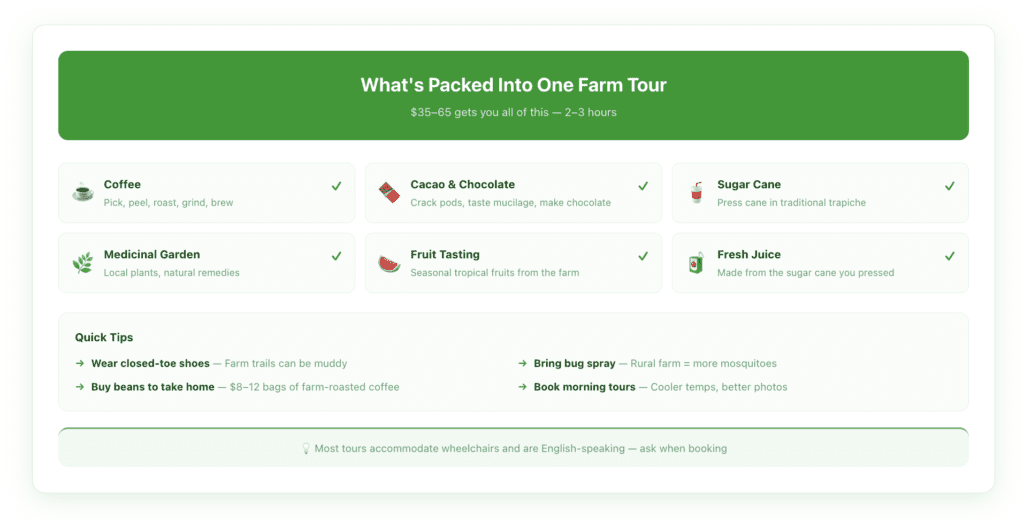
La Fortuna Coffee Tour: What's Covered
La Fortuna coffee tours offer something the big Central Valley plantations don’t—an intimate, hands-on experience where you actually pick, peel, and roast the beans yourself. While La Fortuna sits at a lower elevation than Costa Rica’s premium coffee regions, small family farms like Arenal Vida Campesina combine coffee, chocolate, and sugar cane into one comprehensive 2-3 hour experience for $35-65 per person. Most farms are 10-20 minutes from downtown La Fortuna along well-paved roads—no 4×4 needed with your rental car.
Quick Facts
- Duration: 2-3 hours, leaving plenty of time for other Arenal activities the same day
- Cost: $35-65 per person, including tastings; driving yourself saves $15-20 versus tours with pickup
- Best time: Harvest season (December-February) offers the fullest experience; farms operate year-round
- Accessibility: Most tours include English-speaking guides and are wheelchair accessible
- What’s included: Coffee, chocolate, and sugar cane processing plus tastings of all three
Top Experiences
- Hands-On Coffee Processing – Strap on a traditional picking basket, select ripe cherries yourself, then peel and roast the beans you picked. You’ll taste coffee you traced from plant to cup.
- Traditional Sugar Cane Press – Use a hand-operated trapiche to extract fresh cane juice, then learn how it ferments into guaro—Costa Rica’s national spirit. Adults get a small taste.
- Cacao and Chocolate – Crack open a ripe cacao pod, taste the sweet mucilage, and watch the seeds transform through roasting and grinding into chocolate.
Pair With Other Arenal Experiences
A morning coffee tour creates the perfect half-day combo. Head to a farm around 9 AM, finish by noon, then spend your afternoon at the Arenal hot springs—from free river spots to luxury resorts like Tabacón. Or start early at Arenal Volcano National Park, then visit a farm before the afternoon rains. The drive from San José takes about 3 hours through scenic coffee country, with La Fortuna Waterfall and hanging bridge walks also nearby.
If you need any help with a Costa Rica car rental, contact us now!
If you’re visiting the Arenal area and love coffee, you’re probably wondering whether a La Fortuna coffee tour is worth your time. Here’s the honest take: while La Fortuna sits at a lower elevation than Costa Rica’s prime coffee-growing regions, the farm tours here offer something the big plantations don’t, which is an intimate, hands-on experience where you actually pick, peel, and roast the beans yourself.
Unlike the crowded tours in the Central Valley, La Fortuna’s small-scale farms like Arenal Vida Campesina give you the chance to understand traditional Costa Rican agriculture while sipping coffee you helped create just minutes earlier.
Key Takeaways
- La Fortuna coffee tours combine coffee, chocolate, and sugar cane into one comprehensive farm experience.
- You’ll actively participate in picking, peeling, and roasting coffee—not just watch
- Tours run 2-3 hours, leaving plenty of time for other Arenal activities the same day.
- Small family farms offer authentic insight into Costa Rican agricultural traditions.
- Most tours include English-speaking guides and are wheelchair accessible
- Prices typically range from $35-65 per person, including tastings
What Makes La Fortuna Coffee Tours Different?
Why Aren’t These “First-Grade” Coffee Farms?
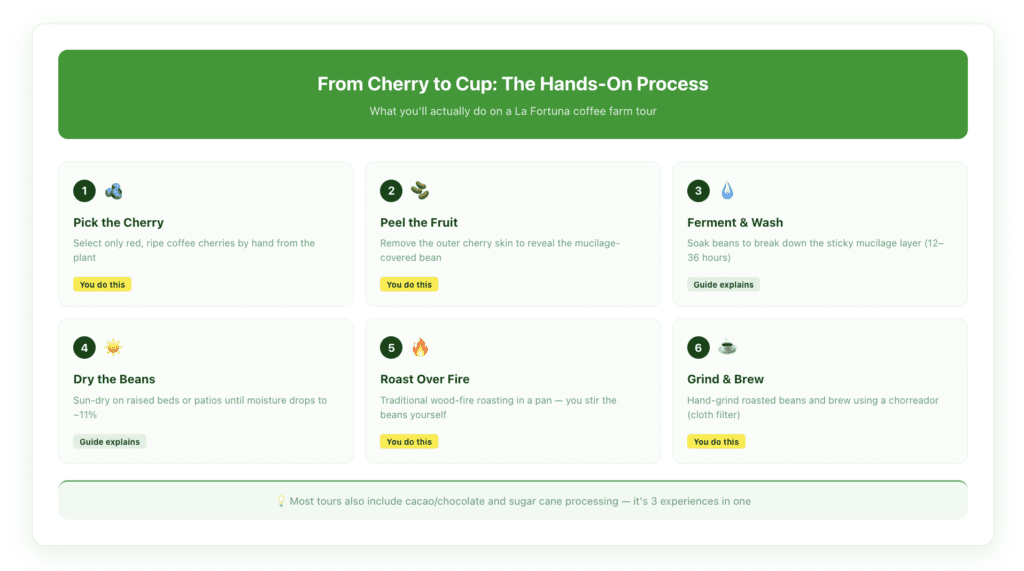
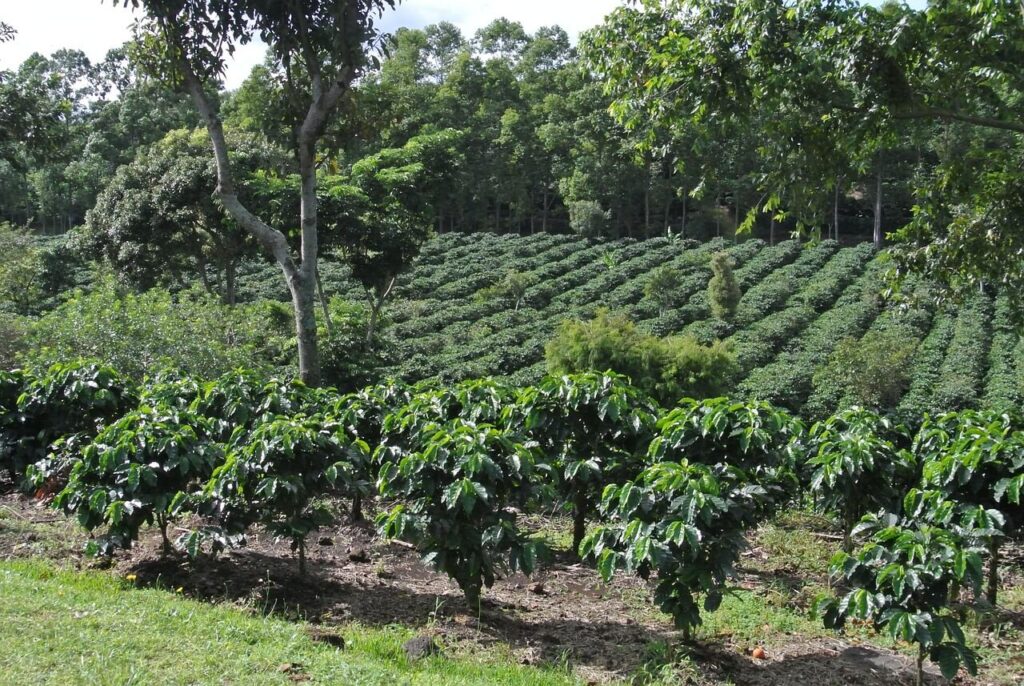
Let’s address the elephant in the room. The best Costa Rican coffee grows at elevations around 3,900-4,900 feet (1,200-1,500 meters) in regions like the Central Valley and Monteverde. La Fortuna sits at roughly 820 feet (250 meters), which is too low for the “strictly hard bean” designation that commands premium prices.
But here’s what matters for visitors: La Fortuna’s farms grow organic, 100% local Arabica coffee (the only variety legal in Costa Rica since a 1989 law banned Robusta cultivation). The beans might be “second grade” by export standards, but the tour experience itself often surpasses what you’ll find at commercial operations.
What Actually Happens on These Tours?
The best La Fortuna coffee tours go far beyond just coffee. At farms like Arenal Vida Campesina, you’ll experience a full immersion into traditional Costa Rican farm life. Expect to spend 2-3 hours exploring:
The Garden and Medicinal Plants Tours typically start in the farm’s garden, where guides introduce local crops and medicinal plants. You’ll learn about citronella (a natural mosquito repellent, which is useful knowledge for your Arenal Volcano exploration), taste raw pepper straight from the plant, and discover that pineapples actually grow in the ground, not on trees.
Cacao and Chocolate. Most comprehensive farm tours include a cacao section. You’ll see the trees, crack open a ripe cacao pod, and taste the sweet mucilage surrounding the seeds, which isa flavor nothing like processed chocolate. The guide explains how the seeds are fermented, dried, roasted, and ground to create chocolate products.
Sugar Cane Processing Using a traditional trapiche (hand-operated sugar cane press), you’ll extract fresh cane juice to drink. This same juice, when fermented, becomes guaro, which is Costa Rica’s national spirit. Many tours offer a small taste for adults.
How Does the Coffee Process Work from Cherry to Cup?
Picking Coffee the Traditional Way
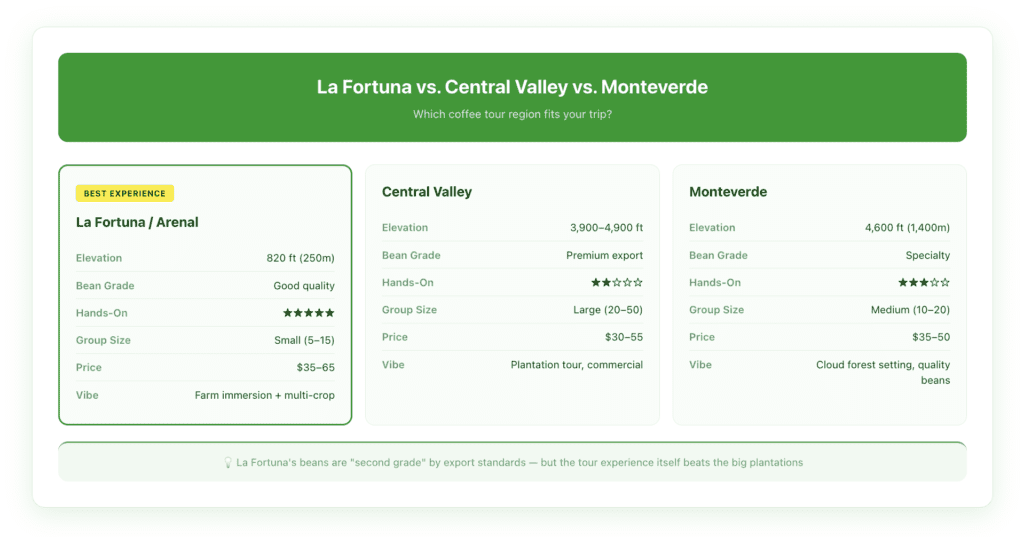
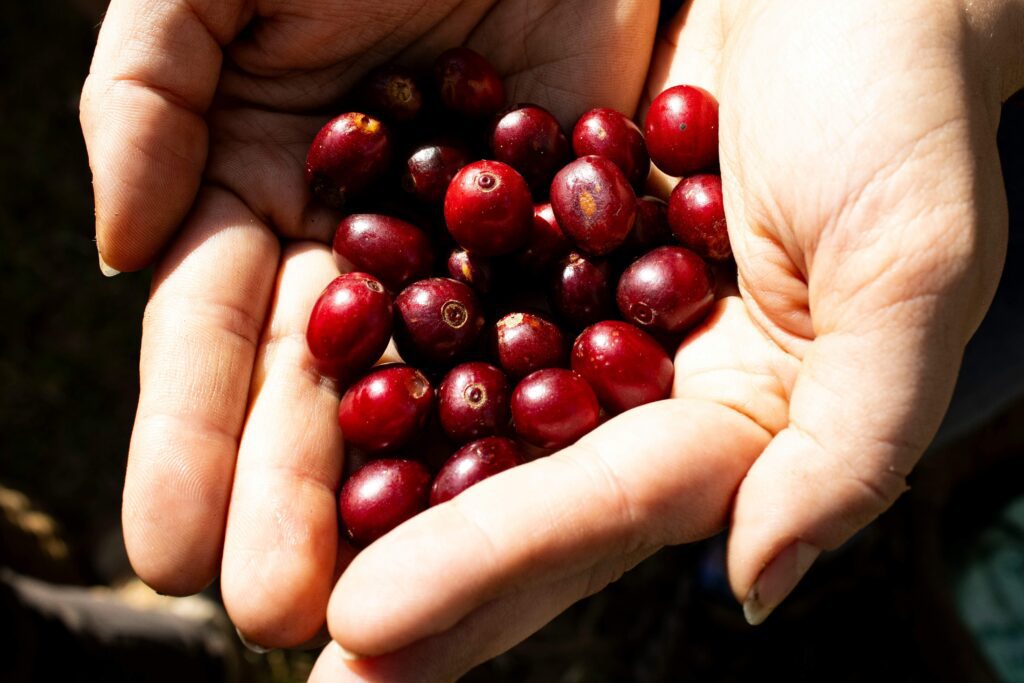
This is where La Fortuna tours shine. Rather than watching from a distance, you’ll strap on a traditional picking basket and head into the coffee plants yourself. Coffee picking in Costa Rica is entirely done by hand with no machines, which explains why it was historically one of the country’s most common professions.
You’ll quickly realize why professional pickers earn respect. Selecting only the ripe red cherries while leaving green ones to mature requires attention and a surprising amount of physical effort. Even a few minutes gives you genuine appreciation for that morning cup.
Peeling and Processing the Beans
After picking, you’ll use a small hand-cranked machine to remove the outer cherry layer. Here’s where things get interesting: guides often explain “honey processed” coffee, where some of the sticky mucilage layer is left on the bean during drying. This creates a sweeter flavor profile that’s become increasingly popular among specialty coffee buyers.
The Costa Rican coffee industry pioneered honey processing, and these small farms are where you can actually see and understand the technique.
Drying and Roasting
While large plantations export green beans for roasting in destination countries, small La Fortuna farms complete the entire process on-site. You’ll see beans drying under the sun (the traditional method) and then watch, or participate in, the roasting process.
Here’s a detail that surprises most visitors: roasting coffee smells like burnt popcorn, not like the aromatic brew you drink. That familiar coffee scent develops after roasting, during the “degassing” period when beans release carbon dioxide.
The tour culminates with tasting coffee you’ve traced from plant to cup. It’s a fundamentally different experience than ordering a latte.
Should You Book a Coffee Tour or Just Show Up?
Reservations are strongly recommended. While some farms accept walk-ins, guided tours with English-speaking staff require advance scheduling. Many visitors combine coffee tours with their hot springs itinerary, and a morning farm tour followed by afternoon relaxation in thermal pools creates an ideal La Fortuna day.
How Much Do La Fortuna Coffee Tours Cost?
Expect to pay $35-65 per person, depending on the farm and whether transportation is included. If you have a rental car from Vamos, driving yourself typically saves $15-20 per person compared to tours with pickup service. Most farms are located 10-20 minutes from downtown La Fortuna along well-paved roads.
What’s the Best Time to Visit?
Coffee harvest season in Costa Rica runs from December through February, when you’ll see the most activity and have the fullest cherry-picking experience. However, farms operate year-round, explaining the process with dried and stored beans when fresh cherries aren’t available.
Morning tours (8-10 AM) typically offer better weather conditions, leaving your afternoon free for activities like La Fortuna Waterfall or hanging bridge walks.
What Other Arenal Activities Pair Well With Coffee Tours?
The 2-3 hour tour duration makes coffee farms perfect for a half-day experience. Consider these combinations:
Morning Coffee Tour + Afternoon Hot Springs Start at a farm around 9 AM, finish by noon, grab lunch in town, then head to one of Arenal’s thermal resorts. The hot springs scene around Arenal ranges from free river spots to luxury resorts like Tabacón.
Coffee Tour + Volcano Hiking Arenal Volcano National Park opens at 8 AM, so you could hike the trails early, then visit a coffee farm in the late morning before the afternoon rains typical during green season (May-November).
Full Agrotourism Day. Some farms offer extended experiences, including lunch made with ingredients grown on-site. This supports rural community tourism, which isa priority for Costa Rica’s tourism board, and gives you deeper insight into sustainable farming practices.
How Do You Get to La Fortuna Coffee Farms?
Driving Yourself
From San José, the drive to La Fortuna takes approximately 3 hours via well-paved roads through coffee country. From Liberia Airport, expect about 2.5 hours. You don’t need a 4×4 for this route, as standard vehicles handle the roads just fine.
Most coffee farms are located along the main road between La Fortuna town and the volcano, with clear signage. Having your own vehicle means you can stop at viewpoints along the way and control your own schedule rather than depending on shuttle services.
Using Shuttles or Taxis
If you’re not driving, local taxis from La Fortuna town charge approximately $10-15 each way to reach nearby farms. Some tour operators include transportation from La Fortuna hotels, which adds convenience but typically costs $15-25 more per person.
Is a La Fortuna Coffee Tour Worth It Compared to Monteverde or the Central Valley?
This depends on your priorities and itinerary.
Choose La Fortuna tours if you want:
- Interactive, hands-on experience over polished presentation
- Combined coffee, chocolate, and sugar cane in one visit
- Small family farm atmosphere rather than corporate operation
- To support rural agrotourism directly
Choose Monteverde or Central Valley tours if you want:
- “First-grade” premium coffee growing at optimal elevation
- Large-scale plantation operations
- More dramatic landscape settings
- Coffee as the sole focus without other agricultural components
Many travelers do both by visiting a small farm in La Fortuna for the experience, then touring a larger operation near San José or Poás Volcano for the premium product perspective.
What Should You Wear and Bring?
Farm tours involve walking on uneven terrain, sometimes through planted fields. Practical preparation includes:
- Closed-toe shoes with decent grip (trail shoes or sneakers work well)
- Long pants to protect against brush and insects
- Insect repellent (farms are in tropical rainforest zones)
- Sunscreen for exposed sections
- Light rain jacket during the green season
- A camera for documenting the process
- Cash for purchasing farm products (not all accept cards)
Most farms sell bags of their roasted coffee, chocolate products, and other items. Prices are often lower than those in tourist shops in town, and your purchase directly supports the family operation.
What's the Verdict on La Fortuna Coffee Tours?
For travelers exploring the Arenal region, a coffee farm tour adds cultural depth to an itinerary often dominated by adventure activities and natural attractions. You won’t leave with bags of award-winning beans, but you will understand why Costa Rican coffee has its reputation and appreciate every cup you drink for the rest of your trip.
The interactive format works particularly well for families with kids who might find sitting through presentations boring. For anyone interested in sustainable agriculture, fair trade practices, or simply wanting to understand where their morning coffee comes from, these small-scale tours deliver genuine education wrapped in an enjoyable half-day experience.
Reserve ahead, arrive hungry (the tastings are generous), and give yourself time afterward to explore more of what La Fortuna offers. A morning learning about traditional Costa Rican farming, followed by an afternoon soaking in volcano-heated hot springs? That’s a pretty good day by anyone’s standards.
Frequently Asked Questions
What Is the Best Time to Visit a Coffee Farm?
The optimal window for visiting Costa Rican coffee farms falls between December and April during the dry season. Harvest season specifically runs from December through February, when you’ll experience the most activity with ripe cherries ready for picking. However, La Fortuna farms operate year-round, and the hands-on educational experience remains valuable regardless of when you visit.
Is a Coffee Tour Worth It?
If you drink coffee and appreciate understanding how products reach your cup, a tour is absolutely worthwhile. Beyond the educational value, you’re supporting local families who’ve farmed this land for generations. For travelers who view experiences over sightseeing, the 2-3 hours invested deliver lasting insight into Costa Rican culture and agriculture.
What Is Included in the Don Juan Coffee Tour?
Don Juan is one of the more established tour operations in the Monteverde/La Fortuna area. Their comprehensive tours typically include guided walks through coffee, chocolate, and sugar cane cultivation, hands-on participation in processing, tastings of all three products, and opportunities to purchase farm-made goods. Tours run about 2 hours with English-speaking guides.
Can You Bring Coffee From Costa Rica Into the United States?
Yes, roasted coffee beans are permitted through U.S. customs with no restrictions. Raw or green coffee beans require an import permit from the USDA. Most travelers bring roasted beans purchased at farms or local markets without any issues. Vacuum-sealed bags travel better in luggage and maintain freshness longer.
What Are the Unspoken Rules in Costa Rica?
Costa Ricans value politeness and patience. Always greet people before asking questions or making requests. “Pura vida” isn’t just a tourist phrase, as locals use it constantly as a greeting, thank you, and general acknowledgement. Tipping isn’t mandatory but appreciated (10% is common at restaurants). When visiting farms or private properties, ask permission before photographing people or their work.
Is Costa Rica Coffee Good Quality?
Costa Rica produces Arabica beans exclusively because Robusta cultivation is actually illegal under a 1989 law. The country’s various growing regions (Central Valley, Tarrazú, West Valley, and others) produce distinct flavor profiles, with many beans earning specialty-grade status. Costa Rica exports approximately 1.5 million bags annually, with the best lots commanding premium prices in specialty markets worldwide.
Which Country Is Number One in Coffee?
Brazil produces the most coffee globally by volume, followed by Vietnam, Colombia, Indonesia, and Ethiopia. Costa Rica ranks outside the top ten in volume but punches well above its weight in quality and sustainability practices. The country’s focus on sustainable tourism and agriculture has positioned it as a leader in environmentally responsible coffee production.
What Is a Good Gift to Bring Back From Costa Rica?
Beyond coffee, popular souvenirs include locally made chocolate, handcrafted wooden items, traditional chorreador coffee filters (the sock-like device used for brewing), local hot sauces, and artisanal products from indigenous communities. For food items, vacuum-sealed coffee and chocolate travel best and clear customs easily.