
Last Updated on January 9, 2026
Rainforest Adventures Braulio Carrillo: What's Covered
Just 45 minutes from San José, there’s a 475-hectare private reserve bordering one of Costa Rica’s most biodiverse national parks—and most travelers have never heard of it. Rainforest Adventures Costa Rica Atlantic offers the longest aerial tram in the country, a 10-cable zipline course, and the kind of wildlife encounters that typically require hours of driving to remote destinations. The park sits at the edge of Braulio Carrillo National Park, Costa Rica’s third-largest protected area with over 600 tree species and 530 bird species. This location creates a unique opportunity: experience primary rainforest ecosystems within easy reach of the Central Valley or as a perfect stop on your way to the Caribbean coast. Located on Route 32 toward Limón, main attractions include Costa Rica’s longest aerial tram (90-minute round-trip through canopy), 10-cable zipline (including 700-meter cable), nature trails, butterfly garden, reptile exhibits. 6-in-1 Full Day Pass from $95/adult, $59/child. Hours 8:15 AM-4:00 PM daily (last entry 2:00 PM).
Quick Facts
- Location: Highway 32 toward Limón, 42 km from San José (45 min-1 hour), bordering Braulio Carrillo National Park
- Main Attractions: Aerial tram (90-minute canopy ride, up to 50 meters high), 10-cable zipline (700-meter longest cable), nature trails, butterfly garden, reptile terrarium
- Prices: 6-in-1 Pass $95 adult/$59 child; Aerial Tram Half-Day $59/$39; Zipline Half-Day $59/$39; Bird Watching $42-84; Frog Night Tour $38/$27
- Hours: 8:15 AM-4:00 PM daily, last entry 2:00 PM; earliest slots recommended
- Best Time: Morning visits (8:00-10:00 AM tours); March-April and September-October drier on Caribbean slope
- Vehicle: No 4×4 needed—fully paved Highway 32 directly to parking lot
- Wildlife: Sloths, monkeys (white-faced capuchins, howlers), toucans, anteaters; 530 bird species, 135 mammal species
Top 5 Rainforest Adventures Tips
- Book Earliest Tour Slots for Best Wildlife – 9:15 AM aerial tram, 8:00 AM zipline, 10:00 AM 6-in-1 pass, 7:30 AM bird watching (National Audubon Society recognized spot)—animals most active before midday heat, clearest visibility before afternoon mist rolls in
- Use as Strategic Caribbean Coast Stop – Perfect mid-journey break between San José and Puerto Viejo/Cahuita (additional 2.5-3 hours from park) or Tortuguero boat launches near Guápiles—morning rainforest adventure, continue coastal drive afternoon
- Bring Mandatory Closed-Toe Shoes and Rain Gear – Park won’t allow sandals for any activity; pack hiking shoes/sneakers, lightweight breathable layers with long pants (insect protection), waterproof rain jacket regardless of season since Caribbean slope receives year-round rainfall, insect repellent, binoculars
- Understand Aerial Tram’s Unique Value – First rainforest aerial tram built anywhere globally; 90-minute journey ascends through understory, returns through treetops at 50 meters showing three-dimensional forest ecosystem impossible from ground trails—guides with walkie-talkies coordinate wildlife spotting across entire tram system
- Perfect Day Trip Without Overnight Commitment – 45-minute drive from San José, full-day activities, easy return versus multi-day commitments for Tortuguero or Monteverde—ideal for travelers with early flights next day or using capital as base
Rainforest Adventures offers genuine primary forest experiences perfect for travelers wanting Costa Rica rainforest immersion without remote destination drives. The park anchors full-day Central Valley explorations or Caribbean coast route stops, making it valuable for maximizing limited time. Many travelers visit as morning activity before continuing to Puerto Viejo, or combine with Braulio Carrillo hiking at Quebrada González sector. For building comprehensive itineraries, check our one-week and two-week plans. The 475-hectare private reserve borders Braulio Carrillo’s 50,000 hectares creating biological corridor where wildlife moves freely between protected areas—tapirs, sloths, monkeys, toucans spotted regularly with guides carrying walkie-talkies coordinating real-time sightings. Zipline uses controlled braking systems (no manual slowing needed), 700-meter cable provides volcano and river views. Standard vehicles handle fully paved Highway 32 fine year-round—pass through Zurquí tunnel marking rainforest zone entrance. Caribbean slope weather differs from Pacific: year-round rainfall with drier March-April and September-October versus distinct Pacific dry season. Morning visits (before 2:00 PM last entry) catch active wildlife, comfortable temperatures, best visibility before afternoon clouds.
If you need any help with a Costa Rica car rental, contact us now!
Just 45 minutes from San José, there’s a 475-hectare (1200 acres) private reserve bordering one of Costa Rica’s most biodiverse national parks and most travelers have never heard of it. Rainforest Adventures Costa Rica Atlantic offers the longest aerial tram in the country, a 10-cable zipline course, and the kind of wildlife encounters that typically require hours of driving to remote destinations. If you’re looking for a genuine rainforest experience without the long journey to more isolated parks, this adventure park delivers.
The park sits at the edge of Braulio Carrillo National Park, Costa Rica’s third-largest protected area with over 600 tree species and 530 bird species. This location creates a unique opportunity: experience primary rainforest ecosystems within easy reach of the Central Valley or as a perfect stop on your way to the Caribbean coast.
Key Takeaways
- Location: Route 32 toward Limón, 45 minutes from San José, bordering Braulio Carrillo National Park
- Main Attractions: Costa Rica’s longest aerial tram, 10-cable zipline course, nature trails, butterfly garden, reptile exhibits
- Prices: 6-in-1 Full Day Pass from $95/adult, $59/child; individual activities from $42-84
- Hours: 8:15 AM – 4:00 PM daily (last entry 2:00 PM)
- Vehicle Requirements: No 4×4 needed as there is paved highway directly to the parking lot
- Best For: Day trips from San José, families, wildlife enthusiasts, travelers heading to the Caribbean
Where Is Rainforest Adventures Located?
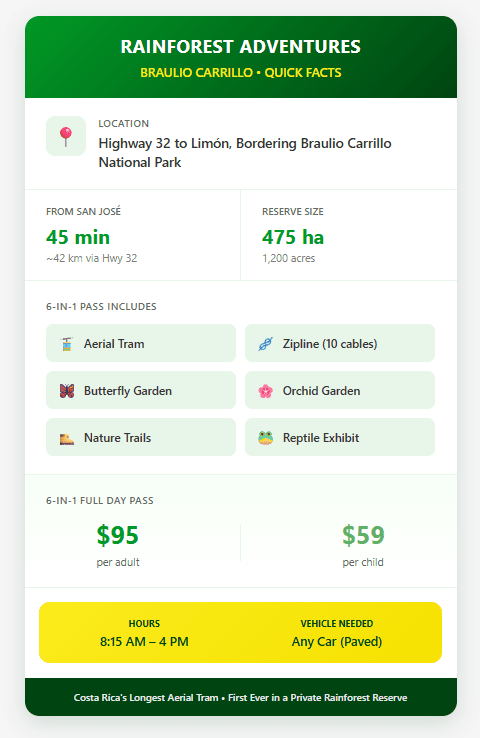
The park sits along Highway 32 (the Guápiles Highway) in Limón Province, about 42 kilometers northeast of San José. This is the main route connecting the Central Valley to the Caribbean coast, making the park an ideal stop whether you’re based in the capital or driving to the South Caribbean or Tortuguero.
The location couldn’t be more convenient. Unlike destinations like Monteverde that require hours of mountain driving, Rainforest Adventures is accessible via a fully paved highway. Your navigation appwill guide you straight there, and the parking lot sits right at the main entrance.
The private reserve spans about 1,200 acres (475 hectares) and shares its border with Braulio Carrillo National Park, creating an important biological corridor. This connection to the national park means the wildlife you’ll encounter here isn’t confined to the reserve because animals move freely between protected areas which increases your chances of memorable sightings.
How Do You Get There from San José?
What’s the Driving Route?
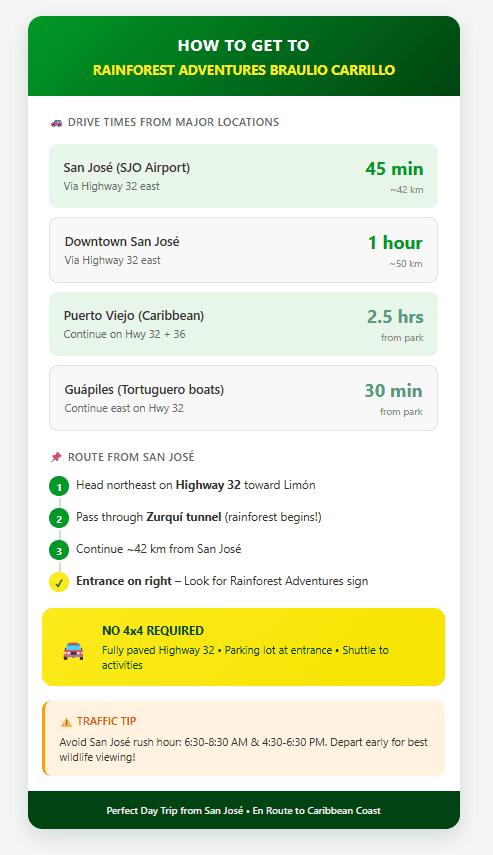
From SJO Airport or downtown San José, head east on Highway 32 toward Limón. The drive takes approximately 45 minutes to an hour, depending on traffic conditions. You’ll pass through the Zurquí tunnel, which marks your entrance into the rainforest zone.
The route is straightforward:
- Exit San José heading northeast
- Follow signs for Guápiles/Limón on Highway 32
- The park entrance appears on your right after approximately 42 km
- Look for the Rainforest Adventures signage
Traffic consideration: Rush hour in San José (6:30-8:30 AM and 4:30-6:30 PM) can significantly delay your departure. Plan accordingly, especially if you’re aiming for early morning arrival.
Do You Need a 4×4?
No. This is one of the few adventure destinations in Costa Rica where a standard sedan works perfectly fine year-round. Highway 32 is fully paved and well-maintained, and the park’s parking lot sits right at the entrance. From there, a shuttle takes you down to the operation center.
This accessibility makes Rainforest Adventures particularly attractive for travelers who’ve chosen a standard rental car for their Costa Rica trip.
What Activities Are Available?
What Does the 6-in-1 Pass Include?
The most popular option bundles all the park’s attractions into a single full-day experience:
Aerial Tram: Costa Rica’s longest rainforest cable car glides through the canopy for about 90 minutes round-trip. You’ll ascend through the understory on the way up and return through the treetops at heights reaching 164 feet (50 meters). Each gondola holds up to four passengers plus a guide equipped with a walkie-talkie for wildlife spotting coordination.
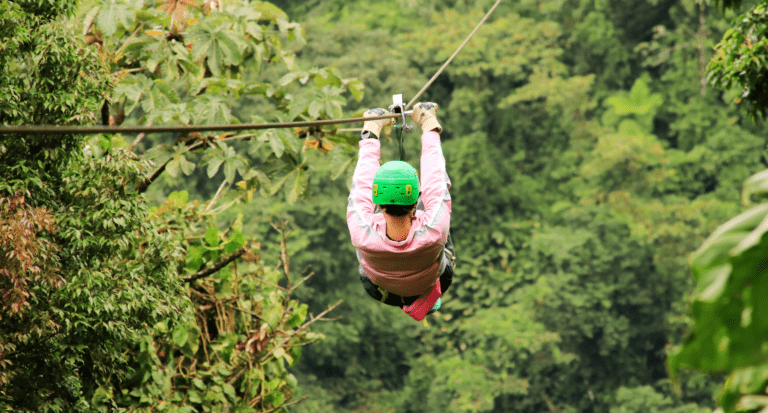
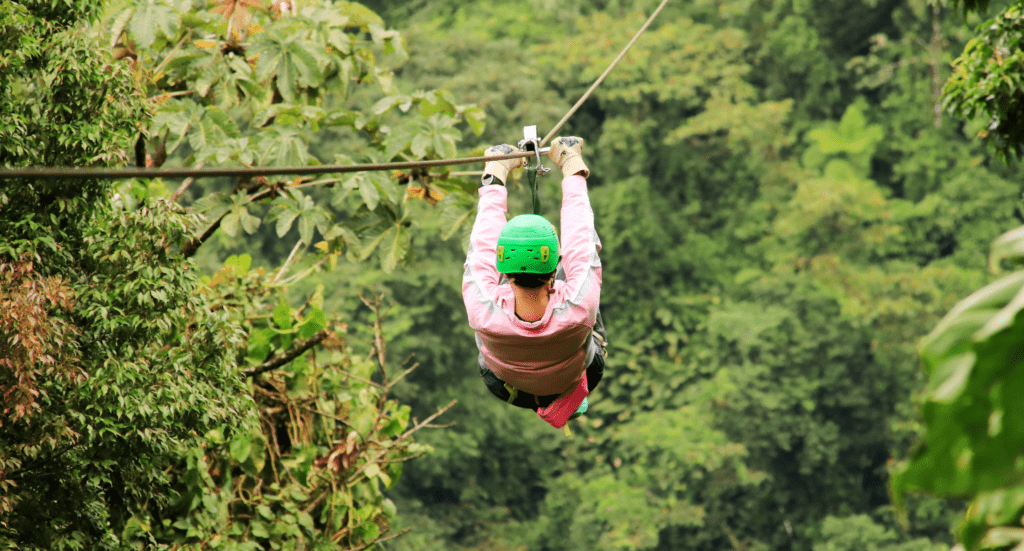
Canopy Zipline: Ten cables and 14 platforms, including one 2,300 feet (700-meter) cable that sends you soaring over the jungle with volcano and river views. The zipline course uses controlled braking systems, so you don’t need to slow yourself down manually.
Nature Trails: Well-maintained, wheelchair-accessible paths wind through the rainforest floor and offer ground-level wildlife encounters that complement the canopy perspectives.
Butterfly Garden: A conservatory where you can observe butterflies in various life stages, from caterpillar to chrysalis to adult.
Orchid Garden: Various species of Costa Rica’s national flower on display.
Reptile Terrarium: Exhibits featuring fer-de-lance, bushmaster snakes, and red-eyed tree frogs in naturalistic settings.
How Do Individual Tours Compare?
If you’re short on time or prefer specific activities:
Aerial Tram Half-Day Pass ($59/adult, $39/child): Includes the tram ride, nature trails, butterfly garden, orchid garden, and reptile exhibits. This option works well for travelers with mobility limitations who want to experience the rainforest without strenuous activity.
Canopy Zipline Half-Day Pass ($59/adult, $39/child): Focuses on the adrenaline by ziplining10 cables plus access to the gardens and nature trails.
Bird Watching Tours ($42-84): Recognized by the National Audubon Society as one of Costa Rica’s best birding spots. Tours start at 7:30 AM when bird activity peaks.
Frog Night Tour ($38/adult, $27/child): A 75-minute evening walk at 6:00 PM focusing on the nocturnal world of amphibians.
What Wildlife Might You See?
The park’s position at the edge of Braulio Carrillo creates exceptional biodiversity. Visitors regularly spot sloths, monkeys (including white-faced capuchins and howlers), toucans, and anteaters. The area supports over 530 species of birds and 135 mammal species.
The aerial tram offers a particular advantage for wildlife viewing. Guides carry walkie-talkies, so when one spotter identifies a sloth or rare bird, then the entire tram system gets notified. You’ll know exactly where to look as your gondola approaches key sighting spots.
Tapirs have been spotted strolling through the property which is an increasingly rare encounter in Costa Rica’s more developed tourism areas. The park’s connection to the vast Braulio Carrillo wilderness makes such sightings possible.
What Makes This Different from Other Parks?
Unlike Manuel Antonio where habituated monkeys approach tourists, or Arenal where hot springs take priority over wildlife, Rainforest Adventures focuses specifically on rainforest immersion. The aerial tram was the first of its kind built within a private rainforest reserve anywhere in the world although it’s a concept that’s since been replicated globally.
The multi-level approach sets this experience apart. You’ll explore the forest floor on trails, observe the mid-canopy from the tram’s ascent, and experience the treetops on both the return journey and zipline course. Few places offer this comprehensive vertical perspective of rainforest ecosystems.

When Is the Best Time to Visit?
What’s the Ideal Season?
The park sits on the Caribbean slope, which operates on different weather patterns than the Pacific coast. While the Pacific experiences distinct dry and wet seasons, the Caribbean side receives rain year-round with drier periods in March-April and September-October.
For dry season travelers (December-April), morning visits offer the best combination of comfortable temperatures and wildlife activity. Arrive early as the park opens at 8:15 AM and you’ll experience the forest when animals are most active and before afternoon mist rolls in.
During green season (May-November), morning visits become even more important. Afternoon rain showers are common and sometimes arrive dramatically. The upside? Lush vegetation, fewer tourists, and dramatic misty forest atmospheres that photographers love.
What Time of Day Works Best?
Book the earliest tour slots whenever possible:
- Aerial Tram: 9:15 AM departure
- Zipline: 8:00 AM or 10:00 AM slots
- 6-in-1 Pass: 10:00 AM start time
- Bird Watching: 7:30 AM (the only option and it’s early for a good reason)
Early arrivals benefit from active wildlife, cooler temperatures, and the best visibility before clouds form. The park requires all visitors to enter by 2:00 PM at the latest.
What Should You Bring and Wear?
What Clothing Works Best?
Footwear: Closed-toe shoes are mandatory for all activities without exception. Hiking shoes or sturdy sneakers work well but you should not use sandals even if you’re only riding the aerial tram.
Clothing: Lightweight, breathable layers. Even during dry season, bring a waterproof rain jacket because you’re visiting a proper rainforest, and conditions change quickly. Long pants protect against insects and vegetation.
Comfort considerations: The aerial tram moves slowly and can feel warm in enclosed gondolas during sunny periods so breathable fabrics help.
What Else Should You Pack?
- Rain gear: A packable rain jacket is essential regardless of season
- Insect repellent: Mosquitoes are present, especially near water features
- Sunscreen: Despite the canopy cover, UV exposure adds up
- Camera: The aerial perspectives offer unique photo opportunities
- Binoculars: Helpful for wildlife spotting, though guides often have scopes
- Cash: The park accepts credit cards, but having colones available for tips and small purchases is helpful
- Water bottle: Stay hydrated in the humidity
Lockers are available for rent ($3) if you want to secure items during the zipline.
How Does This Fit Into a Larger Trip?
Is It Good for a Day Trip from San José?
Absolutely! This is one of the best day trips from the capital. The 45-minute drive, full-day activities, and easy return make it perfect for travelers using San José as a base. You can depart after breakfast, spend a full day in the rainforest, and return for dinner in the city.
For travelers with early international flights the next day, this works particularly well. You’ll get a complete rainforest adventure without the overnight commitment required by destinations like Tortuguero or Monteverde.
Can You Combine It with Other Destinations?
The park’s location on Highway 32 creates natural routing options:
Caribbean Route: Visit the park in the morning, then continue to Puerto Viejo or Cahuita (an additional 2.5-3 hours from the park). This works especially well if you’re starting from San José and heading to the Caribbean coast.
Tortuguero Connection: Travelers heading to Tortuguero National Park can stop at Rainforest Adventures on your way to the boat launch points near Guápiles.
Central Valley Loop: Combine with Braulio Carrillo National Park hiking (Quebrada González sector) for both guided adventure and independent exploration.
What Are the Practical Details?
How Much Does It Cost?
Current pricing (subject to change so verify before booking):
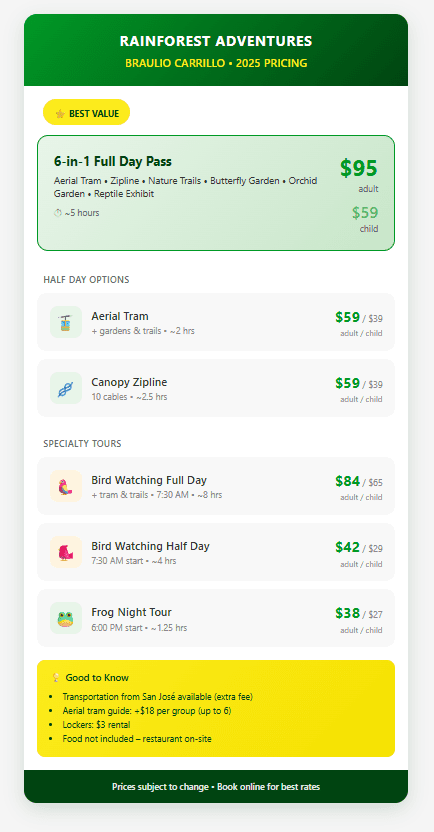
Transportation add-on: Optional pickup from San José hotels available for an additional fee.
Food: Meals are not included but the park has an on-site restaurant where you can purchase food and drinks.
What Are the Age and Physical Requirements?
Zipline restrictions:
- Minimum age: 5 years
- Maximum weight: 300 lbs (136 kg)
- Minimum height: 3’11” (120 cm)
- Must be in good physical condition
Aerial tram: No specific restrictions and the ride is accessible for those who cannot walk long distances which makes it an excellent option for travelers with mobility limitations.
General requirement: All participants must arrive 15 minutes before their confirmed tour time.
Is It Worth the Price?
For travelers who want rainforest immersion without dedicating multiple days to reaching remote locations, Rainforest Adventures delivers exceptional value. The combination of accessibility (45 minutes from San José, paved roads, no 4×4 required) and authentic biodiversity (bordering Costa Rica’s third-largest national park) creates an experience that’s hard to replicate elsewhere.
The aerial tram in particular offers perspectives you simply can’t get any other way. Walking a trail shows you the forest floor, a zipline provides thrilling glimpses, but slowly gliding through each layer of the canopy from ground level up to treetops down reveals how the rainforest actually works as a three-dimensional ecosystem.
The park works especially well for:
- Families: Multiple activity levels mean everyone can find a fun activity
- First-time Costa Rica visitors: Excellent introduction to rainforest ecosystems
- Travelers with limited time: Full experience without overnight stays
- Those heading to the Caribbean: Natural stop en route to the South Caribbean or Tortuguero
- Visitors with mobility considerations: Aerial tram provides accessibility that most rainforest experiences can’t match
Having your own vehicle transforms the experience from a rushed tour schedule to a flexible adventure. Stop for wildlife sightings along Highway 32, take your time at the park, and explore at your own pace.
Frequently Asked Questions
What is the famous rainforest in Costa Rica?
Costa Rica has several famous rainforests, but Braulio Carrillo National Park stands out as the largest protected area in the Central region. Covering 123,500 acres (50,000 hectares) with over 90% primary forest, it contains more than 600 tree species and 530 bird species. Rainforest Adventures borders this park which gives visitors easy access to one of the country’s most biodiverse ecosystems without having to navigate the challenging trails of the national park itself.
What are the best adventures to do in Costa Rica?
Ziplining and aerial trams rank among the top experiences. Costa Rica invented modern canopy zipline tours, and Rainforest Adventures offers one of the country’s safest and most scenic courses with 10 cables including a 2,300 feet (700-meter) line. The aerial tram here is the longest in Costa Rica and provides a gentler alternative that’s accessible to all fitness levels while offering the same immersive rainforest views as the ziplines.
How far is the rainforest from San Jose?
Rainforest Adventures sits just 26 miles (42 kilometers) northeast of San José and can be reached in approximately 45 minutes to an hour by car via Highway 32. This makes it one of the most accessible rainforest destinations from the capital. Unlike Monteverde (3+ hours) or the Osa Peninsula (8+ hours), you can experience genuine primary rainforest and return to San José the same day.
What should I wear when visiting the rainforest?
Closed-toe shoes are mandatory and the park won’t allow sandals or open footwear for any activity. Wear lightweight, breathable clothing with long pants to protect against insects and vegetation. Bring a waterproof rain jacket regardless of season, as the Caribbean slope receives rain year-round. Avoid cotton if possible because quick-dry fabrics handle the humidity much better.
When is the best time to visit Costa Rica rainforest?
For Rainforest Adventures specifically, morning visits work best year-round. The Caribbean slope has different weather patterns than the Pacific and drier periods typically occur March-April and September-October. During the December-April dry season elsewhere in Costa Rica, this region may still see rain. Book the earliest tour slots (8:00-10:00 AM) for best wildlife activity and clearest conditions.
Is La Fortuna a rainforest or jungle?
La Fortuna sits in the tropical rainforest zone which surrounds Arenal Volcano. While “jungle” and “rainforest” are often used interchangeably, scientists prefer “rainforest” for ecosystems receiving almost 80 inches (over 200 centimeters) of annual rainfall with distinct canopy layers. Both La Fortuna and Braulio Carrillo qualify as true rainforests, although Braulio Carrillo contains more primary (undisturbed) forest whereas La Fortuna’s forests show more secondary growth from past volcanic activity and agricultural clearing.