
Last Updated on June 26, 2026
Rio Frio Safari Float: What's Covered
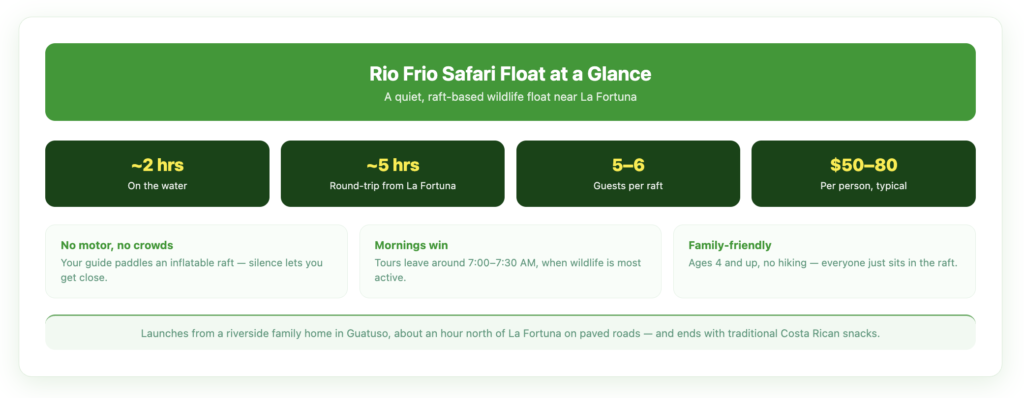
The Rio Frio Safari Float is a quiet, raft-based wildlife tour about an hour north of La Fortuna in Guatuso. Over roughly two hours on the slow-moving river, small groups of 5–6 drift past sloths, monkeys, caimans, and tropical birds — no motor, no crowds.
Quick Facts
- Duration: about 5 hours round-trip from La Fortuna, with ~2 hours floating
- Group size: 5–6 guests per raft; the guide paddles, so there’s no engine noise
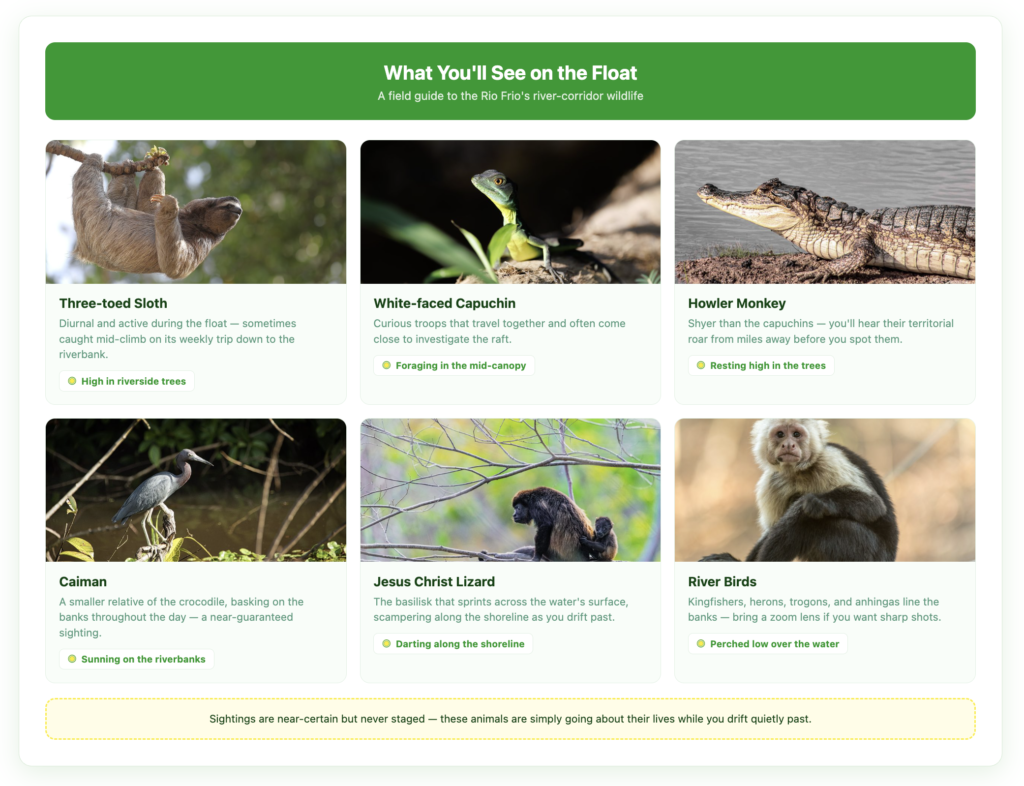
- Wildlife: three-toed sloths, capuchins, howlers, caimans, Jesus Christ lizards, kingfishers, and herons
- Family-friendly: ages 4+, no hiking — everyone sits in the raft
- Getting there: paved roads to Guatuso, no 4×4 needed; round-trip hotel pickup included
Top 3 Wildlife Encounters
- Three-toed sloths — diurnal, sometimes caught mid-climb down toward the riverbank
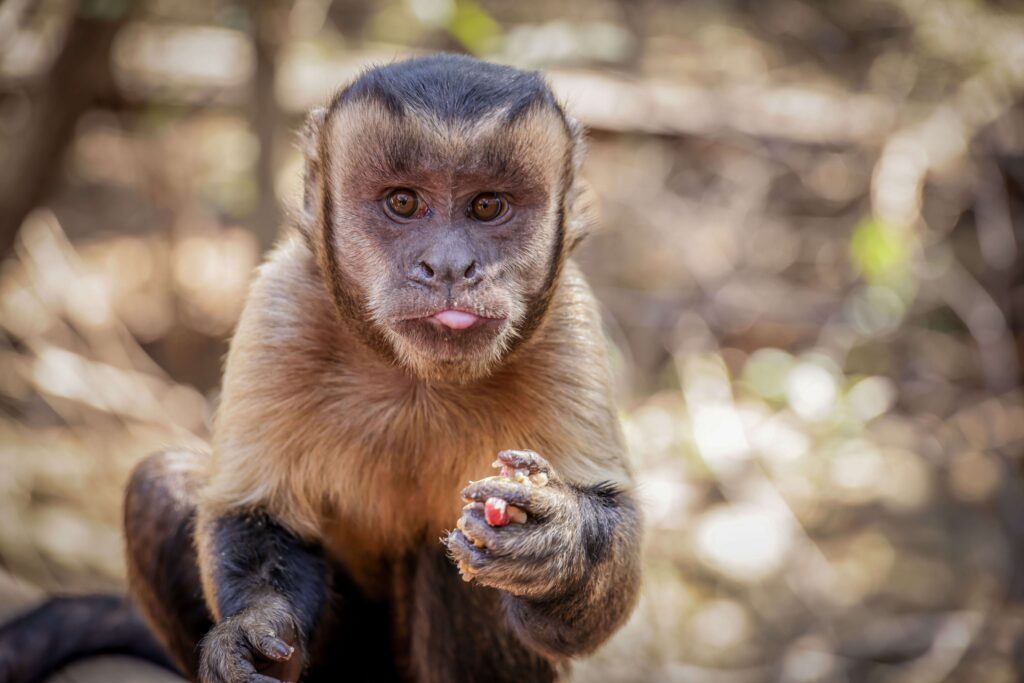
- White-faced capuchins — curious troops that come close to investigate the raft
- Caimans & river birds — caimans basking on the banks, kingfishers and herons along the water
Book an early-morning float for peak activity, then pair it with Arenal hot springs or the nearby Venado Caves. Dry season is ideal, but morning tours stay dry year-round.
If you need any help with a Costa Rica car rental, contact us now!
If you’re searching for an authentic wildlife experience near La Fortuna that doesn’t involve crowds, tour buses, or motorboat engines scaring everything away, the Rio Frio Safari Float delivers the perfect Costa Rican experience. On this quiet raft-based tour, you float through rainforest-lined waterways where sloths climb down to eye level, monkeys swing overhead, and caimans sun themselves on the riverbanks—all without competing with fifty other tourists for the same view.
The tour operates about an hour north of La Fortuna in the small town of Guatuso, where you’ll spend roughly two hours of wildlife spotting on the slow-moving Rio Frio River. With small groups of 5-6 people per raft, your guide can paddle into tight corners and position you perfectly for the right viewing angle. There’s no engine noise to spook the animals, no wake to disturb the riverbanks, and no rush to stick to a rigid schedule. This experience will remind you why Costa Rica remains one of the planet’s best wildlife destinations.
Key Takeaways
- The Rio Frio Safari Float uses inflatable rafts instead of motorboats, allowing much closer wildlife encounters without engine noise.
- Expect to see sloths, howler monkeys, white-faced capuchins, caimans, kingfishers, trogons, and herons during a typical two-hour float.
- The tour works well for families with children as young as 4 years old, which makes it an excellent option for traveling with kids.
- Best wildlife viewing happens during early morning tours when animals are most active.
- The experience ends with traditional Costa Rican snacks at a local family’s riverside home, which is a cultural touch lacking in many other tours.
- Having your own vehicle lets you explore more of the northern Costa Rica region before or after the tour.
What Makes the Rio Frio Safari Float Different from Other Wildlife Tours?
Most wildlife boat tours in Costa Rica use covered motorboats that keep a safe distance from the riverbanks. They’re comfortable, they’re efficient, and they’re noisy enough to send wildlife scattering before you get close. The Rio Frio Safari Float takes the opposite approach.
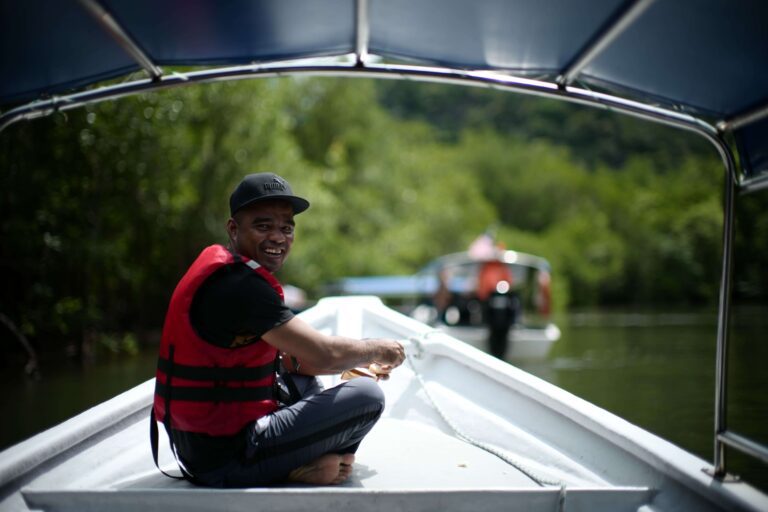
You sit in an inflatable raft with a maximum of five or six other guests while your guide does most of the paddling. The silence changes everything because sloths don’t freeze mid-climb when you approach, monkeys continue foraging instead of disappearing into the canopy, and kingfishers stay perched on low-hanging branches. Your guide can maneuver the raft into narrow channels and river bends that motorboats simply cannot access.
The Caño Negro Wildlife Refuge offers another excellent boat-based wildlife experience in the region, but it uses covered motorboats and takes longer to reach from La Fortuna. Both tours have their merits, as Caño Negro covers more distance and works well during the dry season when water levels concentrate wildlife. However, the Rio Frio float provides more intimate animal and bird encounters within a shorter timeframe.
If you’ve visited Manuel Antonio National Park and found the wildlife habituated to tourists due to the crowded trails, the Rio Frio experience offers a refreshing contrast. Animals here aren’t performing for tourists and are simply going about their lives while you happen to float past.
Which Animals Will You Actually See on the Rio Frio Float?
Costa Rica hosts two species of sloth: the brown-throated three-toed sloth and Hoffmann’s two-toed sloth. Both live along the Rio Frio corridor, and guides have an uncanny ability to spot them even when they’re well-camouflaged against the foliage. Three-toed sloths are diurnal, meaning they’re active during daylight hours, which is perfect for morning and afternoon tour schedules.
One of the most memorable sightings is when juvenile sloths climb down from the canopy. Sloths only descend to ground level about once a week to relieve themselves, so catching one mid-climb is genuinely special. They move slowly enough that your guide can position the raft for extended viewing without rushing or startling the animal.
Monkey troops are common along the river. White-faced capuchins travel in groups and often approach rafts out of curiosity. Shyer howler monkeys announce their territory with calls that can be heard from miles away, and you’ll likely hear them before you see them. The trees growing in the Arenal region provide excellent habitat for all three monkey species found in northern Costa Rica.
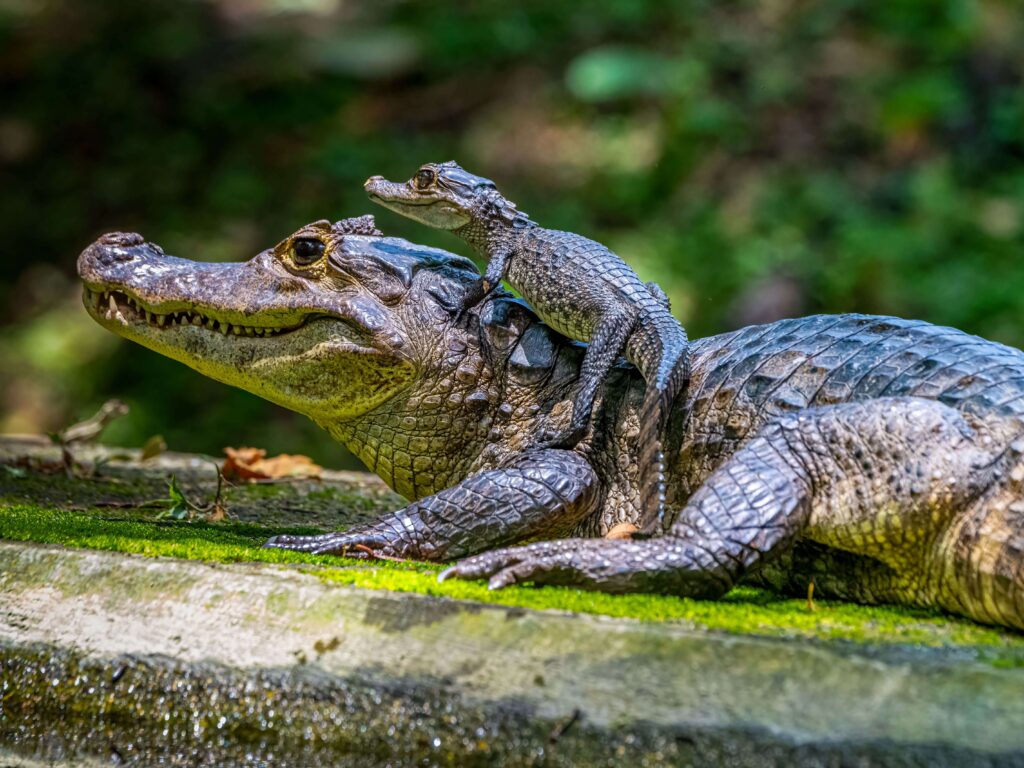
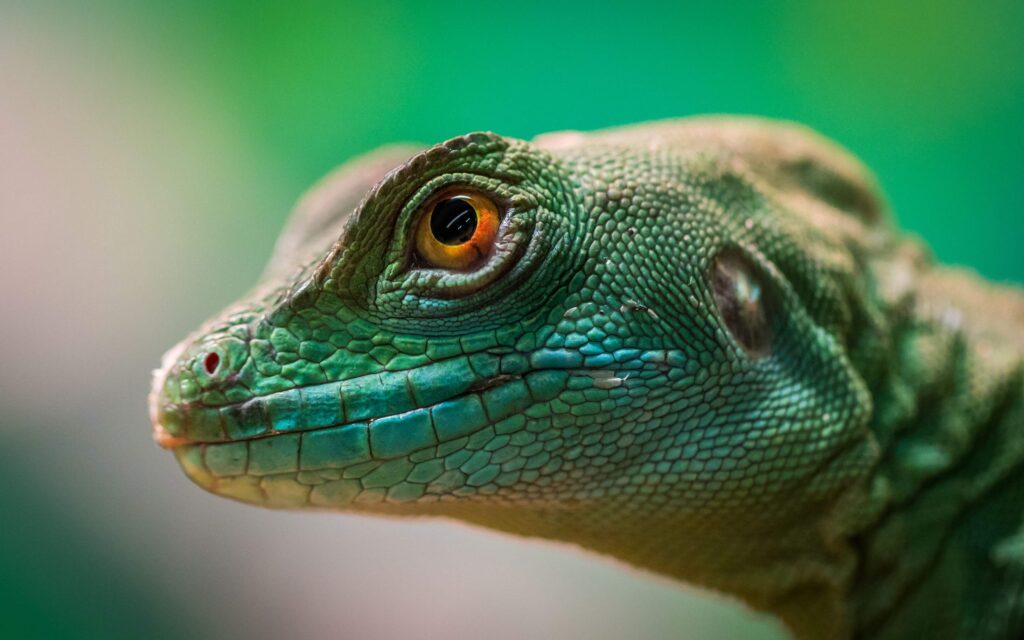
Reptile sightings are practically guaranteed. Caimans, which are smaller relatives of crocodiles, sunbathe on riverbanks throughout the day. Jesus Christ, lizards are named for their ability to run across water and scamper along the shorelines before scrambling across the water. Green iguanas show off brilliant orange breeding colorations during certain seasons.
Bird diversity along the Rio Frio ranks among the best in the Northern Highlands. Expect kingfishers, trogons, anhingas (snake birds), herons, caracaras, cormorants, and, if you’re lucky, the stunning green ibis. Serious birders should bring zoom lenses or quality binoculars, as guides can help you identify species, but getting sharp photos requires decent optics.
How Long Does the Entire Experience Take?
Plan for approximately five hours from pickup to drop-off. The actual floating time runs about two hours, but transportation and logistics add to the total trip time.
Here’s the typical timeline:
Morning tours depart La Fortuna around 7:00-7:30 AM, which puts you on the water during prime wildlife activity hours. The drive to Guatuso takes roughly one hour through countryside that gives you a taste of rural Costa Rica with small farms, grazing cattle, and local communities far removed from tourist infrastructure.
The float itself begins at a local family’s property on the Rio Frio riverbank. After a brief orientation and gear distribution, you launch into the calm waters. Your guide paddles while keeping eyes trained on the trees, banks, and water for any movement. Two hours pass surprisingly quickly when every bend in the river might reveal something new.
After the float, the tour includes traditional Costa Rican snacks at a local family’s home near the river. You should expect a feast of homemade cheese, hand-pressed corn tortillas, fried beans, plantain chips, and fresh fruit juice. This cultural component distinguishes the experience from many adventure activities in the Arenal area that rush tourists from one activity to the next.
Afternoon tours follow the same pattern with a later departure. Wildlife behavior shifts slightly in the afternoon, so some species become more active as temperatures cool, while others settle in for rest. Both time slots produce excellent sightings, though morning tours often beat afternoons for sheer variety.
Is the Rio Frio Safari Float Suitable for Families with Children?
Absolutely. The minimum age is 4 years old, and the experience works exceptionally well for families who want wildlife viewing without demanding physical activity.
Unlike hiking tours through Arenal Volcano National Park or trekking to La Fortuna Waterfall, the float requires no climbing, no stamina, and no athletic ability. Children sit comfortably in the raft while guides do the work. The pace allows even young kids to absorb the sights due to its slow pace.
Kids particularly love the monkey encounters. White-faced capuchins are curious and often come close to investigate rafts. By the end of the float, children who started the trip unable to spot wildlife are pointing out iguanas and lizards on their own, so the trip is educational while remaining fun.
The snack stop at the end of the tour provides a natural break that children appreciate after sitting relatively still for two hours. Running around a Costa Rican farmyard while eating fresh tortillas makes for a memorable end to the morning.
For families visiting Costa Rica with mixed-age groups, the float accommodates grandparents and young children equally well. The physical accessibility makes it one of the more inclusive things to do near La Fortuna for multi-generational travel.
What Should You Bring on the Tour?
Pack light but strategically. The raft has limited space for gear, and anything you bring should be waterproof or stored in waterproof bags.
Essential items:
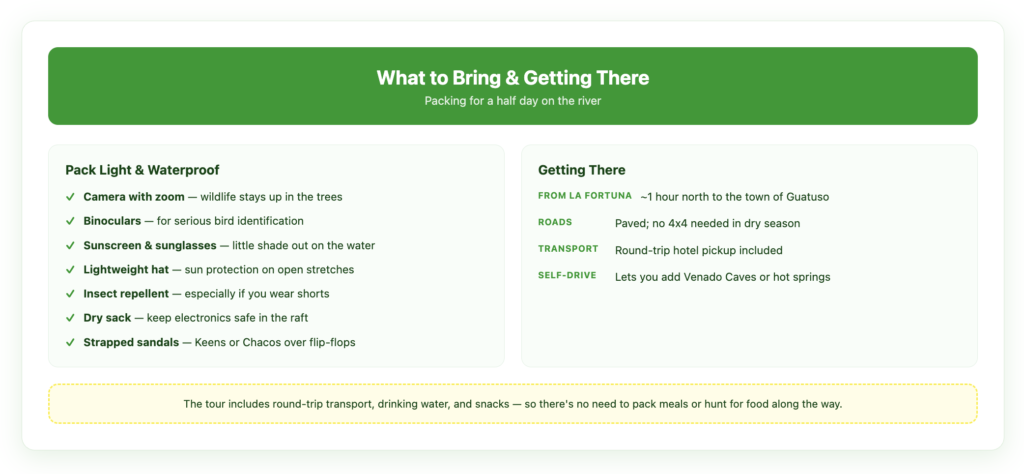
- Camera with zoom capability (wildlife stays in trees, not at arm’s length)
- Binoculars if you’re serious about bird identification
- Sunscreen and sunglasses (there’s no canopy coverage during much of the float)
- Lightweight hat for sun protection
- Insect repellent, especially if wearing shorts
- Small waterproof bag or dry sack for electronics
Clothing choices matter. The region near Guatuso runs hot and humid year-round. Long pants protect against mosquitoes but can feel stifling. Most visitors opt for shorts with generous repellent application. Quick-dry fabrics work better than cotton in helping you feel comfortable. Sandals with secure straps (like Keens or Chacos) are preferable to flip-flops, although you won’t be doing significant walking.
The tour provides round-trip transportation, drinking water, and snacks. You don’t need to pack meals or worry about finding food along the way.
When Is the Best Time of Year to Take This Tour?
Costa Rica’s weather patterns create distinct advantages for different seasons, and the Rio Frio area follows the northern zone climate that differs from both coasts.
The dry season (December through April) brings clearer skies and more predictable weather. Wildlife concentrates around remaining water sources, potentially improving sighting density. However, this coincides with peak tourist season, so tours may book up faster.
The green season (May through November) delivers lush vegetation and fewer tourists. Morning tours typically stay dry, and rain showers usually arrive in the afternoon. The river runs higher, which can make wildlife slightly harder to spot in thicker vegetation, but also expands accessible areas of the waterway.
February and March often provide optimal conditions: dry enough for comfortable touring, warm enough for reptile activity, and within the breeding season for many bird species. Costa Rica’s migratory bird populations peak during late winter and early spring, adding species variety.
The tour operates year-round regardless of conditions. Guides know how the weather affects animal behavior and adjust their approach accordingly. Even during rainy season visits, morning departures are almost always completely dry.
How Do You Get to the Rio Frio Launch Point?
Tours include transportation from La Fortuna hotels, but understanding the logistics helps if you’re coordinating other activities or considering the self-drive option.
The launch point sits in the small town of Guatuso, which is about one hour north of La Fortuna. The route follows paved roads through agricultural countryside, so it’s easy driving for anyone comfortable with Costa Rica’s roads. If you’re renting a car from San José or Liberia Airport, the Guatuso area represents a worthwhile detour for the authentic rural atmosphere.
Self-driving offers flexibility. You could combine the safari float with other northern region attractions like the Venado Caves or hot springs along the way. The roads to Guatuso don’t require 4×4 capability during the dry season, though a higher-clearance vehicle provides peace of mind.
Most visitors book the included transportation for convenience. Tour operators pick up from La Fortuna accommodations at set times and handle all logistics. You relax while someone else navigates unfamiliar roads—perfectly reasonable, especially if you arrived in Costa Rica recently and haven’t adjusted to local driving patterns.
What Makes Rio Frio Different from Other La Fortuna Activities?
La Fortuna operates as an adventure hub with ziplining, hot springs, waterfall hikes, and volcano tours all on offer in the area. Most of these experiences involve some combination of adrenaline, physical exertion, or resort-style pampering.
The Rio Frio float stands apart as a genuinely tranquil wildlife experience. You’re not conquering anything or checking adventure boxes. You’re simply floating through the habitat while trained eyes help you notice things you’d miss on your own.
This distinction matters for certain travelers. If you’ve already done the hanging bridges and soaked in the Tabacón hot springs, the safari float offers something entirely different. Couples looking for romantic experiences find the peaceful river setting more intimate than crowded resort pools, photographers appreciate the extended time with subjects rather than brief glimpses from moving vehicles, and families can relax while small children are enthralled by the nature around them.
For wildlife enthusiasts who prioritize quality sightings over quantity of activities, the Rio Frio float deserves priority placement on your itinerary. It’s one of the rare experiences where slowing down actually improves outcomes.
How Does This Compare to Other Wildlife Tours in Costa Rica?
Costa Rica offers wildlife experiences across the country, from Tortuguero’s canals to Carara’s scarlet macaws to Monteverde’s cloud forests. Each destination specializes in different ecosystems and species.
The Rio Frio float offers you the opportunity to observe river-corridor wildlife in an intimate setting as part of a small group. You’ll need to go to Monteverde to see resplendent quetzals or Tortuguero to watch nesting sea turtles, but Rio Frio delivers reliable sightings of sloths, monkeys, and tropical birds with minimal crowds and maximum time with each animal.
Taking a mangrove tour at Damas Island near Manuel Antonio offers a similar boat-based wildlife viewing on the Pacific coast. The ecosystem differs as you’ll explore mangroves versus rainforest riverbanks, but it still provides opportunities to spot animals and birds.
For visitors with limited time who can only choose one wildlife activity near La Fortuna, the safari float competes directly with Arenal Volcano National Park hiking. The national park offers volcano views and hiking trails with wildlife possibilities, whereas the float guarantees water-based viewing with near-certain animal encounters.
What Should You Know Before Booking?
A few practical considerations help ensure the experience meets expectations.
Group size requirements: Tours need a minimum of three adults to operate. If you’re traveling as a couple, you may be grouped with other guests or asked to pay a small supplement. Check booking policies in advance, especially during slower travel periods.
Physical requirements: None beyond the ability to sit in a raft for two hours. The activity accommodates mobility limitations that would prevent participation in hiking-based alternatives.
Photography reality: Wildlife stays in trees, not at arm’s length. Smartphone cameras may frustrate you. A camera with optical zoom (or quality binoculars) dramatically improves the experience.
Weather preparation: Rain is possible year-round. Quick-dry clothing and a positive attitude toward tropical weather will serve you better than hoping for perfect conditions.
Combination planning: The float pairs naturally with hot springs visits later in the day. Morning wildlife activity, afternoon soak for a solid La Fortuna day.
Wrapping Up Your Rio Frio Adventure
The Rio Frio Safari Float offers something increasingly rare in Costa Rica’s popular regions: an authentic wildlife encounter without the production values of larger tour operations. You trade air-conditioned comfort for proximity to nature and sacrifice efficiency for an extended period with animals in their natural habitat.
Travelers who came to Costa Rica specifically for wildlife and don’t mind a bit of humidity in exchange for better sightings will find the Rio Frio float enjoyable.
The experience also connects you to rural Costa Rica in ways that Arenal’s developed tourism infrastructure doesn’t. Launching from a local family’s property, receiving snacks from the area’s inhabitants, and floating through agricultural countryside introduce you to the real Costa Rica.
Having your own vehicle makes exploring the northern Costa Rica region significantly more flexible. You can arrive early, linger afterward, or combine the float with nearby attractions on your schedule rather than a tour operator’s. The roads to Guatuso are manageable, and the scenic drive through rural countryside adds to the experience.
Frequently Asked Questions
Are There Safaris in Costa Rica?
Costa Rica offers numerous safari-style wildlife experiences, though they differ from African game drives. Safari float tours like the Rio Frio experience use boats or rafts to navigate rivers and wetlands where wildlife concentrates along waterways. The Caño Negro Wildlife Refuge near the Nicaraguan border provides another excellent “safari” option with covered boat tours through wetland ecosystems. SINAC, Costa Rica’s national conservation system, manages over 160 protected areas where wildlife viewing opportunities abound.
Where Should Nature Lovers Go in Costa Rica?
Nature enthusiasts should consider multiple destinations based on their interests. La Fortuna and Arenal combine volcano landscapes with rainforest wildlife and hot springs. Monteverde’s cloud forests attract birdwatchers seeking the resplendent quetzal, the Osa Peninsula offers Costa Rica’s most remote wilderness with exceptional biodiversity, and Manuel Antonio National Park balances accessible wildlife viewing with beautiful beaches. Each region offers distinct ecosystems and species.
What Is the Best Time to See Wildlife in Costa Rica?
Early morning hours consistently deliver the best wildlife activity across all regions and seasons. Animals are most active before the day heats up, typically between 6:00 and 9:00 AM. The dry season (December-April) concentrates wildlife around water sources, potentially improving sighting density. The green season offers lush vegetation and breeding activity for many species. For specific animals, timing varies as sea turtles nest on Caribbean beaches during certain months, while migratory birds appear seasonally, for example.
What Is the Best Time of Year to Visit Costa Rica?
The ideal timing depends on your priorities and which regions you plan to visit. The dry season (December through April) offers the most predictable weather for beach destinations and outdoor activities. The green season (May through November) provides lower prices, fewer crowds, and dramatic landscapes, while afternoon showers typically clear quickly. Costa Rica’s microclimates mean conditions vary significantly between regions, so researching specific destinations matters more than general seasonal advice.
Is Monteverde or Santa Elena Better to Visit?
Both Monteverde and Santa Elena refer to the same general cloud forest region, and they’re neighboring communities rather than competing destinations. Santa Elena tends to be slightly less expensive and less crowded than Monteverde proper. The Santa Elena Cloud Forest Reserve offers similar ecosystems to the Monteverde Cloud Forest Reserve, with fewer visitors. Most travelers stay in one area and visit both reserves, so choosing between them matters less than planning adequate time for the region’s many attractions and activities.
How Much Does a Costa Rica Wildlife Tour Cost?
Wildlife tour pricing varies significantly by type, duration, and included amenities. Safari float tours like the Rio Frio experience typically run $50-80 per person, including transportation, guide services, and snacks. Caño Negro boat tours fall in similar ranges. National park entrance fees (approximately $17-18 for foreign adults) apply separately when visiting protected areas. Private guided tours cost more but offer flexibility. Having your own rental vehicle reduces per-activity transportation costs for multi-day wildlife exploration.