
Last Updated on July 31, 2026
Tárcoles Crocodile Bridge: What's Covered
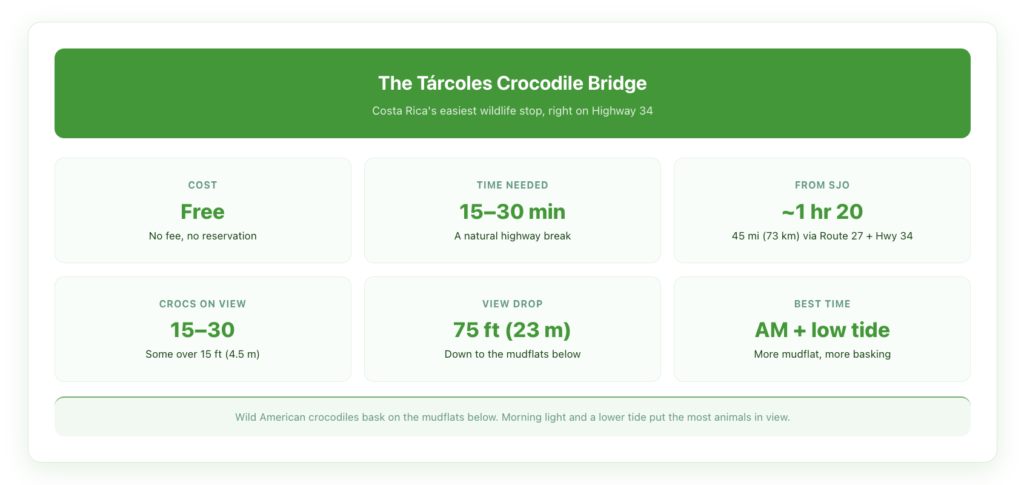
The Tárcoles crocodile bridge is a free roadside stop on Highway 34 where 15–30 wild American crocodiles bask 75 feet below, some over 15 feet long. It’s about 45 miles from San José Airport on the way to Jacó and Manuel Antonio, so any rental car passes right by.
Quick Facts:
- Completely free; no reservation, just park along the highway
- Typically 15–30 crocodiles; best at low tide and in cooler morning hours
- ~1 hr 20 min from SJO via Route 27 and Highway 34
- Petty theft happens — never leave valuables visible in your car
- A quick 15–20 minute stop, not a substitute for a boat tour
Top 3 Things Nearby:
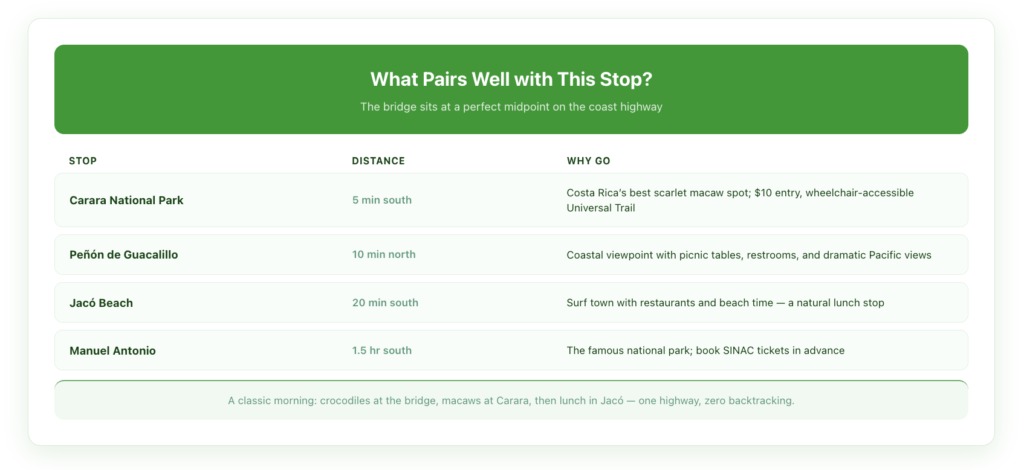
- Carara National Park – Costa Rica’s best scarlet macaw spot, 5 minutes south
- Jacó Beach – Restaurants and surf, a 20-minute lunch stop
- Manuel Antonio – The famous park, 1.5 hours south
It’s a natural break on any Pacific coast road trip. If you need any help with a Costa Rica car rental, contact us now!
The Tárcoles River crocodile bridge is one of Costa Rica’s most reliable wildlife encounters where massive American crocodiles bask in the mud just 75 feet (23 meters) below your feet. Located about 45 miles (72 kilometers) from San José on the route to Manuel Antonio and Jacó, this free roadside stop delivers guaranteed crocodile sightings that rival any organized tour. You’ll spot 15 to 30 crocodiles on any given day, and some measure over 15 feet (4.5 meters) long. The bridge sits along Highway 34, which makes it a natural break point whether you’re heading south from San José or exploring Costa Rica’s Central Pacific coast.
Key Takeaways
- The crocodile bridge spans the Río Tárcoles on Highway 34, roughly 45 miles from San José Airport (about 1 hour 20 minutes driving).
- You’ll typically see 15-30 American crocodiles from the bridge, with some individuals measuring over 15 feet (4.5 meters) and weighing up to 1,000 lbs (454 kilograms.
- This stop is completely free, so just park along the highway and walk onto the pedestrian barrier.
- Petty theft occurs here, so never leave your car unattended with valuables inside.
- The bridge makes an ideal 15-20 minute stop when driving to Jacó, Manuel Antonio, or other Central Pacific destinations.
- Best viewing happens during low tide and cooler morning hours when crocodiles bask on mudflats.
What Makes the Tárcoles River So Special for Crocodile Viewing?
The Río Tárcoles holds one of the highest concentrations of American crocodiles anywhere in the world. Scientists estimate that hundreds of these reptiles inhabit the river system, with dozens congregating directly beneath the bridge at any given time.
Why do so many crocodiles gather here? The river creates ideal habitat conditions. The Tárcoles watershed covers over 1,200 miles of drainage area, and empties into the Pacific Ocean near Carara National Park. This transition zone between freshwater and brackish coastal waters provides abundant fish populations that sustain the crocodile community.
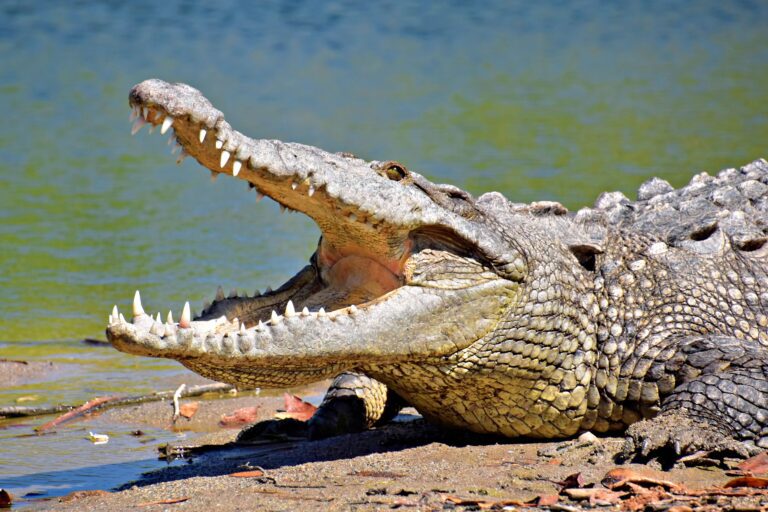
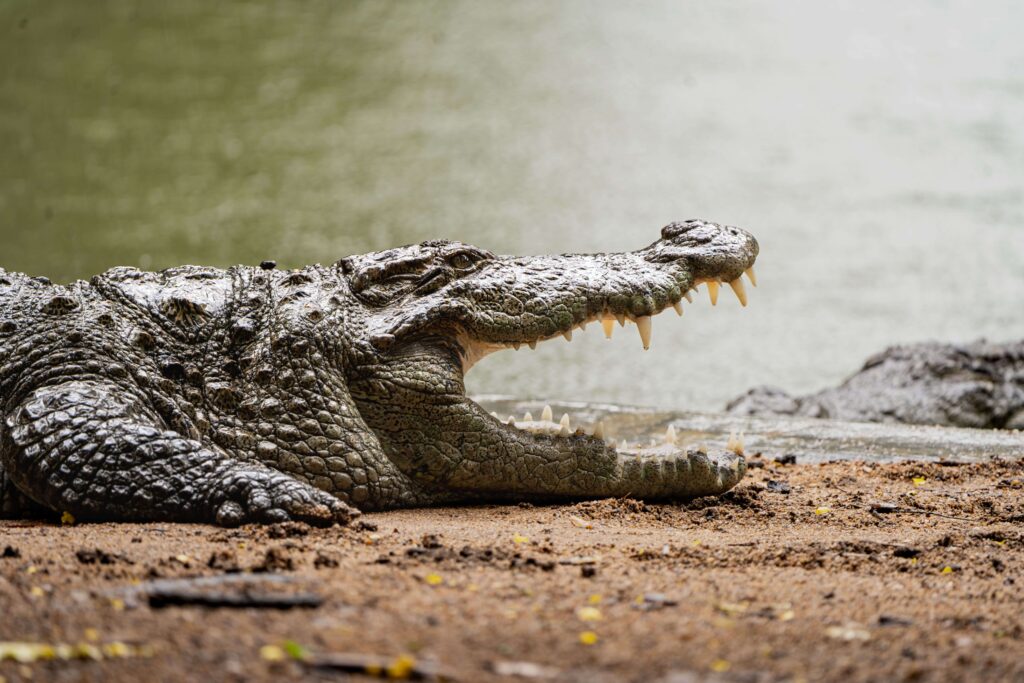
The American crocodile (Crocodylus acutus) differs significantly from the American alligator most visitors know from Florida. These crocodiles have V-shaped snouts rather than U-shaped ones, and they can tolerate saltwater, which explains their presence in coastal river systems throughout Central America. Adult males in the Tárcoles River regularly exceed 13 feet in length, with the largest individuals approaching 16 feet and weighing over 1,000 pounds.
Costa Rica’s National System of Conservation Areas (SINAC) provides legal protection for American crocodiles, and populations have rebounded significantly since hunting was banned in the 1970s. The Tárcoles represents one of the country’s healthiest crocodile populations, which makes this bridge crossing an exceptional wildlife viewing opportunity.
Where Exactly Is the Crocodile Bridge Located?
The bridge crosses the Río Tárcoles along Highway 34 (Costanera Sur) between the small town of Tárcoles and the entrance to Carara National Park. Coming from San José Airport, you’ll drive Route 27 toward the coast, then connect to Highway 34 heading south.
Here’s your route breakdown from common starting points:
From San José Airport (SJO): Take Route 27 west toward Caldera, exit toward Jacó, then continue south on Highway 34. Total distance is approximately 45 miles (73 km), taking about 1 hour 20 minutes in normal traffic. When planning your route from SJO, this bridge makes an excellent first stop.
From Jacó Beach: Head north on Highway 34 for approximately 12 miles (20 km). You’ll reach the bridge in about 20 minutes, making it an easy morning or afternoon excursion.
From Manuel Antonio: Drive north on Highway 34 past Quepos and through Jacó. The total distance is approximately 50 miles (80 kilometers), requiring about 1 hour and 30 minutes of driving time.
On Google Maps, search for “Crocodile Bridge Costa Rica” or “Puente de Cocodrilos Tárcoles” and confirm you’re directed to the bridge spanning the Río Tárcoles near Hacienda NOSAVAR. Several souvenir shops and small restaurants cluster at both ends of the bridge, making it easy to identify when you arrive.
What Should You Expect When Visiting the Bridge?
Pull off Highway 34 on either side of the bridge where parking spaces exist near the shops and restaurants. Most visitors spend 15-30 minutes watching the crocodiles, although serious photographers might linger longer.
Walk onto the bridge using the pedestrian barrier that runs the full length. The walkway provides safe viewing, but exercise caution when crossing the road since vehicles travel at highway speeds. Crocodiles position themselves on both sides of the bridge, so scan in both directions as you walk.
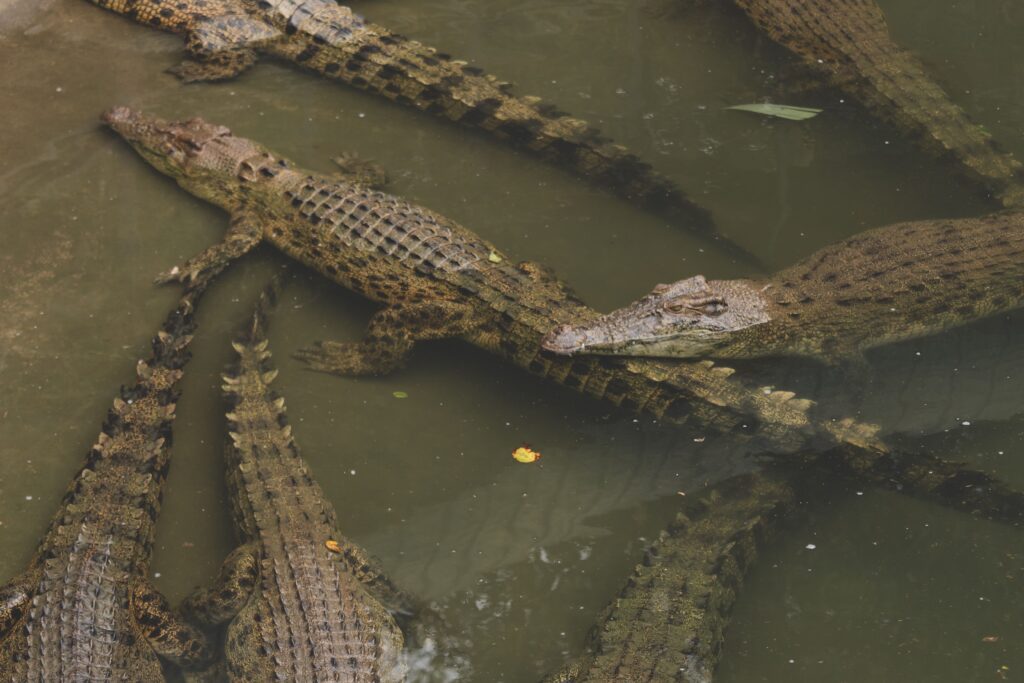
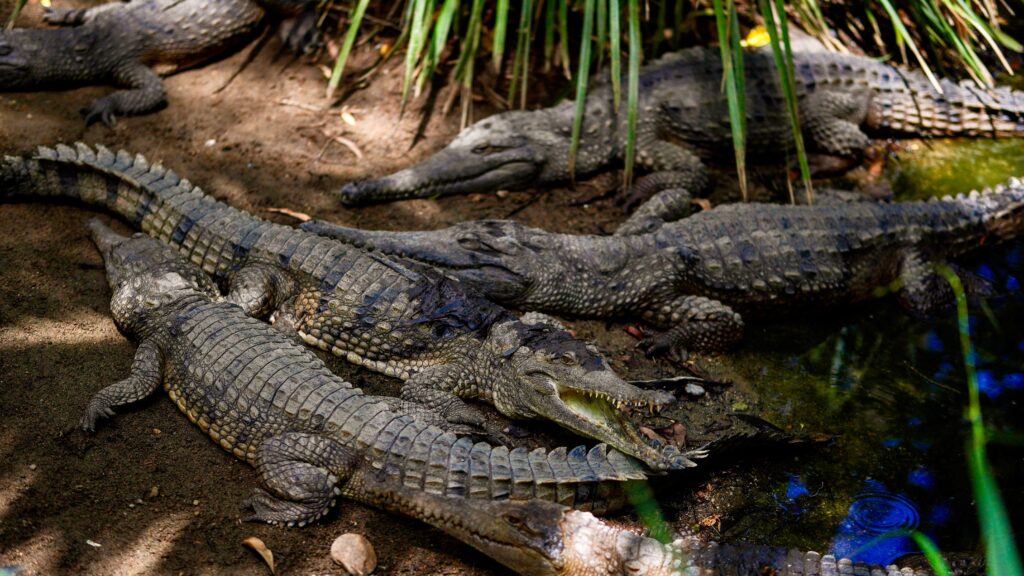
Looking down approximately 75 feet to the mudflats below, you’ll immediately spot the crocodiles. On typical days, expect to see between 15 and 30 animals, ranging from juveniles measuring 3-4 feet to massive adults exceeding 13 feet. The larger crocodiles often rest motionless for hours, and their prehistoric appearance remains unchanged since the dinosaur era.
The best viewing happens during lower tides when more mudflat becomes exposed, and gives crocodiles an additional basking area. Mornings tend to offer excellent activity as the reptiles warm themselves after cooler nighttime temperatures. During midday heat, many crocodiles may be partially submerged in the water.
How Can You Stay Safe at the Crocodile Bridge?
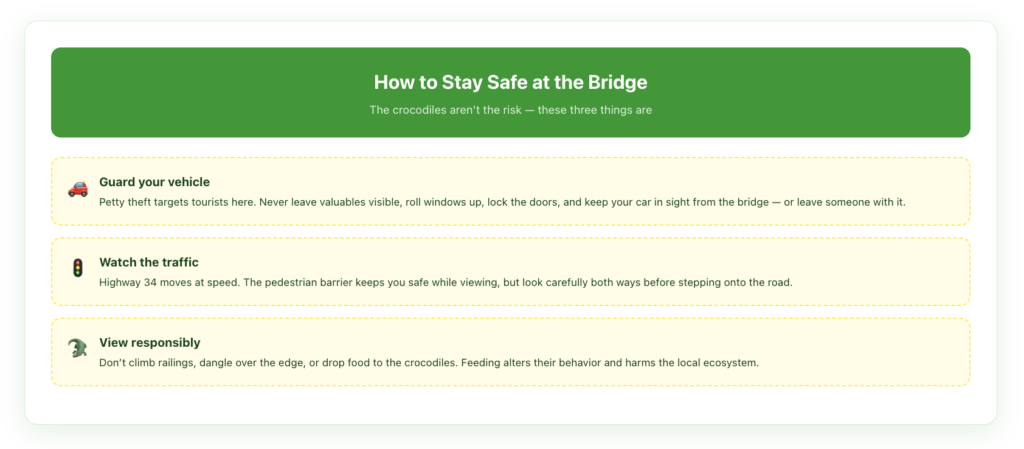
The crocodiles pose no direct threat from the bridge asyou’re viewing from a safe distance above. However, two legitimate safety concerns require attention:
Vehicle Security: Petty theft targeting tourists occurs at this popular stop. Never leave your car unattended with valuables visible inside. If traveling with a group, have someone remain with the vehicle. Roll up windows completely and lock all doors, even for brief stops. Park where you can maintain visual contact with your vehicle from the bridge, ideally near where tour buses congregate.
Traffic Safety: Highway 34 sees steady commercial and tourist traffic moving at highway speeds. The pedestrian barrier protects you from vehicles while viewing crocodiles, but crossing the road requires attention. Watch carefully in both directions before stepping onto the roadway.
Responsible Viewing: Don’t do anything foolish like pretending to hang off the bridge, climbing over railings, or dropping food into the river. Beyond being dangerous to yourself, feeding alters crocodile behavior and creates problems for the local ecosystem. When you’re exploring Costa Rica’s wildlife, respect for animals and their habitat ensures these experiences remain available for future visitors.
What Other Attractions Pair Well With This Stop?
The crocodile bridge sits at a perfect midpoint for several Central Pacific itineraries. Smart travelers combine this quick stop with nearby attractions for a full day of exploration.
Carara National Park (5 minutes south): Costa Rica’s best spot for scarlet macaw sightings sits just down the road. This transition zone park, where dry forest meets rainforest, protects over 400 bird species plus howler monkeys, sloths, and diverse wildlife. Entry costs $10, and the wheelchair-accessible Universal Trail makes this park remarkably beginner-friendly. Combine crocodile viewing with a morning birding session at Carara before continuing to your beach destination.
Jacó Beach (20 minutes south): This surfing town offers restaurants, shopping, and beach time along Costa Rica’s Central Pacific coast. It serves as an excellent lunch stop after morning wildlife viewing.
Manuel Antonio National Park (1.5 hours south): Continue your Central Pacific journey to Costa Rica’s most visited national park, where monkeys and sloths practically pose for photos along accessible trails. Book park entrance tickets through SINAC in advance, as daily visitor limits apply.
Peñón de Guacalillo (10 minutes north): This coastal viewpoint near the crocodile bridge offers picnic tables, restrooms, and dramatic Pacific Ocean views. It’s a pleasant addition for travelers with extra time.
What Do You Need to Know About American Crocodiles?
Understanding what you’re viewing adds appreciation to the experience. The American crocodile represents one of four crocodilian species found in the Americas and one of the largest crocodile species worldwide.
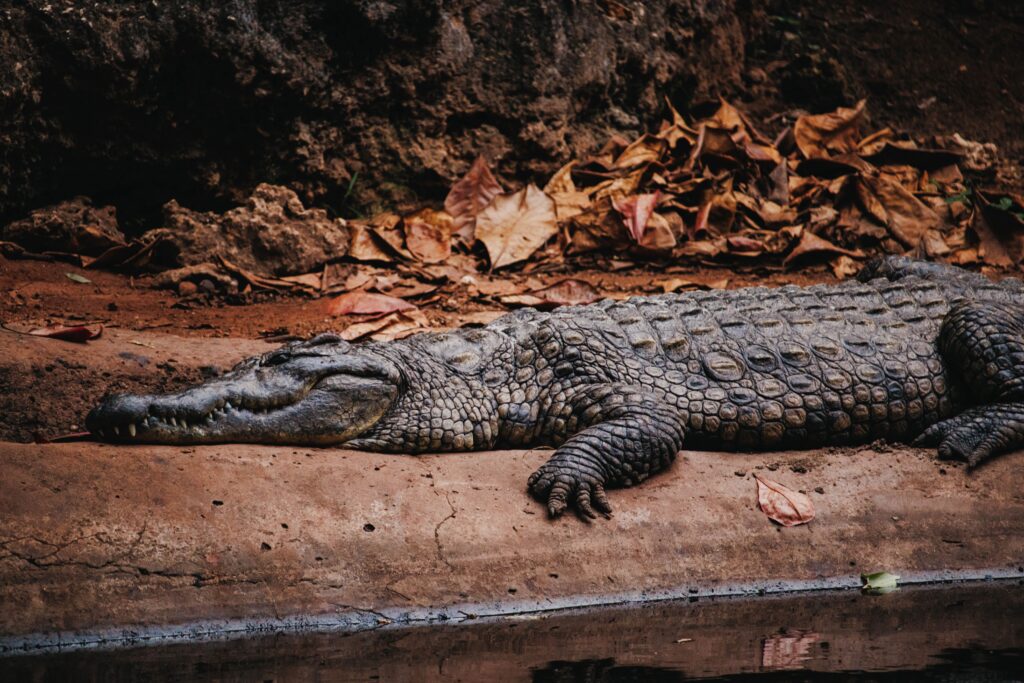
These cold-blooded reptiles regulate body temperature by basking in the sun or cooling in water. That’s why you’ll see so many crocodiles motionless on the mudflats—they’re not lazy; they’re thermoregulating. Morning basking behavior makes crocodiles more visible and active than during midday heat, when many retreat to the water.
Costa Rica’s crocodile populations have recovered dramatically under SINAC protection. While this represents a conservation success story, it also means crocodile sightings have become common throughout lowland rivers on both coasts. The Tárcoles population remains particularly impressive due to the concentrated habitat and abundant food sources.
Female American crocodiles nest during the dry season (December through April), laying 30-70 eggs in sandy mound nests. Hatchlings emerge after approximately 90 days, measuring just 10-12 inches long. Only about 16% of hatchlings survive to adulthood, falling prey to birds, fish, and even other crocodiles. Those that do survive can live 60-70 years, with some individuals estimated at over 80 years old.
When Is the Best Time to Visit the Crocodile Bridge?
Crocodiles remain present year-round, but certain conditions improve your viewing experience:
Time of Day: Early morning (7-10 AM) typically offers the best activity as crocodiles emerge to warm themselves. Late afternoon also provides good viewing as temperatures cool and crocodiles return to exposed positions.
Tide Conditions: Lower tides expose more mudflat, giving crocodiles additional basking area and making more animals visible from the bridge. Check tide tables for the Tárcoles River mouth if you want to optimize your visit.
Season: Dry season (December through April) brings predictable sunny weather, making road conditions excellent and crocodile basking behavior more consistent. Green season visits work perfectly fine, and you’ll still see plenty of crocodiles; just prepare for possible afternoon rain.
Day of Week: Weekday visits generally see fewer tourists than weekend crowds. If you’re planning a Costa Rica itinerary, schedule the crocodile bridge on a weekday morning when possible.
For photographers, golden hour lighting (early morning or late afternoon) creates the best images. A telephoto lens helps capture close-up details from the bridge height, although even smartphone cameras can capture impressive shots of the larger crocodiles.
How Does This Fit Into Your Costa Rica Driving Route?
The crocodile bridge naturally integrates into several popular road trip routes. When you’re exploring Costa Rica by car, this stop doesn’t require a detour because it’s directly along the main highway.
SJO to Manuel Antonio Route: The standard route from San José Airport to Manuel Antonio passes directly over this bridge. Plan your departure to arrive mid-morning, combining crocodile viewing with Carara National Park before continuing to Manuel Antonio for afternoon arrival.
Pacific Coast Road Trip: Travelers exploring Costa Rica’s Central Pacific region from Jacó to Manuel Antonio to Dominical will pass this bridge multiple times. Stop on your first crossing when the novelty is highest.
Day Trip from Jacó: The crocodile bridge makes an excellent morning excursion when combined with Carara National Park. Return to Jacó for lunch and afternoon beach time.
Multi-Region Itinerary: If your trip includes Arenal Volcano, Monteverde Cloud Forest, and Pacific beaches, you’ll likely pass this bridge when transitioning between regions. The flexibility of having your own rental vehicle allows you to stop whenever the timing works for your schedule.
What Facilities Are Available at the Bridge?
The crocodile bridge area has developed substantial tourist infrastructure over the years. You’ll find souvenir shops on both sides of the highway selling t-shirts, crafts, and crocodile-themed merchandise. Several small restaurants and snack vendors offer refreshments, ice cream, and simple meals.
Restrooms are available at some of the shops and restaurants (usually with a small fee or purchase expected). If you need a bathroom break during your Central Pacific drive, this makes a logical stop.
Parking spaces exist along the highway shoulders and in informal lots near the shops. As mentioned earlier, never leave valuables in your vehicle and maintain visual contact with your car while viewing from the bridge.
The commercial development reflects this location’s popularity, and estimates suggest thousands of tourists stop here monthly during high season. This traffic creates both the infrastructure convenience and the vehicle security concerns mentioned earlier.
What Wildlife Might You Spot Besides Crocodiles?
While crocodiles dominate attention, the Tárcoles River ecosystem supports diverse wildlife worth watching:
Birds: The river mouth attracts numerous wading birds, including herons, egrets, and ibis. Scarlet macaws fly between nesting areas in nearby Carara National Park and feeding sites along the river. Sharp-eyed observers might spot kingfishers, ospreys, or various raptors hunting along the waterway.
Iguanas: Large green iguanas often bask on branches near the riverbank and are sometimes visible from the bridge.
Howler Monkeys: Their distinctive roaring calls sometimes echo from the forest edges along the river, particularly in early morning.
The wildlife viewing at this single location demonstrates why Costa Rica protects over 25% of its territory in national parks and reserves. Even a highway bridge becomes a wildlife encounter when ecosystems remain intact.
Is This Stop Worth Your Time?
Absolutely, as long as you have appropriate expectations. The Tárcoles crocodile bridge delivers exactly what it promises: guaranteed sightings of massive wild crocodiles at zero cost. You’ll spend 15-30 minutes, get some memorable photos, and experience wildlife that impresses first-time visitors.
Is it equivalent to a guided boat tour where you cruise at crocodile eye level? No, because the viewing distance from the bridge means you’re observing rather than interacting. But the convenience factor is unbeatable. This stop sits directly along the highway with no entry fee, no appointment is needed, and there’s no tour schedule to coordinate.
For travelers heading to Jacó, Manuel Antonio, or anywhere along Costa Rica’s Central Pacific coast, skipping this bridge means missing one of the country’s most reliable and unusual wildlife sightings. Combined with a visit to Carara National Park just minutes away, you’re looking at a solid morning of wildlife viewing before reaching your beach destination.
When you’re ready to explore Costa Rica’s Pacific coast, having your own vehicle lets you stop at attractions like this on your own schedule. Whether you’re arriving at SJO for the first time or you’re a returning visitor, the crocodile bridge delivers consistently impressive wildlife encounters along one of the country’s most scenic coastal highways.
Frequently Asked Questions
Where Is the Bridge in Costa Rica to See Crocodiles?
The crocodile bridge spans the Río Tárcoles along Highway 34 (Costanera Sur), approximately 45 miles west of San José. You’ll find it between the small town of Tárcoles and the entrance to Carara National Park, roughly 20 minutes north of Jacó Beach. Search “Crocodile Bridge Costa Rica” on Google Maps and confirm you’re directed to the bridge near Hacienda NOSAVAR.
Are Crocodiles in Costa Rica Aggressive?
American crocodiles are generally less aggressive toward humans than some other crocodile species, but they remain powerful predators that deserve respect. From the bridge, you’re viewing from a completely safe distance as the crocodiles are approximately 75 feet below with no way to reach visitors. Don’t attempt to approach crocodiles at river level elsewhere in Costa Rica, and never swim in rivers known to contain crocodile populations.
Can You Swim in the Tárcoles River?
Absolutely not. The Tárcoles River contains one of the highest crocodile concentrations in the world, making swimming extremely dangerous. Beyond the crocodile population, the river also carries significant pollution from San José’s urban watershed, which also makes it unsuitable for swimming. If you want beach time, continue to Jacó or Manuel Antonio, where ocean swimming is safe.
What Is the Top Predator in Costa Rica?
The American crocodile ranks as one of Costa Rica’s apex predators, with the largest individuals having no natural predators as adults. Jaguars also hold apex predator status in terrestrial ecosystems, although they’re rarely seen due to their elusive nature. At the Tárcoles River, the massive crocodiles sitting atop the food chain create the extraordinary wildlife spectacle visitors come to witness.
How Big Are the American Crocodiles in Costa Rica?
Adult American crocodiles in the Tárcoles River commonly measure 10-15 feet in length, with exceptional individuals approaching 16 feet. Large males can weigh 500-1,000 pounds or more. These measurements place them among the largest crocodiles in the Americas, and visitors are often stunned by the sheer size of the animals visible from the bridge.