
Last Updated on July 31, 2026
Bribri Chocolate Tour: What's Covered
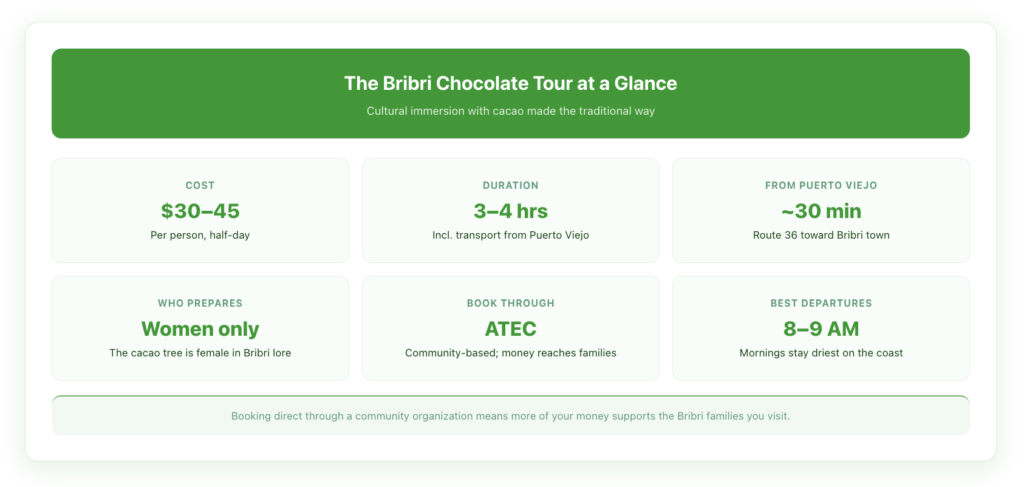
A Bribri chocolate tour near Puerto Viejo pairs cultural immersion with Costa Rica’s largest indigenous group and hands-on cacao making using centuries-old methods. Tours run $30–45 for 3–4 hours, about 30 minutes away on Route 36. A rental car to Puerto Viejo plus a locally booked tour is the sweet spot.
Quick Facts:
- $30–45 per person, 3–4 hours, including transport from Puerto Viejo
- Only women prepare cacao — the tree is female in Bribri creation lore
- You’ll roast, shell, grind, and drink the chocolate yourself
- Book through community organizations like ATEC so money reaches families
- The Caribbean coast stays driest September–October and February–April
Top 3 Highlights:
- Medicinal plant walk – A garden tour of plants used for medicine and dyes
- Bean to cup – Roasting over wood fire, stone-grinding, and tasting three ways
- Cultural depth – The why behind a 3,000-year sacred tradition
Give the Caribbean coast 3–4 nights and add the Jaguar Rescue Center or beach time. If you need any help with a Costa Rica car rental, contact us now!
The BriBri chocolate tour near Puerto Viejo offers something you won’t find anywhere else in Costa Rica, which is cultural immersion with one of the country’s largest indigenous communities, combined with hands-on chocolate making using methods dating back centuries. Located about 30 minutes from Puerto Viejo on the Watsi reservation in the Talamanca mountains, this half-day experience allows you to learn directly from BriBri families who’ve cultivated cacao for generations. You’ll discover why the BriBri consider cacao sacred, watch women prepare chocolate the traditional way (men aren’t permitted to handle cacao in BriBri culture), sample freshly made chocolate drinks, and walk through medicinal plant gardens with guides who know every leaf’s purpose. Tours run around $30-45 per person and can be booked through local operators like ATEC (Asociación Talamanqueña de Ecoturismo y Conservación) in Puerto Viejo.
Key Takeaways
- BriBri chocolate tours provide authentic cultural immersion with Costa Rica’s largest indigenous group in the Talamanca Mountains.
- Only women prepare cacao in the BriBri tradition because the cacao tree is considered female in their creation mythology.
- Tours typically cost $30-45 per person and last 3-4 hours, including transportation from Puerto Viejo.
- You’ll participate in the entire chocolate-making process from roasting beans to grinding paste to drinking the final product.
- The drive from Puerto Viejo takes about 30 minutes on Route 36 toward Bribri town and the Panama border.
- Booking through community-based organizations like ATEC directly supports indigenous families.
Who Are the BriBri People?
Costa Rica is home to eight indigenous groups comprising about 2.4% of the national population, and the BriBri are among the largest, with an estimated 12,000-35,000 people living primarily in the Talamanca region near the Panama border. Unlike many indigenous communities worldwide that have lost significant cultural traditions, the BriBri have maintained their language, spiritual practices, and social structures remarkably well, which is largely because the mountainous terrain kept Spanish colonizers away during the colonial period.
What makes the BriBri society particularly fascinating is its matrilineal structure. Women hold significant power and authority because they inherit land, make major family decisions, and trace ancestry through the maternal line. This isn’t just cultural trivia; it directly affects your chocolate tour experience since only women are permitted to prepare cacao. According to the BriBri creation mythology, the god Sibö transformed his wife into the first cacao tree to provide sustenance for the people, which made the tree itself female, and its preparation is exclusively women’s work.
The BriBri have faced challenges common to indigenous communities because poverty rates significantly exceed national averages, and preserving traditions requires constant effort as younger generations gain access to mainstream education and employment. Tourism provides crucial income while simultaneously helping preserve cultural practices that might otherwise fade. When you book a chocolate tour, you’re not just getting an experience; you’re participating in cultural preservation.
What Happens During a BriBri Chocolate Tour?
Most tours follow a similar structure, though the specific activities and duration can vary depending on the operator and family you visit. The experience typically runs 3-4 hours and unfolds something like this:
What Will You Learn About Medicinal Plants?
Before diving into chocolate, many BriBri tours begin with a walk through the family’s garden where your guide, who is often a family patriarch or matriarch, introduces plants used for everything from treating fevers to making natural dyes and adhesives. You’ll likely see and taste fruits you’ve never encountered, learn which leaves treat stomachaches, and watch demonstrations of traditional crafts like fiber weaving or arrow-making.
The depth of botanical knowledge is impressive. Guides can identify dozens of plants by name and explain their uses in medicine, construction, cooking, and ritual. This isn’t performative tourism because these families actually use these plants daily. The Caribbean coast’s unique ecosystem supports an incredible variety of medicinal flora, and the BriBri have passed down this knowledge orally for generations.
How Is Traditional Chocolate Actually Made?
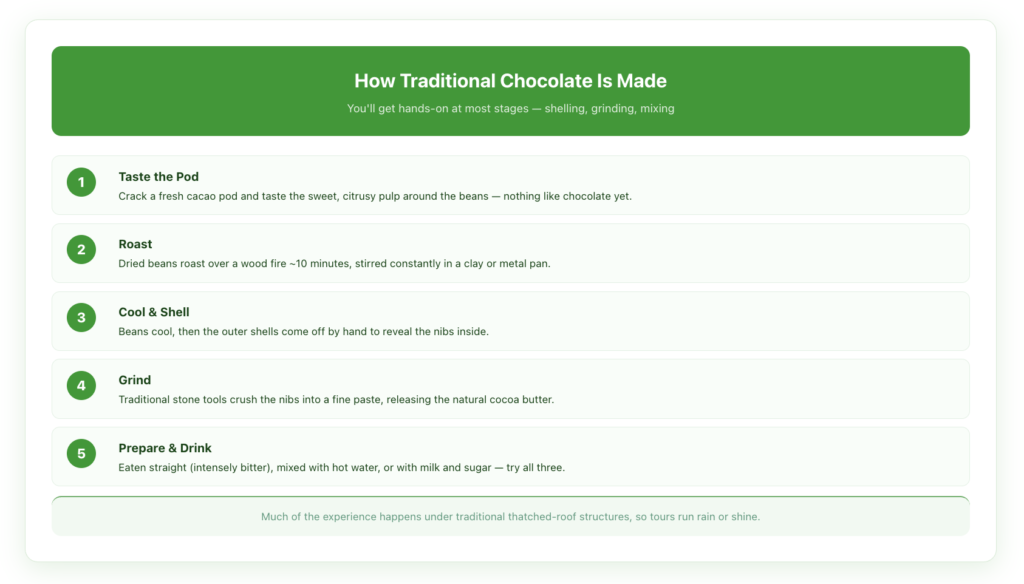
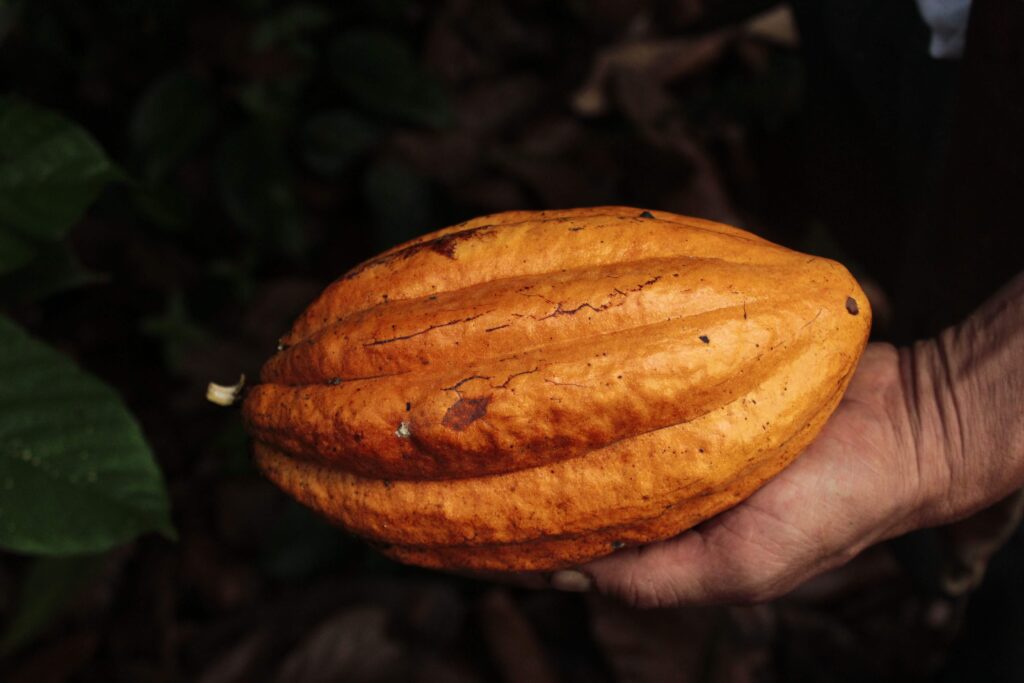
The chocolate-making portion typically begins with examining the cacao tree itself and cracking open a fresh pod to taste the raw pulp surrounding the beans, which is sweet with citrus notes and nothing like chocolate yet. From there, the women of the household demonstrate the traditional process:
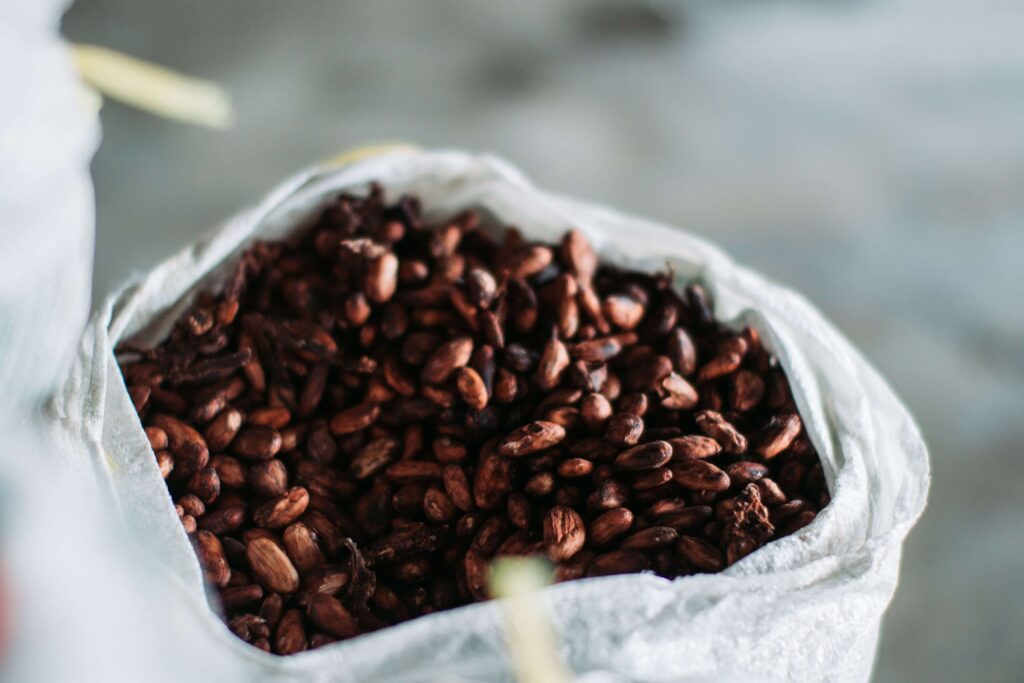
Roasting: Dried cacao beans are roasted over a wood fire for about 10 minutes, stirred constantly in a clay or metal pan. The aroma is rich, earthy, unmistakably chocolate, but more complex than processed cocoa.
Cooling and Shelling: Once roasted, beans cool before the outer shells are removed by hand. This is tedious work that reveals the chocolate nibs inside.
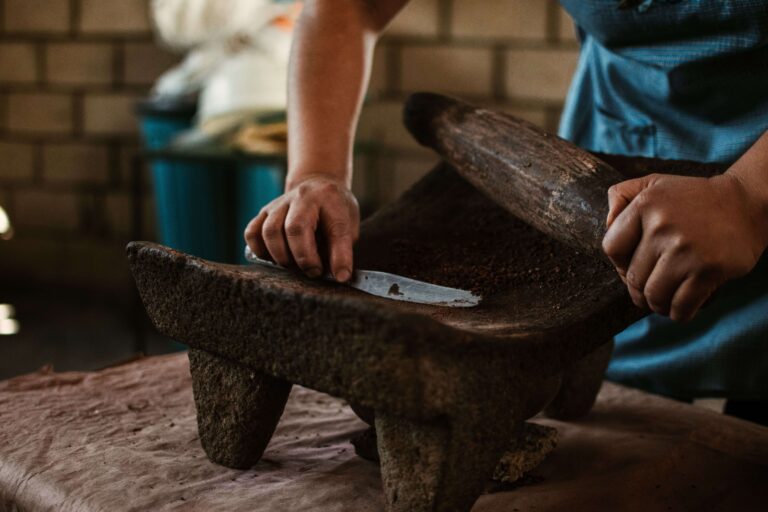
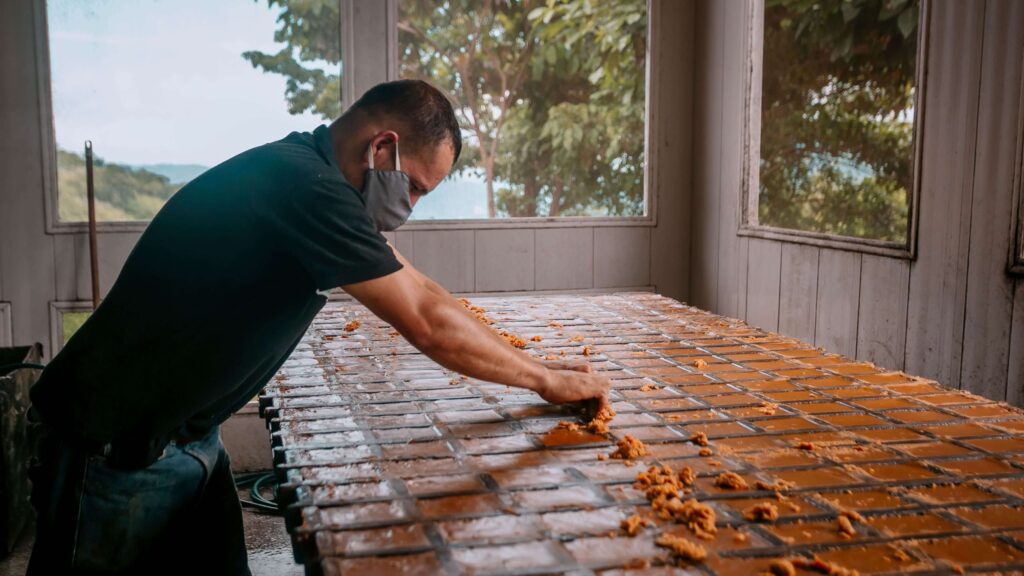
Grinding: Here’s where the magic happens. Using traditional stone grinding tools, the nibs are crushed into an increasingly fine paste. This process releases the natural cocoa butter, eventually creating a smooth, dark chocolate paste.
Preparation: The paste can be eaten straight (intensely bitter), mixed with hot water for a traditional drink, or combined with milk and sugar for something closer to modern hot chocolate. Most tours let you try multiple preparations.
You’ll likely get hands-on involvement by cracking shells, operating the grinder, or helping mix the final drink. The chocolate experience connects deeply to BriBri spiritual beliefs, where cacao represents a divine gift and its preparation carries ritual significance.
How Do You Get to the BriBri Reservation?
The main BriBri communities offering tours are located in the Watsi, Amubri, and Shiroles areas and are all accessible via Route 36, which is the paved road running from Puerto Viejo toward Bribri town and the Sixaola border crossing with Panama. Driving from Puerto Viejo takes approximately 30 minutes, and the roads are well-maintained and suitable for standard vehicles.
From San José, you’re looking at approximately 4.5 hours of driving via Route 32 through Braulio Carrillo National Park to Limón, then south on Highway 36 through Cahuita to Puerto Viejo. The Caribbean coast requires some planning, but rewards travelers with a completely different Costa Rica experience than the Pacific side.
If you’re flying into Juan Santamaría Airport (SJO), plan to stay at least two nights in Puerto Viejo to properly experience the chocolate tour without rushing. You can combine it with Cahuita National Park, the Jaguar Rescue Center, and beach time at Punta Uva or Playa Cocles.
Should You Drive Yourself or Book Transportation?
Both options work, but there are trade-offs to consider.
Self-Drive Advantages: Complete flexibility to explore other stops, leave when you want, and potentially visit multiple communities. Having your own vehicle from Vamos Rent-A-Car also lets you combine the chocolate tour with other Caribbean coast activities on the same day.
Guided Tour Advantages: Transportation included, bilingual guide handles all communication (BriBri is the primary language, followed by Spanish and English is limited), guaranteed navigation to the correct family. ATEC and other operators have established relationships with specific families, ensuring consistent experiences.
For most travelers, self-driving to Puerto Viejo and then booking a guided tour from there is the best bet. The main road is straightforward, but finding specific family farms on unpaved mountain roads requires local knowledge.
What Does a BriBri Chocolate Tour Cost?
Expect to pay between $30-45 USD per person for a standard half-day tour, including transportation from Puerto Viejo. Some operators offer combo packages adding waterfalls, wildlife centers, or extended cultural experiences for $50-75.
Direct bookings through community organizations like ATEC (the Talamanca Ecotourism and Conservation Association) ensure more money reaches BriBri families compared to tours booked through international platforms. ATEC pioneered indigenous tourism in the region and maintains direct partnerships with participating families.
Tour prices typically include:
- Round-trip transportation from Puerto Viejo hotels
- Bilingual guide services
- All materials and tastings
- Support for the host family
What’s usually not included: lunch, souvenirs, and gratuities for guides and host families. Bring cash in small denominations as many families sell handcrafted items, chocolate products, and medicinal preparations.
When Is the Best Time to Visit?
The Caribbean coast’s weather patterns differ significantly from the Pacific side. While Guanacaste bakes under the sun from December through April, the Caribbean receives rain year-round, with drier periods typically occurring from September through October and February through April.
That said, “rainy” doesn’t mean constant downpours. Morning hours usually stay dry with afternoon showers, making morning tour departures (typically 8-9 AM) ideal. The green season throughout Costa Rica actually offers advantages as there are fewer tourists, lower prices, and lush landscapes.
For the chocolate tour specifically, weather matters less than other activities since much of the experience happens under traditional thatched-roof structures. The gardens and walks involve short distances, and BriBri families conduct tours rain or shine.
Why Choose a BriBri Tour Over Other Chocolate Experiences?
Costa Rica offers numerous chocolate tours from commercial operations near La Fortuna to organic farms in Monteverde. What makes the BriBri experience different?
Cultural Depth: Other chocolate tours teach you how chocolate is made. BriBri tours teach you why it matters, from the spiritual significance and the gender role to the connection to a 3,000-year tradition that predates European contact.
Direct Community Support: Your money goes directly to families rather than tour operators or corporate farms. The ICT (Costa Rican Tourism Institute) officially recognized the BriBri tour guide association, validating their tourism credentials and supporting sustainable community development.
Authentic Setting: You’re visiting actual homes and gardens where families live, and not purpose-built tourist facilities. The unpolished authenticity creates genuine connections rather than staged performances.
Unique Caribbean Culture: The Caribbean coast offers completely different flavors—Afro-Caribbean influences, reggae rhythms, coconut-infused cuisine, and a relaxed pace that contrasts sharply with the rest of Costa Rica.
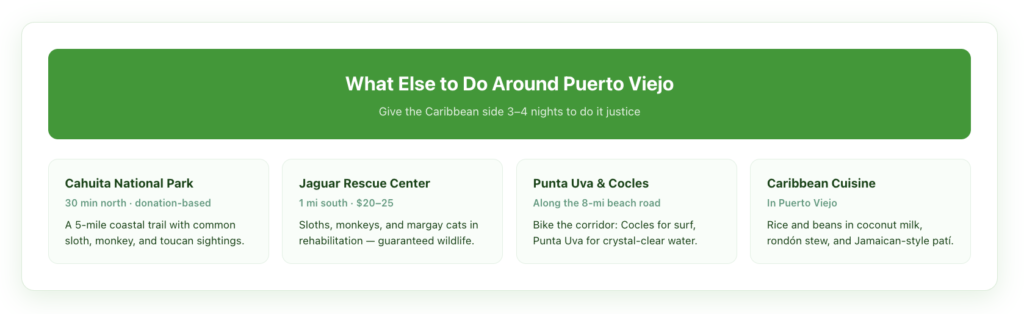
What Else Should You Do While in Puerto Viejo?
The BriBri chocolate tour pairs perfectly with other Caribbean coast experiences:
Cahuita National Park: This donation-based park features a 5-mile coastal trail through rainforest and along beaches where sloths, monkeys, and toucans are common sightings. It’s 30 minutes north of Puerto Viejo.
Jaguar Rescue Center: Despite the name, you probably won’t see jaguars, but you will see sloths, monkeys, margay cats, and other animals undergoing rehabilitation. Tours run $20-25 and offer guaranteed wildlife encounters.
Beach Hopping: Rent a bicycle and explore the 8-mile stretch from Puerto Viejo to Manzanillo, stopping at Playa Cocles (great surfing), Playa Chiquita, Punta Uva (crystal-clear water, picture-perfect beach), and Manzanillo village.
Caribbean Cuisine: Don’t miss rice and beans cooked in coconut milk (completely different from Pacific-style gallo pinto), rondon stew, and patí meat patties reflecting the region’s Jamaican influence.
A one-week Costa Rica itinerary could easily dedicate 3-4 nights to the Caribbean side, allowing time for the chocolate tour, park visits, beach relaxation, and proper appreciation of the region’s unique culture.
How Do You Book a BriBri Chocolate Tour?
Several options exist for booking, each with different advantages:
ATEC (Asociación Talamanqueña de Ecoturismo y Conservación): The most established community-based operator, located in downtown Puerto Viejo. Contact via WhatsApp at +506 8706-4758 or visit their office. They offer various tour combinations and have the longest-standing relationships with BriBri families.
Green Cahuita Tours: Operating from Cahuita, they offer highly-rated tours on TripAdvisor combining the chocolate experience with waterfalls and other activities.
Viator/GetYourGuide: International booking platforms offer packages if you prefer advance reservations and credit card guarantees. Prices tend to be slightly higher than direct bookings.
Hotel Concierges: Most Puerto Viejo accommodations can arrange tours, although this adds another intermediary between you and the community as well as additional cost.
For first-time visitors to Costa Rica, you can book through ATEC directly if you’re comfortable with flexible arrangements, or through Viator if you prefer confirmed reservations and English-language customer service.
What Should You Bring?
Pack light but thoughtfully:
- Cash in small bills: For souvenirs, tips, and emergencies
- Comfortable walking shoes: Closed-toe preferred for garden walks
- Rain jacket: Showers can arrive unexpectedly
- Insect repellent: Mosquitoes are present year-round
- Camera: The setting is photogenic, though ask permission before photographing people
- Reusable water bottle: Some families offer water, but bring your own to be safe
- Spanish phrasebook: Even basic Spanish helps; BriBri guides appreciate the effort
Leave behind: Heavy expectations of polished tourist infrastructure. This is authentic community tourism which is beautiful and meaningful, but not a commercial theme park experience.
Frequently Asked Questions
How long does the BriBri chocolate tour take?
Most tours last 3-4 hours, including transportation from Puerto Viejo. The cultural experience itself (medicinal plants, chocolate making, tastings) runs about 2-2.5 hours. Some combo tours adding waterfalls extend to 5-6 hours.
Is the BriBri chocolate tour suitable for children?
Absolutely. Families frequently bring children of all ages, and BriBri hosts are generally wonderful with kids. The hands-on nature of chocolate making engages children more than typical museum-style tours. Just ensure younger children can handle the walking portions (usually 15-30 minutes total on uneven terrain).
Do I need to speak Spanish for the tour?
Not necessarily. Most organized tours include bilingual guides who translate between English, Spanish, and BriBri. If visiting independently without a guide, conversational Spanish helps significantly since English is rarely spoken in BriBri communities.
Can I buy chocolate to take home?
Yes. Most families sell chocolate products, including pure cacao paste, drinking chocolate, and sometimes chocolate bars. These make excellent souvenirs and directly support the host family’s income.
What is the cultural significance of cacao to the BriBri?
Cacao holds deep spiritual importance in BriBri cosmology. According to their creation mythology, the god Sibö transformed his wife into the first cacao tree to feed the people. This is why only women are permitted to prepare cacao, because the tree itself is considered female. Cacao is used in ceremonies marking births, deaths, and other significant life events.
How far in advance should I book?
During high season (December through April), booking 2-3 days ahead is wise. During the green season, same-day or next-day bookings are usually possible through ATEC or local operators. International platforms like Viator allow reservations weeks in advance.
Is the tour accessible for people with mobility issues?
The experience involves walking on uneven ground through gardens and between structures. While distances are short, the terrain isn’t wheelchair-accessible, and some areas require navigating steps or slopes. Contact tour operators directly to discuss specific needs because some families may be able to accommodate limited mobility.