
Last Updated on March 18, 2026
Quick Guide to Poás Volcano National Park
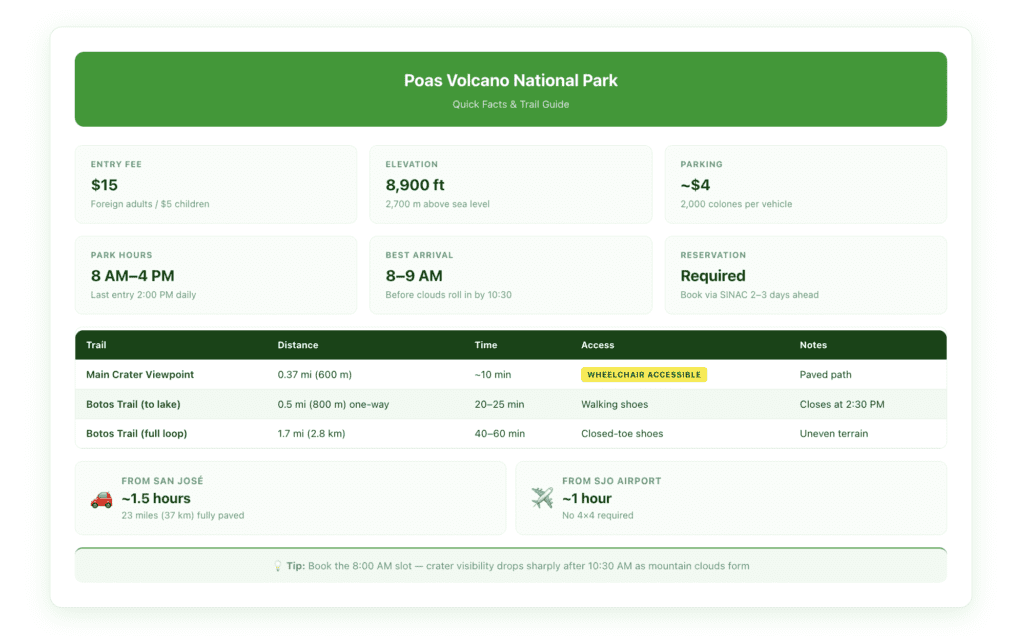
Poás Volcano National Park sits 23 miles (37 km) north of San José on fully paved roads—no 4×4 needed. Entry is $15 adults, $5 children, paid online when booking. Arrive by 8–9 AM for clear views of the turquoise acid crater lake; clouds roll in by 10:30 AM. Any standard rental car gets you there.
Quick Facts:
- Advance reservations mandatory via SINAC — no gate tickets; dry season weekends fill 2–3 weeks out
- SJO airport to park: ~1 hour; San José: ~1.5 hours
- The main crater path is fully paved and wheelchair-accessible
- Temperatures 50–65°F (10–18°C) — pack layers regardless of season
- Botos Trail: 40–60 min cloud forest hike to extinct crater lake (closes 2:30 PM)
Top Experiences:
- Active crater viewpoint — 10-min walk to the turquoise sulfuric acid lake and steaming fumaroles
- Botos Trail — peaceful cloud forest loop through pristine secondary growth
- Coffee tours — Doka Estate or Hacienda Alsacia sit 15 min from the park
- Irazú Volcano — pair on a separate day for Costa Rica’s two best Central Valley volcano visits
Poás fits perfectly into a Central Valley day trip from San José.
If you need any help with a Costa Rica car rental, contact us now!
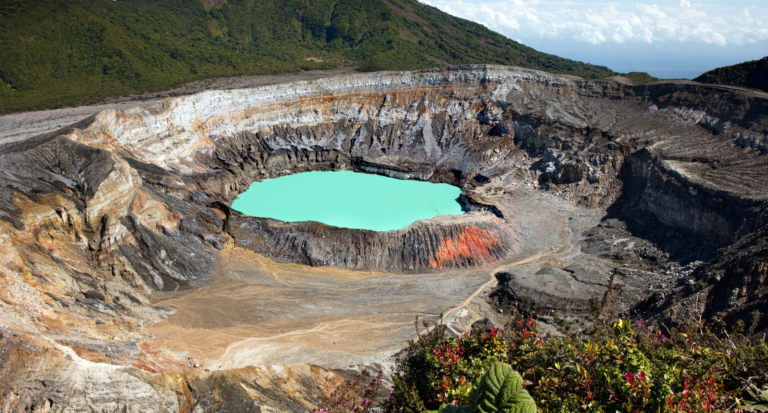
Poás Volcano National Park sits just 23 miles (37 km) north of San José, which makes it one of the easiest active volcano experiences you’ll find anywhere in the world. The park protects one of the largest active crater lakes on Earth—a steaming, sulfuric acid pool that shifts between turquoise and jade-green depending on volcanic activity—and you need just a 10-minute walk from the parking lot to see it. The catch is that this crater sits at 8,900 feet (2,700 m) elevation, where clouds move fast. Book the earliest possible slot, arrive before 9 AM, and you’ll almost certainly see it. Show up at noon, and you’re probably staring at fog.
Key Takeaways
- Advance online reservations through SINAC are mandatory—rangers turn away visitors without a confirmed booking.
- Book the 8:00 AM time slot if available; crater visibility drops sharply after 10:30 AM as clouds roll in.
- Entry is $15 for foreign adults, $5 for children under 12—paid online when you reserve.
- The main crater viewpoint is fully paved and wheelchair-accessible, a 10-minute walk from parking.
- The Botos Trail adds another 30–40 minutes through cloud forest to a peaceful extinct crater lake.
- Any standard rental car handles the drive—the road is fully paved from San José all the way to the park entrance.
- Parking costs 2,000 colones (about $4); no food vendors inside the park, so pack snacks and water.
How Do You Actually Reserve a Spot at Poás Volcano?
The park switched to a mandatory reservation system in 2018 to protect the fragile volcanic ecosystem from overcrowding. You cannot buy tickets at the gate. Walk-ups get turned away.
Book your tickets through the official SINAC reservation portal at least 2–3 days before your visit, though during the dry season (December–April), weekends can fill two to three weeks out. If you’re coordinating Poás around arrival timing, our SJO airport guide covers what to expect on the ground. The system opens reservations 30 days in advance. Create an account, select your date and time slot, pay $15 per adult online, and you’ll receive a confirmation email with a barcode. Either print it or have it ready on your phone—Rangers scan it at the gate along with your passport.
Time slots run every 30 minutes from 8:00 AM to 3:30 PM (last entry at 2:00 PM). Selecting the 8:00 or 8:30 AM slot is the single most important decision you’ll make for this trip. The crater sits at nearly 9,000 feet (2,700 m), where orographic clouds form quickly as morning temperatures rise. By 10:30–11:00 AM, there’s a 60–70% chance the crater is completely socked in. Early arrivals get the crater. Late arrivals get a wall of white.
Can’t find availability? Check back 2–3 days before your target date. Cancellations pop up regularly.
What if Volcanic Activity Closes the Park?
It happens occasionally. If volcanic gas levels exceed safe thresholds, rangers close the crater viewpoint—or in rare cases, the entire park. The SINAC website posts the current status, and you can call the park directly before making the drive up if you’re concerned. Historical closures have been relatively brief, but they are unpredictable.
People with asthma, chronic respiratory conditions, heart issues, or high blood pressure should consult their doctor before visiting, given the elevation and sulfuric gas. The park provides masks at the visitor center for those who need them.
What's the Drive Up to Poás Actually Like?
From central San José, the drive takes about 1.5 hours. If you’re starting from Juan Santamaría International Airport (SJO) in Alajuela, you’re already north of the city and looking at closer to 1 hour, which makes Poás an excellent first-day activity after an early flight arrival.
The route heads north through Alajuela and then climbs steadily on Route 146 through coffee-growing country. The road conditions on the Poás route are about as good as it gets in Costa Rica—fully paved, maintained, and straightforward. No 4×4 required, no river crossings, nothing technical. A compact rental car or economy sedan handles it fine. This makes Poás one of the rare Costa Rica national parks accessible without an SUV, which matters for budget-conscious travelers who don’t need to rent up. Parking costs approximately 2,000 colones—see our Costa Rica currency guide for current exchange rates.
The road narrows in sections but stays paved throughout. You’ll climb through the small mountain towns of Fraijanes and Poasito as temperatures drop and vegetation shifts from coffee terraces to cloud forest. Budget 15 minutes before your reservation time to park, use the restroom, and walk to the entrance checkpoint.
One practical note: fill your gas tank in Alajuela before heading up. There are no gas stations near the park entrance, and the mountain driving burns more fuel than you’d expect.
What Will You Actually See at the Crater?
The main crater viewpoint sits at the end of a 0.37-mile (600 m) paved, wheelchair-accessible path from the visitor center. Arrive, follow the signs, and you’re there in 10 minutes.
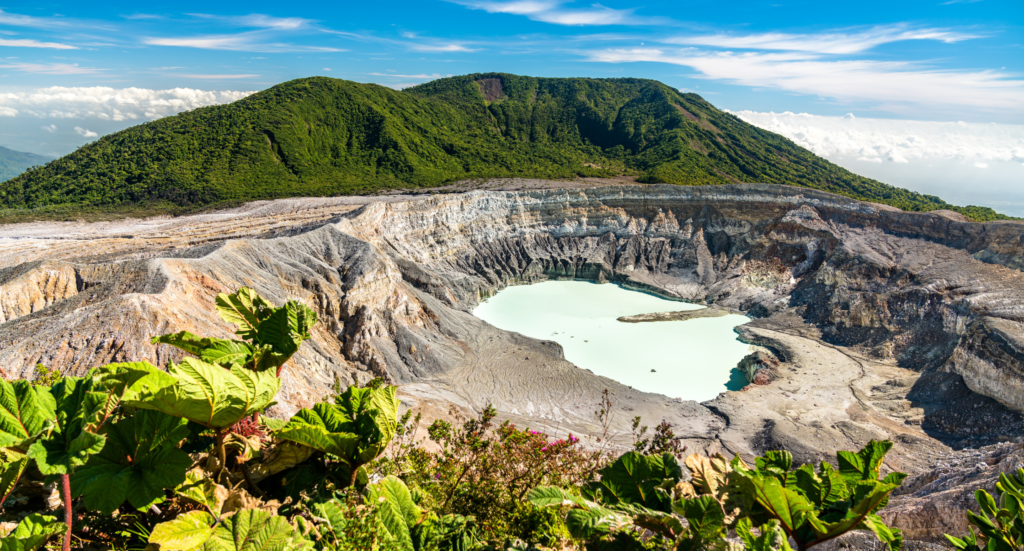
What you’re looking at is genuinely unusual. The crater spans nearly 1 mile (1.5 km) across and drops 984 feet (300 m) deep, making it one of the largest active volcanic craters on Earth. At the bottom sits the acid lake, a sulfuric pool that reaches temperatures up to 160°F (71°C). The color varies from bright turquoise to jade-green depending on mineral concentrations and recent volcanic activity—on active days, you might even catch small geysers breaking the surface.
Fumaroles (steam vents) along the crater walls release sulfuric gas constantly, giving the whole scene an otherworldly quality. The sulfur smell becomes noticeable near the viewpoint—distinctive, not overwhelming, and honestly part of the experience.
A covered observation deck provides excellent sightlines while protecting visitors from the elements. Park rangers station themselves here, answer questions, and can tell you what you’re currently looking at in terms of activity levels.
What Happens When the Clouds Roll In?
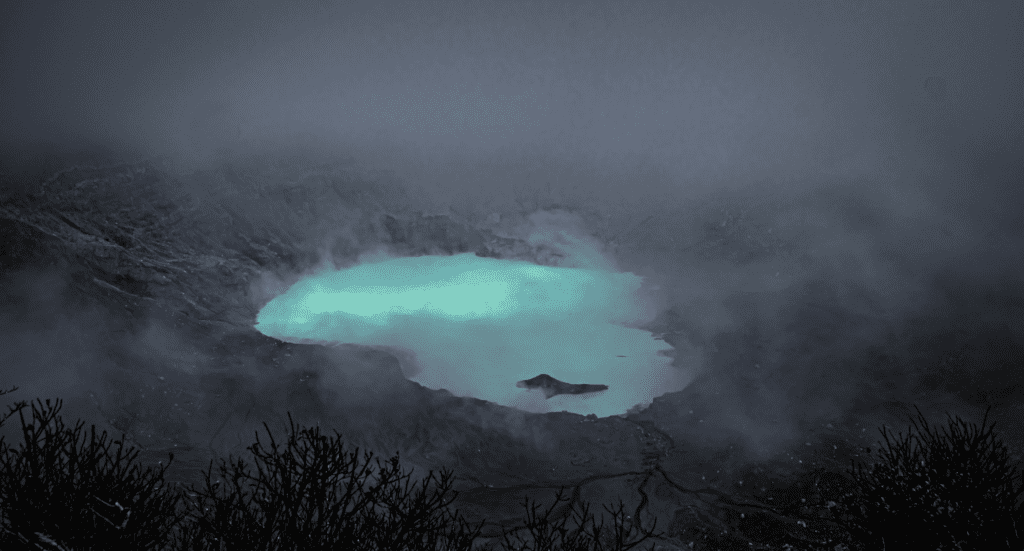
If you arriveato clouds, don’t immediately give up. The fog at Poás often breaks for a few minutes at a time—enough to reveal the crater before closing again. Experienced visitors wait at the viewpoint for 20–30 minutes if it’s overcast, and many catch a clear window. That said, persistent cloud cover is common after 10:30 AM, even during the dry season, which is exactly why the morning slot matters so much.

Why Should You Hike the Botos Trail Too?
Most visitors see the main crater and head back to their cars. That’s a missed opportunity. The Botos Trail leads to a completely different volcanic experience just 30–40 minutes deeper into the park.
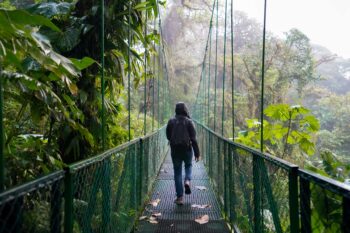
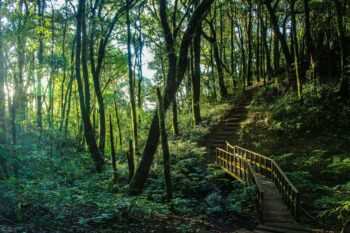
The 1.7-mile (2.8 km) loop (or 0.5-mile/800 m one-way to the main viewpoint) winds through cloud forest at 8,900 feet (2,700 m) elevation. Mosses drape from every branch, bromeliads cluster in every crevice, and the constant moisture creates an atmosphere that feels genuinely primeval. Listen for the emerald toucanet—a small, vivid green toucan found only at these elevations—and keep an eye on the canopy for quetzals if you’re visiting early.
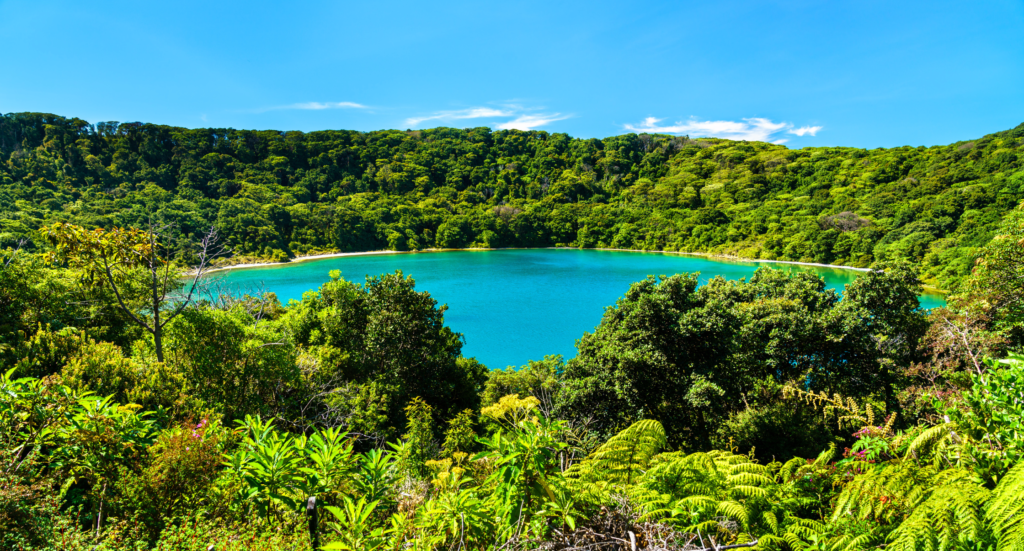
The trail emerges at Laguna Botos, a peacefully dormant crater that became extinct thousands of years ago. Unlike the violent acid lake at the main crater, Botos is a natural rainwater lake encircled by lush forest. The contrast between the two—one boiling and active, one still and forested—is a surprisingly affecting illustration of volcanic cycles.
The Botos Trail isn’t wheelchair accessible. It has wooden walkway sections, uneven ground, and moderate elevation gain. But if you’re mobile and willing to add an hour to your visit, it’s worth every step.
Note: The Botos trailhead closes at 2:30 PM. If you’re booking a later morning slot, keep this cutoff in mind.
What Should You Bring?
The 8,900-foot (2,700 m) elevation creates mountain weather that can shift fast, even when San José is warm and sunny below.
Temperature: Expect 50–65°F (10–18°C) at the crater, sometimes colder with wind. That’s easily 15–20°F (8–11°C) cooler than San José on the same morning. A windproof jacket or fleece is not optional—it’s mandatory even if you’re visiting in March.
Rain gear: Pack a light rain jacket regardless of the season. The cloud forest stays perpetually misty, and afternoon clouds can produce light rain even during dry season months. Green season visits should treat rain gear as guaranteed necessary.
Footwear: Closed-toe shoes handle the main crater trail fine since it’s fully paved. The Botos Trail benefits from shoes with decent traction on uneven surfaces—trail runners or hiking shoes over sandals.
Camera care: The humidity and temperature changes cause constant lens fogging. Bring a microfiber cloth. A zip-lock bag protects electronics if rain comes while you’re on the trail.
Food and water: There’s a small cafeteria at the visitor center, but no vendors inside the park. Pack snacks and water before you leave your accommodation—mountain air at altitude makes dehydration happen faster than people expect.
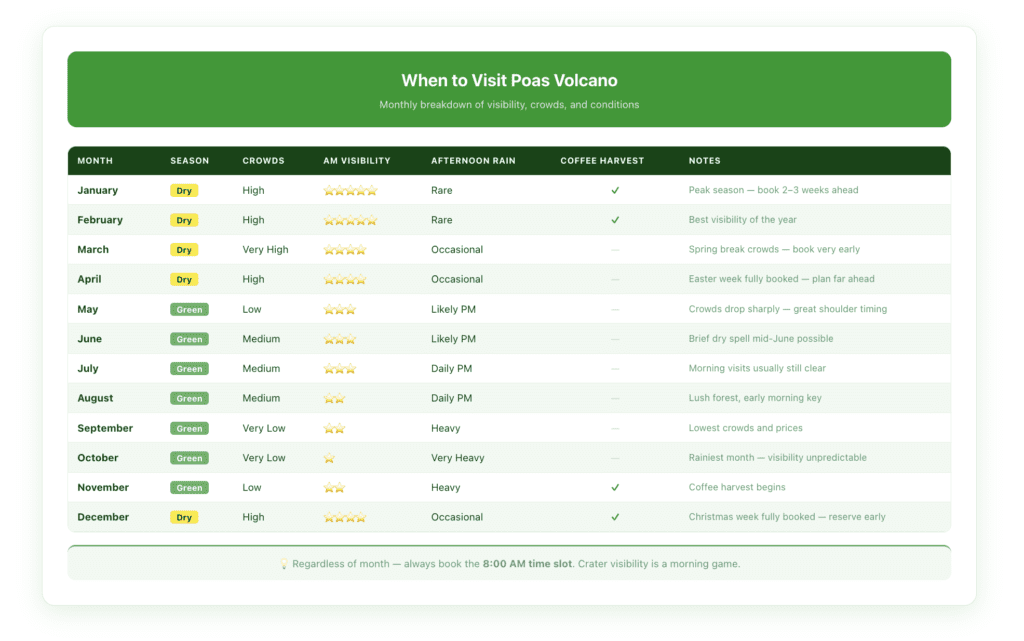
When Is the Best Time to Visit Poas?
The honest answer is that morning timing matters more than the month.
Dry season (December–April): Highest likelihood of clear crater views, but also the most visitors. Weekends can feel crowded at the main viewpoint. Book well in advance—slots disappear quickly. Coffee harvest is in full swing from January to February, which makes combining Poás with a plantation tour even more rewarding.
Green season (May–November): Fewer crowds, lower accommodation prices if you’re staying overnight in the area, and the cloud forest is lush. Afternoon rains become likely, but morning visits still work well. October is the rainiest month; June, July, and early August offer a decent balance between green season pricing and better weather windows.
Regardless of season, the 8:00–9:00 AM slot is where the clear views happen. Plan the rest of your day around that.
What Can You Combine Poás With for a Full Day?
Poás typically wraps up by 10:30–11:00 AM, which leaves your entire afternoon open. The surrounding area is full of good options.
Coffee plantation tours: The mountain slopes between Alajuela and the park entrance produce some of Costa Rica’s finest high-altitude coffee. Doka Estate runs excellent 90-minute tours about 15 minutes from the park, and Hacienda Alsacia (Starbucks’s working farm) offers well-produced tours on the same route. If you’re interested in Costa Rica’s coffee tourism scene more broadly, this area is one of the best places to start.
La Paz Waterfall Gardens: About 30 minutes north of Poás on the Caribbean slope, La Paz Waterfall Gardens has five waterfalls, a butterfly observatory, a hummingbird garden, and a wildlife rescue sanctuary. Entry runs $48 for adults—a high cost—but if you have 3–4 hours, it’s worth it. Combined with an 8 AM Poás visit, this makes a genuinely full-day itinerary. It’s also one of the better Costa Rica activities for families with kids.
Braulio Carrillo National Park: If you’re heading toward the Caribbean coast or Tortuguero after Poas, Braulio Carrillo sits on the same general route and lets you add primary rainforest to your morning. The Rainforest Adventures aerial tram near Braulio Carrillo makes a strong afternoon add-on if you have the energy.
Mountain sodas: The simplest option. Poasito and Fraijanes have small family restaurants (sodas) with incredible views down the valley. Stop for gallo pinto, fresh coffee, and a plate of whatever’s cooking—this is Costa Rica at its most honest and most affordable.
How Does Poás Compare to Irazú?
If you’re weighing which volcano to visit from San José, here’s the honest breakdown: both are excellent, but they’re different experiences for different travelers.
Poás has the more dramatic crater lake, the better secondary trail, and wheelchair-accessible infrastructure that makes it genuinely the most inclusive volcano visit in Central America. It requires advance planning—mandatory reservations, early arrival—but rewards that effort with one of the most otherworldly natural sights in Costa Rica.
Irazú Volcano is Costa Rica’s tallest volcano at 11,260 feet (3,432 m), operates first-come-first-served (no reservations needed), and on clear days lets you see both the Pacific and Caribbean coasts simultaneously. Its crater lake is a deep green versus Poas’s turquoise. The tradeoff: it’s colder, the entry road is in rougher condition, and spontaneous visits carry more weather risk.
First-time visitors to Costa Rica typically prefer Poás for the visual drama and reliability of the experience. Comparing Poás and Irazú comes down to whether you value planning flexibility (Irazú) over optimized views and accessibility (Poás).
Is Poás Accessible for Everyone?
It’s one of the most accessible national parks in all of Central America.
The main crater path is fully paved, gently graded, and comfortably managed by manual wheelchairs with a companion. Power wheelchairs and mobility scooters navigate it independently. The covered viewing platform provides ample space for wheelchairs to be positioned for photographs. Accessible restrooms and parking spots closest to the entrance are available at the visitor center.
The Botos Trail is not wheelchair accessible—it has uneven surfaces, wooden sections, and moderate inclines.
The 8,900-foot (2,700 m) elevation causes noticeable effects for some people: shortness of breath with exertion, mild headaches, or fatigue. Visitors with heart conditions, high blood pressure, or recent surgery should consult their doctor before visiting.
Do You Need a Specific Vehicle for This Trip?
No—and this is one of the few times we’ll tell you that a compact rental car is the right answer. The road from San José to Poás is fully paved and well-maintained. A standard sedan or economy car handles the climb without any issues.
Save the 4×4 rental for destinations that actually require it—Monteverde, remote beaches, or roads during green season when dirt roads become challenging. If you’re planning a broader Costa Rica itinerary that combines Poás with those destinations, you might already have a 4×4—in which case it’s obviously fine for this drive too.
Having your own rental car gives you the flexibility this trip requires: arriving at the early slot without coordinating tour group timing, stopping at roadside coffee stands on the way up, and lingering as long as you want at each viewpoint instead of waiting for a tour bus schedule. Tour companies charge $60–90 per person for Poás tours. A rental car for the day runs $40–60 total. The math and the flexibility both favor driving yourself.
Costa Rica’s mandatory liability insurance applies to all rental vehicles regardless of credit card coverage—it’s the law, not an upsell. Factor it into your daily budget.
Ready to See That Crater?
Poás is one of those places that genuinely delivers on its reputation—as long as you respect the one rule that defines the entire experience: book early, arrive early. The turquoise acid lake and the quiet cloud forest of the Botos Trail give you two completely different volcanic perspectives in one compact morning. The whole thing wraps up by noon, leaving your afternoon for coffee tours near Alajuela, La Paz waterfalls, or a relaxed drive back through mountain scenery.
If you’re building out a Central Valley day trip circuit from San José, Poás is the anchor. Pair it with Irazú on a separate day, add coffee country in between, and you’ve covered one of the most rewarding regions in the country—all on paved roads, all within an hour and a half of the airport. For broader inspiration, our list of top Costa Rica activities worth your time shows how Poás fits into a one-week itinerary or longer trip.
Need a rental car with straightforward insurance and no surprises at the counter? Vamos has you covered.
Frequently Asked Questions
Is Poás Volcano worth visiting?
Yes, especially for travelers based in San José or flying into SJO airport. The turquoise acid lake is one of the most visually striking things in Costa Rica’s national park system, and you need only a 10-minute walk to see it. The wheelchair-accessible path makes it the most inclusive volcano experience in Central America. Just know that it requires two non-negotiables: advance online reservations through SINAC, and an arrival no later than 9:00 AM. Skip those two steps, and the experience suffers significantly. Plan around them, and Poás consistently delivers.
How far in advance do you need to book Poás Volcano tickets?
At minimum, 2–3 days ahead—but that’s cutting it close. During the dry season (December–April), especially on weekends, availability can disappear two to three weeks before your desired date. Book as soon as your dates are confirmed. The SINAC website opens slots 30 days in advance. If you’re locked out of your target date, check back 48–72 hours before—cancellations are common and free up slots regularly.
What time does Poás Volcano open, and when should you arrive?
The park opens at 8:00 AM with time slots available every 30 minutes until 3:30 PM (last entry 2:00 PM). You should book and arrive for the 8:00 or 8:30 AM slot. The crater sits at 8,900 feet (2,700 m) in elevation, and clouds typically roll in between 10:30 and 11:00 AM. Booking an early slot and leaving San José around 6:30 AM gives you the best odds of a clear view.
How long do you need at Poás Volcano?
Plan 2–3 hours inside the park. The main crater viewpoint takes about 30–40 minutes, including the walk and time for photos. The Botos Trail adds another 40–60 minutes of cloud forest hiking to the extinct crater lake. Most visitors are done by 10:30–11:00 AM, which leaves a full afternoon for coffee tours, La Paz Waterfall Gardens, or the drive back through the mountain towns.
What’s the difference between Poás and Irazú, and which should you visit?
Both are active Costa Rica volcanoes within 1.5–2 hours of San José, but they’re quite different. Poás has the more dramatic turquoise crater lake, a better secondary trail, and full wheelchair accessibility—but requires mandatory advance reservations and an early arrival for clear views. Irazú is Costa Rica’s tallest volcano, runs first-come-first-served (no reservations), and offers views of both coasts on clear days—but it is colder, less accessible, and the road conditions are rougher. If it’s your first time and you want optimized views in a single morning, Poás edges ahead. If you prefer flexibility and don’t mind colder conditions, Irazú is the better choice.
Can you visit Poás Volcano without a car?
Yes, but it takes planning. There’s a weekend-only bus connection: take the TUASA bus from San José to Alajuela, then transfer to the COOPETRANSI bus that runs directly to the park on Saturdays and Sundays only, departing Alajuela around 9:30 AM and returning from the park at 2:00 PM. The round trip takes 2.5 hours each way and costs around 5,500 colones ($10–11). The obvious limitation: the bus doesn’t accommodate the early time slot that gives you the best crater visibility, and you’re locked into its schedule for the return. Tour companies also run shared Poás day trips from San José for $60–90 per person. Renting a car costs $40–60 for the whole day and gives you complete schedule control—for two people, it almost always beats the tour price.
What should you know about the Poás Volcano trail to Laguna Botos?
The Botos Trail runs 1.7 miles (2.8 km) total, or 0.5 miles (800 m) one-way to the main lake viewpoint, adding about 40–60 minutes round-trip. The path goes through cloud forest at 8,900 feet (2,700 m) elevation and ends at a peaceful extinct crater lake that’s a striking contrast to the active main crater. The trail is mostly concrete with some uneven surfaces and elevation gain—not wheelchair accessible, but manageable for most walkers with decent footwear. The trailhead closes at 2:30 PM, so if you’re booking a later morning slot, do the math on whether you’ll have time. Wear closed-toe shoes with traction, and expect the forest to be damp regardless of the season.
Is Poás Volcano active right now?
Poás is one of the world’s most persistently active volcanoes. It regularly produces phreatic eruptions—steam-driven explosions from the crater lake—and was closed to visitors for several months after a significant eruption in 2017. As of 2025, the park is fully open with normal operations. Check the SINAC website or the Observatorio Vulcanológico y Sismológico de Costa Rica (OVSICORI) for current activity reports before your visit if you want real-time status. The park service closes the crater viewpoint when gas levels exceed safe thresholds, which can happen with short notice.