

Last Updated on July 31, 2026
Territorio de Zaguates: What's Covered
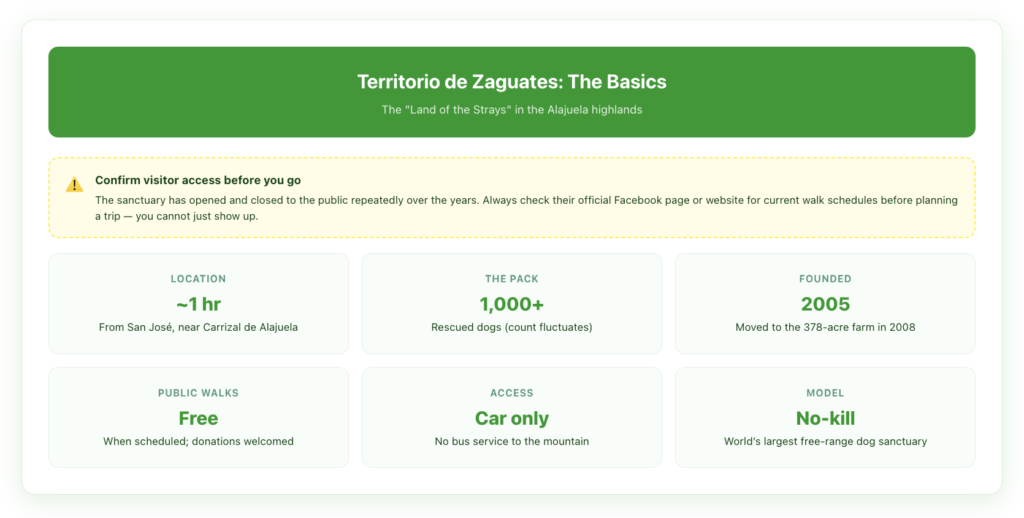
Territorio de Zaguates, the “Land of the Strays,” is the world’s largest free-range, no-kill dog sanctuary — over 1,000 rescued dogs across a 378-acre mountain farm near Carrizal de Alajuela, about an hour from San José. Public walks with the pack are free when scheduled, but access has changed repeatedly, so confirm current status on their official channels first. A rental car is the only way in.
Quick Facts:
- Founded 2005; moved to the current farm in 2008
- Walks are free (donations welcomed) but run only on scheduled days
- No bus service — a private vehicle is required; 4×4 helps in green season
- Fill your tank first: no fuel stations near the sanctuary
- About an hour from San José, close to SJO Airport
Top 3 Ways to Engage:
- Adopt or foster – Rehoming dogs is the sanctuary’s whole mission
- Donate – It runs entirely on donations; feeding the pack costs a fortune monthly
- Combine the day – Pair a Central Valley visit with Poás Volcano or a coffee tour
Always verify walk schedules before driving out. If you need any help with a Costa Rica car rental, contact us now!
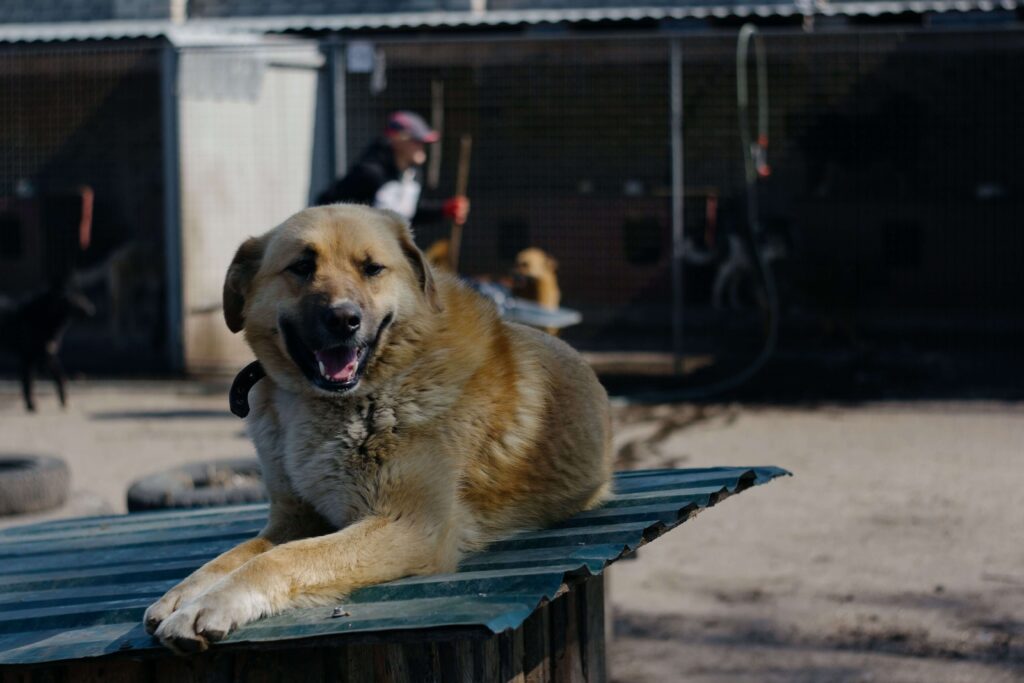
Territorio de Zaguates is known as the “Land of the Strays,” which is the world’s largest free-range, no-kill dog sanctuary, home to over 1,800 rescued dogs roaming freely across 378 acres (153 hectares) in Costa Rica’s mountains. Located about an hour from San José near Carrizal de Alajuela, this nonprofit shelter offers visitors the moving experience of walking mountain trails alongside hundreds of happy, tail-wagging pups who’ve been given a second chance at life.
If you’re an animal lover planning a trip to Costa Rica, this sanctuary offers something you won’t find anywhere else in the world. The shelter reopened to public visits in June 2025, making it an excellent addition to your Central Valley exploration or a memorable day trip from the capital.
Key Takeaways
- Location: Mountain region between Carrizal and Poás Volcano, about 1 hour from San José.
- Population: Over 1,800 dogs currently in residence.
- History: Founded in 2005 by Lya Battle and Alvaro Saumet, relocated to the 378-acre farm in 2008.
- Status: Reopened to public visits in June 2025 after infrastructure renovations.
- Access: Private vehicle required as there’s no public bus service to the sanctuary.
- Cost: Free public walks (donations welcomed).
- Best for: Animal lovers, unique cultural experiences, families seeking meaningful activities.
What Is Territorio de Zaguates and Why Is It Famous?
Territorio de Zaguates translates to “Land of the Strays” in English. In Costa Rica, “zaguate” refers to a mixed-breed dog, a mutt, or a stray, and this sanctuary has made it their mission to celebrate these unique dogs rather than treat them as lesser than purebreds.
The shelter gained international attention through viral videos showing their famous “dog hikes,” where hundreds of rescued canines run alongside human visitors through mountain trails. A 2018 Netflix documentary episode in the series Dogs (Season 1, Episode 5) further boosted the sanctuary’s profile and brought supporters from around the world to this remarkable place.
Who Runs the Sanctuary?
Lya Battle, born in Canada, and Alvaro Saumet from Colombia founded the shelter in 2005 when they began taking in abandoned dogs at their Costa Rica home. When Battle inherited property from her grandfather, they moved operations to the current 378-acre farm in 2008. What started as a shelter for geriatric dogs quickly expanded to care for dogs of all ages as more strays arrived.
Today, the sanctuary operates as a U.S. 501(c)(3) nonprofit organization and employs over 20 full-time staff members who manage daily operations, veterinary care, and the massive task of preparing and distributing roughly 860 pounds of food daily.
How Do You Get to Territorio de Zaguates?
The sanctuary is located in the mountains between Carrizal and Poás Volcano, making it accessible only by private vehicle. There’s no bus service to this mountainous neighborhood, which is part of why the area has remained relatively untouched by mass tourism.
Driving from San José
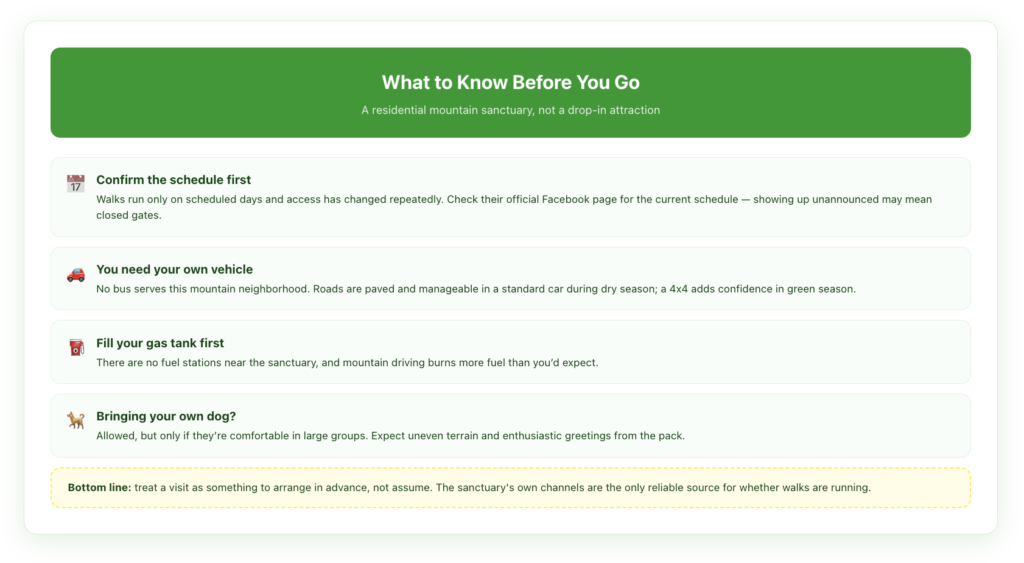
The drive takes approximately one hour from downtown San José. You’ll head northwest toward Alajuela province, then climb into the mountains near Carrizal. The roads are paved and manageable with a standard rental car during dry season, though a 4×4 provides extra confidence on mountain routes, especially if you’re visiting during green season.
If you’re flying into Juan Santamaría International Airport (SJO), Territorio de Zaguates makes an excellent first-day or last-day activity since it’s located in the same general region as the airport. You could combine a morning visit with an afternoon coffee plantation tour in the nearby Heredia highlands.
What to Know Before You Go
Because the sanctuary operates in a residential mountain area, you cannot simply show up and expect entry. Always check their official Facebook page or website for current visit schedules. Walk schedules may change, and the sanctuary occasionally closes for maintenance or special circumstances.
Pro tip: Fill your gas tank before heading into the mountains. There are no fuel stations near the sanctuary, and mountain driving consumes more fuel than you might expect.
What Happens During a Visit to the Dog Sanctuary?
The signature experience at Territorio de Zaguates is the public walk, which is a group hike through the mountain property with hundreds of dogs running, playing, and enjoying their freedom alongside visitors.
The Walking Experience
During these walks, you’ll trek through mountain trails surrounded by wagging tails and happy dogs of every imaginable mix. Some dogs will run ahead, others stay close, hoping to be petted, and many just seem thrilled to have human companions on their adventure. The walks typically last 2-3 hours and cover moderate terrain with some elevation changes.
You’re welcome to bring your own dog, although make sure they’re comfortable around large groups of other dogs. Walkers of all ages can participate, but be prepared for uneven mountain terrain and the occasional enthusiastic greeting from an excited pup.
Beyond the Walks
Even when public walks aren’t scheduled, the sanctuary offers other ways to engage:
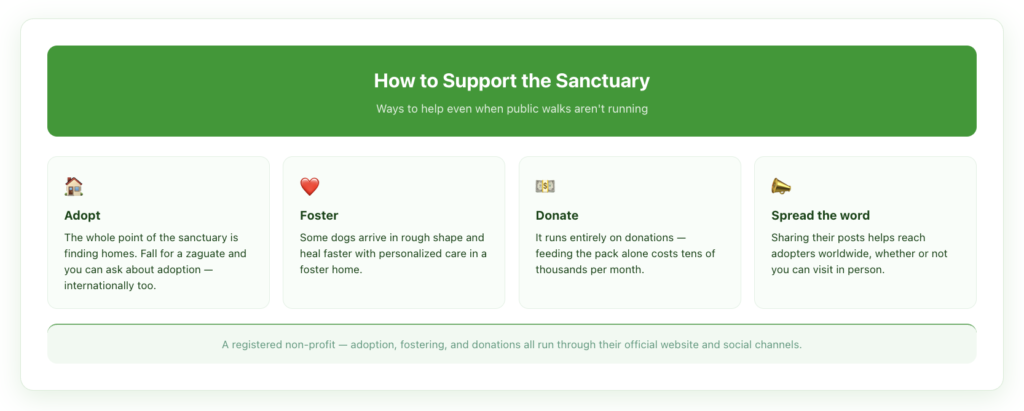
Adoption: The primary goal of Territorio de Zaguates is to find homes for its residents. If you fall in love with a particular zaguate, you can inquire about adoption procedures through their WhatsApp contacts (English: Marcela at +506 8883-9337; Spanish: María Fernanda at +506 8484-7329).
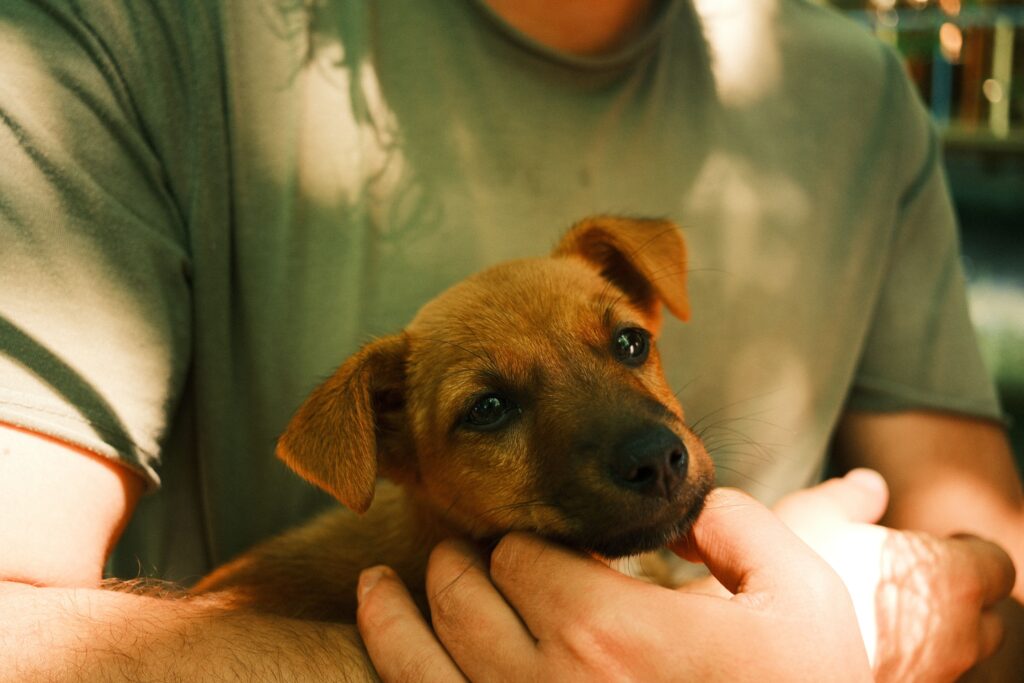
Fostering: Some dogs arrive in terrible condition and need personalized care while they heal. Foster families provide that crucial TLC that accelerates recovery.
Donations: As a 100% donation-based sanctuary, financial support keeps operations running. Weekly food costs alone reach approximately $7,000, plus veterinary care, medications, staff salaries, and facility maintenance.
Why Does Costa Rica Have So Many Stray Dogs?
Costa Rica faces a significant stray dog challenge, with estimates suggesting over two million strays across the country. Several cultural and practical factors contribute to this problem.
Historical Context
Traditionally, many Costa Ricans viewed dogs primarily as guard animals rather than family pets. Dogs were often tied up outside, left to roam freely, or abandoned when families moved or circumstances changed. Spaying and neutering weren’t widely practiced, which led to rapid population growth among street dogs.
Additionally, a cultural preference for purebred dogs meant mixed-breed strays were often overlooked as potential pets, which is something Territorio de Zaguates has worked hard to change through their creative “unique breed” marketing campaign.
Legal Protections
Costa Rica has strengthened its animal welfare laws significantly over the years. The Animal Welfare Law of 2017 established fines and prison sentences for animal abuse, while SENASA (Costa Rica’s National Animal Health Service) oversees animal welfare enforcement. These legal changes reflect growing awareness and changing attitudes toward pet ownership and animal treatment.
Territorio de Zaguates actively promotes education about responsible pet ownership, spaying/neutering, and treating dogs as family members rather than disposable property. Their “When you adopt a mutt, you adopt a unique breed” campaign has helped shift perceptions about mixed-breed dogs throughout Costa Rica.
Can You Combine This Visit with Other Attractions?
Absolutely. The sanctuary’s location in the Central Valley highlands is near several excellent day trip options that complement an animal-focused experience.
Nearby Coffee Experiences
The mountains around Heredia and Alajuela produce some of Costa Rica’s finest coffee. After your morning dog walk, consider stopping at nearby plantations for tours that explain the journey from bean to cup. Finca Rosa Blanca in the Heredia highlands offers organic coffee tours with beautiful Central Valley views.
Volcano Day Trips
Poás Volcano National Park sits just northeast of the sanctuary area. With advance reservations through SINAC, you can witness one of the world’s largest active crater lakes. The park’s 8:00 AM opening aligns well with an early start, so visit the volcano first when skies are clearest, then head to Territorio de Zaguates for an afternoon walk.
Wildlife Experiences
For more animal encounters, the Rescate Wildlife Rescue Center near Grecia houses native and exotic animals rescued from across the country. It’s a different experience from Territorio de Zaguates as the focus is on native wildlife rather than domestic dogs but appeals to the same animal-loving travelers.
What Should You Know About Supporting the Sanctuary?
Territorio de Zaguates operates entirely on donations, making every contribution meaningful. Here’s how support translates to impact:
How Donations Help
The sanctuary’s monthly expenses are substantial. Food alone costs approximately $28,000 monthly to feed over 1,800 dogs. Add veterinary care, medications, specialized treatments for sick or senior dogs, facility maintenance, and staff salaries, and you can see why ongoing support matters.
Every dog arriving at the sanctuary receives immediate veterinary attention: vaccinations, parasite treatment, and spaying or neutering. SENASA veterinarians conduct monthly inspections to verify that the health standards are maintained. Dogs with special medical needs receive ongoing care, and many wouldn’t survive without it.
Ways to Contribute
Direct Donations: Through their official website, you can make one-time or recurring donations.
Merchandise: Purchase items from their Bonfire store to support operations while getting a memento of your visit.
Dog Food Purchases: Contact them directly to arrange food donations that go directly to the pack.
Spreading the Word: Sharing their social media content helps raise awareness and reach potential adopters worldwide.
How Does This Fit Into Your Costa Rica Trip?
If you’re planning a Costa Rica itinerary, Territorio de Zaguates works best as a Central Valley activity before or after exploring other regions.
For First-Time Visitors
Many travelers treat San José as just a stopover, but the Central Valley deserves more attention. A visit to Territorio de Zaguates, combined with San José’s museums or a volcano day trip, creates a meaningful first impression of Costa Rica beyond the beaches.
Practical Timing
The sanctuary visit works well on:
Day 1 or 2: After landing at SJO airport, pick up your rental car and explore the nearby Central Valley before heading to more distant destinations.
Final Day: If your flight departs late afternoon or evening, a morning sanctuary visit makes a memorable farewell activity since the location is convenient to the airport.
Getting Around
Having your own rental vehicle is essential for visiting Territorio de Zaguates. The mountain roads require independent transportation, and shuttle services don’t reach this area. A standard car handles the paved routes fine in the dry season; 4×4 vehicles provide extra security during the green season or if you’re combining with rougher destinations afterward.
What Makes This Experience Unique?
Territorio de Zaguates isn’t a typical tourist attraction—it’s a working sanctuary that happens to welcome visitors. This distinction shapes the experience in meaningful ways.
Authentic Impact
Unlike paid animal encounters, where you’re essentially buying access, your visit here directly supports homeless dogs. Every photo you share, every donation you make, and every adoption you consider has a real impact on animals who truly need help.
Cultural Insight
The sanctuary reveals important aspects of Costa Rican society: the challenges facing stray animals, the dedication of local animal welfare advocates, and the evolving attitudes toward pet ownership.
Unforgettable Moments
There’s something profound about being surrounded by hundreds of dogs who’ve overcome abandonment and now live freely on mountain trails. Many visitors describe it as one of their most memorable Costa Rica experiences and more touching than any beach sunset or zipline adventure.
Planning Your Visit: Quick Reference
Location: Mountains near Carrizal de Alajuela, approximately 1 hour from San José.
Getting There: Private vehicle required; rent a car at SJO airport for easy access.
Current Status: Open for public visits (reopened June 2025).
Visit Information: Check the official Facebook page for current walk schedules.
Cost: Free (donations strongly encouraged).
What to Bring: Comfortable walking shoes, water, sun protection, camera, and treats for the dogs (optional).
Languages: English spoken by staff member Marcela; Spanish by María Fernanda and other team members.
Best Season: Dry season (December-April) offers easier road conditions and more reliable weather for outdoor activities.
Frequently Asked Questions
What Is the Meaning of Territorio de Zaguates?
“Territorio de Zaguates” translates to “Land of the Strays” or “Kingdom of Strays” in English. In Costa Rica, “zaguate” is the local term for a mixed-breed dog, a mutt, or a stray. The name celebrates rather than stigmatizes these dogs, and reflects the sanctuary’s mission to change how Costa Ricans perceive mixed-breed pets.
Can You Visit the Land of the Strays, Costa Rica?
Yes, you can visit Territorio de Zaguates. The sanctuary reopened to public visits in June 2025 after completing government-required infrastructure renovations. Visit schedules vary, so always check their official Facebook page or website before planning your trip. Don’t drop in without checking the schedule first, as unannounced visitors may find locked gates.
Where Is the Territory of Zaguates in Costa Rica?
The sanctuary is located in the mountains between the town of Carrizal and Poás Volcano in Alajuela province. It’s approximately one hour by car from downtown San José and about 45 minutes from Juan Santamaría International Airport. The mountainous location means no public bus service reaches the area, and you’ll need a private vehicle to visit.
Who Is the Owner of Territorio de Zaguates?
Lya Battle (Canadian-born) and Alvaro Saumet (from Colombia) founded and operate Territorio de Zaguates. They began taking in abandoned dogs in 2005 and relocated to their current 378-acre property in 2008 when Battle inherited the land from her grandfather. The sanctuary is registered as a U.S. 501(c)(3) nonprofit organization and a Costa Rican Fundación Sin Fin de Lucro.
What Does “Zaguates” Mean in English?
“Zaguate” is Costa Rican slang for a street dog, stray dog, or mixed-breed mutt. Unlike English, where “mutt” can carry negative connotations, the shelter has worked to make “zaguate” a term of endearment through their creative “unique breed” campaign, and each dog receives a one-of-a-kind breed name like “Alaskan Collie Fluffyterrier” or “Chihuapoodle Punky Hairas” to emphasize their special characteristics.
Do Stray Dogs Still Exist in Costa Rica?
Yes, Costa Rica has an estimated two million stray dogs. While animal welfare legislation has improved significantly, including the 2017 Animal Welfare Law establishing penalties for abuse, the stray population remains a challenge. Cultural shifts toward responsible pet ownership, spaying/neutering, and adoption are gradually addressing the problem, with organizations like Territorio de Zaguates leading educational efforts.
How Can You Support Territorio de Zaguates?
You can support the sanctuary through direct donations via their website, purchasing merchandise from their online store, adopting or fostering a dog, or simply spreading awareness through social media. The sanctuary is 100% donation-funded, with weekly food costs alone reaching approximately $7,000. Every contribution helps feed, shelter, and provide medical care for over 1,800 dogs.
Can I Adopt a Dog from Territorio de Zaguates?
Yes, adoption is the sanctuary’s primary goal. If you’re interested in adopting, contact Marcela (English) at +506 8883-9337 or María Fernanda (Spanish) at +506 8484-7329 via WhatsApp. International adoptions are possible, though they involve additional logistics. The sanctuary also needs foster families for dogs recovering from illness or injury who need individualized care.