
Last Updated on July 24, 2026
Playa Cocolito & El Chorro Waterfall: What's Covered
Playa Cocolito sits 4 miles (6.4 km) south of Tambor on the Nicoya Peninsula, where El Chorro Waterfall spills onto white sand and into the Pacific. No road reaches the beach, which keeps it empty. Come by hike, horseback, or car to a nearby trailhead.
Quick Facts:
- 6 miles (10 km) north of Montezuma; the hike runs 2 hours each way
- Horseback tours cover the same coastal route in roughly 1 hour
- Standard car reaches the Tango Mar trailhead in dry season; 4×4 helps in green season
- Zero facilities — no bathrooms, vendors, or cell service. Pack 2 liters of water each
- Arrive via the Paquera ferry, roughly 4 hours from San José
Top 3 Ways In:
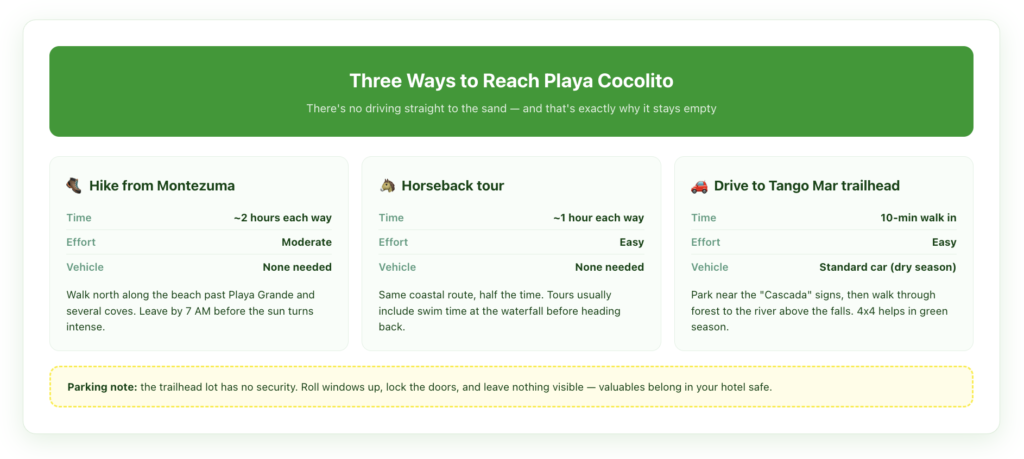
- Hike from Montezuma – Leave by 7 AM before the sun turns brutal
- Horseback tour – Half the travel time, with swim time at the falls
- Tango Mar trailhead – A 10-minute forest walk to the river above the cascade
Pair it with Cabo Blanco or the Montezuma falls. Note that southern Nicoya roads stay rough. If you need any help with a Costa Rica car rental, contact us now!
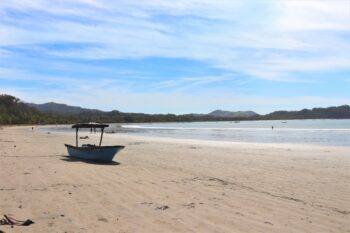
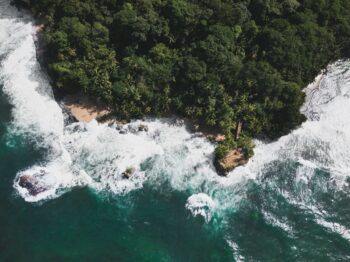
Playa Cocolito sits about 4 miles (6.4 kilometers) south of Tambor on the Nicoya Peninsula and is a pristine beach that has a waterfall cascading directly into the ocean at its edge. El Chorro waterfall (also called Cocolito Falls) tumbles over volcanic rocks at the northern end of this secluded cove, which creates a magical spot where the rainforest meets the sea. There’s no direct driving to the beach, which keeps the crowds away, and the sparkling white sand is largely untouched.
Whether you hike from Montezuma, arrange a horseback ride along the coast, or drive to a nearby trailhead, reaching Playa Cocolito rewards the visitor with an amazing yet authentic experience. The turquoise waters, white sand cove, and stunning waterfall backdrop make the beach particularly special for travelers who don’t mind investing their time and energy into an experience.
Key Takeaways
- Playa Cocolito is located 4 miles (6.4 kilometers) south of Tambor and 6 miles (10 kilometers) north of Montezuma, and is accessible via hiking, horseback, or a short trail from the Tango Mar Hotel area.
- El Chorro waterfall flows directly into the ocean at the beach’s northern end for one of the few waterfall-beach combinations in Costa Rica.
- The 2-hour beach hike from Montezuma or the 1-hour horseback tour are the most popular ways to reach the beach.
- A 4×4 isn’t required if approaching via the Tango Mar route during the dry season, but a high-clearance vehicle is recommended for exploring the broader southern Nicoya Peninsula.
- Best visited early morning before the sun gets intense, so pack plenty of water, sunscreen, and snacks as there are zero facilities.
Where Exactly Is Playa Cocolito Located?
Playa Cocolito occupies a stunning stretch of Costa Rica’s southern Nicoya Peninsula, positioned between the resort town of Tambor to the north and the bohemian village of Montezuma to the south.
The beach sits within the Tempisque Conservation Area, which is part of the protected zone that includes the famous Cabo Blanco Nature Reserve at the peninsula’s southernmost tip. This whole region earned designation as one of the world’s five Blue Zones thanks to its residents’ remarkable longevity, which is attributed to the area’s laid-back lifestyle, fresh local food, and strong community bonds.
From the main service town of Cobano, where you’ll find banks, pharmacies, and supermarkets, Playa Cocolito is roughly a 15-minute drive toward Montezuma before turning off toward Tango Mar. The coastal road from Paquera ferry terminal passes through Tambor before reaching the turnoff for the waterfall access point.
How Do You Get to Playa Cocolito and El Chorro Waterfall?
Several routes lead to this hidden gem, and each offers a different experience to visitors. Your choice of route depends on how much adventure you want before arriving and whether you prefer beach-level or cliff-top views of the waterfall.
What’s the Best Way to Reach Cocolito from Montezuma?
The most popular approach combines exercise with exploration. Walking north from Montezuma along the beach takes roughly two hours one way. You’ll cross Playa Grande and several smaller coves as well as navigate some rocky sections between stretches of sand.
Ideally start by 7 AM because the tropical sun becomes intense by mid-morning. The hike itself is relatively flat but can feel long when temperatures climb above 85°F. Bring at least two liters of water per person, wear sturdy sandals that handle both sand and rocks, and pack a hat along with reef-safe sunscreen.
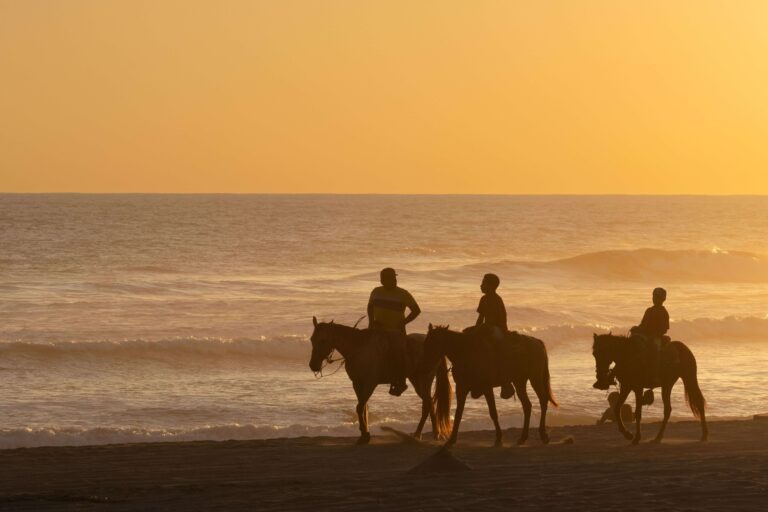
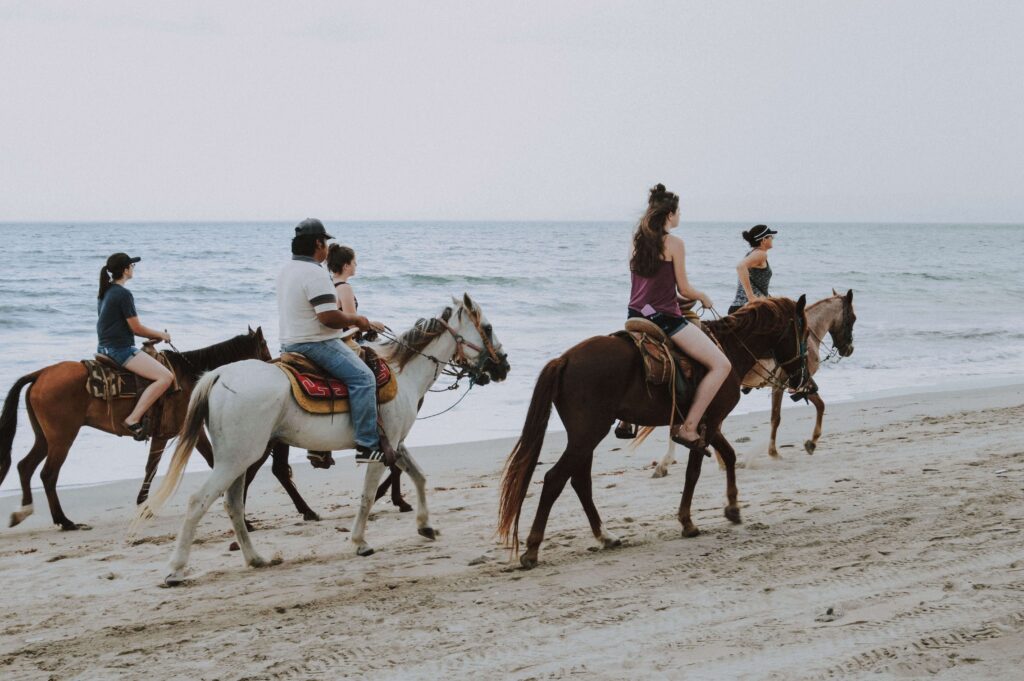
Horseback riding tours from Montezuma follow the same coastal route but cut the travel time to about one hour. Local operators like Zuma Tours coordinate these excursions, which typically include time for swimming at the waterfall and beach before heading back. This option works particularly well for travelers who want the scenic experience without the sweaty two-hour trek.
Can You Drive to El Chorro Waterfall?
Although you can’t drive directly to the beach itself, you can drive to a trailhead that provides waterfall access from above. Head toward Tango Mar Hotel on the coastal road south of Tambor and just before reaching the hotel’s gate, look for a small road on the right with signs pointing toward “Cascada Waterfall.”
Follow this road past several small directional signs until you reach a basic parking area that has space for four or five cars. The trail from here takes roughly 10 minutes through forest to reach the river above the waterfall. During the dry season, a standard vehicle handles this route fine. Green season visitors should consider a 4×4 for extra clearance on potentially muddy sections.
Important note: Leave absolutely nothing visible in your car. This parking area has no security, and unfortunately, opportunistic theft does occur when valuables are left in plain sight. Roll up windows completely, lock all doors, and leave valuables in your hotel safe.
What Makes El Chorro Waterfall So Special?
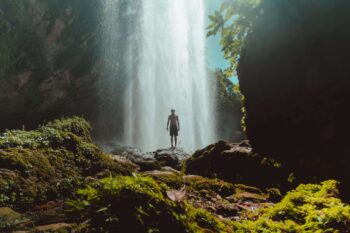
Costa Rica has many waterfalls, but El Chorro’s cascade flows directly onto the beach and into the Pacific Ocean. Watching freshwater meet saltwater against a backdrop of volcanic rocks and white sand is an unforgettable sight.
The waterfall’s flow varies dramatically by season. During the dry months from December through April, water levels drop considerably, which makes the cascade gentler but still photogenic. Visit during or shortly after the rainy season, and you’ll see El Chorro at full power, although wet conditions make the rocks much more slippery.
From the upper trail approach via Tango Mar, you’ll first encounter the river flowing toward the cliff edge, and the view from above shows where the waterfall drops to the beach below. You can cross the river here when water levels permit to get different perspectives of the cascading fall. Climbing down the rocks to beach level requires some scrambling and is definitely not recommended during high water or for anyone uncomfortable with uneven terrain.
The most dramatic views come from the beach itself when you’re looking back at the cascade tumbling down through tropical vegetation. Morning light hits the waterfall beautifully, and if you’ve hiked from Montezuma to arrive early, then you’ll likely have this slice of paradise entirely to yourself.
What Should You Know About Playa Cocolito Beach?
The beach at Cocolito stretches for several hundred yards of white sand, and the waterfall cove at the northern end creates the most sheltered swimming area.
Water conditions vary with the season and tide. The cove near the waterfall generally offers calmer waters, while the main beach can see stronger waves—particularly from January through March when offshore winds pick up. Always check conditions before swimming, and be aware that no lifeguards patrol this beach.
The surrounding rocks at both ends of the beach create small tide pools worth exploring, and the clear water offers decent snorkeling when conditions cooperate. You might spot parrotfish, angelfish, and occasionally sea turtles passing through these waters. The marine biodiversity here benefits from proximity to the protected zones around Cabo Blanco.
Wildlife viewing extends beyond the water. Howler monkeys regularly make their presence known from the forest canopy, and scarlet macaws sometimes fly overhead due to conservation efforts throughout the southern peninsula. Keep eyes open for coatis foraging along the tree line and various tropical bird species throughout your visit.
When Is the Best Time to Visit Cocolito and El Chorro?
Timing your visit properly makes a significant difference in the experience becauseCosta Rica’s dual season pattern affects everything from waterfall flow to trail conditions.
Does Dry Season or Green Season Work Better?
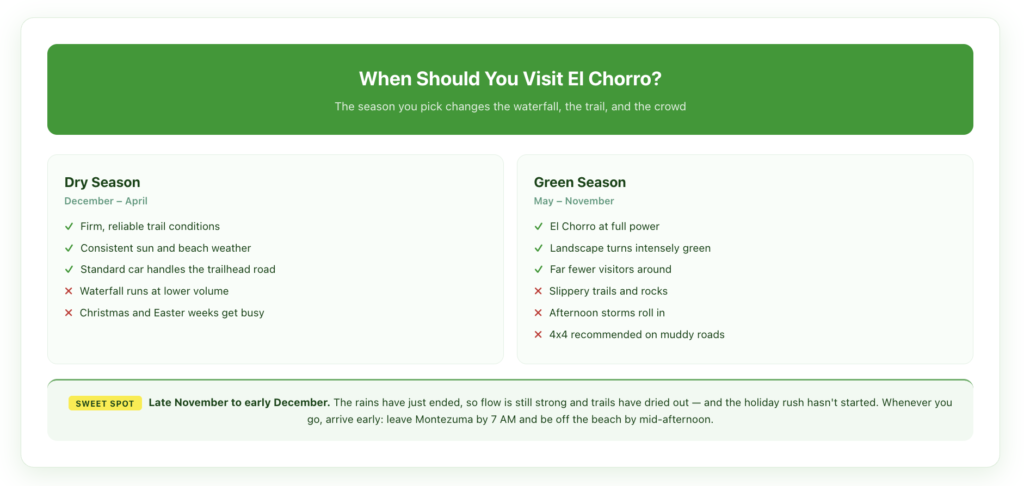
Dry season (December through April) offers the most reliable hiking conditions and comfortable beach weather. The trails stay firm, the sun shines consistently, and you won’t need to worry about sudden afternoon downpours. However, the waterfall runs at a lower volume, and popular weeks around Christmas and Easter bring more visitors to the general area.
The green season (May through November) delivers El Chorro at its most impressive as the heavier water flow creates dramatic cascades. The surrounding landscape turns impossibly green, and you’ll encounter far fewer tourists. The tradeoffs include slippery trails, unpredictable afternoon storms, and the need for more capable transportation on muddy roads.
The sweet spot for many travelers falls in late November or early December, which is just after the rainy season ends but before the holiday rush begins. Waterfall flow remains decent, trails have dried out, and accommodations haven’t yet hit peak pricing.
What Time of Day Should You Arrive?
An early morning departure is essential for the beach hike from Montezuma, and you should leave by 7 AM to arrive before the sun reaches full intensity. This timing also means you’ll reach the beach when the light is perfect for photography and before anyone else arrives.
Afternoon visits work better when driving to the upper trailhead, although you’ll miss the best light on the waterfall itself. Whatever approach you choose, plan to be off the beach by mid-afternoon when the sun becomes brutally direct.
What Should You Pack for a Cocolito Trip?
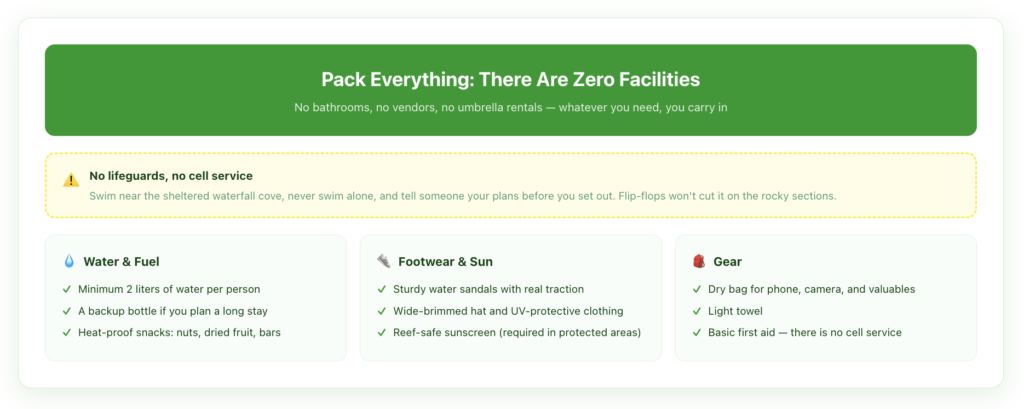
You need to bring everything with you because there are absolutely no facilities at Playa Cocolito, so no bathrooms, no beach umbrellas to rent, and no vendors. Here’s what makes the difference between a great day and a challenging one.
Water is non-negotiable. Bring at least two liters per person for the beach hike, more if you’re planning extended time at the beach. The combination of tropical heat, physical exertion, and salt air dehydrates you faster than you’d expect. A reusable bottle works fine, but having a backup never hurts.
Food and snacks matter because hunger will hit after that hike. Pack high-energy options that won’t melt in tropical heat like nuts, dried fruit, energy bars, or gallo pinto from a Cobano soda if you can carry it.
Footwear deserves careful consideration. The beach hike involves sand, rocks, and potentially some shallow water crossings depending on the tide. Sturdy water sandals with good traction handle all conditions. Flip-flops won’t protect ankles and feet from injury on the rocky sections.
Sun protection goes beyond sunscreen. A wide-brimmed hat, UV-protective clothing, and quality reef-safe sunscreen (required in Costa Rica’s protected areas) should all be in your bag. The midday sun at this latitude will burn unprotected skin in under 20 minutes.
Waterproof storage for electronics and valuables keeps your phone and camera safe through unexpected splashes or the inevitable dip in the ocean. A simple dry bag costs under $20 and saves headaches.
How Does Cocolito Fit into a Nicoya Peninsula Trip?
Playa Cocolito works beautifully as a day trip from either Montezuma or Santa Teresa, the two most popular base towns on the southern peninsula. Each offers different vibes and amenities to complement your waterfall beach adventure.
Montezuma delivers the more convenient access, as the beach hike starts right from town. This bohemian village caters to backpackers and travelers seeking a laid-back alternative to resort-style tourism. Small locally-owned restaurants serve fresh seafood, yoga studios dot the main street, and the famous Montezuma waterfalls provide another natural attraction within walking distance.
Santa Teresa sits about 40 minutes west of Cocolito by car, and offers world-class surfing, more developed restaurant and nightlife options, and a slightly more upscale traveler demographic. From here, you’d drive to the Tango Mar trailhead rather than hiking from Montezuma.
For travelers with more time, the whole southern Nicoya Peninsula deserves exploration. Cabo Blanco Nature Reserve protects Costa Rica’s first conservation area just south of here, with hiking trails leading to pristine beaches accessible only on foot. The small fishing village of Cabuya offers boat trips to nearby islands, and the entire coastline from Mal Pais northward features one beautiful beach after another.
What Are the Best Nearby Attractions?
After experiencing Cocolito’s waterfall beach magic, the surrounding area offers plenty more to explore. These highlights make excellent additions to your itinerary.
The Montezuma waterfalls provide an easier waterfall experience without the long hike. Located about a 20-minute walk from downtown Montezuma, these cascades feature swimming holes at multiple levels. The lower falls see the most visitors, while the upper sections reward those willing to continue climbing.
Cabo Blanco Nature Reserve offers the peninsula’s best hiking through tropical dry forest. The Swedish Trail leads roughly 4 miles to Playa Cabo Blanco, which is a gorgeous white sand beach named for the guano-covered island visible offshore. The reserve protects significant wildlife, including howler monkeys, white-faced capuchins, coatis, and over 100 bird species. The park opens Wednesday through Sunday, so plan accordingly.
Isla Tortuga day trips depart from Montezuma or Tambor, and take you to an island paradise perfect for snorkeling, kayaking, and beach lounging. These tours typically include lunch and equipment, which is a nice contrast to the DIY Cocolito experience.
For those interested in surfing, Santa Teresa’s breaks rank among Costa Rica’s best year-round waves. Beginners find gentler conditions at Playa Carmen, whereas experienced surfers challenge themselves at the more powerful southern breaks.
How Do You Get to the Southern Nicoya Peninsula?
Reaching this corner of Costa Rica requires either a ferry crossing or a long drive around the Gulf of Nicoya. Each approach has advantages depending on where you’re starting.
What’s the Ferry Option?
The Paquera ferry from Puntarenas crosses the Gulf of Nicoya in about 70 minutes, bringing you much closer to Montezuma and the southern beaches. From San José, allow for a total journey of 4 to 4.5 hours, including the ferry crossing. This route makes sense for travelers coming from the Central Valley or people who’d prefer to break up driving time with a scenic boat ride.
Ferry schedules run throughout the day, but arriving 30 minutes early during peak season (December through April) ensures you’ll make your intended crossing. Purchase tickets at the terminal or online for slightly faster boarding.
From Paquera, the drive to Montezuma takes about an hour through Cobano. Roads on this southern section are notoriously challenging, with rutted, unpaved stretches that require patience even in dry conditions. A higher-clearance vehicle isn’t strictly necessary for the main routes, but it certainly makes the journey more comfortable.
Can You Drive from Liberia?
Flying into Liberia and driving to the southern Nicoya Peninsula takes roughly 4 to 5 hours on land. This route works well for travelers combining beach time with Guanacaste activities, although it involves significantly more driving overall.
The road south from Nicoya through the peninsula’s interior has improved in recent years, but still demands attention. Sections alternate between paved and unpaved, with conditions that deteriorate during the wet season. This route definitely calls for 4×4 capability, particularly during the green season.
Many travelers opt for a combined approach: fly into San José, spend a few days in Arenal or Monteverde, then cross to the Nicoya Peninsula by ferry for the final portion of their trip. This loop itinerary maximizes Costa Rica’s highlights without excessive backtracking.
What Should You Know About Safety at Cocolito?
Remote beaches require extra awareness and preparation. While Playa Cocolito is generally safe, understanding the potential risks helps ensure an enjoyable visit.
Ocean conditions change constantly, and seemingly calm water can have strong undertows, especially during tidal transitions. Swim near the sheltered waterfall cove, never swim alone, and be honest about your swimming ability in unfamiliar waters.
The hike from Montezuma crosses some rocky sections, so watch your footing, especially on wet rocks, and allow extra time rather than rushing. Attempting the scramble down from the upper waterfall overlook requires good balance and appropriate footwear. Don’t try it in flip-flops or if conditions are wet.
Dehydration and heat exhaustion are real concerns. The combination of physical exertion, tropical sun, and beach time can catch visitors off guard. Drink water consistently throughout the day, seek shade during peak sun hours, and recognize early warning signs like headache, dizziness, or nausea.
Whether you’re leaving belongings at the beach while swimming or in a parked car, minimize the possessions you bring and keep essentials secured in a waterproof bag with you.
Cell service at the beach is essentially non-existent. Let someone know your plans before heading out, and carry basic first aid supplies for minor injuries.
Frequently Asked Questions
What is the most beautiful waterfall in Costa Rica?
Costa Rica offers dozens of stunning waterfalls, but El Chorro at Playa Cocolito ranks among the most unique because it cascades directly onto a white sand beach and into the Pacific Ocean. This rare waterfall-beach combination creates dramatic scenery you won’t find at La Fortuna Waterfall or the famous Montezuma Falls, although they remain excellent choices for accessibility and swimming.
Is the Montezuma waterfall worth visiting?
Absolutely. The Montezuma waterfalls offer multiple cascades within a 20-minute walk from town and natural swimming pools. They’re far more accessible than Playa Cocolito and make a perfect complement so you can visit Montezuma Falls in the afternoon after a morning at El Chorro for the complete waterfall experience.
Can you swim at El Chorro waterfall?
Swimming is possible at El Chorro, particularly in the cove where the waterfall meets the beach. Water levels and swimming conditions vary by season, as dry season brings gentler flow and calmer waters, whereas rainy season increases both the waterfall’s power and potential currents. Always assess conditions before entering and avoid swimming alone.
Where should you stay near Costa Rica waterfalls?
For Playa Cocolito access, Montezuma offers the most convenient base with accommodations ranging from budget hostels to boutique eco-lodges. Santa Teresa, about 40 minutes away, provides more upscale options. Both towns put you within easy reach of multiple waterfall experiences throughout the southern Nicoya Peninsula.
Do you need a 4×4 to reach Playa Cocolito?
Not necessarily for the waterfall trailhead via Tango Mar during the dry season because a standard vehicle handles that route fine. However, exploring the broader southern Nicoya Peninsula, particularly during the green season, definitely warrants a 4×4 or SUV with good clearance. The beach hike from Montezuma requires no vehicle at all.
What is the prettiest beach on the Nicoya Peninsula?
This sparks friendly debate among visitors, but Playa Cocolito consistently ranks near the top thanks to its waterfall backdrop and pristine white sand. Playa Conchal in northern Guanacaste offers a different kind of beauty with its crushed shell shore, while Cabo Blanco beach rewards hikers with dramatic isolation.
What should you bring to Playa Cocolito?
Pack at least 2 liters of water per person, food and snacks, reef-safe sunscreen, a wide-brimmed hat, sturdy water sandals, a waterproof bag for electronics, and a light towel. There are absolutely no bathrooms, no vendors, and no beach umbrellas, so bring everything you’ll need for a full day.
Is El Chorro waterfall safe to visit?
El Chorro is generally safe for prepared visitors who respect ocean conditions and their own physical limitations. The main risks involve dehydration on the hike, slippery rocks near the waterfall during wet conditions, and unpredictable ocean currents. Leave early, bring ample water, wear appropriate footwear, and don’t attempt difficult scrambles in poor conditions.