
Last Updated on July 24, 2026
Playa San Juanillo: Quick Guide
Playa San Juanillo is a white-sand, double-bay beach on the northern Nicoya Peninsula in Guanacaste — genuinely uncrowded and free of resort development. Getting there requires a high-clearance vehicle via Route 160, roughly 2 hours from Liberia Airport. A 4×4 is essential from May through November.
Quick Facts:
- Two beaches meet at a sheltered bay — the mirador viewpoint is best at high tide.
- Swimming and snorkeling are best at high tide; the rocky bottom makes low tide uncomfortable. There is no resort development; a small fishing village with minimal facilities.
- Ostional Wildlife Refuge (olive ridley turtle arribadas) is 10–15 min north.
- No ATMs in the village — bring cash from Nosara or Nicoya.
Top 3 Experiences at San Juanillo:
- Mirador Viewpoint — 10-min hike to hilltop overlooking both beaches at high tide. Time it right for the full effect.
- Snorkeling Off the Rocks — Rocky left side of the bay. Bring your own gear; nothing rents locally.
- Boat Tours — Paskis Adventures runs wildlife tours from the bay: rays, dolphins, turtles, sea snakes.
Use Samara or Nosara as your base — San Juanillo is best as a Nicoya Peninsula day trip.
If you need any help with a Costa Rica car rental, contact us now!
Playa San Juanillo is a white-sand beach tucked into a small fishing village on the Nicoya Peninsula in Guanacaste and one of the few beaches in Costa Rica that still feels genuinely local. It’s not a resort town; there’s no party scene, and the locals actively want to keep it that way. What you get instead: crystal-clear turquoise water, a dramatic mirador (viewpoint) where two beaches converge, solid snorkeling around rock formations, and the rare experience of feeling like you found something the internet hasn’t fully overrun. It’s about 61 miles (97 km) from Liberia Airport, and getting there requires a high-clearance vehicle, which naturally filters out the tour bus crowd.
Key Takeaways
- San Juanillo is two beaches meeting in a natural bay, which is best viewed from the hillside mirador at high tide.
- A high-clearance vehicle or 4×4 is essential as Route 160 has significant unpaved, hilly sections with potholes.
- Snorkeling off the rocky left side of the bay is the main in-water activity, and swimming is better at high tide.
- The beach stays quiet most of the year, but crowds surge during Costa Rican holidays, especially Semana Santa, Christmas, and New Year.
- Facilities are minimal, so bring your own food and water unless you’re visiting on a busy weekend.
- Ostional Wildlife Refuge, one of the world’s most important olive ridley sea turtle nesting sites, is a short drive north.
Where Exactly Is San Juanillo Beach?
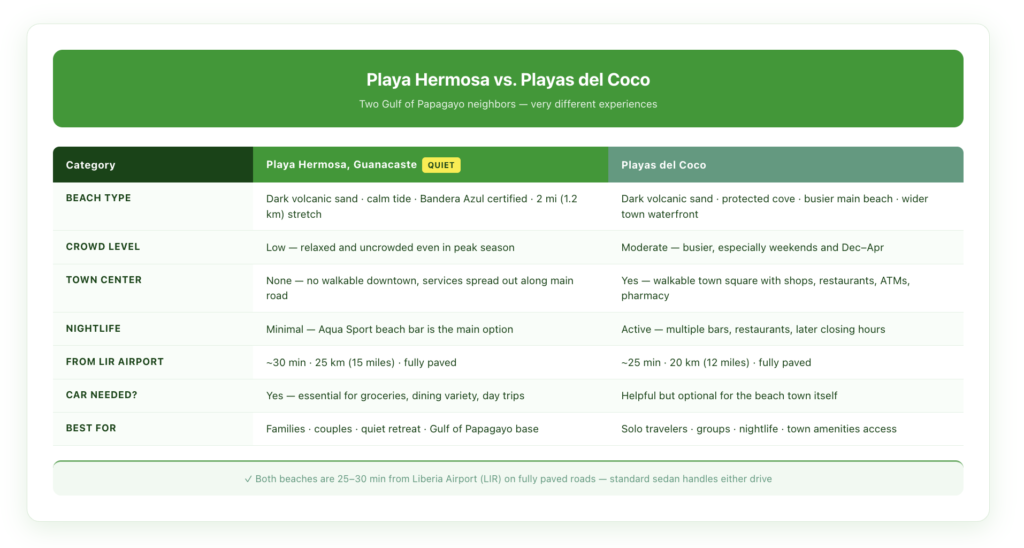
San Juanillo sits on the northern Nicoya Peninsula in Guanacaste, roughly midway between Nosara to the south and Ostional to the north. It’s 61 miles (97 km) from Liberia Airport and about a 2-hour drive or roughly 1.5 hours from Tamarindo heading south on Route 152 then Route 160.
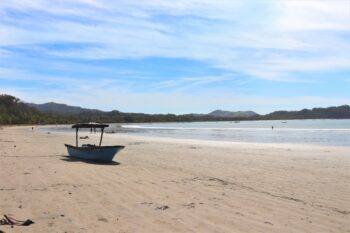
The village of San Juanillo is worth understanding upfront: it’s a real fishing community, and not a tourist town with a beach attached. You’ll see fishing boats pulled up on the sand, and “No Marina” graffiti on the rocks, because the residents are determined to protect what they have. The Nicoya Peninsula is one of the world’s five recognized Blue Zones, which are regions where people consistently live into their 90s and beyond. According to Blue Zones research, residents of the peninsula are roughly twice as likely as Americans to reach a healthy age of 90, and their longevity is tied to a family-centered culture and a slower pace of life. The Pura Vida mindset is very much alive in San Juanillo.
How Do You Actually Get to San Juanillo?
The short answer: you need your own vehicle, and it should have high clearance at a minimum. Renting a standard sedan will get you there in dry season if you’re careful, but a 4×4 is strongly recommended and essential from May through November when the green season turns Route 160 into a muddy obstacle course.
Costa Rica shuttle services don’t serve San Juanillo, and no public transit reliably reaches the village. If you want to see this beach, you need your own car with the right clearance.
What Are the Road Conditions Like?
The most common approach from Tamarindo is via Route 152 south, then Route 160 toward Nosara and San Juanillo. Route 160 has a long unpaved section that’s hilly, potholed, and rocky. It’s drivable in a high-clearance vehicle during the dry season between December and April, but the final descent into the village drops onto sand, and low-clearance cars get stuck there regularly.
From Liberia Airport, the more reliable route is Route 21 south through Nicoya town, then connecting toward Ostional and San Juanillo. It’s longer in distance but has better road conditions for most of the trip. Driving in Costa Rica on these coastal roads always rewards patience, and GPS times are consistently optimistic about Route 160.
If you’re choosing between Costa Rica’s two airports for a Nicoya Peninsula trip, Liberia (LIR) is the right call. It puts you within 2 hours of San Juanillo versus the 4+ hour drive from San José. Either way, clearing customs at LIR is straightforward because the terminal is compact and moves faster than SJO.
Is There Parking at San Juanillo?
Parking is free and informal on the sand near the beach entrance. Sand parking on a slope can trap lower-clearance cars. When the beach gets busy during holidays, a designated overflow parking area appears nearby with a short trail marked peatones (pedestrian path).
Don’t leave valuables in your car. There are no parking attendants, and San Juanillo is remote. Bring cash in colones as there aren’t any ATMs in the village.
What Makes San Juanillo Special?
Why Are There Two Beaches at San Juanillo?
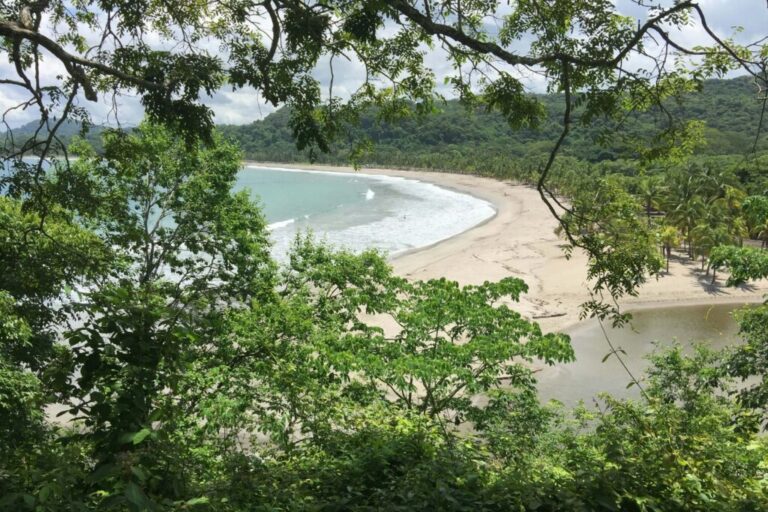
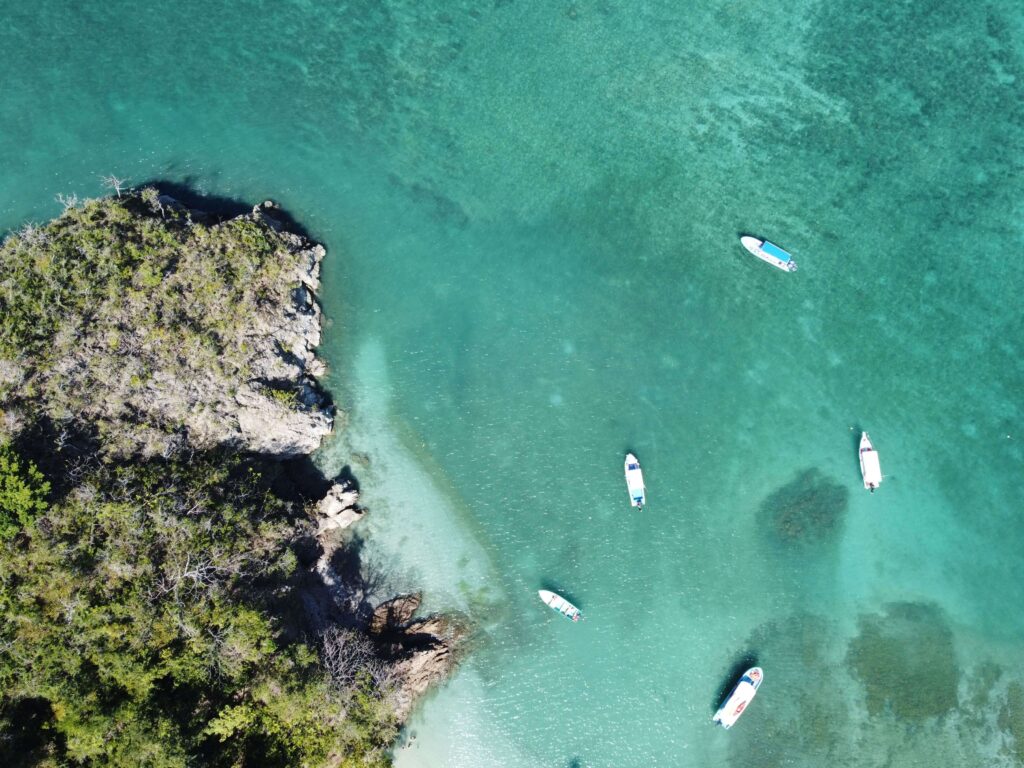
The geography here is genuinely unusual. San Juanillo Bay is formed by two separate beaches that curve into each other, creating a protected cove. A small rocky headland divides the two sections, and the hill at that junction is where the mirador sits.
At low tide, you mostly see the rock shelf, which is scenic, but it’s not the view that earns this beach its reputation. At high tide, both beaches fill with turquoise water, and the bay turns into a proper bowl of calm, clear sea. The mirador viewpoint at high tide is one of the more striking vantage points on the Nicoya Peninsula to observe both beaches curving away in opposite directions from a single hilltop. The Gulf of Papagayo represents the luxury end of Guanacaste’s coastline; San Juanillo is the raw, undeveloped version that doesn’t need a resort to deliver a remarkable view.
The walk to the mirador takes about 10 minutes from the parking area. Most of it is on the beach, with a short scramble over rocks and tree roots near the top. It’s not difficult, but wear closed-toe shoes.
How Is the Swimming at San Juanillo?
Swimming is good, with one important caveat: the rocky bottom makes low tide uncomfortable, and the water in parts of the bay is too shallow. High tide is genuinely better, and you should plan your visit around it.
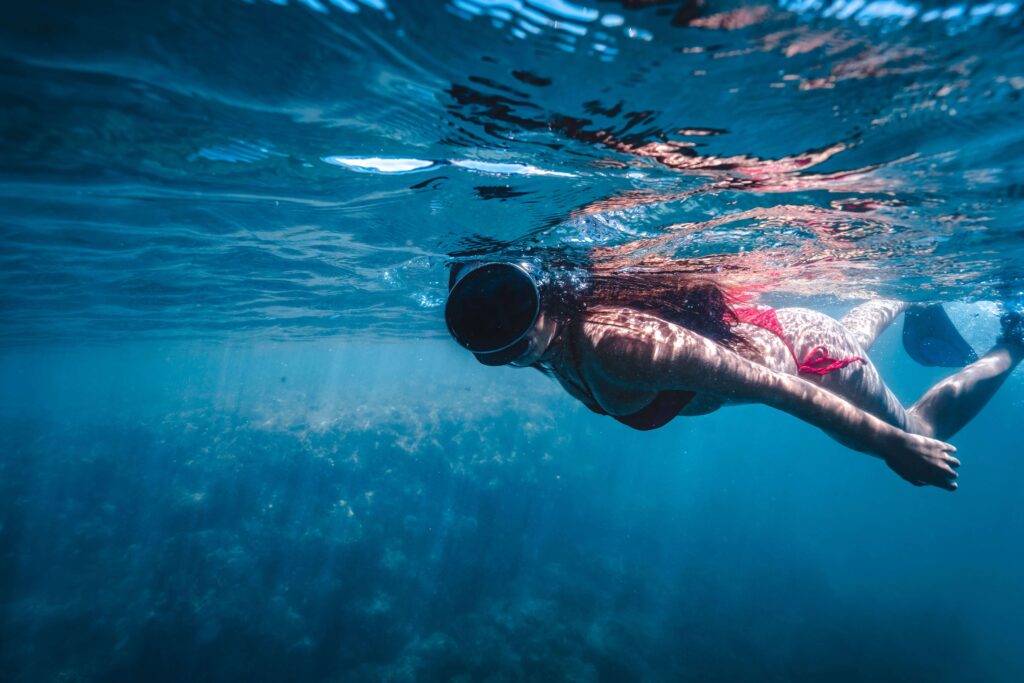
People snorkel on the left side of the beach, near the rock formations. The structure creates habitat for small reef fish and makes for enjoyable casual snorkeling. Visibility is generally good when the water is calm. It’s not a formal snorkeling destination like Caño Island, but it’s a legitimate and fun option for anyone with a mask and fins.
Waves are gentle by Costa Rica standards, and the protected bay dampens most swell, which makes San Juanillo better for families and anyone who wants flat, calm water. The Instituto Costarricense de Turismo (ICT) classifies this as a swimming beach. For context on beach safety flags and what they mean at Costa Rica beaches, the Tico Times occasionally covers water safety conditions across Guanacaste during peak season and is worth checking before travel.
What Can You Do In and Around San Juanillo?
What Activities Are Available at the Beach Itself?
The beach is the main event. San Juanillo doesn’t have a structured activity scene the way Tamarindo or Flamingo Beach do. Here’s what you can actually do:
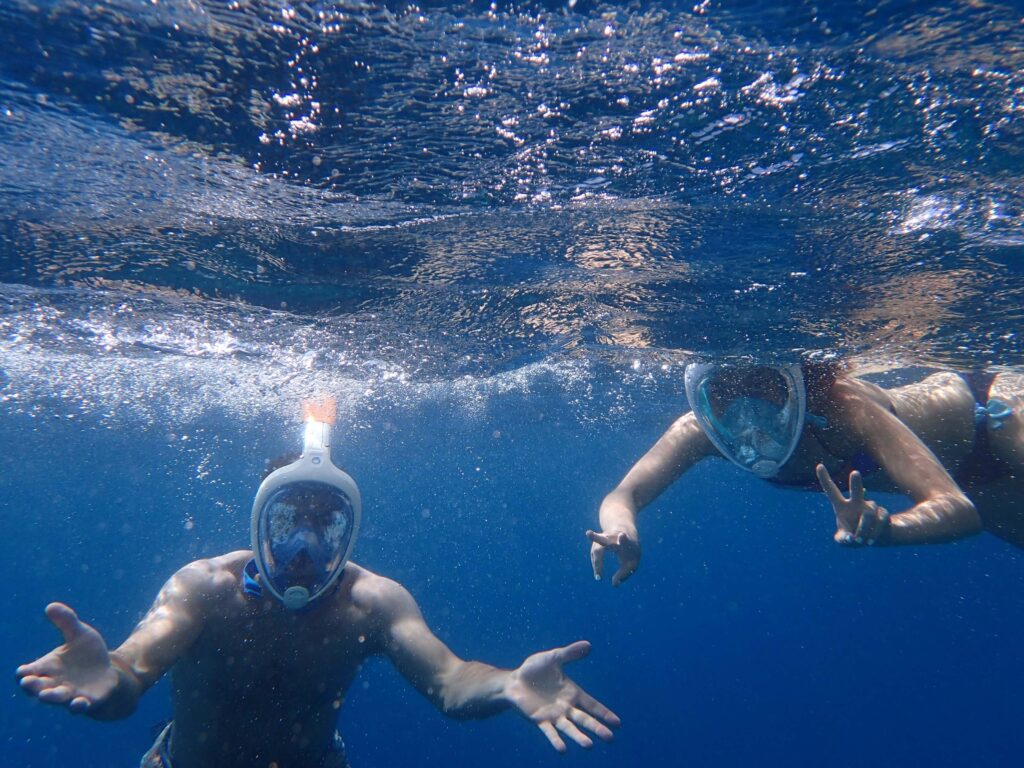
Swimming and snorkeling — The bay’s calm water and rocky left section make this a solid half-day swim, and high tide is the window to aim for. Bring your own snorkel gear as nothing is available to rent at the beach.
The Mirador hike — A 10-minute scramble up the headland dividing the two beaches. Go at high tide for the full effect because the difference between low and high tide views from the top is striking enough to make tide-checking worthwhile before you leave your accommodation.
Boat tours — A local operation called Paskis Adventures runs wildlife boat tours out of the bay. They’re connected to the Ostional turtle rescue program, and the guides understand turtle migration patterns well. Reported sightings include large rays, dolphins, sea turtles, flying fish, and sea snakes.
Sunset watching — San Juanillo faces west and catches the Pacific sunset directly. Arriving in the late afternoon and staying for sunset is a sound strategy, especially on weekdays when you may have most of the beach to yourself.
What’s Worth Combining with a San Juanillo Visit?
Ostional Wildlife Refuge is the most obvious pairing — a short drive north. This is one of the world’s most important nesting sites for olive ridley sea turtles, with mass nesting events called arribadas occurring roughly monthly. The refuge protects 9 miles (15 km) of nesting beach and roughly 869 acres (352 ha) of protected land, administered by Costa Rica’s SINAC. Licensed guides lead tours from around 8 AM; nighttime tours run during turtle season. Peak arribada season is August through December when hundreds of thousands of turtles can come ashore in a single night.
Nosara is 45–60 minutes south, depending on road conditions. For a multi-day trip, Nosara makes a more comfortable base with restaurants, yoga studios, surf camps, and a solid range of accommodations. San Juanillo is a natural day trip from there.
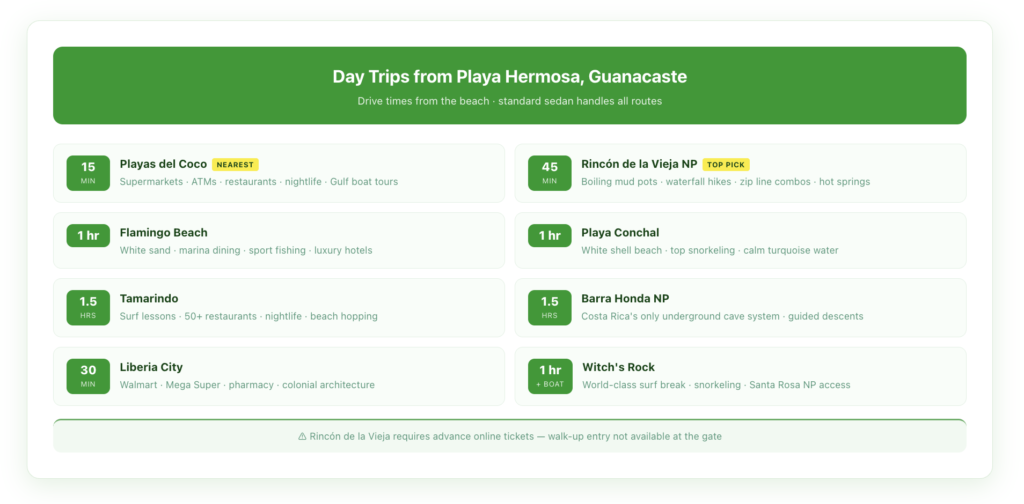
Playa Junquillal sits a few minutes north of San Juanillo and is a longer, emptier beach that catches more swell. It’s a quieter option if you want solitude over the double-bay experience. Playa Conchal is further north but worth considering for a wider Guanacaste beach road trip.
Samara is 1.5 to 2 hours south and is a fully-serviced beach town with restaurants, ATMs, and grocery stores. If San Juanillo is your day trip and you need services before or after, Samara is the right call.
Barra Honda National Park is the Nicoya Peninsula’s cave system and roughly 1.5 hours inland. Worth knowing about if you’re building a multi-day itinerary that needs inland variety alongside beach days. The park sits within the same Tempisque Conservation Area that administers Ostional Wildlife Refuge.
Rincón de la Vieja National Park offers a full contrast if you want to add a volcano day to a Nicoya Peninsula trip. The Park is about 1 hour from Liberia, with mud pots, hot springs, and adventure combo tours. It’s far enough from San Juanillo to be a separate day, but worth building into the broader itinerary. Travelers who want world-class surf rather than calm swimming should look at Witch’s Rock, which is a boat-access break out of Playas del Coco, a very different energy from the protected bay at San Juanillo.
When Is the Best Time to Visit San Juanillo?
Does the Season Change the Experience Much?
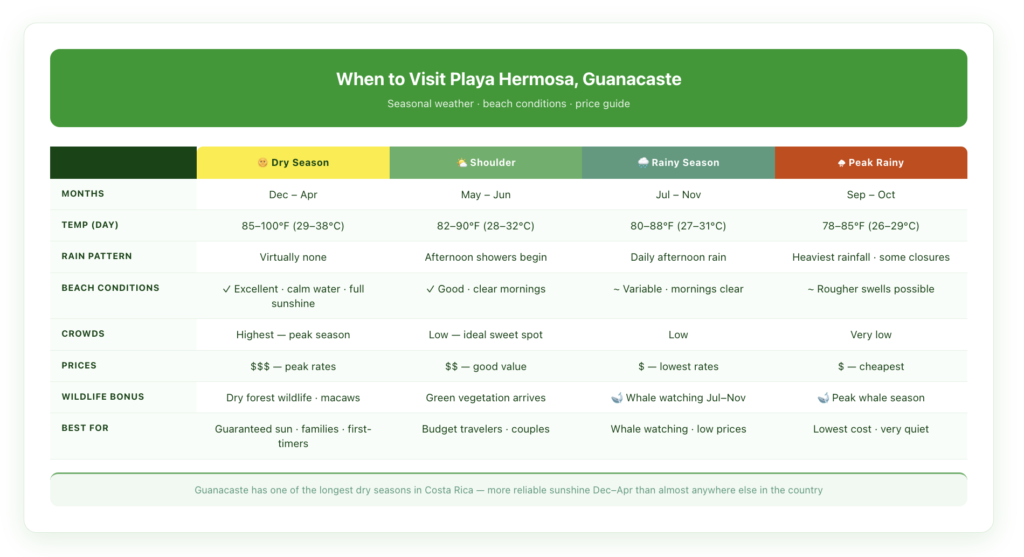
Significantly. The dry season (December–April) is when Route 160 is most manageable, the skies are reliably clear, and the beach looks its best. Guanacaste’s dry season is genuinely excellent for driving the coast because the offshore wind keeps temperatures reasonable, and road conditions are predictable with a high-clearance vehicle.
The green season from May to November brings afternoon rains, lush scenery, and significantly worse road conditions. The Ostional turtle nesting ramps up considerably from August through December, and the largest arribadas happen during this window, with some events reaching 500,000 nesting females according to refuge records.
The community-managed egg harvest program at Ostional is considered one of the first successful examples of its kind globally, as detailed by National Geographic’s coverage of Costa Rica conservation. But you need a 4×4 in the green season without question because Route 160 is not passable in a standard vehicle after heavy rain. Make sure your vehicle choice matches the season before you book.
Holiday periods, especially Semana Santa, Christmas, and New Year, flip the experience entirely. San Juanillo is popular with Costa Rican families from the cities, and the beach becomes packed with camping, music, and full festive energy. If you want the quiet version, avoid those windows. Weekday mornings in shoulder season are when you’ll find the beach closest to empty.
Where Should You Stay Near San Juanillo?
San Juanillo village itself has minimal accommodations, and a handful of small B&Bs and vacation rentals have emerged as the beach’s reputation has spread. The village was essentially unknown to non-Costa Ricans as recently as 2016; that’s changed, but it’s still not Airbnb-saturated.
Most visitors use nearby towns as a base:
Nosara (45–60 min south) is the premium nearby option. Full range of accommodations, restaurants, surf schools, and a wellness scene. Use it as your anchor and day trip to San Juanillo.
Ostional (10–15 min north) puts you closest to both the beach and the turtle refuge, with a rustic, local feel. Accommodation is limited but functional.
Samara (1.5 hr south) is the most family-friendly and fully serviced option. If you need ATMs, grocery stores, and a walkable town, Samara is the call, and it’s also a great first or last stop when connecting to other Guanacaste beach destinations.
Practical Information Before You Go
Beach access: Free, no entrance fee.
Facilities: Basic public bathrooms and showers (variable quality). A small food stand operates occasionally, more reliably on weekends. Bring your own food and water for weekday visits.
Tide planning: Check before you go. High tide is better for swimming and essential for the best mirador view. Most tide apps can pull a forecast for the Nicoya Pacific coast. Costa Rica’s Sistema Nacional de Áreas de Conservación (SINAC) manages protected coastal zones adjacent to San Juanillo.
Currency: There are no ATMs in San Juanillo and the nearest options are in Nosara (south) or Nicoya town (inland). Sort your Costa Rica currency in advance.
From Liberia Airport: Budget 2 hours. Route 21 through Nicoya town is more reliable than cutting across via Route 160 from Tamarindo, especially if arriving late or in the wet season. The Liberia Airport is also useful as a departure point for anyone doing a Nicoya Peninsula loop; just drive north from the southern Nicoya towns and exit through the Nicoya-Liberia route.
San Juanillo works best as a dedicated day trip or one stop on a Palo Verde National Park region loop. Visit in the morning, hit the mirador at high tide, snorkel off the rocks, and head to a town with services by late afternoon.
If you need the right car for Route 160, contact Vamos before your trip — a high-clearance SUV handles the dry season, and a 4×4 is necessary May through November.
Frequently Asked Questions
Is Playa San Juanillo worth visiting?
Yes, particularly for travelers who want a beach that hasn’t been packaged for mass tourism. The double-bay mirador view is genuinely unique on the Nicoya Peninsula; the water is clear, and on weekdays outside of the holiday season, you can have most of it to yourself. That said, it’s a destination for people comfortable with minimal facilities and a real off-the-beaten-path drive. If you need restaurants and beach bars within walking distance, use Nosara as your base and day-trip to San Juanillo.
Is Playa San Juanillo good for swimming?
It’s good at high tide. The bay has calm, clear water with gentle waves, but the rocky bottom makes low tide uncomfortable for wading. Check tide times before you go and plan your swim window accordingly. The left side near the rocks is best for snorkeling, whereas the right side is better for open swimming.
Does Juanillo Beach have sargassum?
San Juanillo has largely avoided the sargassum events that affect Caribbean and some exposed Pacific beaches. The protected bay and local geography keep it cleaner than more open coastlines. Conditions vary seasonally, but sargassum is not a common complaint here.
What resorts are on Juanillo Beach?
There are no resorts at San Juanillo. The village has small guesthouses and vacation rentals, and the community actively resists large commercial development. Nosara and Samara are the nearest towns with traditional hotel options.
Is Playa San Juanillo crowded?
On weekday mornings outside of holiday periods, it can be nearly empty. On Costa Rican holidays, the beach gets packed with local families who camp and stay for multiple days. The quiet version of San Juanillo exists, but it requires timing your visit right.
How much does it cost to visit San Juanillo Beach?
The beach is free. Costs come from getting there: fuel for the drive, and optionally a boat tour from Paskis Adventures. If you’re day-tripping from Nosara or Tamarindo, allow for 1–1.5 hours of driving each way plus a full tank of gas. There are no entrance fees, and no paid parking.
What is the best way to combine San Juanillo with Ostional Wildlife Refuge?
Drive to Ostional first thing in the morning for an early turtle tour (guides are typically available from 8 AM), then continue south to San Juanillo with the aim to arrive around mid-morning at rising high tide. Swim and hike the mirador through the afternoon, then head south to Nosara or Samara for dinner for a full, rewarding day on the northern Nicoya Peninsula.